Self adhesive Traffic Safety Belt
CN → US| HS Code | Tariff Rate | Origin | Destination | Doc |
|---|---|---|---|---|
| 3919101010 | 41.5% | CN | US | Official Doc |
| 7607205000 | 17.5% | CN | US | Official Doc |
| 3919905010 | 40.8% | CN | US | Official Doc |
Product Images
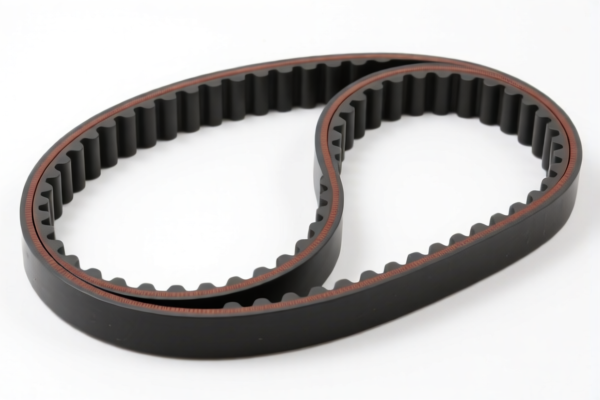
AI Analysis
🚧 Self-Adhesive Traffic Safety Belt (Road Marking Material)
🌐 HS Code Reference & Customs Clearance Guide | 2026 Latest Tariff Analysis | Professional Entry Strategies
📌 I. Product Definition & Classification: Do You Really Understand "Self-Adhesive Traffic Safety Belt"?
Self-adhesive traffic safety belts (often referred to as preformed road markings, tape, or films) are critical materials used for road safety, including lane dividers, crosswalks, and directional arrows. In international trade, their classification depends heavily on material composition and physical form, leading to three distinct HS Code paths with drastically different tax implications.
The key distinction lies in identifying the backing material: * Plastic-based: If the backing is PVC, PE, or similar polymer films → Chapter 39 * Aluminum/Metal-based: If the backing is aluminum foil or alloy → Chapter 76 * Generic/Unspecified: If material is unclear but functions as a self-adhesive plastic sheet → Chapter 39 (Fallback)
⚠️ Critical Distinction:
- If the product is plastic-based (most common): Use 3919.10.10.10 or 3919.90.50.10.
- If the product is aluminum-based (metallic reflective tapes): Use 7607.20.50.00.
- Do not mix classifications; customs will reject mixed declarations.
📦 II. HS Code Classification Details (2026 Latest Tariff Authority Comparison)
| HS Code | Product Description | Material Basis | Application Scenario | Adhesive Type |
|---|---|---|---|---|
3919.10.10.10 |
Self-adhesive traffic materials, flat/self-adhesive form, for road marking | Plastic/Polymer (Unspecified) | Standard road markings, lanes, signs | Yes (Pre-applied) |
7607.20.50.00 |
Self-adhesive traffic materials, inferred Aluminum/Alloy backing | Aluminum/Aluminum Alloy | High-reflectivity metallic tapes, specialty road markers | Yes (Pre-applied) |
3919.90.50.10 |
Self-adhesive traffic materials, flat/film/plastic form | Plastic/Polymer Film | Plastic film-based markings, durable road tapes | Yes (Pre-applied) |
🔍 Key Insight:
-3919.10.10.10is the primary code for general plastic-based self-adhesive road marking tapes.
-7607.20.50.00applies if the tape has a metallic (aluminum) core for enhanced reflectivity.
-3919.90.50.10is used when the material is clearly plastic film but doesn’t fit the specific "rolled/flexible sheet" criteria of 3919.10, often acting as a fallback for specific plastic film formats.
💰 III. 2026 Latest Tariff Rate Breakdown (Including Surcharges & Policy Add-ons)
✅ Applicable Country: United States (US)
✅ Country of Origin: China (CN)
✅ Effective Date: From November 10, 2025 (for subsequent imports)
🎯 1. 3919.10.10.10 —— Self-Adhesive Plastic Traffic Material (Most Common)
| Item | Content |
|---|---|
| Basic Tariff | 6.5% (ad valorem) |
| USITC Surcharge | +25% (Under Section 301) |
| IEEPA Surcharge | +10% (For China/HK products, from Nov 10, 2025) |
| Total Tariff | 41.5% |
| Tax Calculation | CIF Value × 41.5% |
| De Minimis Eligible? | ❌ No (deny_de_minimis) |
| Legal Basis Path | IEEPA:9903.01.25 → IEEPA:9903.01.24 → USITC:3919.10.10.10 |
📌 Explanation:
- The 25% USITC surcharge is part of the ongoing Section 301 tariffs on Chinese goods.
- The 10% IEEPA surcharge is an additional layer targeting Chinese imports under the International Emergency Economic Powers Act.
- Total 41.5% is extremely high. This classification applies to most standard PVC/Plastic self-adhesive road tapes.
🎯 2. 7607.20.50.00 —— Self-Adhesive Aluminum Traffic Material
| Item | Content |
|---|---|
| Basic Tariff | 0.0% |
| USITC Surcharge | +7.5% |
| IEEPA Surcharge | +10% |
| Total Tariff | 17.5% |
| Tax Calculation | CIF Value × 17.5% |
| De Minimis Eligible? | ❌ No (deny_de_minimis) |
| Legal Basis Path | IEEPA:9903.01.25 → IEEPA:9903.01.24 → USITC:7607.20.50.00 |
📌 Note:
- Aluminum-based products often enjoy lower base tariffs.
- The 7.5% USITC surcharge is lower than the 25% for plastics, but the 10% IEEPA still applies.
- Total 17.5% is significantly more cost-effective than plastic-based options.
- Use this only if the product has a verifiable aluminum backing.
🎯 3. 3919.90.50.10 —— Self-Adhesive Plastic Film/Material
| Item | Content |
|---|---|
| Basic Tariff | 5.8% |
| USITC Surcharge | +25% |
| IEEPA Surcharge | +10% |
| Total Tariff | 40.8% |
| Tax Calculation | CIF Value × 40.8% |
| De Minimis Eligible? | ❌ No (deny_de_minimis) |
| Legal Basis Path | IEEPA:9903.01.25 → IEEPA:9903.01.24 → USITC:3919.90.50.10 |
📌 Note:
- Very similar to3919.10.10.10but with a slightly lower base tariff (5.8% vs 6.5%).
- Total 40.8% is still extremely high.
- Use this when the product is clearly a plastic film but does not fit the "self-adhesive tape" description of 3919.10.
🛠️ IV. Customs Clearance Practical Advice (Pitfall Avoidance Guide)
✅ 1. Required Documentation Checklist (Mandatory)
| Document | Required | Description |
|---|---|---|
| ✅ Product Specification Sheet | ✔️ | Must specify material (PVC, PE, Aluminum), thickness, adhesive type, and reflectivity class. |
| ✅ Material Composition Proof | ✔️ | Crucial: Provide lab reports or material certificates proving if it’s plastic or aluminum. Misclassification here is the #1 cause of delays. |
| ✅ Product Photos (Clear Label) | ✔️ | Show the self-adhesive backing, surface texture, and any reflective properties. |
| ✅ Commercial Invoice | ✔️ | Clearly state "Self-Adhesive Traffic Safety Belt/Material" and specify material. |
| ✅ Packing List | ✔️ | Detail dimensions, weight, and quantity. |
| ✅ Country of Origin Certificate | ✔️ | If not China, may qualify for lower tariffs. |
✅ 2. Declaration Tips (Key Mnemonic)
🔥 "Material Defines Code, Plastic High Tax, Aluminum Lower Tax, Clear Proof Saves Day!"
| Scenario | Correct Declaration | Incorrect Practice |
|---|---|---|
| Standard Plastic Tape | 3919.10.10.10 (41.5%) |
Declare as "Traffic Sign" → Risk of 301+IEEPA penalties |
| Aluminum Foil Tape | 7607.20.50.00 (17.5%) |
Declare as plastic → Overpay by 24% |
| Plastic Film Roll | 3919.90.50.10 (40.8%) |
Declare as general "adhesive" → Higher scrutiny |
| Mixed Material | Split Declaration | Mixed declaration → Rejection & Inspection |
✅ 3. Special Handling Cases
| Case | Recommendation |
|---|---|
| OEM Custom Markings | Provide design files + material specs to avoid "generic" classification penalties. |
| Reflective Property | If high-visibility/reflection is a key feature, declare it to justify specific HS codes (e.g., 7607 for metallic). |
| Bulk Roll vs. Pre-cut Shapes | Ensure the description matches the HS code. "Self-adhesive film" fits 3919 better than "traffic cones." |
| Origin Diversification | If shipped from Vietnam, Thailand, or Malaysia, check for IEEPA exemptions. Tariffs could drop to 0%-5% instead of 17-41%. |
🌍 V. Global Market Clearance Comparison (2026 Latest)
| Country/Region | Recommended HS Code | Tariff (China Origin) | Certification Required | Notes |
|---|---|---|---|---|
| 🇺🇸 USA | 3919.10.10.10 |
41.5% (Plastic) | None Specific | High tariff due to Section 301 + IEEPA. |
| 🇨🇳 China | 3919.10.10.10 |
~6-10% | CCC (if applicable) | No additional surcharges. |
| 🇪🇺 EU | 3919.10.10.10 |
0-6.5% | CE (if electrical/smart) | No Section 301 equivalents. |
| 🇦🇺 Australia | 3919.10.10.10 |
5-10% | ADR (for road safety) | Moderate tariffs. |
| 🇯🇵 Japan | 3919.10.10.10 |
0-5% | JIS Standard | Low tariffs for road materials. |
📌 Conclusion:
- USA is the most expensive market for self-adhesive traffic materials due to cumulative surcharges.
- Aluminum-based products (7607) offer a cost-saving strategy (17.5% vs 41.5%) if the product design allows.
- Consider supply chain diversification to non-China origins to mitigate IEEPA surcharges.
📌 VI. Common Errors & Pitfall Guide (Lessons Learned)
❌ Error 1: Declaring aluminum-backed tape as plastic (3919)
👉 Consequence: Overpayment of ~24% in tariffs.
❌ Error 2: Failing to prove material composition
👉 Consequence: Customs holds shipment for inspection → Delays + Demurrage fees.
❌ Error 3: Ignoring IEEPA 10% surcharge for China-origin goods
👉 Consequence: Unexpected 10% cost increase post-Nov 2025.
❌ Error 4: Using vague terms like "Traffic Tape" without specifying material
👉 Consequence: Customs assigns highest applicable rate (41.5%) by default.
✅ Correct Practice:
"Self-Adhesive Road Marking Tape, PVC Material, 2mm Thickness, Reflective Surface, for Highway Lane Dividers, Model XYZ, Origin: China"
🎯 VII. Conclusion: Precise Classification, Cost Optimization, Smooth Clearance!
🎯 Remember Mnemonic:
🔹 "Material is King: Plastic 41%, Aluminum 17%, Prove it to Save It!"
🔹 "HS Code Determines Duty, 24% Gap Between Plastic and Metal, Declare Correctly or Pay the Penalty!"
📌 Pro Tip:
If your self-adhesive traffic belts are shipped from Vietnam, Mexico, or Thailand, you may be eligible for IEEPA Exemptions, reducing the total tariff to 0%-5%.
Recommendation: Apply for an Advance Ruling (Pre-classification) with US Customs to confirm the HS code and tax rate before shipment.
📣 Immediate Action:
📞 Contact a professional customs broker + Provide Material Test Reports + Apply for HS Code Pre-classification
🚀 Ensure your self-adhesive traffic belts pass through customs smoothly, efficiently, and profitably!
✨ Professional Clearance Starts with Accurate Classification!
💼 Every Percent of Tariff Saved is Pure Profit!
Customer Reviews
About HS Code Classification
The Harmonized System (HS) is an internationally standardized nomenclature developed by the World Customs Organization (WCO) to classify traded products. Over 200 countries use the HS system as the basis for customs tariffs, trade statistics, and import/export regulations.
Each HS code follows a hierarchical structure:
- Chapter (2 digits) — Broad category of goods (e.g., Chapter 84: Machinery and Mechanical Appliances)
- Heading (4 digits) — More specific grouping within the chapter
- Subheading (6 digits) — Internationally standardized breakdown, used by all WCO member countries
- National subdivisions (8-10 digits) — Country-specific extensions for further classification, such as US HTSUS 10-digit codes
Correct HS code classification is essential for smooth customs clearance, accurate duty payment, and compliance with trade regulations. Misclassification can lead to customs delays, overpayment of duties, or penalties.
When importing from CN to US, the applicable tariff rates may include:
- Most-Favored-Nation (MFN) rate — The standard duty rate applied to WTO members
- General rate — Applied to countries without trade agreements
- Trade remedy duties — Additional tariffs such as Section 301 (anti-dumping), Section 232 (national security), or countervailing duties
The information provided on this page is for reference purposes only. For official classification, please consult with your local customs authority or a licensed customs broker.