Self adhesive Transparent Film
CN → US| HS Code | Tariff Rate | Origin | Destination | Doc |
|---|---|---|---|---|
| 391910 | 0.0% | CN | US | Official Doc |
| 482390 | 0.0% | CN | US | Official Doc |
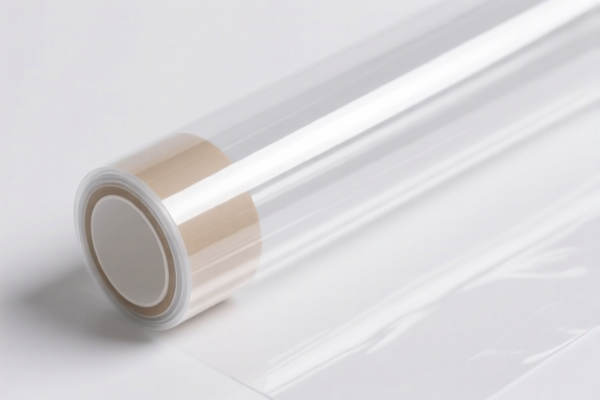
Product Images


AI Analysis
🎞️ Self-Adhesive Transparent Film (Plastic)
🌐 HS Code Reference & Customs Clearance Guide | 2026 Latest Tariff Analysis | Professional Entry Strategies
📌 I. Product Definition & Classification: Do You Really Understand "Self-Adhesive Transparent Film"?
Self-adhesive transparent films are versatile industrial and commercial materials made from plastic polymers (such as PET, PVC, OPP, or BOPP). They consist of a transparent plastic backing coated with an adhesive layer, designed to stick to various surfaces without the need for water, heat, or solvents.
In international trade, these films are typically categorized based on their substrate composition and primary intended use:
- Pure Plastic Self-Adhesive Sheets/Films: Made entirely of plastic materials, intended for general protective, decorative, or labeling purposes on packaging, displays, or non-paper substrates.
- Key Characteristic: The entire roll is plastic; no paper/cardboard backing.
- Adhesive Labels on Paper/Cardboard: Plastic adhesive film applied primarily to paper or cardboard substrates for labeling.
- Key Characteristic: The backing or primary structure involves paper/cardboard, even if the visible face is plastic.
⚠️ Key Distinction Point:
- If the product is a pure plastic roll with adhesive, intended for general surface covering → It is classified under Chapter 39 (Plastics).
- If the product is essentially a label where the substrate is paper/cardboard, even with a plastic face → It may fall under Chapter 48 (Paper/Cardboard).
📦 II. HS Code Classification Details (2026 Latest Tariff Authority Comparison)
| HS Code | Product Description | Applicable Scenario | Material Composition |
|---|---|---|---|
3919.10 |
Self-adhesive plates, sheets, film, foil, strip and other shapes of plastics | General protective/decorative film, plastic labeling rolls, pure plastic adhesive films | ✅ 100% Plastic (No paper backing) |
4823.90 |
Other articles of paper, paperboard, cardboard, moss and other vegetable materials | Labels/packaging where the base is paper/cardboard with plastic adhesive backing; composite paper-based labels | ✅ Paper/Cardboard Substrate with plastic adhesive |
🔍 Important Reminder:
-3919.10is for "Plastic Sheets/Films". If you buy a roll of clear plastic with glue on it, and it is not stuck to a paper label backing, it belongs here.
-4823.90is for "Paper/Cardboard Articles". If the item is a pre-cut label with a paper backing that you peel off, even if the label itself is clear plastic, customs often views this as a paper-based labeling product.
- Misclassification Risk: Declaring a pure plastic adhesive film as4823.90(paper-based) to seek lower duties can lead to severe penalties. Conversely, misdeclaring a paper-backed label as plastic can result in valuation errors.
💰 III. 2026 Latest Tariff Rate Details (Including Additional Taxes)
✅ Applicable Country: United States (US)
✅ Country of Origin: China (CN)
✅ Effective Date: From November 10, 2025 (including subsequent imports)
🎯 1. 3919.10 —— Self-adhesive Plastic Sheets/Films
| Item | Content |
|---|---|
| Base Tariff Rate | 0% (ad valorem) |
| USITC Additional Duty | +25% (from USITC Footnote 9903.88.01) |
| IEEPA Additional Duty | +10% (Against Chinese/HK products, effective from Nov 10, 2025) |
| Total Duty Rate | 35% |
| Tax Calculation | CIF Value × 35% |
| De Minimis Eligibility | ❌ Not Eligible (deny_de_minimis) |
| Legal Basis Path | IEEPA:9903.01.25 → IEEPA:9903.01.24 → USITC:3919.10 → FOOTNOTE:9903.88.01 |
📌 Explanation:
- The 25% USITC duty is part of the Section 301 tariffs on specific Chinese imports.
- The 10% IEEPA duty is an additional levy under the International Emergency Economic Powers Act.
- Total 35% is a significant cost driver. This category is heavily taxed due to the "plastic" classification originating from China.
🎯 2. 4823.90 —— Other Paper/Cardboard Articles (Adhesive Labels)
| Item | Content |
|---|---|
| Base Tariff Rate | 0% (ad valorem) |
| USITC Additional Duty | +25% (from USITC Footnote 9903.88.01) |
| IEEPA Additional Duty | +10% (Against Chinese/HK products, effective from Nov 10, 2025) |
| Total Duty Rate | 35% |
| Tax Calculation | CIF Value × 35% |
| De Minimis Eligibility | ❌ Not Eligible |
| Legal Basis Path | IEEPA:9901.25 → IEEPA:9903.01.24 → USITC:4823.90 → FOOTNOTE:9903.88.01 |
📌 Note:
- Although classified under Chapter 48, Chinese-origin paper-based adhesive products are still subject to the same Section 301 and IEEPA surcharges.
- The total effective rate is identical (35%) to the plastic version.
- Strategic Insight: Since the tax burden is the same, classification should strictly follow the material composition to avoid customs audits for misdeclaration.
🛠️ IV. Customs Clearance Practical Advice (Practical Pitfall Avoidance Guide)
✅ 1. Required Documentation Checklist (None Can Be Missing)
| Document | Must Provide | Explanation |
|---|---|---|
| ✅ Product Specification Sheet | ✔️ | Must clearly state material (e.g., "100% PET", "BOPP with PE adhesive") and whether a paper backing exists. |
| ✅ Physical Samples/Photos | ✔️ | Show the roll structure. If it's a sticker on a paper sheet, highlight the paper backing. If it's a pure film roll, show the plastic core. |
| ✅ Commercial Invoice | ✔️ | Description must be precise: "Self-Adhesive PET Film" vs. "Paper-Backed Adhesive Labels". |
| ✅ Packing List | ✔️ | Confirm net/gross weight and dimensions. Ensure no mixed containers with different HS codes without clear segregation. |
| ✅ Certificate of Origin (CO) | ✔️ | Critical for proving Chinese origin to apply correct additional duties or check for exemptions. |
| ✅ Third-Party Test Report | ✔️ | FDA compliance (if for food contact), REACH (for EU), or general safety tests. |
✅ 2. Declaration Tips (Key Mantra)
🔥 "Material Determines Code, Backing Defines Chapter, Name Must Be Precise!"
| Situation | Correct Declaration Method | Wrong Practice |
|---|---|---|
| Pure plastic adhesive film roll | 3919.10 |
Declare as "Labels" → Potential audit for misclassification |
| Stickers on paper backing | 4823.90 |
Declare as "Plastic Film" → Incorrect material assessment |
| Mixed shipment (Plastic film + Paper labels) | Split Declaration | Bundle under one HS Code → High risk of penalty |
| "Transparent Tape" (narrow strip) | May be 3919.10 or 3919.90 depending on width |
Confuse with "Tape for Packing" |
✅ 3. Special Case Handling
| Scenario | Handling Advice |
|---|---|
| Food-Grade Plastic Film | Ensure declaration includes "Food Contact Safe" and provide FDA migration test results. |
| OEM Custom Printed Labels | If printed on plastic, still 3919.10. If printed on paper, still 4823.90. Printing does not change HS. |
| Roll Core Material | Ensure the core is not declared as part of the product value if it's negligible cardboard/plastic. |
| Samples vs. Commercial Goods | Both are subject to the 35% total duty if from China. De Minimis ($800) does NOT apply to these HS codes from China. |
🌍 V. Global Market Comparison (2026 Latest)
| Country/Region | Recommended HS Code | Tariff (China Origin) | Certification Requirements | Notes |
|---|---|---|---|---|
| 🇺🇸 USA | 3919.10 / 4823.90 |
35% (Total) | FDA, Prop 65 | High duty due to Section 301 + IEEPA |
| 🇨🇳 China | 3919.10 / 4823.90 |
0% - 5% | CCC (if applicable) | No additional surcharges |
| 🇪🇺 EU | 3919.10 / 4823.90 |
0% - 6% | REACH, RoHS | No major retaliatory tariffs |
| 🇬🇧 UK | 3919.10 / 4823.90 |
0% - 6% | UKCA, REACH | Post-Brexit standards apply |
| 🇦🇺 Australia | 3919.10 / 4823.90 |
5% | AICIS (Chemicals) | Moderate duty |
📌 Conclusion:
- The USA remains the most expensive market due to the叠加 (stacked) duties of Section 301 and IEEPA.
- EU/UK/Australia have significantly lower barriers, making them more attractive for Chinese-manufactured adhesive films if supply chain flexibility allows.
- Cost Saving Strategy: Consider sourcing non-China origins (e.g., Vietnam, Thailand) for US-bound goods to potentially avoid IEEPA/Section 301 tariffs, provided substantial transformation rules are met.
📌 VI. Common Errors & Pitfall Guide (Blood & Tears Lessons)
❌ Mistake 1: Declaring "Plastic Adhesive Film" as "Packing Tape" under different HS codes to evade duties
👉 Consequence: Customs will detect the difference in width, application, and material. Fines + Back Duties!
❌ Mistake 2: Ignoring the "De Minimis" exclusion
👉 Consequence: Shipping small samples via postal mail under $800. Since 3919.10 and 4823.90 from China are not eligible for de minimis, shipments will be seized or taxed upon arrival.
❌ Mistake 3: Vague Description: "Stickers"
👉 Consequence: CBP (US Customs) may classify it as 4911 (Picture/Printed) or 4823 incorrectly, leading to classification audits. Always specify "Self-Adhesive Plastic Film" or "Paper-Backed Adhesive Labels".
❌ Mistake 4: Assuming all "Transparent Film" is the same
👉 Consequence: If the film is not self-adhesive (e.g., shrink wrap), it falls under 3920 or 3921, which has different duty rates. Misclassification leads to incorrect duty payment.
✅ Correct Practice:
"Self-Adhesive PET Transparent Film, 50 Microns Thick, For Industrial Labeling, 100% Plastic, Non-Food Grade, Model: AF-2026"
🎯 VII. Conclusion: Precision in Classification, Efficiency in Clearance
🎯 Remember the Mantra:
🔹 "Plastic Roll = 3919.10 (35% Total)"
🔹 "Paper Backing = 4823.90 (35% Total)"
🔹 "No De Minimis for China"
🔹 "Check the Substrate!"
📌 Pro Tip:
If you are importing large volumes to the USA, calculate the total landed cost including the 35% duty.
Consider Advance Rulings from CBP if the product structure is ambiguous (e.g., hybrid materials).
For non-US markets, focus on REACH/RoHS compliance rather than duty avoidance.
📣 Immediate Action:
📞 Contact a professional customs broker
📸 Provide high-res photos of the roll end (to see layers) and backing material
🚀 Ensure your commercial invoice reflects the exact material composition to avoid delays!
✨ Professional Classification Starts with Accuracy!
💼 Every Percent Saved is Profit Gained!
Customer Reviews
About HS Code Classification
The Harmonized System (HS) is an internationally standardized nomenclature developed by the World Customs Organization (WCO) to classify traded products. Over 200 countries use the HS system as the basis for customs tariffs, trade statistics, and import/export regulations.
Each HS code follows a hierarchical structure:
- Chapter (2 digits) — Broad category of goods (e.g., Chapter 84: Machinery and Mechanical Appliances)
- Heading (4 digits) — More specific grouping within the chapter
- Subheading (6 digits) — Internationally standardized breakdown, used by all WCO member countries
- National subdivisions (8-10 digits) — Country-specific extensions for further classification, such as US HTSUS 10-digit codes
Correct HS code classification is essential for smooth customs clearance, accurate duty payment, and compliance with trade regulations. Misclassification can lead to customs delays, overpayment of duties, or penalties.
When importing from CN to US, the applicable tariff rates may include:
- Most-Favored-Nation (MFN) rate — The standard duty rate applied to WTO members
- General rate — Applied to countries without trade agreements
- Trade remedy duties — Additional tariffs such as Section 301 (anti-dumping), Section 232 (national security), or countervailing duties
The information provided on this page is for reference purposes only. For official classification, please consult with your local customs authority or a licensed customs broker.