Self adhesive Transparent Label
CN → US| HS Code | Tariff Rate | Origin | Destination | Doc |
|---|---|---|---|---|
| 4821902000 | 35.0% | CN | US | Official Doc |
| 3919905060 | 40.8% | CN | US | Official Doc |
| 3919102055 | 40.8% | CN | US | Official Doc |
| 4821102000 | 35.0% | CN | US | Official Doc |
| 3926909989 | 22.8% | CN | US | Official Doc |
Product Images
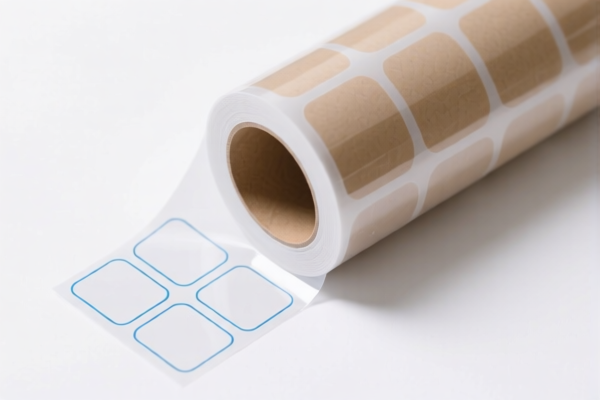
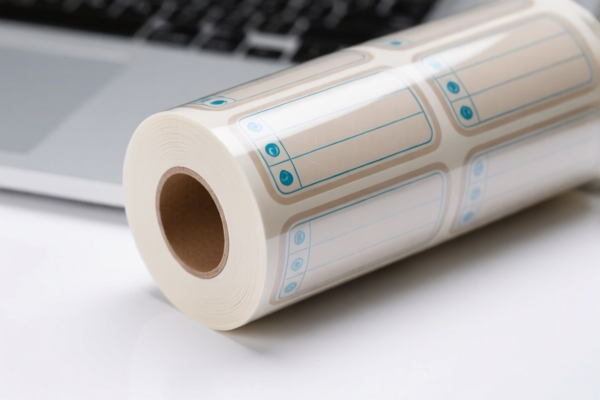
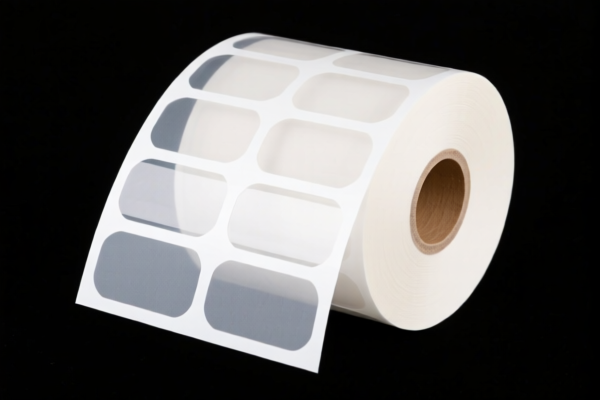
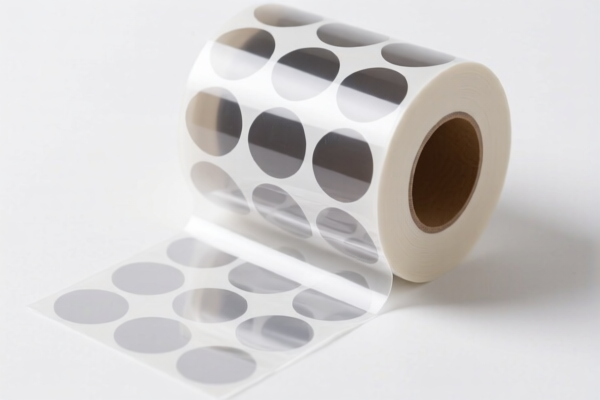
AI Analysis
🏷️ Self-Adhesive Transparent Label
🌐 HS Code Reference & Customs Clearance Guide | 2026 Latest Tariff Analysis | Professional-Level Clearance Strategy
📌 1. Product Definition & Classification: Do You Really Understand “Self-Adhesive Transparent Label”?
A self-adhesive transparent label is a tagging material composed of a label face stock (substrate), a pressure-sensitive adhesive, and a release liner. It is primarily used for product identification, packaging, and marketing. In international trade, its classification depends heavily on material composition (paper vs. plastic/composite) and physical form (sheet, film, strip, etc.).
⚠️ Key Distinction Point:
- If made of paper/cardboard → Classified under Heading 4821 (Paper labels).
- If made of plastic (single or composite) → Classified under Heading 3919 (Plastic sheets/films) or 3926 (Other plastic articles).
- "Transparent" alone does not dictate the HS code; the base material is the deciding factor.
📦 2. HS Code Classification Details (2026 Latest Tariff Authority Comparison)
| HS Code | Product Description | Application Scenario | Material Type |
|---|---|---|---|
4821.90.20.00 |
Self-adhesive labels, paper/cardboard material, meeting self-adhesive characteristics | Paper-based transparent labels, thermal paper labels | ✅ Paper/Cardboard |
3919.90.50.60 |
Self-adhesive labels, plastic material, sheet/film/flat shape | Plastic film transparent labels, PVC/PE/PP film labels | ✅ Plastic (Sheet/Film) |
3919.10.20.55 |
Self-adhesive labels, plastic material, flat shape (sheets, strips, etc.) | Plastic adhesive tapes or flat plastic label strips | ✅ Plastic (Strip/Flat) |
4821.10.20.00 |
Self-adhesive labels, paper material, meeting label category | Standard paper adhesive labels, even if clear-coated | ✅ Paper |
3926.90.99.89 |
Self-adhesive labels, plastic or composite material, classified as other articles | Composite materials (e.g., PET/aluminum/paper), non-standard plastic labels | ✅ Plastic/Composite |
🔍 Key Reminder:
- “Transparent” usually implies a plastic substrate (like PET, BOPP, or PVC) or a coated paper. If it’s purely plastic film with adhesive, it falls under 3919 or 3926.
- If it’s paper-based but clear (via coating or thinness), it falls under 4821.
- Composite materials (e.g., PET backing with paper face) often default to 3926.90.99.89 unless specifically classified as plastic films.
💰 3. 2026 Latest Tariff Rate Breakdown (Including Additional Duties & Policy Surcharges)
✅ Applicable Country: United States (US)
✅ Origin: China (CN)
✅ Effective Date: Post-November 10, 2025 (includes subsequent imports)
🎯 1. 4821.90.20.00 & 4821.10.20.00 —— Paper-Based Self-Adhesive Labels
| Item | Content |
|---|---|
| Basic Tariff | 0% (ad valorem) |
| USITC Additional Duty | +25% (under USITC Footnote 9903.88.01, Section 301) |
| IEEPA Additional Duty | +10% (against Chinese/HK products, effective Nov 10, 2025) |
| Total Tariff | 35.0% |
| Tax Calculation | CIF Value × 35% |
| De Minimis Exemption? | ❌ No (deny_de_minimis) |
| Legal Basis Path | IEEPA:9903.01.25 → IEEPA:9903.01.24 → USITC:4821.xxxx → FOOTNOTE:9903.88.01 |
📌 Explanation:
- Even though paper labels have a 0% base tariff, they are heavily impacted by trade policies.
- The 25% Section 301 duty and 10% IEEPA duty apply, resulting in a total effective rate of 35%.
- This is a high-cost category for Chinese-origin paper labels.
🎯 2. 3919.90.50.60 & 3919.10.20.55 —— Plastic-Based Self-Adhesive Labels (Sheet/Film/Strip)
| Item | Content |
|---|---|
| Basic Tariff | 5.8% (ad valorem) |
| USITC Additional Duty | +25% |
| IEEPA Additional Duty | +10% |
| Total Tariff | 40.8% |
| Tax Calculation | CIF Value × 40.8% |
| De Minimis Exemption? | ❌ No (deny_de_minimis) |
| Legal Basis Path | IEEPA:9903.01.25 → IEEPA:9903.01.24 → USITC:3919.xxxx → FOOTNOTE:9903.88.01 |
📌 Note:
- Plastic film labels carry a 5.8% base duty, which is higher than paper.
- Adding 25% + 10% results in a total of 40.8%, making this the most expensive category.
- Applies to PVC, PET, BOPP, and PE film labels.
🎯 3. 3926.90.99.89 —— Plastic/Composite Self-Adhesive Labels (Other Articles)
| Item | Content |
|---|---|
| Basic Tariff | 5.3% (ad valorem) |
| USITC Additional Duty | +7.5% (Note: Lower than 25% for certain composite categories) |
| IEEPA Additional Duty | +10% |
| Total Tariff | 22.8% |
| Tax Calculation | CIF Value × 22.8% |
| De Minimis Exemption? | ❌ No (deny_de_minimis) |
| Legal Basis Path | IEEPA:9903.01.25 → IEEPA:9903.01.24 → USITC:3926.90.99.89 → FOOTNOTE:7.5% |
📌 Critical Insight:
- This is the most cost-effective option for plastic/composite labels.
- If your label is made of composite materials (e.g., PET+Paper+Adhesive) or doesn’t fit neatly into 3919, it may qualify for this lower 22.8% rate.
- Strategy: If possible, structure product design or supplier classification to fit under 3926.90.99.89 to save ~18% in duties compared to plastic film labels.
🛠️ 4. Customs Clearance Practical Advice (Battle-Tested Pitfall Avoidance)
✅ 1. Required Documentation Checklist (Must-Have)
| Document | Required | Description |
|---|---|---|
| ✅ Product Specification Sheet | ✔️ | Detail material (PET/PVC/Paper), adhesive type, transparency, dimensions |
| ✅ Material Composition Statement | ✔️ | Clearly state % of plastic vs. paper vs. composite |
| ✅ Product Photos (Clear View) | ✔️ | Show label, adhesive side, and release liner |
| ✅ Commercial Invoice | ✔️ | Must specify “Self-Adhesive Label” and origin “China” |
| ✅ Packing List | ✔️ | Include gross/net weight, dimensions, number of rolls/sheets |
| ✅ Certificate of Origin (CO) | ✔️ | Confirm China origin for accurate tariff application |
✅ 2. Declaration Strategy (Key Mantra)
🔥 “Material First, Form Second, Don’t Split, Declare Whole!”
| Scenario | Correct Declaration | Wrong Practice |
|---|---|---|
| Plastic Film Label | 3919.90.50.60 or 3919.10.20.55 |
Misdeclare as paper → Risk of audit & penalty |
| Paper Label | 4821.90.20.00 or 4821.10.20.00 |
Misdeclare as plastic → Unnecessary 5.8% base duty |
| Composite Label | 3926.90.99.89 |
Force into 3919 → Higher 40.8% rate |
| Rolls vs. Sheets | Declare as “labels” | Declare as “tape” or “film” without context → Confusion |
📌 Tip:
- Always specify “Self-Adhesive” in the description.
- If using composite materials (e.g., PET-backed paper), argue for 3926.90.99.89 to benefit from the 22.8% rate.
✅ 3. Special Case Handling
| Situation | Recommendation |
|---|---|
| OEM Custom Labels | Provide design files + material specs to justify HS code |
| Clear Plastic Labels (PET/BOPP) | Default to 3919 unless composite |
| Paper Labels with Clear Coating | Classify as 4821 (paper) |
| Mixed Orders (Paper + Plastic) | Declare separately by HS code |
| Small Quantity (De Minimis) | ❌ Not eligible due to IEEPA/301 restrictions |
🌍 5. Global Market Comparison (2026 Latest)
| Country/Region | Recommended HS Code | Tariff (China Origin) | Certification | Notes |
|---|---|---|---|---|
| 🇺🇸 USA | 3926.90.99.89 (Optimal) |
22.8% | No specific | 40.8% for plastic, 35% for paper |
| 🇨🇳 China | 4821 / 3919 |
5-10% | CCC (if applicable) | No additional duties |
| 🇪🇺 EU | 4821 / 3919 |
0-6.5% | REACH | No additional duties |
| 🇬🇧 UK | 4821 / 3919 |
0-6.5% | UKCA | Post-Brexit rules apply |
| 🇦🇺 Australia | 4821 / 3919 |
5% | ACCC | No additional duties |
📌 Conclusion:
- USA is the only major market with significant additional tariffs on Chinese goods.
- Optimizing HS code classification (e.g., using 3926 for composites) can save ~18% in duties.
- For other markets, standard MFN rates apply with no surcharges.
📌 6. Common Mistakes & Pitfall Guide (Lessons Learned)
❌ Mistake 1: Declaring plastic labels as paper to avoid 5.8% base duty
👉 Result: Customs audit → Back taxes + penalties + delay!
❌ Mistake 2: Splitting “label rolls” into “adhesive” + “film”
👉 Result: Each item taxed separately → Total duty > 50%!
❌ Mistake 3: Ignoring IEEPA 10% surcharge in cost calculation
👉 Result: Margin erosion → Unexpected loss!
❌ Mistake 4: Using generic “Label” without material specification
👉 Result: Customs ambiguity → Possible reclassification to higher duty rate!
✅ Correct Approach:
“Self-Adhesive Clear Label, PET Material, Roll, 100mm x 50mm, 500 pcs/roll, Model XYZ, China Origin”
🎯 7. Conclusion: Precise Classification, Lower Costs, Smooth Clearance!
🎯 Remember the Mantra:
🔹 “Paper is 35%, Plastic Film is 40.8%, Composite is 22.8%!”
🔹 “HS Code saves money, misclassification costs time!”
🔹 “Transparent doesn’t mean cheap – check the material!”
📌 Pro Tip:
If your labels are made of composite materials (e.g., PET film + paper face), consult a customs broker to classify under 3926.90.99.89 for the 22.8% rate.
For pure plastic films, expect 40.8%.
For paper-based, expect 35%.📞 Immediate Action:
📋 Provide material composition + product photos to your customs broker.
📝 Request an Advance Ruling if volume is high.
🚀 Optimize your supply chain to leverage the 22.8% composite rate where possible.
✨ Professional Clearance Starts with Accurate Classification!
💼 Every Cent Saved is Profit Earned!
Customer Reviews
About HS Code Classification
The Harmonized System (HS) is an internationally standardized nomenclature developed by the World Customs Organization (WCO) to classify traded products. Over 200 countries use the HS system as the basis for customs tariffs, trade statistics, and import/export regulations.
Each HS code follows a hierarchical structure:
- Chapter (2 digits) — Broad category of goods (e.g., Chapter 84: Machinery and Mechanical Appliances)
- Heading (4 digits) — More specific grouping within the chapter
- Subheading (6 digits) — Internationally standardized breakdown, used by all WCO member countries
- National subdivisions (8-10 digits) — Country-specific extensions for further classification, such as US HTSUS 10-digit codes
Correct HS code classification is essential for smooth customs clearance, accurate duty payment, and compliance with trade regulations. Misclassification can lead to customs delays, overpayment of duties, or penalties.
When importing from CN to US, the applicable tariff rates may include:
- Most-Favored-Nation (MFN) rate — The standard duty rate applied to WTO members
- General rate — Applied to countries without trade agreements
- Trade remedy duties — Additional tariffs such as Section 301 (anti-dumping), Section 232 (national security), or countervailing duties
The information provided on this page is for reference purposes only. For official classification, please consult with your local customs authority or a licensed customs broker.