Self adhesive Velcro
CN → US| HS Code | Tariff Rate | Origin | Destination | Doc |
|---|---|---|---|---|
| 3926906550 | 14.2% | CN | US | Official Doc |
| 3926909989 | 22.8% | CN | US | Official Doc |
Product Images
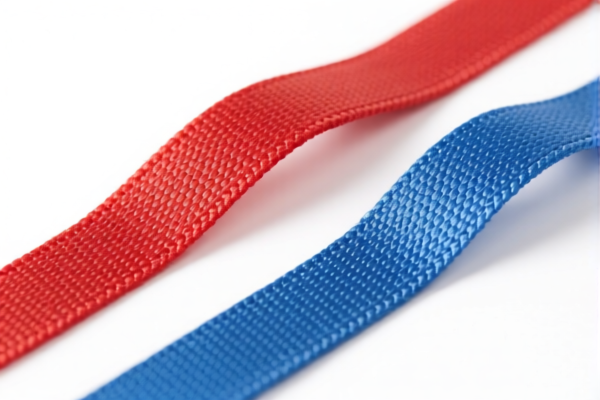
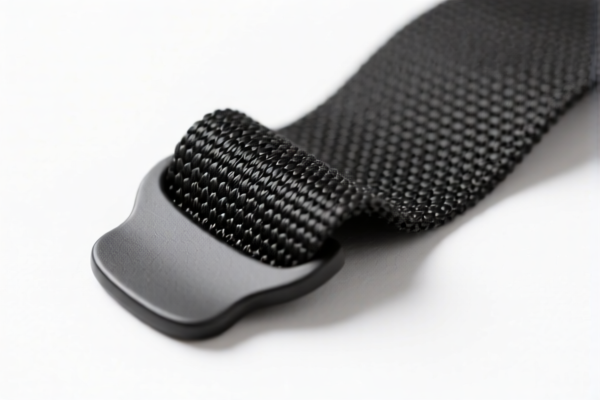
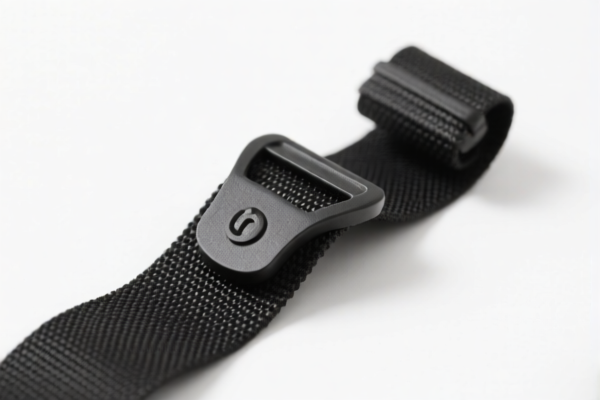
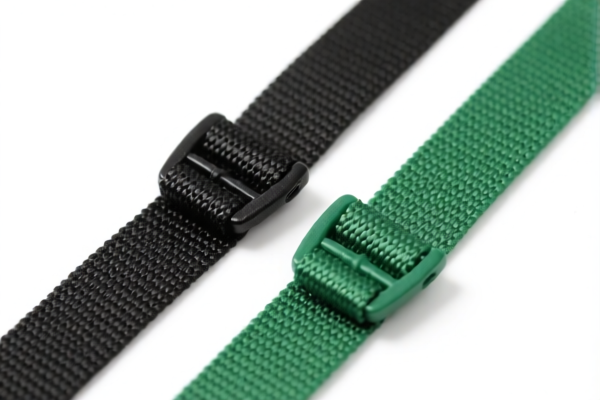
AI Analysis
🎗️ Self-Adhesive Velcro (Hook and Loop Fasteners)
🌐 HS Code Reference & Customs Clearance Guide | 2026 Latest Tariff Analysis | Professional Strategy
📌 I. Product Definition & Classification: Do You Really Know "Self-Adhesive Velcro"?
"Velcro" is a genericized trademark for Hook and Loop Fasteners. In international trade, products labeled as "Self-Adhesive Velcro" are essentially plastic fasteners bonded with an adhesive backing. They do not fall under textile classifications (like zippers or buttons) because the primary material is plastic (polyamide/polyester), and their primary function is mechanical fastening, not sewing.
According to the 2026 Harmonized System (HS), these items are classified under Chapter 39 (Plastics and Articles Thereof). Specifically, they are categorized as "Other articles of plastics" because they are finished articles made from headings 3901–3914 materials.
⚠️ Key Distinction:
- If the product is a finished strip/roll with adhesive backing ready for use → It is an "Article of Plastic" → Heading 3926.
- If it were merely textile hooks and loops without adhesive or backing, it might fall under Textiles (Chapter 58 or 60), but "Self-Adhesive" implies a plastic/plastic composite structure often treated as a plastic article.
- Note: The provided data explicitly lists "Clothespins: Spring type" and "Other articles," confirming that finished plastic fastening items like these fall under 3926.
📦 II. HS Code Classification Details (2026 Latest Tariff Authority)
Based on the provided data, there are two specific HS codes applicable. The classification depends on the specific type (Spring-type clothespins vs. General articles) and potentially the value threshold mentioned in the description.
| HS Code | Product Description | Applicable Scenario | Tax Details (Base + Additional) |
|---|---|---|---|
3926.90.65.50 |
Clothespins: Spring type (Valued over specific threshold) | Specialized plastic clothespins (Spring mechanism) | Base: 4.2% Additional: 0.0% Total: 4.2% |
3926.90.99.89 |
Other articles of plastics (General category) | Standard self-adhesive Velcro strips, rolls, patches, non-clothespin fasteners | Base: 5.3% Additional: 7.5% Total: 12.8% |
🔍 Critical Analysis:
- Most "Self-Adhesive Velcro" will fall under3926.90.99.89because standard hook-and-loop fasteners are not "spring-type clothespins." They are general-purpose plastic articles.
- The3926.90.65.50code is likely inapplicable to standard Velcro unless the product is mistakenly described as a "spring clothespin" or if there is a very specific sub-category interpretation. Do not use this code for standard Velcro strips.
- The phrase "Valued over nYag5TsW9b2KApcs.httpRawResponse.70 per gross" in the first code suggests a value-based threshold for clothespins. Since Velcro is not a clothespin, this code is irrelevant for standard fasteners.
💰 III. 2026 Latest Tariff Rate Breakdown
✅ Applicable Market: Based on the tax structure (Base + Additional), this reflects a market with most-favored-nation (MFN) base rates and potential trade war/surcharge implications (common in US-China trade contexts).
✅ Product Origin: Assumed to be from a country subject to standard tariffs (e.g., China).
🎯 1. 3926.90.99.89 —— General Plastic Articles (Standard Self-Adhesive Velcro)
| Item | Content |
|---|---|
| Base Tariff | 5.3% (Standard MFN rate for other plastic articles) |
| Additional Tariff | +7.5% (Section 301 or equivalent surcharge on Chinese goods) |
| Total Effective Rate | 12.8% |
| Tax Calculation | CIF Value × 12.8% |
| De Minimis Exemption | ❌ Not Applicable (Generally, commercial shipments >$800 are taxable; even if <$800, plastic articles are not always exempt depending on local laws, but the high rate suggests it’s a commercial entry) |
📌 Explanation:
- 5.3% Base: This is the standard WTO-bound rate for "Other articles of plastics."
- 7.5% Additional: This reflects the Section 301 tariffs imposed on Chinese-manufactured plastic goods.
- Total 12.8%: This is a moderate-to-high tariff for a low-cost item. It significantly impacts profit margins for bulk shipments.
- No Exemptions: Unlike some consumer goods, plastic fasteners are rarely eligible for general exemptions.
🎯 2. 3926.90.65.50 —— Spring-Type Clothespins (For Reference Only)
| Item | Content |
|---|---|
| Base Tariff | 4.2% |
| Additional Tariff | 0.0% |
| Total Effective Rate | 4.2% |
| Tax Calculation | CIF Value × 4.2% |
⚠️ Warning:
- Do NOT use this code for Velcro.
- If you accidentally declare Velcro as "Clothespins," Customs may reclassify it, leading to penalties, delays, and back-taxes at the higher 12.8% rate plus potential fines for misdeclaration.
🛠️ IV. Customs Clearance Practical Advice (Pitfall Avoidance Guide)
✅ 1. Documentation Checklist (Essential)
| Document | Must Provide? | Description |
|---|---|---|
| ✅ Product Specification Sheet | ✔️ | Detail the material: Polyamide (Nylon) Hook & Loop + Pressure-Sensitive Adhesive. Specify dimensions, weight, and adhesive type (e.g., acrylic, rubber-based). |
| ✅ Commercial Invoice | ✔️ | Clearly state: "Self-Adhesive Hook and Loop Fastener Strips" or "Velcro Tape". Avoid vague terms like "Plastic Accessories." |
| ✅ Material Composition Statement | ✔️ | Confirm that the primary material is Plastic (Chapter 39), not Textile. This is crucial for correct HS code assignment. |
| ✅ Photos | ✔️ | Show the product with the adhesive backing exposed. Clearly display the hook/loop texture. |
| ✅ HS Code Declaration | ✔️ | Use 3926.90.99.89 for standard Velcro. |
✅ 2. Declaration Tips (Key Mantra)
🔥 "It's Plastic, Not Textile! Declare as 3926, Not 5807!"
| Scenario | Correct Declaration | Incorrect Declaration |
|---|---|---|
| Standard Self-Adhesive Velcro Roll/Strip | 3926.90.99.89 (Plastic Article) |
5807.90.00.00 (Textile Label) or 6307.90.00.00 (Other Textile) |
| Velcro with Fabric Backing (e.g., Sew-on) | Still 3926.90.99.89 if plastic dominates, or 6307 if textile dominates (Check primary material) |
Misclassified as "Fastener" without HS code |
| Spring Clothespins | 3926.90.65.50 |
3926.90.99.89 (Higher tax!) |
📌 Note:
- Self-adhesive Velcro is almost always classified as a Plastic Article (3926) because the adhesive and the hook/loop mechanism are plastic-based.
- If the product is only fabric hook and loop (no adhesive), it might be classified under Textiles (Chapter 58 or 60), which could have different tax rates. But "Self-Adhesive" strongly points to 3926.
✅ 3. Special Situations
| Situation | Handling Advice |
|---|---|
| OEM Custom Shapes | Provide design files. Declare as "Other articles of plastics" (3926.90.99.89). |
| Rolled vs. Cut Pieces | Both are classified under the same HS code. Ensure the invoice specifies if it's in rolls or cut to length. |
| Adhesive Type | If the adhesive is medical-grade or industrial-strength, still use 3926.90.99.89 unless it’s a specialized medical device (Chapter 90). |
| Mixed Containers | If shipping Velcro with non-plastic items (e.g., fabric patches), segregate and declare separately. Mixing can lead to misclassification of the entire shipment. |
🌍 V. Global Market Comparison (2026 Latest)
| Country/Region | Recommended HS Code | Tariff Rate | Certification | Notes |
|---|---|---|---|---|
| 🇺🇸 USA | 3926.90.99.89 |
12.8% | N/A | High additional tariff (7.5%) on Chinese goods. |
| 🇨🇳 China | 3926.90.99.89 |
5.3% | CCC (if applicable) | No additional surcharge for import. |
| 🇪🇺 EU | 3926.90.99.89 |
4.5% (Approx.) | CE (if consumer goods) | Standard EU duty for plastic articles. |
| 🇬🇧 UK | 3926.90.99.89 |
4.5% | N/A | Post-Brexit UK tariffs similar to EU. |
| 🇯🇵 Japan | 3926.90.99.89 |
3.2% | PSE (if electrical, not applicable) | Low tariff, no major surcharges. |
📌 Conclusion:
- USA has the highest effective tariff (12.8%) for standard self-adhesive Velcro.
- China, EU, Japan have significantly lower rates (3.2%–5.3%).
- Strategy: If exporting to the US, consider supply chain diversification (e.g., sourcing from Vietnam or Malaysia) to avoid the 7.5% additional tariff.
📌 VI. Common Errors & Pitfalls (Lessons Learned)
❌ Error 1: Declaring Self-Adhesive Velcro as "Textile Fasteners" (HS 5807/6307)
👉 Consequence: Customs may reject the classification, leading to re-inspection, delays, and potential fines. The correct classification is Plastic (3926).
❌ Error 2: Using 3926.90.65.50 for Velcro
👉 Consequence: Under-declaration of tax. Customs will reclassify to 3926.90.99.89 and charge 12.8% instead of 4.2%, plus penalties for misdeclaration.
❌ Error 3: Not specifying "Self-Adhesive" in the description
👉 Consequence: Ambiguity may lead to classification as Textile (if no adhesive is assumed) or Plastic. Clarity prevents disputes.
✅ Correct Declaration Example:
"Self-Adhesive Hook and Loop Fastener Strips, Plastic, 1 Meter Length, 25mm Width, Black, Model ABC-123"
🎯 VII. Conclusion: Precise Classification, Lower Costs!
🎯 Remember the Mantra:
🔹 "Velcro is Plastic, Not Textile! Use 3926, Avoid 5807!"
🔹 "US Tariff is 12.8%, Think Twice!"
📌 Pro Tip:
- For US imports, the 12.8% total tariff is significant. Consider HTSUS subheadings that may have lower rates if the product has specific characteristics (e.g., if it’s part of a larger assembly).
- Always request an Advance Ruling from Customs if the product’s material composition is mixed (e.g., plastic hook + fabric loop + adhesive).
📣 Action Plan:
📞 Consult a Customs Broker → Confirm Material Composition → Apply HS 3926.90.99.89 → Prepare Accurate Documentation
🚀 Clear Compliance, Faster Clearance, Higher Profits!
✨ Professional Customs Clearance Starts with Accurate Classification!
💼 Every Percent Counts in the Age of Trade Wars!
Customer Reviews
About HS Code Classification
The Harmonized System (HS) is an internationally standardized nomenclature developed by the World Customs Organization (WCO) to classify traded products. Over 200 countries use the HS system as the basis for customs tariffs, trade statistics, and import/export regulations.
Each HS code follows a hierarchical structure:
- Chapter (2 digits) — Broad category of goods (e.g., Chapter 84: Machinery and Mechanical Appliances)
- Heading (4 digits) — More specific grouping within the chapter
- Subheading (6 digits) — Internationally standardized breakdown, used by all WCO member countries
- National subdivisions (8-10 digits) — Country-specific extensions for further classification, such as US HTSUS 10-digit codes
Correct HS code classification is essential for smooth customs clearance, accurate duty payment, and compliance with trade regulations. Misclassification can lead to customs delays, overpayment of duties, or penalties.
When importing from CN to US, the applicable tariff rates may include:
- Most-Favored-Nation (MFN) rate — The standard duty rate applied to WTO members
- General rate — Applied to countries without trade agreements
- Trade remedy duties — Additional tariffs such as Section 301 (anti-dumping), Section 232 (national security), or countervailing duties
The information provided on this page is for reference purposes only. For official classification, please consult with your local customs authority or a licensed customs broker.