Self adhesive Warning Label
CN → US| HS Code | Tariff Rate | Origin | Destination | Doc |
|---|---|---|---|---|
| 3919102055 | 40.8% | CN | US | Official Doc |
| 3919101010 | 41.5% | CN | US | Official Doc |
| 4821102000 | 35.0% | CN | US | Official Doc |
| 3926909989 | 22.8% | CN | US | Official Doc |
| 3926100000 | 15.3% | CN | US | Official Doc |
Product Images
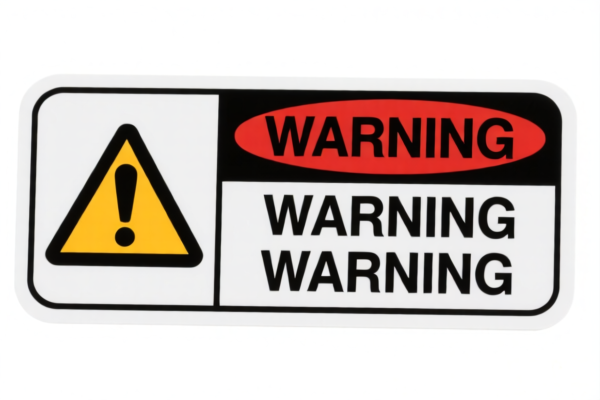
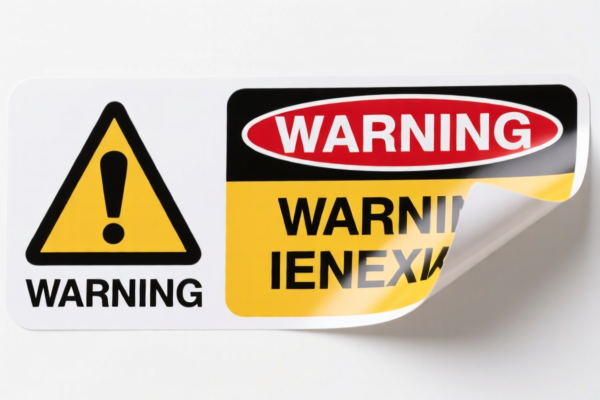

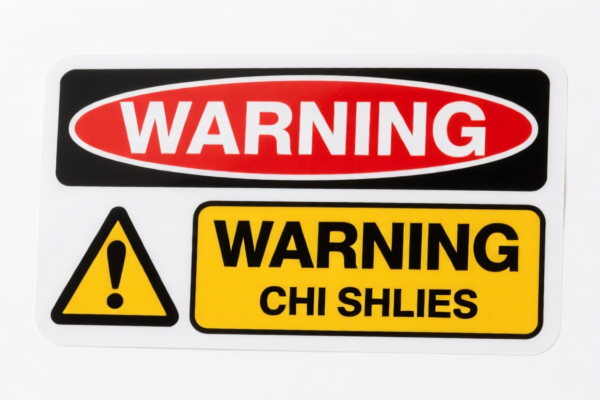
AI Analysis
🚨 Self-Adhesive Warning Labels (Hazmat & Safety Signage)
🌐 HS Code Reference & Customs Clearance Guide | 2026 Latest Tariff Analysis | Professional Entry Strategy
📌 I. Product Definition & Classification: What Exactly Are You Shipping?
Self-adhesive Warning Labels are critical safety components used in industrial, commercial, and residential settings to alert users of potential hazards (e.g., high voltage, biohazard, flammable materials). In international trade, the classification is highly sensitive to material composition and specific use case. Misclassification can lead to severe penalties due to differing tariff structures for plastics vs. paper and "office supplies" vs. "safety equipment."
⚠️ Critical Distinction:
- Paper Labels: Generally treated as general printing/office supplies.
- Plastic/Composite Labels: Often treated as plastic articles or other manufactured goods.
- Warning vs. General: Specific "warning" or "road marking" labels may attract stricter scrutiny and higher tariffs due to anti-dumping or Section 301 duties.
📦 II. HS Code Classification Matrix (2026 Authorized List)
Based on the provided data, here are the five authorized HS Codes for Self-Adhesive Warning Labels, categorized by material and application:
| HS Code | Product Description | Material | Key Characteristic | Tax Category |
|---|---|---|---|---|
| 3919.10.20.55 | Self-adhesive Warning Tape | Plastic | Flat, self-adhesive shape; specifically for warning purposes. | High Tax (Road/Warning specific) |
| 3919.10.10.10 | Self-adhesive Tape (Road Marking) | Plastic | For road marking and related signage; warning use. | High Tax (Road/Warning specific) |
| 4821.10.20.00 | Self-adhesive Label | Paper | Standard paper-based labels. | Moderate Tax (Paper Base) |
| 3926.90.99.89 | Self-adhesive Label | Plastic/Composite | "Other" plastic articles; general purpose plastic labels. | Lower Tax (General Plastic) |
| 3926.10.00.00 | Self-adhesive Label | Plastic/Adhesive | Used as Office or School Supplies. | Lowest Tax (Office Supply) |
🔍 Key Insight:
- Code3919applies to tapes used for warning or road marking. These carry the highest total tax (40.8% - 41.5%).
- Code3926.10applies to plastic labels classified as office/school supplies. This is the most tariff-efficient option (15.3%) if the label fits this usage description.
- Code4821is the only paper-based option, but carries a 35.0% rate due to Section 301 duties.
💰 III. 2026 Tariff Rate Breakdown (Including Surcharges)
✅ Applicable Country: United States (US)
✅ Origin: China (CN)
✅ Effective Date: Current rates apply (Section 301 & IEEPA)
🎯 1. 3919.10.20.55 – Self-Adhesive Warning Tape (Plastic)
For flat, self-adhesive warning tapes made of plastic.
| Item | Detail |
|---|---|
| Base Tariff | 5.8% |
| Section 301 Surcharge | +25.0% |
| IEEPA Section 122 Duty | +10.0% |
| Total Effective Rate | 40.8% |
| Tax Calculation | CIF Value × 40.8% |
| De Minimis Exemption | ❌ Denied (deny_de_minimis) |
| Legal Path | Section 301: 25% → IEEPA: 10% → HS: 3919.10.20.55 |
📌 Note: This code is for tapes used specifically for warning. It is not for general packaging. The high tax reflects its classification as a specialized warning product.
🎯 2. 3919.10.10.10 – Road Marking/Warning Tape (Plastic)
For self-adhesive tapes used in road marking and related signage.
| Item | Detail |
|---|---|
| Base Tariff | 6.5% |
| Section 301 Surcharge | +25.0% |
| IEEPA Section 122 Duty | +10.0% |
| Total Effective Rate | 41.5% |
| Tax Calculation | CIF Value × 41.5% |
| De Minimis Exemption | ❌ Denied (deny_de_minimis) |
| Legal Path | Section 301: 25% → IEEPA: 10% → HS: 3919.10.10.10 |
📌 Note: Slightly higher base tariff (6.5%) than the general warning tape. Applies strictly to road/traffic signage materials.
🎯 3. 4821.10.20.00 – Self-Adhesive Paper Label
For labels made primarily of paper.
| Item | Detail |
|---|---|
| Base Tariff | 0.0% |
| Section 301 Surcharge | +25.0% |
| IEEPA Section 122 Duty | +10.0% |
| Total Effective Rate | 35.0% |
| Tax Calculation | CIF Value × 35.0% |
| De Minimis Exemption | ❌ Denied (deny_de_minimis) |
| Legal Path | Section 301: 25% → IEEPA: 10% → HS: 4821.10.20.00 |
📌 Note: Although the base tariff is 0%, the 35% total is still significant due to surcharges. This is the best option only if the label is strictly paper-based.
🎯 4. 3926.90.99.89 – Other Plastic/Composite Labels
For self-adhesive labels made of plastic or composite materials, classified as "Other."
| Item | Detail |
|---|---|
| Base Tariff | 5.3% |
| Section 301 Surcharge | +7.5% |
| IEEPA Section 122 Duty | +10.0% |
| Total Effective Rate | 22.8% |
| Tax Calculation | CIF Value × 22.8% |
| De Minimis Exemption | ❌ Denied (deny_de_minimis) |
| Legal Path | Section 301: 7.5% → IEEPA: 10% → HS: 3926.90.99.89 |
📌 Note: Lower Section 301 duty (7.5% vs. 25%). This code is suitable for general-purpose plastic labels that do not fall under office supplies or warning tapes.
🎯 5. 3926.10.00.00 – Plastic Labels (Office/School Supplies)
For self-adhesive plastic labels used as office or school supplies.
| Item | Detail |
|---|---|
| Base Tariff | 5.3% |
| Section 301 Surcharge | 0.0% |
| IEEPA Section 122 Duty | +10.0% |
| Total Effective Rate | 15.3% |
| Tax Calculation | CIF Value × 15.3% |
| De Minimis Exemption | ❌ Denied (deny_de_minimis) |
| Legal Path | IEEPA: 10% → HS: 3926.10.00.00 |
📌 Strategic Advantage: This is the lowest tax rate (15.3%). It applies if the label is plastic and can be legitimately classified as an office/school supply (e.g., filing labels, name tags, document markers). No Section 301 surcharge.
🛠️ IV. Customs Clearance Practical Advice (Avoiding Pitfalls)
✅ 1. Documentation Checklist (Non-Negotiable)
| Document | Required | Purpose |
|---|---|---|
| ✅ Product Spec Sheet | ✔️ | Must specify material (Paper vs. Plastic vs. Composite) and adhesive type. |
| ✅ Label Samples/Photos | ✔️ | Clear view of the warning symbol/text and backing material. |
| ✅ Intended Use Statement | ✔️ | Crucial for determining if it’s "Office Supply" (15.3%) or "Warning Tape" (40.8%). |
| ✅ Commercial Invoice | ✔️ | Must match HS Code exactly (e.g., do not write "Tape" if it’s "Label"). |
| ✅ Packing List | ✔️ | Detail quantities and dimensions. |
| ✅ Certificate of Origin | ✔️ | Required for verifying US-China origin status. |
✅ 2. Declaration Strategy: How to Optimize Taxes
🔥 Golden Rule: "Material defines Base, Use defines Surcharge, Office Supplies save 7.5%!"
| Scenario | Recommended HS Code | Total Tax | Strategy |
|---|---|---|---|
| Plastic Label for Filing/Office Use | 3926.10.00.00 |
15.3% | BEST OPTION. Justify as "Office Supply." Avoid "Warning" in description if possible. |
| General Plastic/Composite Label | 3926.90.99.89 |
22.8% | Use if not strictly office supplies. Still has lower Section 301 (7.5%). |
| Paper Label | 4821.10.20.00 |
35.0% | Use only if material is 100% paper. High base tax but 0% base duty. |
| Warning Tape/Road Marking | 3919.10.xxxx |
40.8% - 41.5% | AVOID if possible. Only declare here if it is literally a tape for roads or hazard warnings. |
⚠️ Warning: Do not declare a "Warning Label" as "Office Supply" (
3926.10) if it is clearly marked with high-visibility hazard symbols (e.g., Skull & Crossbones, High Voltage). Customs may reclassify it, leading to back taxes and penalties.
✅ 3. Special Cases & Mitigation
| Situation | Advice |
|---|---|
| Mixed Materials | If the label has a plastic face but paper backing, check the "essential character." Usually, the face material dominates → 3926 series. |
| "Warning" Keywords | Avoid using the word "Warning" in the product name if it’s a general label. Use "Safety Identifier" or "Hazard Symbol Label" to potentially qualify for lower categories, but ensure compliance with OSHA/ANSI standards. |
| De Minimis (Section 321) | All listed HS codes deny de minimis exemption. Small shipments (< $800) will still be subject to these tariffs. Budget accordingly. |
| Pre-Ruling | For large volumes, request a Binding Ruling from US Customs to confirm if your specific label qualifies for 3926.10.00.00. |
🌍 V. Global Market Comparison (2026)
| Destination | Recommended HS Code | Est. Total Tax | Key Requirement |
|---|---|---|---|
| 🇺🇸 USA | 3926.10.00.00 |
15.3% | IEEPA 10% + Base 5.3%. Best for plastic office labels. |
| 🇺🇸 USA | 3919.10.20.55 |
40.8% | Highest tax. For warning tapes. |
| 🇪🇺 EU | Varies | ~0-6.5% | No Section 301/IEEPA. Check local VAT. |
| 🇨🇳 China | Varies | ~5-10% | Import duties apply. No anti-dumping on labels. |
📌 Conclusion for US Market:
The US market is cost-prohibitive for warning tapes (~41%) and moderately expensive for paper labels (35%). The only viable low-cost path for plastic labels is classifying them as Office/School Supplies (15.3%), provided the usage is appropriate.
📌 VI. Common Mistakes & Pitfalls (Learn from Others' Errors)
❌ Mistake 1: Calling a "High-Voltage Warning Label" an "Office Label"
👉 Result: Customs flags it for safety compliance (OSHA) and reclassifies it to 3919 or rejects it.
✅ Fix: If it’s a safety label, ensure it meets ANSI/ISO standards. If it’s a generic adhesive sheet, use 3926.10.
❌ Mistake 2: Using "Tape" for a Label
👉 Result: Misclassification. Tapes (3919) and Labels (3926) have different duty rates and regulations.
✅ Fix: Use the term "Label" or "Sticker" in descriptions, not "Tape," unless it is a roll of tape for marking.
❌ Mistake 3: Ignoring Section 122 IEEPA Duty
👉 Result: Budgeting only for the 301 tariff (25%) and being shocked by the extra 10%.
✅ Fix: Always calculate Total Tax = Base + 301 + 122.
❌ Mistake 4: Assuming De Minimis Applies
👉 Result: Small samples or low-value shipments held at customs because the HS codes listed deny de minimis.
✅ Fix: Treat all shipments as taxable. Plan for duty payment upfront.
🎯 VII. Conclusion: Smart Classification, Higher Margins
🎯 Key Takeaway:
🔹 Plastic Office Labels = 15.3% (Best)
🔹 Plastic General Labels = 22.8% (Good)
🔹 Paper Labels = 35.0% (Moderate)
🔹 Warning/Road Tapes = 40.8% - 41.5% (Avoid if possible)
📌 Pro Tip:
If your product is a plastic label but used for warning purposes, consult a customs broker to see if it can be classified under 3926.90.99.89 (22.8%) rather than 3919 (40.8%). The key is whether it is considered a "Tape" (3919) or an "Other Plastic Article" (3926).
📣 Immediate Action:
📞 Engage a Customs Broker to review your product’s physical form (roll vs. sheet) and intended use.
📄 Prepare a Detailed Product Description that highlights "Office/School Use" if aiming for the 15.3% rate.
🚀 Optimize Your Supply Chain by choosing the lowest valid HS code to protect your profit margins.
✨ Precision in Classification = Profit in Customs!
💼 Don’t let 25% in unexpected duties erase your margins.
Customer Reviews
About HS Code Classification
The Harmonized System (HS) is an internationally standardized nomenclature developed by the World Customs Organization (WCO) to classify traded products. Over 200 countries use the HS system as the basis for customs tariffs, trade statistics, and import/export regulations.
Each HS code follows a hierarchical structure:
- Chapter (2 digits) — Broad category of goods (e.g., Chapter 84: Machinery and Mechanical Appliances)
- Heading (4 digits) — More specific grouping within the chapter
- Subheading (6 digits) — Internationally standardized breakdown, used by all WCO member countries
- National subdivisions (8-10 digits) — Country-specific extensions for further classification, such as US HTSUS 10-digit codes
Correct HS code classification is essential for smooth customs clearance, accurate duty payment, and compliance with trade regulations. Misclassification can lead to customs delays, overpayment of duties, or penalties.
When importing from CN to US, the applicable tariff rates may include:
- Most-Favored-Nation (MFN) rate — The standard duty rate applied to WTO members
- General rate — Applied to countries without trade agreements
- Trade remedy duties — Additional tariffs such as Section 301 (anti-dumping), Section 232 (national security), or countervailing duties
The information provided on this page is for reference purposes only. For official classification, please consult with your local customs authority or a licensed customs broker.