Self adhesive plastic sheet rolls
CN → US| HS Code | Tariff Rate | Origin | Destination | Doc |
|---|---|---|---|---|
| 3919102055 | 40.8% | CN | US | Official Doc |
| 3919905040 | 40.8% | CN | US | Official Doc |
| 3921905050 | 39.8% | CN | US | Official Doc |
| 3921904090 | 39.2% | CN | US | Official Doc |
| 3920992000 | 39.2% | CN | US | Official Doc |
Product Images
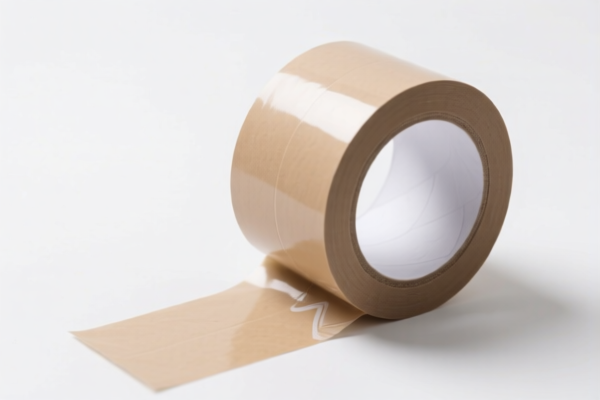
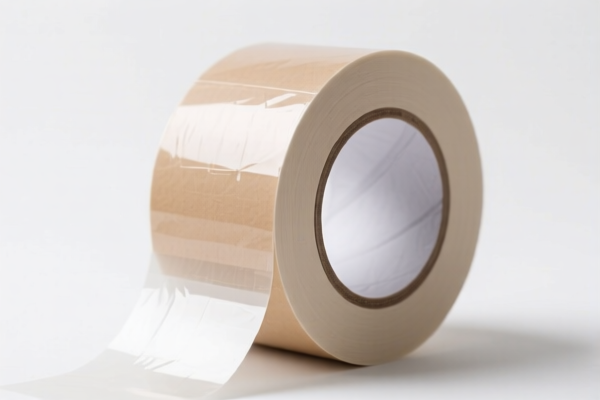
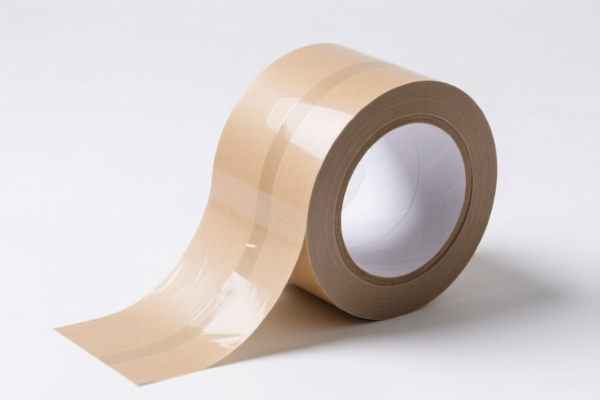
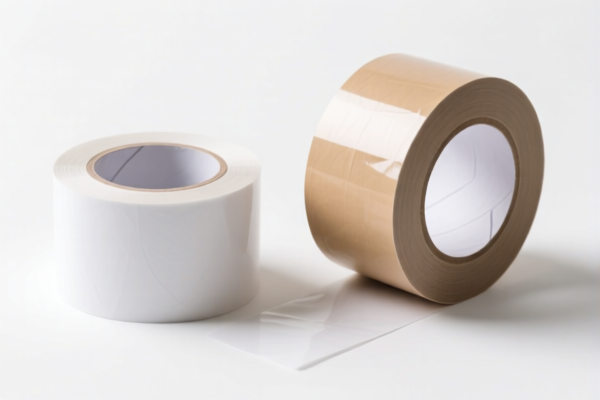
AI Analysis
🏗️ Self-Adhesive Plastic Sheet Rolls (Construction & Industrial Films)
🌐 HS Code Reference & Customs Clearance Guide | 2026 Latest Tariff Analysis | Professional Compliance Strategy
📌 Part 1: Product Definition & Classification: What Exactly Are You Importing?
Self-adhesive plastic sheet rolls are versatile industrial and construction materials. In international trade, they are primarily categorized based on their function (adhesive nature) and material composition (plastic polymers). The key distinction for customs purposes is whether the product is classified as a self-adhesive backing (Ch 39.19) or a plastic film/sheet (Ch 39.20/39.21).
1. Self-Adhesive Plastic Backings (HS 3919):
Defined by their ability to stick without additional glue application. This category includes building films, masking tapes, and protective wraps.
Key Feature: The adhesive is an integral part of the product.
2. Plastic Films & Sheets (HS 3920/3921):
Defined by their physical form (flexible, rolled) and material. If the product is a plastic film that can be used as a backing but lacks inherent self-adhesive properties in its primary classification context, it may fall here.
Key Feature: Focuses on the plastic matrix (PE, PVC, PET, etc.) and form factor (roll/film).
⚠️ Critical Distinction:
- If the product is explicitly marketed and structured as "Self-Adhesive" (e.g., tape, sticky film) → HS 3919 is the primary candidate.
- If the product is a pure plastic film/roll used for packaging or construction lining (without strong emphasis on self-adhesion as the primary function) → HS 3920 or 3921.
- Note: Many "plastic building films" that are self-adhesive may be scrutinized. If the adhesive is secondary, it might still fall under 3921, but if self-adhesion is the defining trait, 3919 is safer. However, specific subheadings like 3921.90.50.50 are often used for generic plastic films.
📦 Part 2: HS Code Classification Matrix (2026 Latest Tariff Alignment)
| HS Code | Product Description | Key Attributes | Total Tax Rate* |
|---|---|---|---|
3919.10.20.55 |
Self-adhesive plastic building film rolls | Material: Plastic; Form: Film/Coil; Type: Self-adhesive | 40.8% |
3919.90.50.40 |
Self-adhesive plastic items (e.g., transparent tape-like) | Material: Plastic; Form: Film/Coil; Similar to transparent tape | 40.8% |
3921.90.50.50 |
Plastic films (not self-adhesive or generic plastic film) | Material: Plastic; Form: Film/Coil; General plastic film definition | 39.8% |
3921.90.40.90 |
Plastic plates, sheets, film (other) | Material: Plastic; Form: Film/Coil; General plastic film | 39.2% |
3920.99.20.00 |
Other plastic plates, sheets, film, strip, and band | Material: Plastic; Form: Flexible film/roll | 39.2% |
Note: Rates include Base Tariff, Section 301 Additional Tariff (25%), and Section 122 Tariff (10% for China origin, applicable as per current trade restrictions).
💰 Part 3: Detailed Tariff Breakdown (China Origin → US Market)
✅ Applicable Country: United States (US)
✅ Country of Origin: China (CN)
✅ Effective Date: Current trade policies (Section 301 & 122)
🎯 1. 3919.10.20.55 & 3919.90.50.40 — Self-Adhesive Plastic Products
These codes apply to products where self-adhesion is the primary functional characteristic.
| Component | Rate | Source/Justification |
|---|---|---|
| Base Tariff | 5.8% | General Most-Favored-Nation (MFN) rate for plastic self-adhesive films/tapes |
| Section 301 Tariff | 25.0% | Added tariff on Chinese imports of plastics and plastic articles |
| Section 122 Tariff | 10.0% | Additional tariff on specific Chinese plastic products (if applicable under current enforcement) |
| Total Weighted Rate | 40.8% | Calculated as: Base + 301 + 122 (applied cumulatively on CIF value) |
📌 Explanation:
- The 25% Section 301 tariff is the dominant cost driver. It applies to all plastic self-adhesive products from China.
- The 10% Section 122 tariff further increases the burden on specific plastic categories.
- Result: A 40.8% total duty rate makes these products significantly less competitive unless priced accordingly.
🎯 2. 3921.90.50.50 — Plastic Films (Non-Self-Adhesive or Generic)
If the product is classified as a plastic film rather than a self-adhesive item (e.g., standard construction vapor barrier without adhesive backing):
| Component | Rate | Source/Justification |
|---|---|---|
| Base Tariff | 4.8% | MFN rate for other plastic films/sheets |
| Section 301 Tariff | 25.0% | Applied to Chinese plastic films |
| Section 122 Tariff | 10.0% | Applied to specific Chinese plastic products |
| Total Weighted Rate | 39.8% | Base + 301 + 122 |
🎯 3. 3921.90.40.90 & 3920.99.20.00 — Other Plastic Films/Strips
These codes are used for non-self-adhesive plastic rolls, such as generic packaging films or industrial plastic sheets.
| Component | Rate | Source/Justification |
|---|---|---|
| Base Tariff | 4.2% | MFN rate for other plastic plates, sheets, films |
| Section 301 Tariff | 25.0% | Applied to Chinese plastic films |
| Section 122 Tariff | 10.0% | Applied to specific Chinese plastic products |
| Total Weighted Rate | 39.2% | Base + 301 + 122 |
📌 Cost Saving Tip:
- Classifying as a non-adhesive plastic film (HS 3921.90.40.90 or 3920.99.20.00) saves 1.6% compared to self-adhesive classifications.
- However, misclassification is high-risk. If the product is clearly self-adhesive, customs may reclassify it to 3919, leading to penalties and back-taxes.
🛠️ Part 4: Customs Clearance Practical Advice
✅ 1. Documentation Checklist (Must-Haves)
| Document | Required? | Purpose |
|---|---|---|
| Commercial Invoice | ✅ Yes | Must clearly state "Self-Adhesive Plastic Film" or "Plastic Sheet Roll" depending on HS code. |
| Product Specification Sheet | ✅ Yes | Detail material composition (e.g., PE, PVC, PP), thickness, width, length, and adhesive type. |
| HS Code Determination Letter | ✅ Recommended | Pre-approval from customs or legal counsel to justify HS code choice. |
| Country of Origin Certificate | ✅ Yes | Confirms China origin for Section 301/122 application. |
| Photos of Product | ✅ Yes | Show the product with adhesive backing visible (if applicable) to support 3919 classification. |
✅ 2. Classification Strategy & Risk Mitigation
| Scenario | Recommended HS Code | Risk Level | Action |
|---|---|---|---|
| Product is clearly self-adhesive tape/film | 3919.10.20.55 or 3919.90.50.40 |
Low | Declare accurately. Budget for 40.8% tax. |
| Product is plastic film with weak adhesive or adhesive on only one side for specific use | 3921.90.50.50 |
Medium | Provide technical docs proving it’s primarily a "plastic film." |
| Product is non-adhesive plastic roll | 3921.90.40.90 or 3920.99.20.00 |
Low | Ensure no adhesive residue or properties are present. |
| Unclear if self-adhesive | Consult Expert | High | Misclassification can lead to 10% penalty + back taxes. |
🔥 Pro Tip:
- Avoid "De Minimis": These goods do not qualify for de minimis exemption under current rules. All duties apply to the full CIF value.
- Labeling: Clearly label packages as "Self-Adhesive Plastic Film" or "Plastic Sheet Roll" to match the HS code. Discrepancies trigger inspections.
✅ 3. Common Pitfalls to Avoid
❌ Pitfall 1: Calling "Self-Adhesive Film" a "Plastic Sheet" to save tax.
👉 Consequence: Customs may reject this, reclassify to 3919, and charge 40.8% + penalties.
❌ Pitfall 2: Ignoring Section 122 Tariff.
👉 Consequence: Underpayment of duties. The 10% Section 122 tariff is critical for Chinese plastic imports.
❌ Pitfall 3: Vague product descriptions.
👉 Consequence: Delays at customs. Always specify: "Material: Polyethylene; Width: 1m; Self-Adhesive: Yes/No; Use: Construction/Industrial."
🌍 Part 5: Global Market Comparison (2026)
| Country | HS Code | Base Tariff | Section 301/122 | Total Rate (China) | Notes |
|---|---|---|---|---|---|
| 🇺🇸 USA | 3919.10.20.55 | 5.8% | +35% (25%+10%) | 40.8% | High compliance risk. |
| 🇺🇸 USA | 3921.90.40.90 | 4.2% | +35% (25%+10%) | 39.2% | Lower rate for non-adhesive films. |
| 🇨🇳 China | 3919 | Varies | None | Low | Export duty may apply. |
| 🇪🇺 EU | 3919 | 6.5% | None | 6.5% | No Section 301/122. |
| 🇬🇧 UK | 3919 | 6.5% | None | 6.5% | Post-Brexit rules apply. |
📌 Conclusion:
- The US market is the most expensive due to Section 301 and 122 tariffs.
- For US imports, consider supply chain diversification (e.g., sourcing from Vietnam or Mexico if eligible) to avoid high duties.
- If sourcing from China, accurate classification is crucial to avoid overpaying or underpaying.
📌 Part 6: Final Recommendations
✅ Action Steps for Importers:
1. Determine Product Nature: Is it self-adhesive? If yes, use HS 3919. If no, use HS 3920/3921.
2. Calculate Total Landed Cost: Include 40.8% (self-adhesive) or 39.2-39.8% (non-adhesive) duty.
3. Prepare Documentation: Ensure invoices and specs match the chosen HS code.
4. Consider Pre-Ruling: Apply for a Customs Ruling if classification is ambiguous.
🎯 Key Takeaway:
"Self-adhesive" = Higher Tax (40.8%). "Plastic Film" = Lower Tax (39.2%). Accuracy is your best defense.
📣 Immediate Action:
📞 Consult a licensed customs broker before shipping.
📄 Ensure your product description matches the HS code exactly.
🚀 Optimize your supply chain to mitigate high US tariffs.
✨ Precision in Classification = Savings in Cost!
💼 Don’t let tariff confusion eat your margins.
Customer Reviews
About HS Code Classification
The Harmonized System (HS) is an internationally standardized nomenclature developed by the World Customs Organization (WCO) to classify traded products. Over 200 countries use the HS system as the basis for customs tariffs, trade statistics, and import/export regulations.
Each HS code follows a hierarchical structure:
- Chapter (2 digits) — Broad category of goods (e.g., Chapter 84: Machinery and Mechanical Appliances)
- Heading (4 digits) — More specific grouping within the chapter
- Subheading (6 digits) — Internationally standardized breakdown, used by all WCO member countries
- National subdivisions (8-10 digits) — Country-specific extensions for further classification, such as US HTSUS 10-digit codes
Correct HS code classification is essential for smooth customs clearance, accurate duty payment, and compliance with trade regulations. Misclassification can lead to customs delays, overpayment of duties, or penalties.
When importing from CN to US, the applicable tariff rates may include:
- Most-Favored-Nation (MFN) rate — The standard duty rate applied to WTO members
- General rate — Applied to countries without trade agreements
- Trade remedy duties — Additional tariffs such as Section 301 (anti-dumping), Section 232 (national security), or countervailing duties
The information provided on this page is for reference purposes only. For official classification, please consult with your local customs authority or a licensed customs broker.