Self adhesive plastic stationery film rolls
CN → US| HS Code | Tariff Rate | Origin | Destination | Doc |
|---|---|---|---|---|
| 3919102055 | 40.8% | CN | US | Official Doc |
| 3919905040 | 40.8% | CN | US | Official Doc |
| 3926100000 | 15.3% | CN | US | Official Doc |
| 3926901000 | 20.9% | CN | US | Official Doc |
Product Images
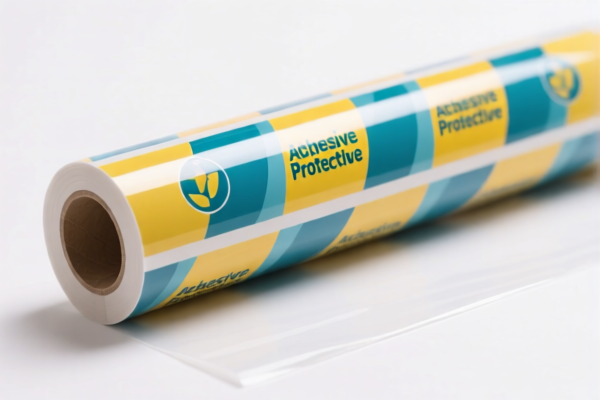
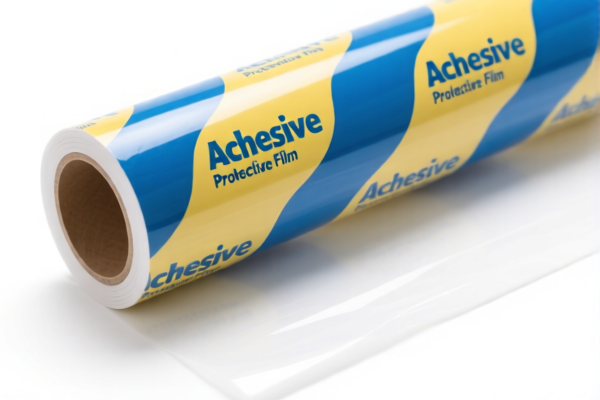
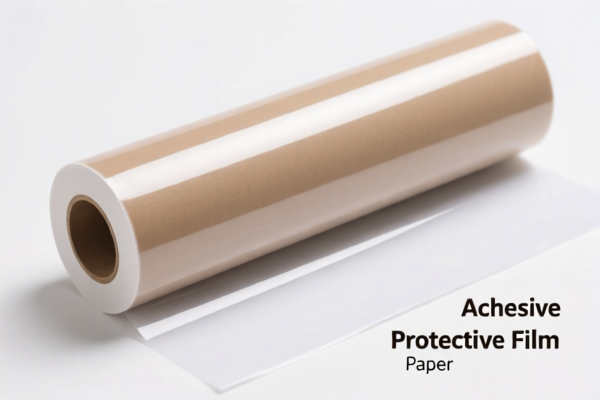
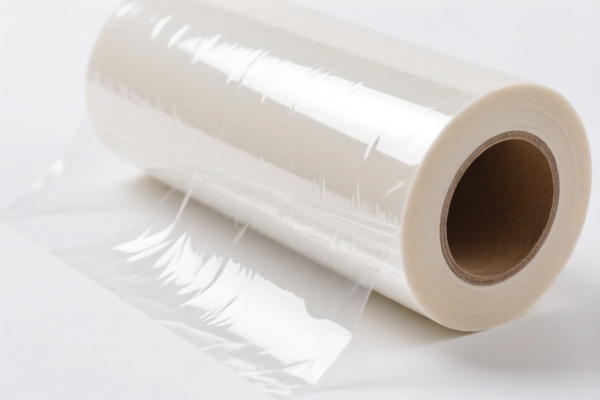
AI Analysis
📜 Plastic Stationery Tape Rolls (Self-Adhesive)
🌐 HS Code Reference & Customs Clearance Guide | 2026 Latest Tariff Analysis | Professional Clearance Strategy
📌 I. Product Definition & Classification: Do You Really Understand "Plastic Stationery Film Rolls"?
Self-adhesive plastic stationery tape rolls are essential office and school supplies, primarily used for packaging, labeling, or decorative purposes. In international trade, these products are strictly categorized based on their material (plastic), form (rolls/self-adhesive), and specific use (stationery/office supplies).
Misclassification often leads to significant duty discrepancies. The key distinction lies in whether the product is defined as a specific "adhesive tape" (Chapter 39, Heading 3919) or a general "plastic article" (Chapter 39, Heading 3926).
⚠️ Key Distinction Point:
- If the product is explicitly self-adhesive plastic tape in rolls, regardless of width, it typically falls under 3919 (Self-adhesive plates, sheets, film, foil, tape, strip, and other shapes).
- If the product is a general plastic item for stationery that does not fit the precise definition of adhesive tape (e.g., rigid plastic holders, non-adhesive clips), it may fall under 3926 (Other articles of plastics).
- Crucial Note: Even if labeled "stationery," if it is a roll of self-adhesive plastic, 3919 is the primary classification. However, customs may sometimes view certain stationery tapes under 3926 if they deem them "general plastic articles" rather than standard adhesives, though this is less common for tape rolls.
📦 II. HS Code Classification Details (2026 Latest Tariff Authority Comparison)
| HS Code | Product Description | Application Scenario | Adhesive/Roll Form? |
|---|---|---|---|
3919.10.20.55 |
Plastic stationery tape rolls, material: plastic, form: tape rolls, use: stationery. | School stationery tapes, office sealing tapes. | ✅ Yes (Self-adhesive, Rolls) |
3919.90.50.40 |
Self-adhesive plastic tapes in rolls, material: plastic, form: tape rolls, fits self-adhesive tape characteristics. | General industrial/commercial self-adhesive plastic tapes. | ✅ Yes (Self-adhesive, Rolls) |
3926.10.00.00 |
Plastic articles, material: plastic, use: stationery, fits definition of office or school supplies. | Plastic stationery items not strictly classified as "adhesive tape" (e.g., plastic rulers, cases). | ❌ No (General Plastic Article) |
3926.90.10.00 |
Other plastic articles, material: plastic, use: other categories of plastic articles. | Plastic stationery items falling under "other" or undefined categories. | ❌ No (General Plastic Article) |
🔍 Key Reminder:
- All self-adhesive plastic tapes in rolls should ideally be classified under 3919.
- If the product is a plastic stationery item but lacks the specific "self-adhesive roll" characteristics (e.g., it's a stiff plastic sheet or clip), it may be classified under 3926.
- Customs Discretion: Some customs authorities may interpret "stationery tape" under 3926.10 if they consider it a "general plastic office supply" rather than a functional adhesive. This is a high-risk area. Always provide technical data sheets.
💰 III. 2026 Latest Tariff Rate Details (Including Surcharges & Policy Add-ons)
✅ Applicable Country: United States (US)
✅ Origin: China (CN)
✅ Effective Date: 2025 November 10 onwards (including subsequent imports)
🎯 1. 3919.10.20.55 —— Plastic Stationery Tape Rolls
| Item | Content |
|---|---|
| Base Tariff Rate | 5.8% (ad valorem) |
| USITC Surcharge (Section 301) | +25.0% |
| IEEPA Surcharge (Section 122/China) | +10.0% |
| Total Tariff Rate | 40.8% |
| Tax Calculation | CIF Value × 40.8% |
| De Minimis Eligibility | ❌ Not Eligible (Deny de minimis for Section 301/IEEPA goods) |
| Legal Path | Base Tariff → Section 301: 25% → IEEPA: 10% → Total: 40.8% |
📌 Explanation:
- The 5.8% is the standard Most Favored Nation (MFN) rate for plastic adhesive tapes.
- The 25% surcharge is due to Section 301 tariffs on Chinese goods.
- The 10% surcharge is the additional IEEPA tariff applied to Chinese imports.
- Total: 40.8%. This is a high-cost item for importers.
🎯 2. 3919.90.50.40 —— Self-Adhesive Plastic Tapes (Other)
| Item | Content |
|---|---|
| Base Tariff Rate | 5.8% |
| USITC Surcharge (Section 301) | +25.0% |
| IEEPA Surcharge (Section 122/China) | +10.0% |
| Total Tariff Rate | 40.8% |
| Tax Calculation | CIF Value × 40.8% |
| De Minimis Eligibility | ❌ Not Eligible |
| Legal Path | Base Tariff → Section 301: 25% → IEEPA: 10% → Total: 40.8% |
📌 Note:
- Same tax burden as3919.10.20.55.
- This code covers self-adhesive tapes not specifically listed as "stationery" but still fitting the self-adhesive plastic roll criteria.
🎯 3. 3926.10.00.00 —— Plastic Stationery Articles
| Item | Content |
|---|---|
| Base Tariff Rate | 5.3% |
| USITC Surcharge (Section 301) | +0.0% (No Section 301 for this subheading in some lists, but check latest) |
| IEEPA Surcharge (Section 122/China) | +10.0% |
| Total Tariff Rate | 15.3% |
| Tax Calculation | CIF Value × 15.3% |
| De Minimis Eligibility | ⚠️ Check Latest Rules (Usually IEEPA applies, de minimis may still be denied) |
| Legal Path | Base Tariff → IEEPA: 10% → Total: 15.3% |
📌 Critical Insight:
- If customs accepts the classification as 3926.10, the total tariff drops significantly to 15.3% compared to 40.8%.
- Why the difference? Section 301 tariffs (25%) often apply to specific plastic articles. If3926.10is exempt from Section 301 (or has a different list), the savings are massive.
- Risk: Misclassifying a3919product as3926to save on duties is customs fraud if the product clearly fits the3919definition (self-adhesive tape). Only use this if the product truly does not fit3919.
🎯 4. 3926.90.10.00 —— Other Plastic Articles
| Item | Content |
|---|---|
| Base Tariff Rate | 3.4% |
| USITC Surcharge (Section 301) | +7.5% |
| IEEPA Surcharge (Section 122/China) | +10.0% |
| Total Tariff Rate | 20.9% |
| Tax Calculation | CIF Value × 20.9% |
| De Minimis Eligibility | ⚠️ Check Latest Rules |
| Legal Path | Base Tariff → Section 301: 7.5% → IEEPA: 10% → Total: 20.9% |
📌 Note:
- This code is for "other" plastic articles. If your product is a unique plastic stationery item not covered by3926.10, it might fall here.
- 20.9% is lower than the3919rate (40.8%) but higher than3926.10(15.3%).
🛠️ IV. Customs Clearance Practical Advice (Pitfall Avoidance Guide)
✅ 1. Required Documentation Checklist (None Can Be Omitted)
| Document | Required | Explanation |
|---|---|---|
| ✅ Product Specification Sheet | ✔️ | Must detail: Material (100% plastic), Form (Rolls), Adhesive Type (Self-adhesive), Width, Length, Core Size. |
| ✅ Product Photos | ✔️ | Clear images showing the roll, adhesive side (if possible), packaging, and any branding ("Stationery"). |
| ✅ Commercial Invoice | ✔️ | Must accurately describe the product. Avoid vague terms like "Tape." Use "Plastic Self-Adhesive Stationery Tape Rolls." |
| ✅ Packing List | ✔️ | Show net/gross weight, number of rolls, and packaging type. |
| ✅ Origin Certificate (CO) | ✔️ | Required for IEEPA tariff assessment. |
✅ 2. Declaration Tips (Key Mantra)
🔥 "Be Precise, Not Vague! 'Tape' vs. 'Article' Matters!"
| Scenario | Correct Declaration | Wrong Approach |
|---|---|---|
| Self-Adhesive Tape Rolls | 3919.10.20.55 or 3919.90.50.40 |
Declaring as "Plastic Stationery" (3926) to save tax → High Risk of Audit & Penalties |
| Non-Adhesive Plastic Stationery (e.g., Plastic Clips) | 3926.10.00.00 |
Declaring as "Tape" → Wrong Classification |
| Mixed Shipment (Tape + Non-Adhesive Items) | Split Declaration | Mixing them → Complexity & Delay |
✅ 3. Special Case Handling
| Situation | Recommendation |
|---|---|
| Is it really "Stationery"? | If the product is used for industrial sealing, it should be 3919.90, not 3919.10 (which specifies stationery). |
| Material Composition | If the tape has a cloth or paper backing, it might fall under different chapters (e.g., 5911 or 5914). Pure Plastic is key for 3919/3926. |
| IEEPA Exemptions | Check if your product code is exempt from IEEPA. Most plastic adhesives are not exempt. |
🌍 V. Global Market Comparison (2026 Latest)
| Country/Region | Recommended HS Code | Tariff Rate (China Origin) | Certification Requirements | Remarks |
|---|---|---|---|---|
| 🇺🇸 United States | 3919.10.20.55 / 3919.90.50.40 |
40.8% | None specific for customs, but FDA/CPSC may apply if for children | High Tariff. Consider supply chain diversification. |
| 🇺🇸 United States | 3926.10.00.00 (If applicable) |
15.3% | None specific | Lower Tariff, but only if product truly fits "Plastic Article" and not "Adhesive Tape". |
| 🇨🇳 China | 3919.10.20.55 |
5.8% | CCC (if applicable) | Lower import tariff, but domestic consumption is high. |
| 🇪🇺 EU | 3919.90.00.10 |
6.5% | CE, REACH | No Section 301 equivalent, but VAT applies. |
| 🇨🇦 Canada | 3919.10.00.00 |
0% (if MFN) | Various | Check CPTPP benefits. |
📌 Conclusion:
- USA is the most expensive market for plastic stationery tapes due to Section 301 (25%) + IEEPA (10%).
- Total Tariff of 40.8% significantly impacts profit margins.
- Risk of Misclassification: Attempting to classify3919items as3926to reduce tariff from 40.8% to 15.3% is high-risk and subject to strict customs scrutiny. Ensure your product truly lacks "adhesive tape" characteristics to use3926.
📌 VI. Common Mistakes & Pitfalls (Lessons Learned)
❌ Mistake 1: Declaring "Plastic Tape" as "Plastic Stationery" (3926.10) to save tax.
👉 Consequence: Customs may reclassify as 3919, apply 40.8% duty, plus penalties and interest.
Total Cost: Could exceed 25% extra in penalties.
❌ Mistake 2: Ignoring the "Self-Adhesive" aspect.
👉 Consequence: If the product is self-adhesive, it must go through 3919. Declaring as non-adhesive is fraud.
❌ Mistake 3: Assuming "Stationery" automatically means lower tariffs.
👉 Consequence: "Stationery" is a use, not a material definition. Plastic adhesive tapes remain subject to high tariffs under 3919.
✅ Correct Approach:
"Plastic Self-Adhesive Tape Rolls, Width 19mm, Length 50m, for Stationery Use, 100% PVC Material."
HS Code:3919.10.20.55
Tariff: 40.8%
Strategy: Optimize supply chain, negotiate pricing, or consider third-country origin (e.g., Vietnam, Malaysia) for IEEPA exemption if available.
🎯 VII. Conclusion: Professional Classification Saves Money!
🎯 Remember the Mantra:
🔹 "Self-Adhesive = 3919, High Tariff 40.8%."
🔹 "General Plastic Article = 3926, Lower Tariff 15.3% (If Valid)."
🔹 "Don't Cheat Customs, Or You Pay More!"
📌 Pro Tip:
If your plastic stationery tapes are originating from Vietnam, Mexico, Thailand, or Malaysia, you may be eligible for IEEPA Exemptions or Section 301 Exclusions, potentially reducing the total tariff to 0%~5%.
Action:
1. Get a Binding Ruling from US Customs (CBP) before shipping.
2. Verify Origin carefully.
3. Consult a Customs Broker to confirm if your specific product qualifies for 3926 (15.3%) or must be 3919 (40.8%).
📣 Immediate Action:
📞 Contact a licensed customs broker.
📤 Provide product samples and technical specs for HS Code Pre-Ruling.
🚀 Protect your profits by declaring correctly!
✨ Professional Clearance Starts with Accurate Classification!
💼 Every Percent of Duty Saved is Pure Profit!
Customer Reviews
About HS Code Classification
The Harmonized System (HS) is an internationally standardized nomenclature developed by the World Customs Organization (WCO) to classify traded products. Over 200 countries use the HS system as the basis for customs tariffs, trade statistics, and import/export regulations.
Each HS code follows a hierarchical structure:
- Chapter (2 digits) — Broad category of goods (e.g., Chapter 84: Machinery and Mechanical Appliances)
- Heading (4 digits) — More specific grouping within the chapter
- Subheading (6 digits) — Internationally standardized breakdown, used by all WCO member countries
- National subdivisions (8-10 digits) — Country-specific extensions for further classification, such as US HTSUS 10-digit codes
Correct HS code classification is essential for smooth customs clearance, accurate duty payment, and compliance with trade regulations. Misclassification can lead to customs delays, overpayment of duties, or penalties.
When importing from CN to US, the applicable tariff rates may include:
- Most-Favored-Nation (MFN) rate — The standard duty rate applied to WTO members
- General rate — Applied to countries without trade agreements
- Trade remedy duties — Additional tariffs such as Section 301 (anti-dumping), Section 232 (national security), or countervailing duties
The information provided on this page is for reference purposes only. For official classification, please consult with your local customs authority or a licensed customs broker.