Self service ordering machine thermal paper
CN → US| HS Code | Tariff Rate | Origin | Destination | Doc |
|---|---|---|---|---|
| 4811908030 | 35.0% | CN | US | Official Doc |
| 4811909030 | 35.0% | CN | US | Official Doc |
| 4802201000 | 35.0% | CN | US | Official Doc |
| 4802202000 | 35.0% | CN | US | Official Doc |
| 4911996000 | 17.5% | CN | US | Official Doc |
Product Images
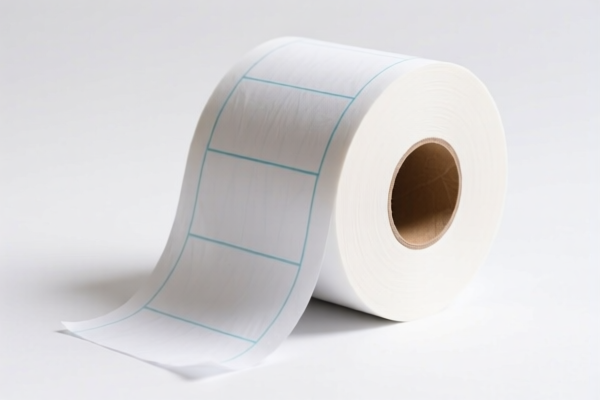

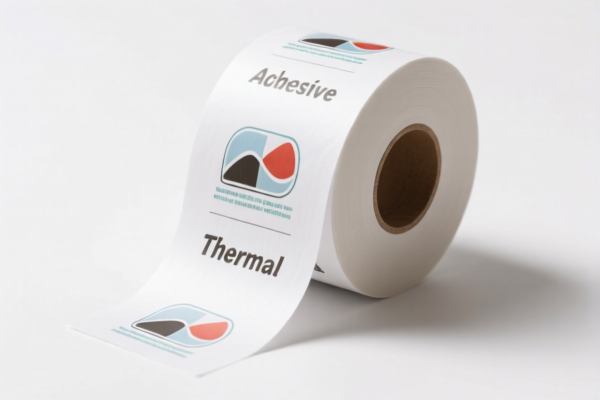
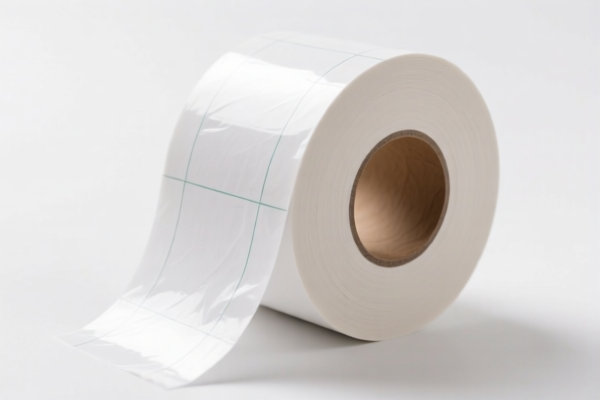
AI Analysis
🧾 Thermal Paper for Self-Service Ordering Machines (Kiosk & POS Systems)
🌐 HS Code Reference & Customs Clearance Guide | 2026 Latest Tariff Analysis | Strategic Clearance Strategy
📌 I. Product Definition & Classification: Do You Really Understand "Thermal Paper"?
Thermal paper is the core consumable for self-service kiosks, smart POS terminals, and automated ordering machines. In international trade, its classification is not uniform; it depends strictly on the manufacturing process, base paper properties, and final application. Misclassification can lead to significant tax discrepancies (0% vs. 35%).
Key Distinctions: 1. Processed Thermal Paper (Finished Goods): Paper that has already been coated with heat-sensitive chemicals and is ready for immediate use in printing receipts or tickets. * Typical HS Codes: 4811.90.80.30, 4811.90.90.30 2. Base Paper with Thermal Properties: Paper that has the chemical coating characteristics or is designated specifically for thermal printing but falls under broader paper categories. * Typical HS Codes: 4802.20.10.00, 4802.20.20.00 3. Printed Thermal Paper: If the thermal paper already contains printed text, logos, or designs before import, it may be classified as printed matter. * Typical HS Code: 4911.99.60.00
⚠️ Critical Distinction Point:
- If the paper is blank (plain white/color) and used for thermal printing → Classify under Chapter 48 (Paper/Paperboard).
- If the paper is pre-printed with content (e.g., store loyalty cards, branded receipts) → Classify under Chapter 49 (Printed Books/Newspapers/Other Printed Matter).
📦 II. HS Code Classification Details (2026 Latest Tariff Authority Comparison)
| HS Code | Product Description | Applicable Scenario | Key Attribute Match |
|---|---|---|---|
4811.90.80.30 |
Thermal paper, matching core attributes: thermal & paper material | Standard blank thermal receipt paper for self-service kiosks | ✅ Matches "Thermal Coating + Paper Base" |
4811.90.90.30 |
Thermal paper, matching material: paper + direct thermal coating usage | High-quality thermal paper for high-speed printers | ✅ Matches "Direct Thermal Coating" |
4802.20.10.00 |
Thermal paper, matching material: thermal + usage: thermal paper | Base paper specifically manufactured for thermal applications | ✅ Matches "Thermal Base Paper" |
4802.20.20.00 |
Thermal paper, matching basic paper attributes usable as thermal paper | General purpose thermal paper base | ✅ Matches "Usable as Thermal Paper" |
4911.99.60.00 |
Thermal paper, matching classification: other printed matter on paper | Pre-printed thermal tickets (e.g., with logos/text) | ❌ Printed (Not blank) |
🔍 Key Reminder:
- Blank Thermal Paper generally falls under 4811 or 4802 series.
- Pre-printed Thermal Paper MUST fall under 4911.99.60.00. Declaring pre-printed paper as blank thermal paper (4811) is a serious compliance error that can trigger audits.
- The distinction between4811and4802often lies in specific national tariff notes regarding the depth of thermal coating and paper grade.
💰 III. 2026 Latest Tariff Rate Details (Including Surtaxes & Policy Surcharges)
✅ Applicable Country: United States (US)
✅ Origin: China (CN)
✅ Effective Date: From November 10, 2025 (for subsequent imports)
🎯 1. Blank Thermal Paper (4811.90.80.30, 4811.90.90.30, 4802.20.10.00, 4802.20.20.00)
| Item | Content |
|---|---|
| Base Tariff | 0.0% (ad valorem) |
| Section 301 Surtax | +25.0% (Added by USITC) |
| Section 122 Tariff | +10.0% (Specific policy surcharge) |
| Total Tax Rate | 35.0% |
| Tax Calculation | CIF Value × 35% |
| De Minimis Exemption | ❌ Not Available (deny_de_minimis applies to these categories from China) |
| Legal Basis Path | USITC:4811.90.80.30 → FOOTNOTE:301.88 → Section 122 Policy |
📌 Explanation:
- "Base Tariff 0%": Standard imports of paper products from most countries have 0% base duty.
- "301 Surtax 25%": This is the primary trade war tariff applied to Chinese goods.
- "Section 122 Tariff 10%": An additional layer specific to certain paper/cardboard products under current enforcement.
- Total 35% is a high cost factor. Businesses must include this in their landed cost calculations.
🎯 2. Pre-Printed Thermal Paper (4911.99.60.00)
| Item | Content |
|---|---|
| Base Tariff | 0.0% (ad valorem) |
| Section 301 Surtax | +7.5% (Reduced rate for this specific subcategory) |
| Section 122 Tariff | +10.0% |
| Total Tax Rate | 17.5% |
| Tax Calculation | CIF Value × 17.5% |
| De Minimis Exemption | ❌ Not Available |
| Legal Basis Path | USITC:4911.99.60.00 → FOOTNOTE:301.88 → Section 122 Policy |
📌 Note:
- If your self-service machines use pre-printed loyalty cards or branded receipts, the tax burden is half (17.5%) compared to blank paper (35%).
- However, you cannot intentionally pre-print minimal marks on blank paper just to claim this lower rate if the primary purpose is blank storage. The "print" must be substantial and integral to the product's function.
🛠️ IV. Customs Clearance Practical Advice (Combat Pitfall Guide)
✅ 1. Required Documentation Checklist (None Can Be Missing)
| Document | Must Provide | Explanation |
|---|---|---|
| ✅ Product Specification Sheet | ✔️ | Specify: GSM (grams per square meter), roll diameter, core size, thermal coating type (top-coat/bottom-coat). |
| ✅ Material Safety Data Sheet (MSDS) | ✔️ | Required for chemical safety of the thermal coating. |
| ✅ Product Photos | ✔️ | Clear images of the roll, label, and side view of the coating. Crucial for distinguishing 4811 (coated) from 4802 (base). |
| ✅ Commercial Invoice | ✔️ | Must clearly state "Thermal Paper for Self-Service Kiosk" and NOT "Blank Paper". |
| ✅ Certificate of Origin (CO) | ✔️ | To prove origin (China) and apply correct surtaxes. |
| ✅ Packing List | ✔️ | Detail weight and volume to verify HS code consistency. |
✅ 2. Declaration Tips (Key Mantra)
🔥 "Blank is 4811, Printed is 4911; Don't Mix Up, Or You Pay Double!"
| Scenario | Correct Declaration | Wrong Action | Consequence |
|---|---|---|---|
| Blank Thermal Roll | 4811.90.80.30 |
Declare as 4911 |
Underpayment of tax → Penalty + Interest |
| Pre-Printed Receipt | 4911.99.60.00 |
Declare as 4811 |
Overpayment of tax (17.5% vs 35%) → Unnecessary cost |
| Mixed Shipment | Split HS Codes | Declare all as one code | Customs seizure → Delayed release |
| Sample Rolls | Declare as "Sample Thermal Paper" | Declare as "Commercial Goods" | May trigger different inspection rules |
✅ 3. Special Handling Cases
| Case | Handling Suggestion |
|---|---|
| Custom Size Rolls | Provide exact dimensions (diameter, width). Non-standard sizes may require detailed technical descriptions to justify 4811. |
| Eco-Friendly Thermal Paper | If claiming "Eco," ensure BPA-free certificates are attached. Some markets offer incentives, but US tax code remains the same unless specified otherwise. |
| Large Volume Imports | Consider applying for an Advance Ruling (Pre-Ruling) from CBP to confirm whether specific pre-printed content qualifies for 4911. |
| Re-export from Third Country | If transshipped via Vietnam/Malaysia, ensure No Chinese Origin markers remain. Direct shipment from China triggers the 35% rate. |
🌍 V. Global Market Clearance Comparison (2026 Latest)
| Country/Region | Recommended HS Code | Tariff (China Origin) | Certification Required | Notes |
|---|---|---|---|---|
| 🇺🇸 USA | 4811.90.80.30 |
35.0% (Blank) 17.5% (Printed) |
None specific | High tax burden; strict origin checks. |
| 🇨🇳 China | 4811.90.80.30 |
0% (Import) | CCC (if applicable) | Domestic production is common. |
| 🇪🇺 EU | 4811.90.90 |
~6.5% | REACH (Chemical Safety) | No Section 301 surtax. |
| 🇦🇺 Australia | 4811.90.00 |
5% | None | Competitive rate. |
| 🇯🇵 Japan | 4811.90.00 |
0-3% | None | Low barrier entry. |
📌 Conclusion:
- The USA is the most expensive market for thermal paper due to the 35% effective rate.
- Pre-printed paper (4911) offers a 50% tax saving compared to blank paper in the US.
- For blank paper, consider supply chain diversification to non-China origins if possible to avoid Section 301 taxes.
📌 VI. Common Errors & Pitfall Guide (Blood & Tears Lessons)
❌ Error 1: Declaring Pre-Printed thermal paper as Blank (4811) to avoid higher scrutiny.
👉 Consequence: Customs will detect the print. If they find it's actually 4911, they may accept it at 17.5%, BUT if they suspect fraud, penalties apply. If they think it's 4811 but you under-declared value, you pay 35% back taxes + fines.
❌ Error 2: Declaring Blank thermal paper as 4911 to save money.
👉 Consequence: Customs inspection reveals no print. You will be charged 35% (plus interest and penalties). You lose money and time.
❌ Error 3: Ignoring Section 122 Tariff.
👉 Consequence: Many importers only calculate 25% (Section 301) and forget the extra 10%. Result: Unexpected 10% cost overrun.
✅ Correct Practice:
"Blank Thermal Paper, BPA-Free, 80mm x 60mm, 500m Length, for Self-Service Kiosk Printers"
OR
"Pre-Printed Thermal Receipt Paper with [Store Name] Logo, 80mm Width"
🎯 VII. Conclusion: Precision Declaration Saves Money!
🎯 Remember the Mantra:
🔹 "Blank = 35% (4811), Printed = 17.5% (4911). Don't Guess, Check the Print!"
🔹 "301 is 25%, Section 122 is 10%. Total 35% is the Reality."
📌 Pro Tip:
If your self-service machines are in Europe or Asia, the tax is significantly lower (0-7%). If you are supplying the USA, plan your inventory carefully. The 17.5% rate for pre-printed paper is a significant advantage if your branding allows for pre-printing.
📣 Immediate Action:
📞 Confirm with your supplier: Is the paper blank or pre-printed?
📋 If blank → Target HS 4811.90.80.30 (Budget 35% tax).
📋 If printed → Target HS 4911.99.60.00 (Budget 17.5% tax).
🚀 Accurate classification = Accurate Costing = Smooth Clearance!
✨ Professional clearance starts with precise classification!
💼 Every cent of tax saved is pure profit!
Customer Reviews
About HS Code Classification
The Harmonized System (HS) is an internationally standardized nomenclature developed by the World Customs Organization (WCO) to classify traded products. Over 200 countries use the HS system as the basis for customs tariffs, trade statistics, and import/export regulations.
Each HS code follows a hierarchical structure:
- Chapter (2 digits) — Broad category of goods (e.g., Chapter 84: Machinery and Mechanical Appliances)
- Heading (4 digits) — More specific grouping within the chapter
- Subheading (6 digits) — Internationally standardized breakdown, used by all WCO member countries
- National subdivisions (8-10 digits) — Country-specific extensions for further classification, such as US HTSUS 10-digit codes
Correct HS code classification is essential for smooth customs clearance, accurate duty payment, and compliance with trade regulations. Misclassification can lead to customs delays, overpayment of duties, or penalties.
When importing from CN to US, the applicable tariff rates may include:
- Most-Favored-Nation (MFN) rate — The standard duty rate applied to WTO members
- General rate — Applied to countries without trade agreements
- Trade remedy duties — Additional tariffs such as Section 301 (anti-dumping), Section 232 (national security), or countervailing duties
The information provided on this page is for reference purposes only. For official classification, please consult with your local customs authority or a licensed customs broker.