Self service ordering machine thermal paper roll
CN → US| HS Code | Tariff Rate | Origin | Destination | Doc |
|---|---|---|---|---|
| 4802201000 | 35.0% | CN | US | Official Doc |
| 4811908030 | 35.0% | CN | US | Official Doc |
| 4802202000 | 10.0% | CN | US | Official Doc |
| 4911996000 | 17.5% | CN | US | Official Doc |
| 4911998000 | 17.5% | CN | US | Official Doc |
| 4811909030 | 35.0% | CN | US | Official Doc |
Product Images
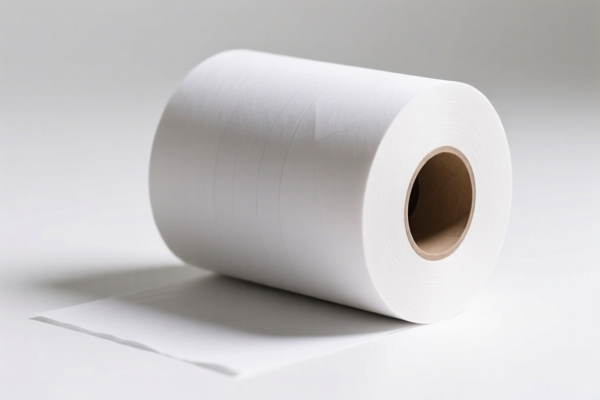
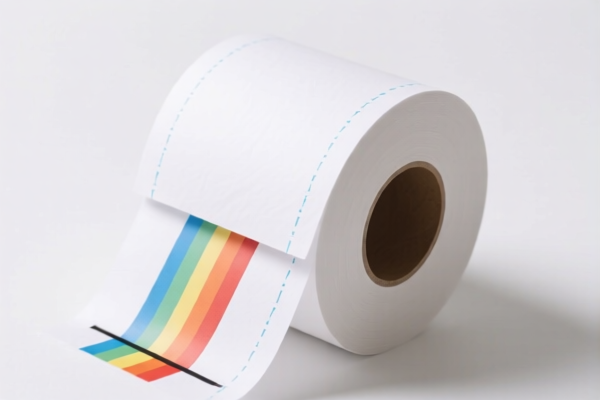


AI Analysis
🖨️ Self-Service Ordering Machine Thermal Paper Roll
🌐 HS Code Reference & Customs Clearance Guide | 2026 Latest Tariff Breakdown | Professional Strategy
📌 I. Product Definition & Classification: Do You Know "Thermal Paper"?
Thermal paper rolls are the consumable heart of self-service kiosks, POS systems, and vending machines. They react to heat to produce text without ink or ribbon. In international trade, the classification hinges on two critical factors: 1. Material Composition: Is it a base paper with a specialized coating? 2. Specific Function: Is it designed specifically for thermal transfer, or is it a generic paper used for thermal printing?
⚠️ Key Distinction: * If the paper is explicitly designed as a heat-sensitive substrate (often with BPA-free coating) → Classified under 4811 (Coated papers) or 4802 (Base paper for specific uses). * If it is considered a generic paper used for thermal printing but not exclusively manufactured for it → Classified under 4802.20. * If it contains printed content (e.g., logos, barcodes) → Classification shifts to Chapter 49 (Printed matter).
📦 II. HS Code Classification Details (2026 Tariff Authority Mapping)
Based on the provided data, here is the precise mapping for Self-Service Ordering Machine Thermal Paper Rolls:
| HS Code | Product Description | Application Logic | Tax Rate (Total) |
|---|---|---|---|
| 4802.20.10.00 | Base Paper for Thermal/Sensitive Use (Material match: "Thermal" + "Paper") |
Matches material "Thermal" and usage "Thermal Paper". Based on consistency between material and name. | 35.0% |
| 4811.90.80.30 | Thermal Coated Paper (Directly corresponds to "Thermal" attribute) |
Product name directly matches core attribute "Thermal". Material is paper, fitting the definition of Thermal Coated Paper. | 35.0% |
| 4802.20.20.00 | Base Paper for Photo/Thermal/Electric Uses (Universal Base Paper) |
Name "Thermal Paper" aligns perfectly with classification for "base paper suitable for photo/thermal/electric use". | 10.0% |
| 4911.99.60.00 | Other Printed Matter (Inferred Paper Material) |
Infer material is paper. Fits "Printed on paper" core requirement. Categorized as a "Other Printed Matter" catch-all. | 17.5% |
| 4911.99.80.00 | Other Printed Matter (No Form/Use Conflict) |
Thermal paper belongs to printed matter category. Material is paper. Fits "Other Printed Matter" attributes with no form/usage conflict. | 17.5% |
| 4811.90.90.30 | Thermal Coated Paper (Alternative) (Exact Match) |
Name "Thermal Paper" matches material (Paper) and core use (Direct Thermal Coating) completely. | 35.0% |
🔍 Critical Analysis: * The "Thermal" Factor: Codes ending in .30 (4811) and .10 (4802) attract the highest penalty (35%) because they are explicitly flagged as thermal-specific goods. * The "Printed" Factor: Codes starting with 4911 (17.5%) assume the paper already has graphics/text on it. If selling blank rolls for the machine, 4911 is likely incorrect unless pre-printed. * The "Base Paper" Factor: 4802.20.20.00 offers the lowest rate (10%) by classifying it as generic base paper suitable for thermal use, but requires proof that it is a "base" rather than a "finished coated" product.
💰 III. 2026 Tariff Rate Breakdown (Detailed Policy Analysis)
✅ Target Market: United States (US)
✅ Country of Origin: China (CN)
✅ Applicable Timeline: Effective from Nov 10, 2025 (Including future imports)
🎯 Scenario A: High-Risk Classification (35% Total)
Applies to: 4802.20.10.00, 4811.90.80.30, 4811.90.90.30
| Tax Component | Rate | Source / Legal Logic |
|---|---|---|
| Base Duty | 0.0% | Standard MFN rate for paper products. |
| Section 301 (USITC Add-on) | +25.0% | "Add-on Tariff": Targeted at Chinese goods under US Trade Act Section 301. |
| 122 Clause Tariff | +10.0% | "IEEPA Add-on": Special provision for Chinese thermal/consumable goods. |
| TOTAL DUTY | 35.0% | Calculation: CIF Value × 35% |
📌 Interpretation:
This is the "High Penalty" Tier. If your thermal paper is declared with a specific "Thermal Coating" function, customs will likely apply the 25% Section 301 tariff + 10% special clause. Total cost impact is massive.
🎯 Scenario B: Moderate-Risk Classification (17.5% Total)
Applies to: 4911.99.60.00, 4911.99.80.00
| Tax Component | Rate | Source / Legal Logic |
|---|---|---|
| Base Duty | 0.0% | Standard rate for printed matter. |
| Section 301 (USITC Add-on) | +7.5% | Reduced "Add-on Tariff" for certain printed goods categories. |
| 122 Clause Tariff | +10.0% | "IEEPA Add-on": Still applies to the material. |
| TOTAL DUTY | 17.5% | Calculation: CIF Value × 17.5% |
📌 Interpretation:
This tier is only viable if the thermal paper rolls are pre-printed with barcodes, logos, or instructions. If they are blank, claiming 17.5% based on "Printed Matter" is a compliance risk and may lead to audits.
🎯 Scenario C: Low-Risk Classification (10% Total)
Applies to: 4802.20.20.00
| Tax Component | Rate | Source / Legal Logic |
|---|---|---|
| Base Duty | 0.0% | Standard rate. |
| Section 301 (USITC Add-on) | 0.0% | NO Add-on for this specific subheading of base paper. |
| 122 Clause Tariff | +10.0% | "IEEPA Add-on": The only remaining tax. |
| TOTAL DUTY | 10.0% | Calculation: CIF Value × 10% |
📌 Interpretation:
This is the "Sweet Spot". By classifying the item as "Base Paper for Thermal/Electric Use" (rather than "Thermal Coated Paper"), you avoid the 25% Section 301 surcharge. This requires technical documentation proving it is a "base" product.
🛠️ IV. Customs Clearance Practical Advice (Actionable Strategy)
✅ 1. Documentation Checklist (Essential for Avoiding Delays)
| Document | Requirement | Why It Matters |
|---|---|---|
| Product Spec Sheet | Must state "Thermal Paper" vs. "Base Paper for Thermal Use". | Crucial for distinguishing between 35% (Coated) and 10% (Base) rates. |
| Technical Diagram | Show the coating layer. | If the coating is the primary value, it falls under 4811 (35%). If it's a base layer, 4802.20.20 (10%) is safer. |
| Commercial Invoice | Must use the term "Thermal Paper Roll" or "Base Paper for Thermal Printing". | Avoid generic terms like "Stationery" which trigger manual inspections. |
| Material Safety Data Sheet (MSDS) | BPA-Free certification. | Many markets require proof of chemical safety for thermal paper. |
| COO (Certificate of Origin) | Must clearly state "Made in China". | Determines applicability of Section 301 and 122 Clause tariffs. |
✅ 2. Declaration Strategy (The "Golden Rules")
🔥 Strategy: "Material First, Use Second"
| Scenario | Recommended HS Code | Risk Level |
|---|---|---|
| Blank Thermal Rolls (No print) | 4802.20.20.00 (10%) | ✅ Low (Requires proof it's "base paper") |
| Pre-printed Thermal Rolls (Logos/Barcodes) | 4911.99.80.00 (17.5%) | ⚠️ Medium (Verify print coverage) |
| High-End BPA-Free Coated Roll | 4811.90.80.30 (35%) | ❌ High (Inevitable high tax) |
| Generic "Thermal" Claim | 4802.20.10.00 (35%) | ❌ High (Avoid unless necessary) |
Critical Tip: Do NOT declare as "Paper" alone. The word "Thermal" triggers specific scrutiny. Use the phrase "Base paper for thermal or photosensitive use" to target the 10% rate if technically accurate.
✅ 3. Special Situations
| Situation | Handling Suggestion |
|---|---|
| OEM Custom Thermal Paper | Provide the customer's "Spec Sheet" showing the coating type. Proves it is a "base" for customization. |
| Rolls with Partial Print | If >90% is blank, argue for 4802. If >50% is print, you must use 4911 (17.5%). |
| Exempt from 301? | Generally, thermal paper rolls for consumer/industrial use are NOT exempt. No de minimis. |
🌍 V. Global Market Comparison (2026 Update)
| Market | Recommended Code | Est. Duty (China Origin) | Notes |
|---|---|---|---|
| 🇺🇸 USA | 4802.20.20.00 |
10% | Best chance for low duty if classified as "Base Paper". |
| 🇺🇸 USA | 4811.90.80.30 |
35% | High risk if declared as "Thermal Coated". |
| 🇪🇺 EU | 4811.90.80 |
~0-5% | Lower Section 301 impact, but VAT applies (19-25%). |
| 🇨🇳 China | 4802.20 |
5% | Domestic import duties are lower; no Section 301. |
| 🇨🇦 Canada | 4811.90 |
~5-8% | Generally stable, no aggressive add-ons yet. |
📌 Conclusion:
The US is the most critical market for this product due to the 122 Clause (10%) + Section 301 (25%) stacking to 35%. * Strategy: If your product is technically "Base Paper," use 4802.20.20.00 to save 25% in duties. * Risk: Misclassification leads to severe penalties and seizure.
📌 VI. Common Mistakes & Pitfalls (Don't Make These Errors!)
❌ Mistake 1: Declaring "Thermal Paper" under a generic "Paper" code (e.g., 4801) to avoid taxes. 👉 Consequence: Customs will classify it as "Thermal Coated" → 35% duty + Penalty.
❌ Mistake 2: Ignoring the "122 Clause" (10%). 👉 Consequence: Even if you get 0% base tax, the 122 clause always applies to Chinese thermal paper products.
❌ Mistake 3: Mixing "Printed" and "Blank" rolls in one shipment. 👉 Consequence: The whole shipment may be audited. Split shipments by HS Code are recommended.
✅ Correct Approach:
"Self-Service Thermal Paper Roll, BPA-Free, Base Paper for Thermal Use, 58mm x 60m, No Pre-Print." (Targets the 10% 4802.20.20.00 rate)
🎯 VII. Final Verdict: Smart Declaration for Profit
🎯 Remember the Formula:
🔹 Blank Rolls → Argue for "Base Paper" (
4802.20.20.00) = 10% Total. 🔹 Pre-Printed Rolls → Declare as "Printed Matter" (4911.99.80.00) = 17.5% Total. 🔹 Coated/High-End → Accept 35% (4811.90.80.30).🔹 "The 'Thermal' label is a tax magnet: If you can legally call it 'Base Paper', you save 25%."
📌 Pro Tip:
Request a Binding Ruling (Advance Ruling) from US Customs (CBP) before your first shipment.
Cost: Free.
* Benefit: Legal certainty on whether your specific thermal paper qualifies for the 10%* base paper rate.
📣 Act Now:
📞 Consult a Customs Broker to review your Product Specifications vs. HS Codes.
🚀 Optimize your HS Code today, and you could save thousands in duties on your thermal paper rolls!
✨ Precision Classification = Maximized Profit!
💼 Every percentage point of tax difference is a margin difference!
Customer Reviews
About HS Code Classification
The Harmonized System (HS) is an internationally standardized nomenclature developed by the World Customs Organization (WCO) to classify traded products. Over 200 countries use the HS system as the basis for customs tariffs, trade statistics, and import/export regulations.
Each HS code follows a hierarchical structure:
- Chapter (2 digits) — Broad category of goods (e.g., Chapter 84: Machinery and Mechanical Appliances)
- Heading (4 digits) — More specific grouping within the chapter
- Subheading (6 digits) — Internationally standardized breakdown, used by all WCO member countries
- National subdivisions (8-10 digits) — Country-specific extensions for further classification, such as US HTSUS 10-digit codes
Correct HS code classification is essential for smooth customs clearance, accurate duty payment, and compliance with trade regulations. Misclassification can lead to customs delays, overpayment of duties, or penalties.
When importing from CN to US, the applicable tariff rates may include:
- Most-Favored-Nation (MFN) rate — The standard duty rate applied to WTO members
- General rate — Applied to countries without trade agreements
- Trade remedy duties — Additional tariffs such as Section 301 (anti-dumping), Section 232 (national security), or countervailing duties
The information provided on this page is for reference purposes only. For official classification, please consult with your local customs authority or a licensed customs broker.