Self transparent film
CN → US| HS Code | Tariff Rate | Origin | Destination | Doc |
|---|---|---|---|---|
| 3921904090 | 39.2% | CN | US | Official Doc |
| 9001200000 | 35.0% | CN | US | Official Doc |
| 9001909000 | 35.0% | CN | US | Official Doc |
| 3921905050 | 39.8% | CN | US | Official Doc |
| 3920515090 | 41.5% | CN | US | Official Doc |
Product Images


AI Analysis
🎞️ Self-Transparent Film (基于自透明薄膜的塑料材质属性归类)
🌐 HS Code Reference & Customs Clearance Guide | 2026 Tariff Analysis for US Imports
📌 I. Product Definition & Classification: What is "Self-Transparent Film"?
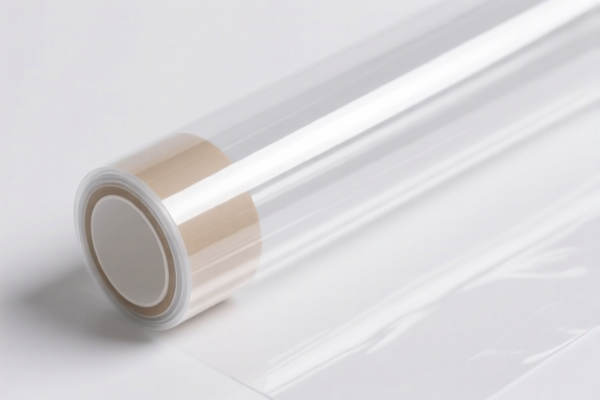
In international trade, "Self-Transparent Film" refers to plastic films where the transparency is an inherent property of the material itself (e.g., PET, PP, PE, PVC), rather than relying on external optical coatings, polarizers, or specialized light-diffusing structures. It is primarily used for packaging, protective layers, labeling, or industrial shielding.
The classification depends on the base polymer type and whether it contains specific optical functions.
⚠️ Key Distinction:
- Standard Plastic Films: Transparent due to the resin material itself → Chapter 39 (Plastics)
- Optical/Polarizing Films: Transparent due to special optical layers (polarizers, diffusers) → Chapter 90 (Optical Instruments)
📦 II. HS Code Classification Details (2026 Latest Tariff Schedule)
Based on the provided data, here are the specific HS Codes and their corresponding tax implications for self-transparent films imported into the USA from China.
| HS Code | Product Description | Basis for Classification | Total Tax Rate |
|---|---|---|---|
3921.90.40.90 |
Self-Transparent Plastic Film | Based on the inherent plastic material attributes; general purpose transparent film. | 39.2% |
9001.20.00.00 |
Polarizing/Optical Material Film | Based on morphology and function; film treated for specific optical use (e.g., display backlights). | 35.0% |
9001.90.90.00 |
Other Optical Elements (Fallback) | Fallback category for polarizing material sheets or other optical components not specified elsewhere. | 35.0% |
3921.90.50.50 |
Other Plastic Films | Based on plastic material attributes; fits under "Other plastics sheets, film, foil, and strip". | 39.8% |
3920.51.50.90 |
Acrylic Polymer Film | Based on specific polymer type (Acrylic/PMMA); high-clarity, rigid transparent film. | 41.5% |
🔍 Classification Logic:
- If the film is general-purpose (e.g., shrink wrap, protective film, food packaging), it falls under Chapter 39 (3921or3920).
- If the film is engineered for optical performance (e.g., polarizing films for LCD screens, anti-glare optical layers), it may be classified under Chapter 90 (9001).
- Acrylic (PMMA) films are specifically categorized under3920.51due to the polymer type.
💰 III. Detailed Tariff Breakdown (2026 US-China Trade Context)
✅ Applicable Country: United States (US)
✅ Origin: China (CN)
✅ Effective Date: Tariffs include Section 301 (25%) and IEEPA (10%) surcharges.
🎯 1. 3921.90.40.90 – Self-Transparent Plastic Film
| Item | Details |
|---|---|
| Base Tariff | 4.2% |
| Section 301 Surcharge | +25.0% |
| IEEPA Surcharge | +10.0% |
| Total Tax Rate | 39.2% |
| Calculation Basis | CIF Value × 39.2% |
| De Minimis Exemption | ❌ Not Eligible (Deny) |
| Legal Path | USITC:3921.90.40.90 → FOOTNOTE:301.9901.25 + IEEPA:9903.01.24 |
📌 Explanation:
- This is the most common code for general transparent plastic films (e.g., PET, PP).
- The 39.2% rate reflects the high trade barrier on Chinese plastics.
- No de minimis applies, meaning even small shipments are subject to these duties.
🎯 2. 9001.20.00.00 – Polarizing/Optical Material Film
| Item | Details |
|---|---|
| Base Tariff | 0.0% |
| Section 301 Surcharge | +25.0% |
| IEEPA Surcharge | +10.0% |
| Total Tax Rate | 35.0% |
| Calculation Basis | CIF Value × 35.0% |
| De Minimis Exemption | ❌ Not Eligible |
| Legal Path | USITC:9001.20.00.00 → FOOTNOTE:301.9901.25 + IEEPA:9903.01.24 |
📌 Explanation:
- Used for polarizing films used in displays (LCD/OLED).
- Although the base tariff is 0%, the surcharges bring the total to 35%, which is 4.2% cheaper than the general plastic film category.
🎯 3. 9001.90.90.00 – Other Optical Elements (Fallback)
| Item | Details |
|---|---|
| Base Tariff | 0.0% |
| Section 301 Surcharge | +25.0% |
| IEEPA Surcharge | +10.0% |
| Total Tax Rate | 35.0% |
| Calculation Basis | CIF Value × 35.0% |
| De Minimis Exemption | ❌ Not Eligible |
| Legal Path | USITC:9001.90.90.00 → FOOTNOTE:301.9901.25 + IEEPA:9903.01.24 |
📌 Explanation:
- A "catch-all" for optical films that don’t fit neatly into9001.20.
- Same tax rate as9001.20.00.00. Use this only if the product lacks specific polarizing functionality but is still an optical component.
🎯 4. 3921.90.50.50 – Other Plastic Films
| Item | Details |
|---|---|
| Base Tariff | 4.8% |
| Section 301 Surcharge | +25.0% |
| IEEPA Surcharge | +10.0% |
| Total Tax Rate | 39.8% |
| Calculation Basis | CIF Value × 39.8% |
| De Minimis Exemption | ❌ Not Eligible |
| Legal Path | USITC:3921.90.50.50 → FOOTNOTE:301.9901.25 + IEEPA:9903.01.24 |
📌 Explanation:
- Applies to plastic films not specified in more detailed subheadings.
- Highest base tariff among plastic films (4.8%), resulting in the highest total rate (39.8%).
🎯 5. 3920.51.50.90 – Acrylic Polymer Film
| Item | Details |
|---|---|
| Base Tariff | 6.5% |
| Section 301 Surcharge | +25.0% |
| IEEPA Surcharge | +10.0% |
| Total Tax Rate | 41.5% |
| Calculation Basis | CIF Value × 41.5% |
| De Minimis Exemption | ❌ Not Eligible |
| Legal Path | USITC:3920.51.50.90 → FOOTNOTE:301.9901.25 + IEEPA:9903.01.24 |
📌 Explanation:
- Specifically for Acrylic (PMMA) films.
- Highest total tax rate (41.5%) due to the higher base tariff (6.5%) for acrylic products.
🛠️ IV. Customs Clearance Practical Advice
✅ 1. Documentation Requirements
| Document | Mandatory? | Notes |
|---|---|---|
| ✅ Product Specification Sheet | ✔️ | Must specify: Material (e.g., PET, PP, Acrylic), Thickness, Width, Transparency level. |
| ✅ Material Composition | ✔️ | Critical to distinguish between "general plastic" and "optical film". |
| ✅ Photographs | ✔️ | Show film roll, packaging, and any markings. |
| ✅ Commercial Invoice | ✔️ | Clear description: e.g., "Transparent PET Film for Packaging". |
| ✅ Bill of Lading (B/L) | ✔️ | Consistent with invoice description. |
✅ 2. Classification Strategy (How to Save Money)
🔥 Key Tip: "Optical > General Plastic > Acrylic"
| Scenario | Recommended HS Code | Total Tax | Why? |
|---|---|---|---|
| Polarizing Film for Screens | 9001.20.00.00 |
35.0% | Lowest base tariff (0%), even with surcharges. |
| General Clear Plastic Film | 3921.90.40.90 |
39.2% | Standard for most non-optical plastic films. |
| Acrylic (PMMA) Film | 3920.51.50.90 |
41.5% | Highest cost; avoid if possible unless material is mandatory. |
⚠️ Warning:
- Do NOT misclassify general plastic film as9001(Optical) to save taxes. Customs may audit and levy penalties for misdeclaration.
- Only use9001if the film has proven optical functionality (e.g., polarizing, light-diffusing, anti-reflective coatings).
✅ 3. Special Considerations
| Situation | Advice |
|---|---|
| Customs Audit Risk | High for Chapter 39 films due to high tariffs. Ensure your product description matches the HS Code exactly. |
| De Minimis | ❌ No Exemption. Even shipments under $800 are subject to tariffs if they are of Chinese origin. |
| Origin Marking | Clearly mark "Made in China" on packaging to avoid customs delays. |
| Pre-Ruling | Consider applying for a Customs Ruling if the film’s optical properties are ambiguous. |
🌍 V. Global Market Comparison (2026)
| Country | Recommended HS Code | Total Tax (China Origin) | Notes |
|---|---|---|---|
| 🇺🇸 USA | 3921.90.40.90 / 9001.20.00.00 |
35.0% – 39.2% | High due to Section 301 + IEEPA. |
| 🇨🇳 China | 3921.90.40.90 |
~5-10% | Import tariff + VAT. No Section 301. |
| 🇪🇺 EU | 3920.51.90 |
~6-12% | No punitive surcharges, but VAT applies. |
| 🇯🇵 Japan | 3920.51.90 |
~5-8% | Lower base tariff, no punitive taxes. |
📌 Conclusion:
- The US market is the most expensive for Chinese-made transparent films due to layered tariffs.
- Optical films (9001) are slightly cheaper than general plastics (3921) in the US, but classification must be accurate.
📌 VI. Common Mistakes & Pitfalls
❌ Mistake 1: Classifying Acrylic Film as General Plastic Film
👉 Result: Customs may reclassify it to 3920.51, increasing tax from 39.2% to 41.5%.
❌ Mistake 2: Classifying General Film as Optical Film
👉 Result: If proven false, you face penalties for misdeclaration. Do not claim optical properties unless true.
❌ Mistake 3: Ignoring IEEPA 10% Surcharge
👉 Result: Many importers only calculate the 25% Section 301 tariff. The additional 10% pushes the total to 35-41%, significantly impacting margins.
❌ Mistake 4: Assuming De Minimis applies
👉 Result: Under current US law, Chinese-origin goods are not eligible for the $800 de minimis exemption for most categories, including plastics and optics.
🎯 VII. Conclusion: Smart Classification Saves Costs
🎯 Remember the Rule:
🔹 "Optical is 35%, General is 39.2%, Acrylic is 41.5%."
🔹 "If it’s not optical, don’t claim it’s optical."
🔹 "Always add 25% + 10% to your base tariff for US imports from China."
📌 Pro Tip:
If your film is used in non-US markets (EU, Japan, etc.), the tax burden is significantly lower. Consider diversifying supply chains or destination markets to reduce tariff impact.
📣 Action Required:
📞 Consult a Customs Broker to confirm the exact HS Code based on your film’s material and function.
🚀 Verify IEEPA eligibility and ensure proper documentation to avoid customs holds.
✨ Accurate Classification is Your Best Defense Against High Tariffs!
💼 Every percentage point saved is pure profit!
Customer Reviews
About HS Code Classification
The Harmonized System (HS) is an internationally standardized nomenclature developed by the World Customs Organization (WCO) to classify traded products. Over 200 countries use the HS system as the basis for customs tariffs, trade statistics, and import/export regulations.
Each HS code follows a hierarchical structure:
- Chapter (2 digits) — Broad category of goods (e.g., Chapter 84: Machinery and Mechanical Appliances)
- Heading (4 digits) — More specific grouping within the chapter
- Subheading (6 digits) — Internationally standardized breakdown, used by all WCO member countries
- National subdivisions (8-10 digits) — Country-specific extensions for further classification, such as US HTSUS 10-digit codes
Correct HS code classification is essential for smooth customs clearance, accurate duty payment, and compliance with trade regulations. Misclassification can lead to customs delays, overpayment of duties, or penalties.
When importing from CN to US, the applicable tariff rates may include:
- Most-Favored-Nation (MFN) rate — The standard duty rate applied to WTO members
- General rate — Applied to countries without trade agreements
- Trade remedy duties — Additional tariffs such as Section 301 (anti-dumping), Section 232 (national security), or countervailing duties
The information provided on this page is for reference purposes only. For official classification, please consult with your local customs authority or a licensed customs broker.