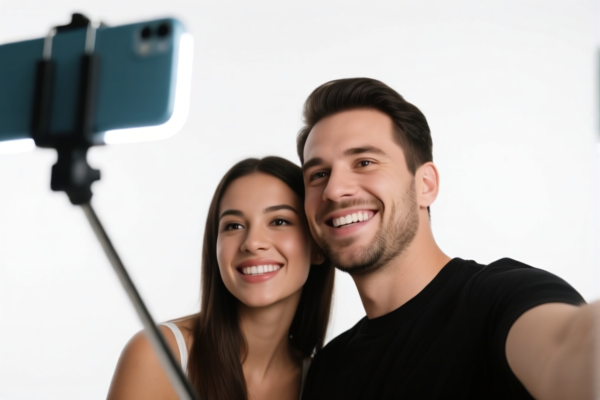
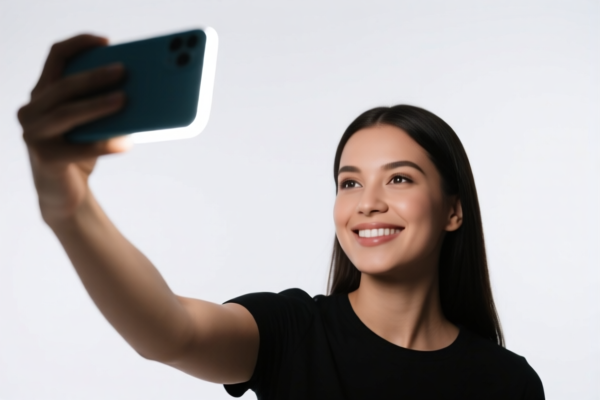
Selfie Light
CN → US| HS Code | Tariff Rate | Origin | Destination | Doc |
|---|---|---|---|---|
| 9405214010 | 38.7% | CN | US | Official Doc |
| 9405294010 | 38.7% | CN | US | Official Doc |
Product Images


AI Analysis
💡 Selfie Light (Ring Light / LED Table Lamp)
🌐 HS Code Reference & Customs Clearance Guide | 2026 Latest Tariff Analysis | Professional Clearance Strategy
📌 I. Product Definition & Classification: Do You Really Understand "Selfie Light"?
A "Selfie Light" (commonly known as a Ring Light, Clip-on LED Light, or Small Table Lamp) is a portable lighting device designed to provide even, shadow-free illumination for facial photography and video recording. In international trade, its classification depends heavily on its form factor and intended use.
According to the provided data, these products fall under Chapter 94 (Furniture; bedding, mattresses, mattress supports, cushions and similar stuffed furnishings; lamps and lighting fittings...). Specifically, they are classified as Electric table, desk, bedside or floor-standing luminaires.
⚠️ Key Distinction:
- If the light is designed specifically for tabletop/desktop use (including clip-on models that clamp onto a desk/table), it falls under 9405.21 or 9405.29.
- The material of the base/body determines the final sub-heading. The provided data specifies Brass base metal construction for household use.
- The light source technology (LED vs. Other) splits the code into two specific categories.
📦 II. HS Code Classification Details (2026 Latest Tariff Authority Match)
Based on the <DATA> provided, the "Selfie Light" is classified into two specific HS Codes depending on the light source technology and design specifics. Both codes apply to Brass household luminaires.
| HS Code | Product Description | Key Features | Material | Light Source |
|---|---|---|---|---|
9405.21.40.10 |
Electric table, desk, bedside or floor-standing luminaires: Designed for use solely with light-emitting diode (LED) light sources: Of base metal: Of brass Household | ✅ Dedicated LED Design Designed solely for LEDs. Cannot use other bulb types. |
Brass | LED Only |
9405.29.40.10 |
Electric table, desk, bedside or floor-standing luminaires: Other: Of base metal: Of brass Household | ✅ General/Other Design Does not meet the "solely for LED" criteria (e.g., may accept other sources, or generic design). |
Brass | Other/Mixed |
🔍 Critical Clarification:
- "Of Brass": The provided data explicitly limits the classification to Brass base metal. If the selfie light is made of plastic, aluminum, or steel, these specific codes (...40.10) DO NOT APPLY. You would need different sub-headings for other metals.
- "Household": These codes are designated for household use. Commercial/industrial grade lights may fall under different sub-categories.
- LED vs. Other: Most modern selfie lights are LED-only. If your product is an LED-only unit,9405.21.40.10is the most likely correct classification.
💰 III. 2026 Latest Tariff Rate Breakdown
✅ Applicable Jurisdiction: United States (US)
✅ Origin: China (CN)
✅ Effective Date: Current tariff structure applies
✅ Total Tax Rate: 28.7% (Composite Rate)
🎯 1. 9405.21.40.10 & 9405.29.40.10 – Brass Household Luminaires (Selfie Lights)
| Item | Content |
|---|---|
| Base Tariff (MFN) | 3.7% |
| Section 301 Additional Tariff | +25.0% |
| Total Effective Rate | 28.7% |
| Tax Calculation Basis | CIF Value (Cost + Insurance + Freight) × 28.7% |
| De Minimis Exemption Eligibility | ❌ Not Eligible (Due to Section 301 tariffs) |
| Legal Basis Path | HTSUS:9405.21.40.10 / 9405.29.40.10 → USITC Footnote 9903.88.01 (Section 301) |
📌 Interpretation:
- The 3.7% is the standard Most Favored Nation (MFN) tariff for lamps of brass.
- The 25.0% is the additional tariff imposed under Section 301 of the Trade Act of 1974 on Chinese imports.
- Combined Total: 28.7%. This is a significant cost burden that must be factored into your pricing strategy.
- No De Minimis: Unlike some categories, Section 301 goods generally do not benefit from the de minimis exemption (Section 321) for shipments under $800, meaning duties are collected at entry.
🛠️ IV. Customs Clearance Practical Advice (Avoid Pitfalls)
✅ 1. Required Documentation Checklist
| Document | Required? | Notes |
|---|---|---|
| ✅ Commercial Invoice | ✔️ | Must clearly state "LED Table Lamp" or "Selfie Ring Light". |
| ✅ Packing List | ✔️ | Include item weight, dimensions, and country of origin. |
| ✅ Product Specifications | ✔️ | Confirm material is Brass (not plated plastic). |
| ✅ Proof of Origin (CO) | ✔️ | Essential for proving Chinese origin (to avoid anti-dumping issues, though not listed here, origin is key). |
| ✅ Certifications | ✔️ | UL/ETL (for safety) and FCC (for electronic components) are often required for customs and retail sale. |
✅ 2. Declaration Tips (Key Mnemonic)
🔥 "Brass Base, LED Only, Code 21; Brass Base, Other Type, Code 29. Total Tax 28.7%!"
| Scenario | Correct Declaration | Risk if Wrong |
|---|---|---|
| LED-only, Brass base | 9405.21.40.10 |
Misclassification into 9405.29 (same rate but incorrect description) or higher-rated plastics. |
| Plastic base, LED | NOT in DATA | Would fall under different HS codes (e.g., 9405.21.00.00 for plastics) with potentially different rates. Do not use ...40.10. |
| Rechargeable Battery Included | Declare as part of the lamp | If batteries are Lithium-ion, ensure UN38.3 certification is available for air freight safety. |
✅ 3. Special Considerations for "Selfie Lights"
| Situation | Handling Advice |
|---|---|
| Plastic vs. Brass | Many cheap selfie lights are plastic. The provided <DATA> only covers Brass. If your product is plastic, these HS codes are INVALID. Check if it is solid brass or brass-plated. |
| Clip-on vs. Standalone | Both are "Table/Desk" luminaires. The mechanism (clip vs. stand) does not change the HS code if the base material and light source remain the same. |
| Smart Lights (Wi-Fi) | If the light has Wi-Fi/Bluetooth capabilities, it is still classified as a luminaire (9405). However, ensure FCC certification is in order. |
🌍 V. Global Market Comparison (2026 Outlook)
| Country/Region | Recommended HS Code | Tariff Rate | Notes |
|---|---|---|---|
| 🇺🇸 USA | 9405.21.40.10 (Brass/LED) |
28.7% | High due to 301 tariffs. Check for plastic alternatives to reduce duty if possible. |
| 🇨🇳 China | 9405.21.40.10 |
~5-7% | Lower import duty for re-imports or domestic trade. |
| 🇪🇺 EU | 9405.40 (General) |
0-4% | No Section 301 equivalent. Generally lower tariff than US for brass lamps. |
| 🇬🇧 UK | 9405.40 |
0-4% | Post-Brexit tariffs similar to EU for many goods. |
📌 Strategic Insight:
- The 28.7% US tariff is a major cost driver. If your selfie light can be redesigned to use Aluminum or Plastic (if allowed by brand standards), you may qualify for different HS codes with lower or zero additional Section 301 tariffs (verify current HTSUS for plastics/aluminum).
- Brass is often perceived as "premium," but the tax burden is high. Ensure the product positioning justifies the landed cost.
📌 VI. Common Errors & Pitfalls (Lessons Learned)
❌ Error 1: Misidentifying Material
👉 Consequence: Declaring a plastic selfie light as "Brass" (9405.21.40.10) leads to misclassification. Customs may reassess under the correct plastic code, potentially causing delays or fines.
✅ Fix: Verify material composition. Use "Brass" only for solid brass or significant brass alloy components.
❌ Error 2: Ignoring the "Solely LED" Criterion
👉 Consequence: Using 9405.21.40.10 for a light that can also take incandescent bulbs.
✅ Fix: If the fixture is multi-source, use 9405.29.40.10. Both have the same tax rate in this data, but accurate description prevents audits.
❌ Error 3: Forgetting Battery Safety for Rechargeable Models
👉 Consequence: Many selfie lights have built-in Li-ion batteries. Failure to declare batteries correctly can lead to shipping rejection by carriers or customs holds.
✅ Fix: Provide UN38.3 test summaries and ensure proper labeling (Lithium Ion Battery mark).
🎯 VII. Conclusion: Precision in Classification Saves Money
🎯 Remember the Rules:
🔹 "Brass + LED Only = 9405.21.40.10"
🔹 "Brass + Other = 9405.29.40.10"
🔹 "Total Tax = 28.7% (3.7% Base + 25% Section 301)"
🔹 "Check Material! If not Brass, This Data Does Not Apply."
📌 Pro Tip:
If your product volume is high, consider Supply Chain Diversification. Shipping to a third country (e.g., Vietnam, Thailand) if substantial transformation occurs may allow for different origin rules, but this requires strict legal compliance and substantial processing (not just simple assembly).
📣 Immediate Action:
📞 Verify the material composition (Brass vs. Plastic/Aluminum).
📞 Confirm if the light is LED-only.
📞 Calculate Landed Cost including the 28.7% duty.
🚀 Ensure FCC/UL certifications are ready for smooth customs clearance!
✨ Professional Clearance, Starts with Accurate Classification!
💼 Every Percent of Duty Counts! Optimize Your HS Code Strategy Today!
Customer Reviews
About HS Code Classification
The Harmonized System (HS) is an internationally standardized nomenclature developed by the World Customs Organization (WCO) to classify traded products. Over 200 countries use the HS system as the basis for customs tariffs, trade statistics, and import/export regulations.
Each HS code follows a hierarchical structure:
- Chapter (2 digits) — Broad category of goods (e.g., Chapter 84: Machinery and Mechanical Appliances)
- Heading (4 digits) — More specific grouping within the chapter
- Subheading (6 digits) — Internationally standardized breakdown, used by all WCO member countries
- National subdivisions (8-10 digits) — Country-specific extensions for further classification, such as US HTSUS 10-digit codes
Correct HS code classification is essential for smooth customs clearance, accurate duty payment, and compliance with trade regulations. Misclassification can lead to customs delays, overpayment of duties, or penalties.
When importing from CN to US, the applicable tariff rates may include:
- Most-Favored-Nation (MFN) rate — The standard duty rate applied to WTO members
- General rate — Applied to countries without trade agreements
- Trade remedy duties — Additional tariffs such as Section 301 (anti-dumping), Section 232 (national security), or countervailing duties
The information provided on this page is for reference purposes only. For official classification, please consult with your local customs authority or a licensed customs broker.