Semi Diesel Hybrid Advanced Touring Car Engine
CN → US| HS Code | Tariff Rate | Origin | Destination | Doc |
|---|---|---|---|---|
| 8706001540 | 37.5% | CN | US | Official Doc |
| 8703500070 | 37.5% | CN | US | Official Doc |
| 8706001520 | 37.5% | CN | US | Official Doc |
| 8702206100 | 37.0% | CN | US | Official Doc |
| 8702206100 | 37.0% | CN | US | Official Doc |
Product Images
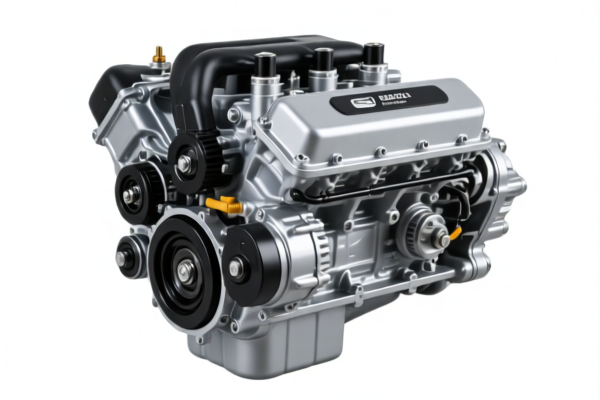
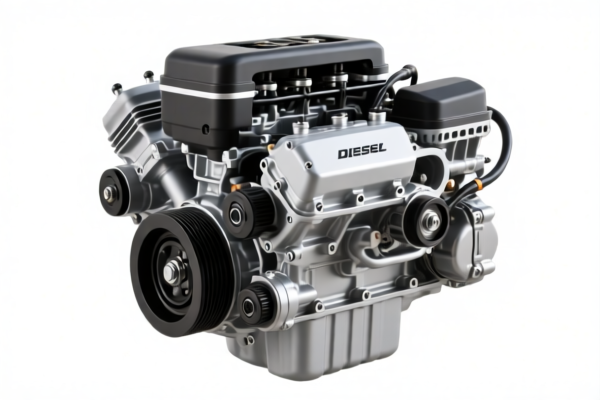
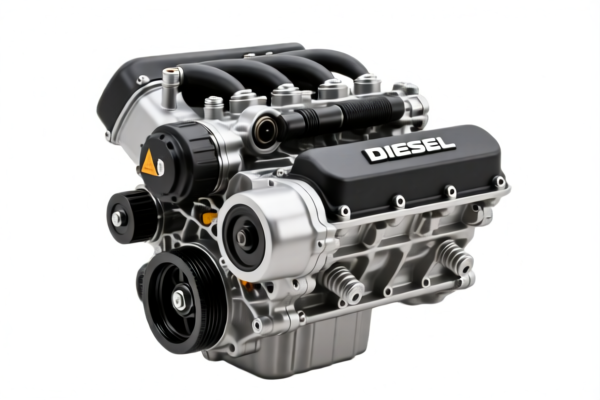
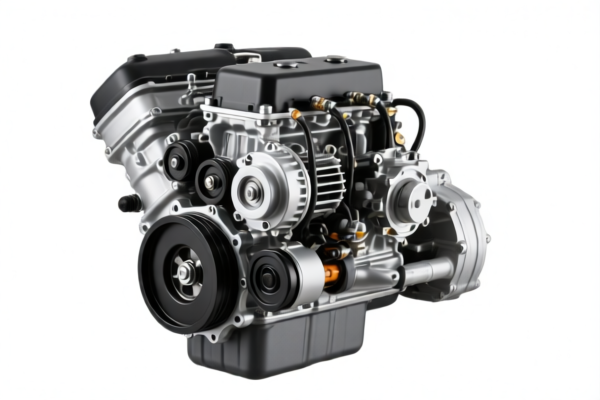
AI Analysis
🚗 Semi Diesel Hybrid Advanced Touring Car | Engine & Chassis Classification Guide
🌐 HS Code Reference & Customs Clearance Guide | 2026 Latest Tariff Analysis | Professional Entry Strategies
📌 I. Product Definition & Classification: Understanding the "Semi Diesel Hybrid Advanced Touring Car"
The "Semi Diesel Hybrid Advanced Touring Car" is a sophisticated passenger vehicle integrating internal combustion and electric propulsion technologies. In international trade, its classification depends heavily on the power source configuration, engine displacement, and specific hybrid mechanism.
Key Components Defined:
Semi-Diesel Hybrid: Typically refers to a system where a diesel (compression-ignition) engine works in conjunction with an electric motor, often in parallel or series-parallel configurations.
* Advanced Touring Car:* Implies a vehicle designed for long-distance travel, often associated with higher comfort and performance standards, falling under passenger vehicle categories.
⚠️ Critical Classification Distinction:
- If the vehicle falls under Chapter 87 (Vehicles), it is primarily classified based on its propulsion type.
- Diesel Hybrid vs. Other Hybrid: Vehicles with compression-ignition internal combustion pistons (diesel) are classified under 8702, while other hybrids (including gasoline-diesel or pure electric hybrids not fitting 8702) often fall under 8703.
- Body Type: The summary notes mention "Chassis" (8706) vs. "Passenger Vehicles" (8703/8702). The final assembled vehicle vs. bare chassis matters, but for import duty purposes, the engine/type definition is key.
📦 II. HS Code Classification Matrix (2026 Latest Tariff Authority Reference)
Based on the provided data for Semi Diesel Hybrid Advanced Touring Car, the following HS Codes apply depending on the specific technical compliance:
| HS Code | Product Description | Applicability Criteria | Total Tax Rate |
|---|---|---|---|
8706.00.15.40 |
Chassis with Engine for Vehicles of 8703 | Used for semi-diesel hybrid advanced touring cars; classified under "Other vehicles" of heading 8703, non-passenger sedan. | 37.5% |
8703.50.00.70 |
Passenger Vehicles (Hybrid) | Applies if it meets the requirement of compression-ignition internal combustion engine + electric motor hybrid AND displacement > 2500cc. | 37.5% |
8706.00.15.20 |
Chassis with Engine for Passenger Vehicles of 8703 | Applies if classified as "Passenger vehicle for vehicles listed in heading 8703". | 37.5% |
8702.20.61.00 |
Vehicles with Compression-Ignition Internal Combustion Piston Engine (Diesel) | Applies if it meets the requirement of compression-ignition internal combustion engine + electric motor combination power system OR is classified as a passenger carrying vehicle with semi-diesel hybrid features. | 37.0% |
🔍 Key Takeaway:
- The most competitive rate is 37.0% under 8702.20.61.00 if the vehicle strictly qualifies as a "Vehicle with compression-ignition internal combustion piston engine" (Diesel Hybrid).
- Rates of 37.5% apply under 8703 or 8706 variants, particularly if the displacement is >2500cc or classified under "Other vehicles" or specific passenger chassis categories.
- Note on "122 Clause": All listed rates include a 10% tariff under "Section 122" (likely referring to specific trade remedy or punitive tariffs, e.g., US Section 301/122 equivalent depending on origin).
💰 III. 2026 Latest Tariff Rate Breakdown (Detailed Tax Policy)
✅ Applicable Country: United States (US) (Implied by "122 Clause" and tariff structure similar to US Section 301/IEEPA)
✅ Origin: China (CN) (Inferred from high tariff rates and "122 clause" context)
✅ Effective Time: Current 2026 Tariff Schedule
🎯 1. 8706.00.15.40 & 8706.00.15.20 —— Chassis with Engine (Other/Passenger)
| Item | Detail |
|---|---|
| Base Duty Rate | 2.5% (Ad Valorem) |
| Additional Tariff (Section 301/Trade War) | 25.0% |
| Section 122 Tariff | 10.0% |
| Total Effective Rate | 37.5% |
| Tax Calculation | CIF Value × 37.5% |
| De Minimis Exemption | ❌ Not Applicable (High value automotive parts/vehicles do not qualify) |
| Legal Basis Path | HTSUS 8706 → Section 301 Footnotes → Section 122 (if applicable in jurisdiction) |
📌 Explanation:
- These codes apply to chassis with engines or specific "other vehicles" under 8703.
- The 25% additional tariff is a standard punitive tariff for many Chinese-origin vehicles/parts.
- The 10% "122 Clause" tariff adds further cost, bringing the total to 37.5%.
- Risk: Misclassification as a "part" instead of "chassis" or "vehicle" can lead to severe penalties.
🎯 2. 8703.50.00.70 —— Passenger Vehicles (>2500cc Diesel Hybrid)
| Item | Detail |
|---|---|
| Base Duty Rate | 2.5% (Ad Valorem) |
| Additional Tariff (Section 301/Trade War) | 25.0% |
| Section 122 Tariff | 10.0% |
| Total Effective Rate | 37.5% |
| Tax Calculation | CIF Value × 37.5% |
| De Minimis Exemption | ❌ Not Applicable |
| Legal Basis Path | HTSUS 8703.50 → Section 301 → Section 122 |
📌 Explanation:
- This code is for passenger vehicles with a compression-ignition engine (diesel) + electric motor hybrid, specifically with displacement > 2500cc.
- Strategic Note: If your vehicle’s diesel engine is ≤2500cc, it may NOT qualify for this specific subheading, potentially affecting eligibility for other codes. However, the rate remains 37.5%.
🎯 3. 8702.20.61.00 —— Diesel Hybrid Passenger Vehicles (Best Rate: 37.0%)
| Item | Detail |
|---|---|
| Base Duty Rate | 2.0% (Ad Valorem) |
| Additional Tariff (Section 301/Trade War) | 25.0% |
| Section 122 Tariff | 10.0% |
| Total Effective Rate | 37.0% |
| Tax Calculation | CIF Value × 37.0% |
| De Minimis Exemption | ❌ Not Applicable |
| Legal Basis Path | HTSUS 8702.20 → Section 301 → Section 122 |
📌 Explanation:
- This code covers vehicles with compression-ignition internal combustion piston engines (i.e., Diesel) with an electric motor.
- Why 37.0%? The base duty for diesel vehicles (8702) is 2.0%, which is 0.5% lower than the 2.5% base duty for gasoline/hybrid vehicles (8703).
- Requirement: Must strictly meet the definition of a Diesel Hybrid (Compression-ignition + Electric Motor).
- Recommendation: If your "Semi Diesel Hybrid" meets the legal definition of a diesel hybrid, 8702.20.61.00 is the optimal classification to save 0.5% on the total duty base.
🛠️ IV. Customs Clearance Practical Advice (Best Practices)
✅ 1. Documentation Checklist (Mandatory)
| Document | Required? | Purpose |
|---|---|---|
| ✅ Technical Specifications | ✔️ | Must explicitly state: Engine Type (Diesel/Compression-Ignition), Hybrid System Type, Displacement, Motor Power. |
| ✅ Engine Serial Number & Chassis Number | ✔️ | Critical for verifying 8702 vs. 8703 classification. |
| ✅ Hybrid System Diagram | ✔️ | Proves the combination of internal combustion and electric propulsion. |
| ✅ Commercial Invoice | ✔️ | Must clearly state "Semi Diesel Hybrid Advanced Touring Car" and HS Code. |
| ✅ Certificate of Origin | ✔️ | To confirm origin for Section 301 and 122 tariff applicability. |
| ✅ EPA/DOE Compliance Certificates | ✔️ | Required for import of vehicles into the US (emissions and fuel economy standards). |
✅ 2. Declaration Strategy (Key Mantras)
🔥 “Diesel First, Hybrid Second, Displacement Check, Tariff Minimization!”
| Scenario | Correct Classification | Incorrect Classification | Risk |
|---|---|---|---|
| Diesel Engine + Electric Motor | 8702.20.61.00 (37.0%) |
8703.50.00.70 (37.5%) |
Overpay 0.5% on CIF value |
| Gasoline Engine + Electric Motor | 8703.50.00.70 (if >2500cc) |
8702 |
Misdeclaration → Penalties |
| Bare Chassis with Engine | 8706.00.15.40 or 8706.00.15.20 (37.5%) |
8703 (Complete Vehicle) |
Wrong duty base |
| Displacement ≤2500cc Diesel Hybrid | 8702.20.61.00 |
8703.50.00.70 |
Ineligible for 8703.50 |
📌 Note: The term "Semi Diesel Hybrid" must be technically defined as a compression-ignition engine to qualify for 8702. If it’s a gasoline engine with a "diesel-like" feature, it must go to 8703.
✅ 3. Special Considerations
| Situation | Handling Advice |
|---|---|
| OEM Custom Touring Cars | Provide factory specifications and engineering bills of material (BOM) to prove hybrid nature. |
| Left-Hand Drive (LHD) vs. Right-Hand Drive (RHD) | Ensure NHTSA compliance documentation is included; otherwise, customs may delay for safety verification. |
| Emissions Standards (EPA) | US Customs requires EPA Form 3520-1 and certification. Non-compliant vehicles will be rejected. |
| Section 122 Tariff Exemptions | Check if your specific model is on the exemption list. If not, the 10% is unavoidable. |
🌍 V. Global Market Comparison (2026)
| Country/Region | Recommended HS Code | Base Duty | Additional Tariffs | Total Effective Rate | Remarks |
|---|---|---|---|---|---|
| 🇺🇸 USA | 8702.20.61.00 |
2.0% | 25% (301) + 10% (122) | 37.0% | Best rate if Diesel Hybrid |
| 🇺🇸 USA | 8703.50.00.70 |
2.5% | 25% (301) + 10% (122) | 37.5% | If >2500cc Gasoline Hybrid |
| 🇨🇳 China | 8702.20.61.00 |
15% | 0% | 15% | Lower base duty, no Section 301 |
| 🇪🇺 EU | 8702.20.61.00 |
10% | 0% | 10% | No punitive tariffs; CE certification required |
| 🇯🇵 Japan | 8702.20.61.00 |
0-5% | 0% | 0-5% | Low tariffs; strict safety/emissions checks |
📌 Conclusion:
- US Market: Highest barrier due to Section 301 + Section 122 tariffs.
- Optimization: Use 8702.20.61.00 to save 0.5% compared to 8703 codes.
- Alternative Markets: Consider exporting to EU or Japan for lower duty rates (10% or less) if US margins are compressed.
📌 VI. Common Errors & Pitfalls (Lessons Learned)
❌ Error 1: Classifying a Diesel Hybrid as 8703 (Gasoline/Hybrid category)
👉 Consequence: Higher base duty (2.5% vs 2.0%) → Overpayment.
👉 Fix: Ensure engine type is correctly stated as "Compression-Ignition" in technical docs.
❌ Error 2: Misdeclaring Chassis as Complete Vehicle or vice versa
👉 Consequence: Different duty rates and regulatory requirements (e.g., NHTSA for complete vehicles).
👉 Fix: Clarify if the shipment is a "Bare Chassis" (8706) or "Complete Vehicle" (8702/8703).
❌ Error 3: Ignoring Section 122 Tariff
👉 Consequence: Underpayment of 10% → Penalties and interest.
👉 Fix: Include 10% in landed cost calculations for US imports.
❌ Error 4: Using generic terms like "Hybrid Car" in Invoice
👉 Consequence: Customs may request additional info, causing delays.
👉 Fix: Use precise language: "Diesel-Electric Hybrid Passenger Vehicle, Displacement 2800cc, Compression-Ignition"
🎯 VII. Conclusion: Strategic Clearance for High-Tax Vehicles
🎯 Key Recommendations:
1. Prioritize 8702.20.61.00 if the vehicle is a true Diesel Hybrid to save 0.5% on the total value.
2. Verify Displacement: If >2500cc, 8703.50.00.70 is also viable, but still 37.5%.
3. Prepare for High Duties: Total tariffs of 37.0%-37.5% are unavoidable for US-bound Chinese-origin vehicles. Factor this into pricing.
4. Compliance is Key: Ensure EPA and NHTSA certifications are in place to avoid seizure or return.
📌 Pro Tip:
📞 Engage a Certified Customs Broker to file an Advance Ruling (Ruling Letter) with US CBP. This provides legal certainty on the HS Code and tariff rate before shipment, reducing clearance risks.
📣 Take Action Now:
🚀 Optimize Your Supply Chain:
- If margins are tight, explore third-country assembly (e.g., Mexico, Vietnam) to mitigate Section 301/122 tariffs.
- Accurate Documentation: Ensure every technical spec aligns with the chosen HS Code.
✨ Precision Classification, Maximum Savings!
💼 Your Profit Margin Depends on Correct HS Code Selection!
Customer Reviews
About HS Code Classification
The Harmonized System (HS) is an internationally standardized nomenclature developed by the World Customs Organization (WCO) to classify traded products. Over 200 countries use the HS system as the basis for customs tariffs, trade statistics, and import/export regulations.
Each HS code follows a hierarchical structure:
- Chapter (2 digits) — Broad category of goods (e.g., Chapter 84: Machinery and Mechanical Appliances)
- Heading (4 digits) — More specific grouping within the chapter
- Subheading (6 digits) — Internationally standardized breakdown, used by all WCO member countries
- National subdivisions (8-10 digits) — Country-specific extensions for further classification, such as US HTSUS 10-digit codes
Correct HS code classification is essential for smooth customs clearance, accurate duty payment, and compliance with trade regulations. Misclassification can lead to customs delays, overpayment of duties, or penalties.
When importing from CN to US, the applicable tariff rates may include:
- Most-Favored-Nation (MFN) rate — The standard duty rate applied to WTO members
- General rate — Applied to countries without trade agreements
- Trade remedy duties — Additional tariffs such as Section 301 (anti-dumping), Section 232 (national security), or countervailing duties
The information provided on this page is for reference purposes only. For official classification, please consult with your local customs authority or a licensed customs broker.