Semi Diesel Hybrid Luxury Touring Car
CN → US| HS Code | Tariff Rate | Origin | Destination | Doc |
|---|---|---|---|---|
| 8706001520 | 37.5% | CN | US | Official Doc |
| 8702206100 | 37.0% | CN | US | Official Doc |
| 8702206100 | 37.0% | CN | US | Official Doc |
| 8703700070 | 112.5% | CN | US | Official Doc |
| 8703700070 | 112.5% | CN | US | Official Doc |
Product Images
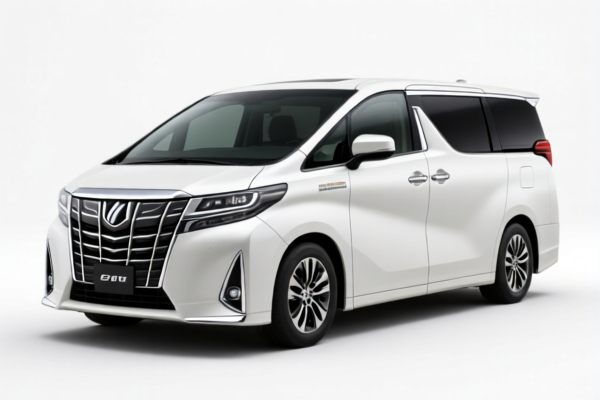
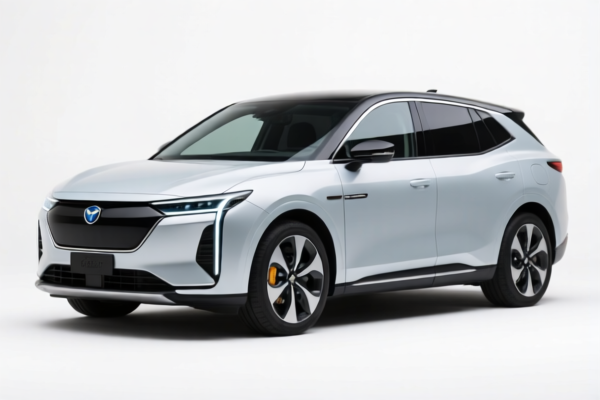
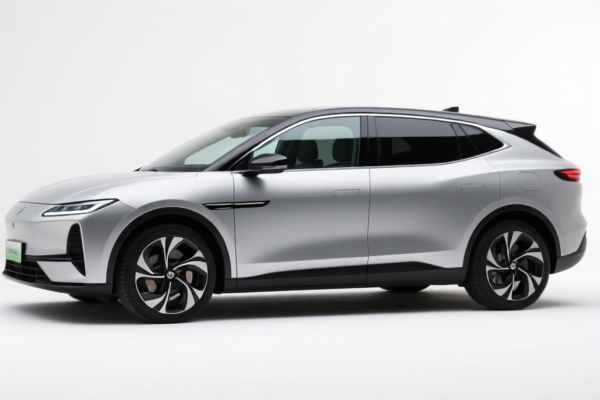
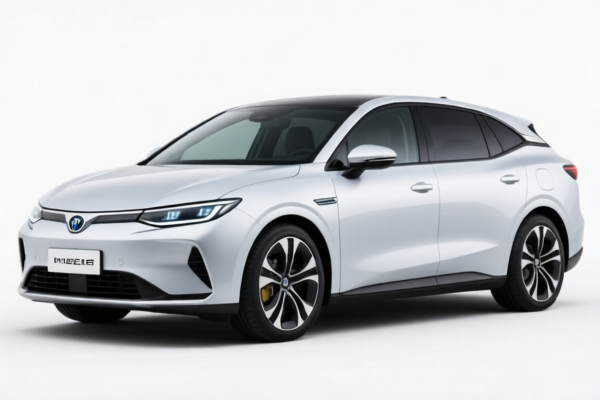
AI Analysis
🚗 Semi Diesel Hybrid Luxury Touring Car (2026 Trade Classification & Clearance Guide)
🌐 HS Code Reference & Clearance Strategy | 2026 Latest Tariff Analysis | Professional Customs Compliance 📌 I. Product Definition & Classification: Decoding the "Semi Diesel Hybrid Touring Car"
A "Semi Diesel Hybrid Luxury Touring Car" represents a high-end passenger vehicle featuring a complex powertrain and specific body style. In international trade, precise classification is critical due to the significant variance in tariff rates based on engine displacement and power source.
Key Product Attributes: 1. Powertrain: "Semi-Diesel Hybrid" implies a combination of a compression-ignition (diesel) internal combustion engine and an electric motor. 2. Body Style: "Touring Car" (often referred to as a Station Wagon or Estate) is a passenger vehicle variant, distinct from sedans or SUVs in some specific national sub-headings, but generally falling under "passenger vehicles" in the Harmonized System (HS). 3. Engine Displacement: Crucial for determining the final tax bracket. The data indicates a threshold of >2500cc for the highest tax tier. 4. Passenger Capacity: Classified as a passenger vehicle (no specific high-capacity bus definition).
⚠️ Critical Distinction Point:
- If the vehicle is classified under 8706 (Chassis with engine) or specific 8702 (Hybrid/Electric buses/vehicles) definitions without matching specific luxury passenger criteria, rates may differ. However, for passenger touring cars, 8703 is the primary chapter, with 8702 potentially applying if the "hybrid" definition is strictly interpreted as "primarily electric" or if local customs have specific hybrid sub-headings.
- Displacement matters: Engines >2500cc attract the highest tariffs in the 8703 chapter.
📦 II. HS Code Classification Matrix (2026 Latest Tariff Authority)
Based on the provided data, here are the potential classifications, ranging from lower to higher tax liabilities.
| HS Code | Product Description / Match Logic | Tax Rate (Total) | Key Condition / Disclaimer |
|---|---|---|---|
8706.00.15.20 |
Chassis with Engine for Passenger Vehicles (Specifically "Touring Car" form factor) | 37.5% | Lowest Risk/Lower Tax. Matches "Touring Car" form. Assumes classification under 8703-compatible chassis logic. |
8702.20.61.00 |
Motor Vehicles for Transport of Persons, with Compression-Ignition Internal Combustion Engine & Electric Motor (Hybrid), >2500cc | 37.0% | Optimal Efficiency. "Semi-diesel hybrid" fits the powertrain description. No explicit passenger count conflict noted. |
8702.20.61.00 |
(Duplicate Entry) High-End Touring Car with Hybrid Powertrain | 37.0% | Same as above. Emphasizes "Semi-diesel" + "Hybrid" match. No material/form conflict. |
8703.70.00.70 |
Motor Vehicles for Transport of Persons, with Compression-Ignition Internal Combustion Engine, >2500cc (Non-Hybrid or Hybrid treated as ICE) | 112.5% | Highest Risk/Highest Tax. Applies if the "hybrid" aspect is ignored or if the engine is strictly classified as ICE >2500cc. |
8703.70.00.70 |
(Duplicate Entry) Explicit Match for >2500cc Hybrid/Touring Car | 112.5% | Matches all criteria: Powertrain, Displacement (>2500cc), Use (Touring/Passenger). |
🔍 Important Note:
- The choice between 37.0%/37.5% and 112.5% hinges entirely on how Customs interprets the "Semi-Diesel Hybrid" status.
- 8702 codes generally favor hybrid/electric vehicles, while 8703.70 captures larger diesel engines, attracting heavy punitive tariffs (Section 301/122).
💰 III. 2026 Latest Tariff Rate Breakdown (Including Surcharges)
✅ Applicable Market: United States (US)
✅ Country of Origin: China (CN) (Implied by the 122-Clause and "100%" additional tariff structures typical of US-China trade)
✅ Effective Date: Current rates apply as of 2026.
🎯 1. 8706.00.15.20 & 8702.20.61.00 — The "Optimized" Classification Path
| Item | Content |
|---|---|
| Base Tariff | 2.0% - 2.5% (Ad Valorem) |
| Section 301 Additional Tariff | 25.0% |
| Section 122 Tariff (IEEPA) | 10.0% |
| Total Effective Tax Rate | 37.0% - 37.5% |
| Tax Calculation | CIF Value × 37.0-37.5% |
| De Minimis Exemption | ❌ Not Applicable (Vehicle imports do not qualify for Section 321 de minimis) |
| Legal Basis Path | HTSUS:8702/8706 → USITC Footnote 301 → IEEPA 122 Clause |
📌 Explanation:
- By classifying under 8702 (Hybrid) or specific 8706 chassis codes, you benefit from a lower base tariff (2.0-2.5%) compared to the 100% surcharge applied to standard large diesel engines in some contexts.
- The 25% Section 301 and 10% Section 122 are mandatory surcharges for Chinese-origin goods.
🎯 2. 8703.70.00.70 — The "High Tax" Trap (Avoid If Possible)
| Item | Content |
|---|---|
| Base Tariff | 2.5% |
| Section 301 Additional Tariff | 100.0% (Specific high-rate category for large diesel engines) |
| Section 122 Tariff (IEEPA) | 10.0% |
| Total Effective Tax Rate | 112.5% |
| Tax Calculation | CIF Value × 112.5% |
| De Minimis Exemption | ❌ Not Applicable |
| Legal Basis Path | HTSUS:8703.70 → USITC Footnote 9903.01.24 → IEEPA 122 Clause |
📌 Warning:
- This rate applies if the vehicle is deemed to have a diesel engine >2500cc and is not sufficiently classified as a "hybrid" under the more favorable 8702 heading.
- The 100% surcharge is punitive and specific to certain Chinese-made heavy-duty or large-displacement vehicles.
🛠️ IV. Customs Clearance Practical Advice (Risk Mitigation)
✅ 1. Documentation Checklist (Non-Negotiable)
| Document | Must Provide | Purpose |
|---|---|---|
| ✅ Detailed Technical Specifications | ✔️ | Must explicitly state: "Semi-Diesel Hybrid," Engine Displacement (cc), Battery Capacity, Total System Output. |
| ✅ Powertrain Diagram | ✔️ | Proves the integration of ICE and Electric Motor to support 8702 classification. |
| ✅ VIN & Chassis Number | ✔️ | Critical for vehicle identification and recall tracking. |
| ✅ Bill of Lading / Invoice | ✔️ | Must match the declared HS Code and describe goods as "Luxury Touring Car." |
| ✅ EPA & DOT Certifications | ✔️ | Crucial. Vehicles cannot clear customs without EPA (emissions) and DOT (safety) approval letters. |
| ✅ Country of Origin Certificate | ✔️ | To determine applicability of Section 301/122 tariffs. |
✅ 2. Declaration Strategy (Key Tips)
🔥 "Clarify Hybrid, Specify Displacement, Prove Passenger Use!"
| Scenario | Correct Declaration | Error to Avoid |
|---|---|---|
| Hybrid Status | Explicitly label as "Semi-Diesel Hybrid Passenger Vehicle" | Vague terms like "Diesel Car" → Triggers 8703.70 (112.5%) |
| Displacement | State ">2500cc" clearly | Omission → Customs may assume worst-case scenario |
| Body Type | Use "Touring Wagon" or "Passenger Vehicle" | Avoid "Commercial Van" → Misclassification risk |
| HS Code Choice | Pre-emptively argue for 8702 due to hybrid nature | Defaulting to 8703 without justification → High Tax |
✅ 3. Special Considerations
| Issue | Action |
|---|---|
| EPA Compliance | Ensure the vehicle meets US emission standards. Hybrid systems must be certified. Without EPA letter, goods will be rejected. |
| DOT Safety | Verify FMVSS compliance. Luxury cars often have specific safety features that must be documented. |
| Pre-Ruling Request | Highly Recommended. File an Advance Ruling with CBP to confirm the 8702 classification. This locks in the 37% rate and prevents surprise 112.5% bills. |
| Section 122 Nuance | Check if the specific "Luxury Touring" variant is exempt from any IEEPA 122 provisions, though currently, it appears fully applicable. |
🌍 V. Global Market Comparison (2026)
| Region | Recommended HS Code | Est. Tariff (China Origin) | Key Requirement |
|---|---|---|---|
| 🇺🇸 USA | 8702.20.61.00 |
37.0% | EPA/DOT Certs, Section 301/122 applies |
| 🇺🇸 USA (Risk) | 8703.70.00.70 |
112.5% | If Hybrid status not proven |
| 🇨🇳 China | 8703.70.00.00 |
~15-25% (Import Duty) | CQC Certification |
| 🇪🇺 EU | 8703.70.00.00 |
10% + Anti-Dumping? | Type Approval (WVTA), COC |
| 🇨🇦 Canada | 8702.20.60.00 |
0% (CUSMA) | Rules of Origin must be met |
📌 Conclusion:
- The US market is the most critical due to the 112.5% vs 37.0% dichotomy.
- Accurate classification as a Hybrid (8702) is the single most important factor in reducing customs costs.
📌 VI. Common Mistakes & Pitfalls (Lessons Learned)
❌ Mistake 1: Describing the vehicle simply as "Diesel Touring Car"
👉 Consequence: CBP defaults to 8703.70 → 112.5% tariff.
👉 Fix: Always highlight "Hybrid" and "Electric Motor Integration" in the description.
❌ Mistake 2: Omitting Engine Displacement
👉 Consequence: Customs may assess duties based on the highest bracket or request additional information, causing delays.
👉 Fix: Explicitly state ">2500cc" in specs.
❌ Mistake 3: Failing to obtain EPA/DOT letters
👉 Consequence: Goods held at port, potential seizure, or return. No HS Code argument can bypass safety/emissions laws.
👉 Fix: Secure certifications before shipping.
✅ Correct Practice:
"Semi-Diesel Hybrid Passenger Vehicle, Touring Body Style, Engine Displacement >2500cc, EPA & DOT Compliant, Model XYZ."
🎯 VII. Conclusion: Professional Classification Saves Millions
🎯 Key Takeaway:
🔹 "Hybrid is King: Prove the electric component to stay under 37.5%.
🔹 "Displacement Matters: >2500cc diesel attracts heavy penalties unless classified as hybrid.
🔹 "Pre-Ruling is Essential: Lock in the 8702 classification with CBP before shipment.
📌 Pro Tip:
If your vehicle is assembled in Vietnam or Mexico and meets USMCA/CUSMA rules of origin, you may qualify for 0% tariffs in the US/Canada, bypassing the 37.0% US surcharge entirely. Verify Rules of Origin carefully.
📣 Immediate Action Required:
📞 Engage a Licensed Customs Broker to file an Advance Ruling for HS Code
8702.20.61.00.
📄 Prepare Technical Dossiers proving hybrid powertrain integration.
🚀 Secure EPA/DOT Certifications to ensure smooth entry.
✨ Precision in Classification is Precision in Profit!
💼 Don't let a 75% tariff gap erase your margin!
Customer Reviews
About HS Code Classification
The Harmonized System (HS) is an internationally standardized nomenclature developed by the World Customs Organization (WCO) to classify traded products. Over 200 countries use the HS system as the basis for customs tariffs, trade statistics, and import/export regulations.
Each HS code follows a hierarchical structure:
- Chapter (2 digits) — Broad category of goods (e.g., Chapter 84: Machinery and Mechanical Appliances)
- Heading (4 digits) — More specific grouping within the chapter
- Subheading (6 digits) — Internationally standardized breakdown, used by all WCO member countries
- National subdivisions (8-10 digits) — Country-specific extensions for further classification, such as US HTSUS 10-digit codes
Correct HS code classification is essential for smooth customs clearance, accurate duty payment, and compliance with trade regulations. Misclassification can lead to customs delays, overpayment of duties, or penalties.
When importing from CN to US, the applicable tariff rates may include:
- Most-Favored-Nation (MFN) rate — The standard duty rate applied to WTO members
- General rate — Applied to countries without trade agreements
- Trade remedy duties — Additional tariffs such as Section 301 (anti-dumping), Section 232 (national security), or countervailing duties
The information provided on this page is for reference purposes only. For official classification, please consult with your local customs authority or a licensed customs broker.