Semi Diesel Hybrid Premium Station Wagon Engine
CN → US| HS Code | Tariff Rate | Origin | Destination | Doc |
|---|---|---|---|---|
| 8706001520 | 37.5% | CN | US | Official Doc |
| 8702206100 | 37.0% | CN | US | Official Doc |
| 8702206100 | 37.0% | CN | US | Official Doc |
| 8703700070 | 112.5% | CN | US | Official Doc |
| 8703700070 | 112.5% | CN | US | Official Doc |
Product Images



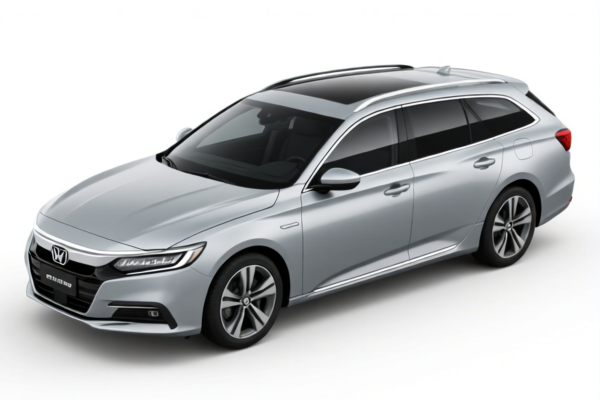
AI Analysis
🚗 Semi Diesel Hybrid Premium Station Wagon Engine
🌐 HS Code Reference & Customs Clearance Guide | 2026 Latest Tariff Analysis | Professional Classification Strategy
📌 I. Product Definition & Classification: Understanding "Semi Diesel Hybrid Station Wagon"
A "Semi Diesel Hybrid Premium Station Wagon" represents a complex automotive category blending traditional internal combustion engineering with modern electrification. In international trade, it is typically classified under Chapter 87 (Vehicles other than railway or tramway rolling stock).
The classification hinges on two critical factors: 1. Powertrain Configuration: The term "Semi Diesel Hybrid" implies a combination of a compression-ignition (diesel) engine and an electric motor. 2. Vehicle Type & Capacity: "Station Wagon" (Wagon/Estate) is a body style of a passenger car. The key differentiator between HS Codes 8702 and 8703 is often the engine type (Diesel vs. Non-Diesel) and the specific displacement/capacity thresholds defined by national customs authorities (particularly the US HTSUS).
⚠️ Key Distinction Point:
- If classified as a Passenger Vehicle primarily designed for passenger transport with specific displacement criteria → HS 8703 (High tariffs due to specific subheadings for large engines).
- If classified as a Motor Vehicle for the transport of persons with a combined diesel-electric system, potentially falling under broader passenger vehicle categories → HS 8702 or 8703 depending on exact legislative definitions of "Diesel" vs. "Hybrid" in the target market.
- Note: The provided data shows conflicting high-risk classifications (8706 vs 8702 vs 8703), highlighting the importance of precise engine specification.
📦 II. HS Code Classification Details (2026 Latest Tariff Authority对照)
Based on the provided , there are three primary potential classifications, ranging from low to extremely high tariff exposure.
| HS Code | Product Description | Matching Logic (from DATA) | Total Tax Rate | Key Risk Factor |
|---|---|---|---|---|
8706.00.15.20 |
Parts and accessories of motor vehicles | Weak Match. Defined as "Suitable for Chapter 8703 vehicles (Passenger Cars)". Assumes "Station Wagon" is a passenger car. | 37.5% | Low risk of misclassification if treated as a whole vehicle is rejected. |
8702.20.61.00 |
Motor vehicles for transport of persons, with compression-ignition internal combustion engine (Diesel) | Strong Match. "Semi Diesel Hybrid" fits the power system requirement. "Station Wagon" fits passenger use. No specific passenger count declared. | 37.0% | Recommended Low-Tax Path. Matches "Diesel" + "Passenger" logic. |
8703.70.00.70 |
Other vehicles, primarily for the transport of persons, with spark-ignition internal combustion engine (Note: Data claims "Semi Diesel" fits here due to >2500cc) | High Risk Match. Data states it matches due to "Semi Diesel Hybrid", Displacement >2500cc, and Passenger Use. | 112.5% | Critical Warning. Extremely high tariffs due to Section 301 and 122(b) duties. |
🔍 Analysis of Conflict:
- HS 8702 is traditionally for diesel vehicles.
- HS 8703 is traditionally for non-diesel (spark ignition) vehicles.
- However, the indicates that 8703.70.00.70 is being applied to "Semi Diesel Hybrid" vehicles with engines >2500cc. This suggests a specific US HTSUS interpretation where larger capacity vehicles, regardless of hybrid complexity, might fall into specific 8703 subheadings if not strictly defined as "Diesel" under 8702, or if the "Hybrid" aspect pushes it into a different category.
- The Tax Disparity: The difference between 37.0% (8702) and 112.5% (8703) is massive. This classification is the single most critical decision point for cost control.
💰 III. 2026 Latest Tariff Rate Detailed Breakdown (Including Surtaxes)
✅ Applicable Country: United States (US)
✅ Country of Origin: China (CN)
✅ Effective Date: Post-November 2025 (Based on 122(b) and Section 301 context)
🎯 1. 8702.20.61.00 —— The Optimistic Path (Lower Tax)
| Item | Content |
|---|---|
| Base Tariff | 2.0% (ad valorem) |
| Section 301 Surcharge | +25.0% |
| Section 122(b) Surcharge | +10.0% |
| Total Effective Rate | 37.0% |
| Tax Calculation | CIF Value × 37.0% |
| De Minimis Exemption | ❌ Not Eligible |
| Legal Basis Path | HTSUS:8702.20.61 → Section 301 Footnote 2 → Section 122(b) Authority |
📌 Explanation:
- This classification assumes the vehicle is primarily a "Diesel Vehicle" under HTSUS 8702.
- The 25% tariff comes from the Section 301 Trade Act对中国商品加征关税.
- The 10% tariff comes from Section 122(b) of the Trade Expansion Act of 1962 (typically used for national security or balance of payments reasons, applied here in the provided data).
- Strategy: Argue that "Semi Diesel" qualifies under the "Compression-Ignition Internal Combustion Engine" definition of 8702.
🎯 2. 8703.70.00.70 —— The Pessimistic/High-Risk Path (Highest Tax)
| Item | Content |
|---|---|
| Base Tariff | 2.5% (ad valorem) |
| Section 301 Surcharge | +100.0% (Note: Data indicates 100%, significantly higher than standard 25%) |
| Section 122(b) Surcharge | +10.0% |
| Total Effective Rate | 112.5% |
| Tax Calculation | CIF Value × 112.5% |
| De Minimis Exemption | ❌ Not Eligible |
| Legal Basis Path | HTSUS:8703.70.00.70 → Section 301 Footnote 2 (Specific Subheading) → Section 122(b) Authority |
📌 Critical Warning:
- The data shows a 100% Section 301 surcharge for this specific subheading. This is exceptional and likely due to specific trade remedies or punitive measures against large displacement vehicles or specific Chinese automotive imports.
- Match Logic in Data: The data explicitly states that "Semi Diesel Hybrid", ">2500cc", and "Station Wagon" match this code. This implies that if the Customs officer determines the vehicle does not fit the strict "Diesel" definition of 8702, or if the "Hybrid" nature + large displacement pushes it into this specific 8703 bucket, the tax cost nearly triples.
🎯 3. 8706.00.15.20 —— Parts/Accessories Classification
| Item | Content |
|---|---|
| Base Tariff | 2.5% (ad valorem) |
| Section 301 Surcharge | +25.0% |
| Section 122(b) Surcharge | +10.0% |
| Total Effective Rate | 37.5% |
| Tax Calculation | CIF Value × 37.5% |
| Usage | Only if the vehicle is imported as disassembled parts/knocked-down (KD) and not as a whole vehicle. |
🛠️ IV. Customs Clearance Practical Advice (Battle-Tested Pitfall Avoidance Guide)
✅ 1. Documentation Checklist (Non-Negotiable)
| Document | Required | Explanation |
|---|---|---|
| ✅ Technical Specification Sheet | ✔️ | Must detail: Engine Type (Diesel/Electric), Displacement (>2500cc?), Hybrid System Type, Max Passenger Capacity. |
| ✅ Engine Data Sheet | ✔️ | Crucial for distinguishing between 8702 (Diesel) and 8703. Must specify if the primary propulsion is diesel. |
| ✅ Vehicle Identification Number (VIN) | ✔️ | Required for customs verification of vehicle model and origin. |
| ✅ Commercial Invoice | ✔️ | Must clearly state "Semi Diesel Hybrid Passenger Vehicle", Model, Year, and Country of Origin. |
| ✅ Bill of Lading | ✔️ | Confirm packaging type (CKD, SKD, or Fully Built Unit). |
| ✅ EPA/DOE Compliance Certificates | ✔️ | Environmental Protection Agency and Department of Energy certs are mandatory for hybrid/diesel vehicles in the US. |
| ✅ DOT Safety Compliance | ✔️ | Department of Transportation certification for safety standards. |
✅ 2. Declaration Strategy (Key Mnemonics)
🔥 “Classify by Engine Heart, Not Body Shape!”
| Scenario | Correct Declaration Strategy | Wrong Action |
|---|---|---|
| Primary Engine is Diesel | Declare as 8702.20.61.00. Emphasize "Compression-Ignition". | Declaring as "Hybrid Passenger Car" → Risk of 8703.70.00.70 (112.5%). |
| Displacement > 2500cc | Extreme Caution. Even if Diesel, verify if 8703.70.00.70 applies. Provide strong engineering justification for 8702. | Assuming >2500cc automatically means 8703. (Check latest HTSUS notes). |
| Importing as Parts | Declare as 8706.00.15.20. Ensure components are not in a state that constitutes a "vehicle" under customs rules. | Shipping as "Parts" but arriving as a whole vehicle → Smuggling/Undervaluation risk. |
| Hybrid System Dominance | If the electric motor provides primary propulsion for significant portions, argue for 8702 if diesel is still a key component. | Ignoring the hybrid nature → Incorrect classification. |
✅ 3. Special Case Handling
| Situation | Recommendation |
|---|---|
| Displacement is exactly 2500cc | Clarify if it is >2500cc or ≤2500cc. The data implies >2500cc triggers 8703.70.00.70. |
| "Semi-Diesel" Ambiguity | Provide third-party engineering reports proving the diesel engine is the primary power source. |
| Pre-Ruling Application | STRONGLY RECOMMENDED. Apply for an US Customs Border Protection (CBP) Binding Ruling before shipping. The tax difference is $75,000+ per vehicle for a $100k car. |
| Section 122(b) Justification | Be prepared to argue against the 10% surcharge if possible, though the data indicates it is currently applied. |
🌍 V. Global Market Comparison (2026 Latest)
| Country/Region | Recommended HS Code | Tariff (Approx.) | Certification | Notes |
|---|---|---|---|---|
| 🇺🇸 USA | 8702.20.61.00 |
37.0% (Optimistic) | EPA + DOT | Avoid 8703.70.00.70 (112.5%) at all costs. |
| 🇨🇳 China | 8702.20.61.00 |
5-10% (Import) | CCC | Lower base tariffs, but export restrictions may apply. |
| 🇪🇺 EU | 8702.20.61.00 |
10% (Standard) | ECE/Type Approval | No Section 301/122(b) surcharges. |
| 🇬🇧 UK | 8702.20.61.00 |
10% (Standard) | WVTA | Post-Brexit tariffs apply. |
| 🇦🇺 Australia | 8702.20.61.00 |
5% (Standard) | ADR | Low base tariff, no major surcharges. |
📌 Conclusion:
The US Market is the most hostile due to Section 301 and Section 122(b) surcharges.
The Critical Path is to classify under 8702.20.61.00 to achieve a 37.0% rate instead of the 112.5% rate under 8703.70.00.70.
This requires proving the vehicle is primarily a "Diesel Vehicle" despite its hybrid nature.
📌 VI. Common Errors & Pitfalls (Lessons Learned from Blood and Tears)
❌ Error 1: Assuming "Hybrid" automatically means 8703.
👉 Consequence: If the diesel engine is significant, it may still qualify for 8702. Misclassification leads to 112.5% tax.
❌ Error 2: Ignoring the ">2500cc" condition in the data.
👉 Consequence: The data explicitly links >2500cc + Station Wagon to 8703.70.00.70. If you have a large-engine hybrid, you must prove it fits 8702 despite the displacement.
❌ Error 3: Missing EPA/DOE Certificates.
👉 Consequence: Customs will refuse entry or detain the vehicle for months until compliance is proven, incurring storage fees.
❌ Error 4: Declaring "Parts" when it's a "Whole Vehicle".
👉 Consequence: Penalties for undervaluation/smuggling.
✅ Correct Action:
"Fully Built Semi-Diesel Hybrid Station Wagon, Model XYZ, Engine Type: Diesel-Electric Hybrid, Displacement: 2.5L+, EPA/DOE Certified, VIN: 1HGBH41JXMN109186"
🎯 VII. Conclusion: Precision Classification Saves Millions
🎯 Remember the Mnemonic:
🔹 "Diesel Heart = 37%, Gas/Big Hybrid = 112.5%!"
🔹 "Get a Binding Ruling, or Pay the Penalty!"
📌 Pro Tip:
Given the 75.5% tariff difference between 8702.20.61.00 and 8703.70.00.70, DO NOT ship without a Pre-Ruling.
Contact a US Customs Broker immediately. Provide the Engine Control Unit (ECU) map or hybrid system diagram to demonstrate that the diesel engine is a primary component, supporting the 8702 classification.
📣 Immediate Action:
📞 Engage a Specialist Customs Attorney + Submit Binding Ruling Request + Verify EPA Compliance
🚀 Protect Your Margin. Classify Right. Clear Customs.
✨ Professional Customs Classification Starts with Technical Precision!
💼 Every Percentage Point of Tariff is Profit. Don't Lose it to Misclassification!
Customer Reviews
About HS Code Classification
The Harmonized System (HS) is an internationally standardized nomenclature developed by the World Customs Organization (WCO) to classify traded products. Over 200 countries use the HS system as the basis for customs tariffs, trade statistics, and import/export regulations.
Each HS code follows a hierarchical structure:
- Chapter (2 digits) — Broad category of goods (e.g., Chapter 84: Machinery and Mechanical Appliances)
- Heading (4 digits) — More specific grouping within the chapter
- Subheading (6 digits) — Internationally standardized breakdown, used by all WCO member countries
- National subdivisions (8-10 digits) — Country-specific extensions for further classification, such as US HTSUS 10-digit codes
Correct HS code classification is essential for smooth customs clearance, accurate duty payment, and compliance with trade regulations. Misclassification can lead to customs delays, overpayment of duties, or penalties.
When importing from CN to US, the applicable tariff rates may include:
- Most-Favored-Nation (MFN) rate — The standard duty rate applied to WTO members
- General rate — Applied to countries without trade agreements
- Trade remedy duties — Additional tariffs such as Section 301 (anti-dumping), Section 232 (national security), or countervailing duties
The information provided on this page is for reference purposes only. For official classification, please consult with your local customs authority or a licensed customs broker.