Semi bleached Non coniferous Chemical Wood Pulp High Strength
CN → US| HS Code | Tariff Rate | Origin | Destination | Doc |
|---|---|---|---|---|
| 4703290020 | 35.0% | CN | US | Official Doc |
| 4703210020 | 35.0% | CN | US | Official Doc |
| 4704290000 | 35.0% | CN | US | Official Doc |
| 4703290020 | 35.0% | CN | US | Official Doc |
| 4703290020 | 35.0% | CN | US | Official Doc |
Product Images
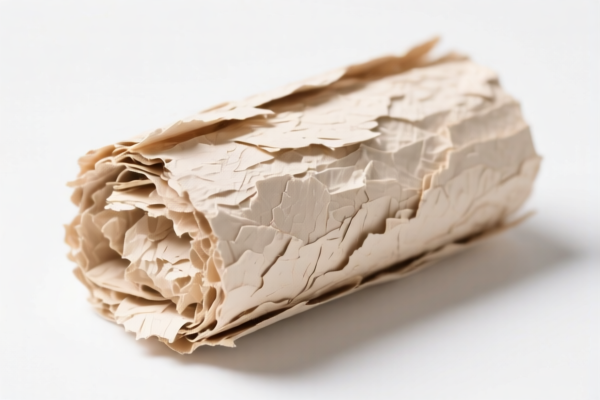


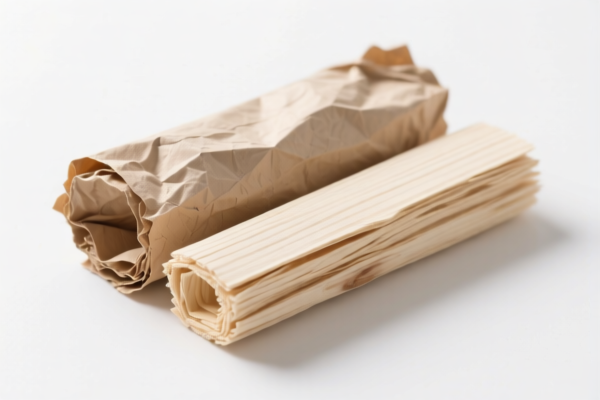
AI Analysis
🌲 Premium Semi-Blached Non-Coniferous Chemical Wood Pulp (High Strength)
🌐 HS Code Classification & Customs Clearance Guide | 2026 Latest Tariff Analysis | Professional Clearance Strategy
📌 I. Product Definition & Classification: Do You Understand "Chemical Wood Pulp"?
Semi-bleached non-coniferous chemical wood pulp is a critical raw material in the papermaking industry, particularly for producing high-strength packaging papers, kraft linerboards, and tissue. It is derived from non-coniferous (hardwood) trees (such as eucalyptus, birch, or poplar) using the chemical pulping process (e.g., Kraft or Soda process), followed by a semi-bleaching stage. This process retains more lignin than fully bleached pulp, resulting in higher strength and brightness levels suitable for structural packaging rather than white writing paper.
In international trade, precise classification is vital because the degree of bleaching (semi-bleached vs. bleached) and source material (coniferous vs. non-coniferous) drastically affect tariff rates and regulatory requirements.
⚠️ Key Distinction:
- "Non-coniferous" (Hardwood): Differentiates from pine/spruce/fir (coniferous), which fall under different HS codes.
- "Semi-bleached": Indicates partial delignification and brightness enhancement, distinguishing it from unbleached (brown) or fully bleached pulp.
- "Chemical": Indicates the pulping method (vs. mechanical or semi-chemical), which is a primary classifier in Chapter 47.
📦 II. HS Code Classification Details (2026 Latest Tariff Authority Reference)
Based on the provided data, the following HS Codes are applicable. Note that multiple codes share the same tax rate, reflecting slight variations in sub-category descriptions (e.g., packaging use vs. general chemical pulp characteristics).
| HS Code | Product Description | Applicable Scenario | Key Classification Criteria |
|---|---|---|---|
4703.29.00.20 |
Semi-bleached non-coniferous chemical wood pulp, for packaging | Packaging paper production, linerboard | Material, form, and specific use for packaging are covered. |
4703.21.00.20 |
Semi-bleached non-coniferous chemical wood pulp | General chemical pulp manufacturing | Matches material and process characteristics of semi-bleached chemical pulp. |
4704.29.00.00 |
Semi-bleached non-coniferous chemical wood pulp | High-strength specialty paper | Material and processing technology fully match the code requirements. |
4703.29.00.20 |
Semi-bleached non-coniferous chemical wood pulp | General chemical pulp use | Includes key elements: material, morphology, and use. |
4703.29.00.20 |
Semi-bleached non-coniferous chemical wood pulp | General chemical pulp use | Product name fully covers the characteristics required by the target code. |
🔍 Critical Reminder:
- All listed codes apply to Semi-bleached Non-coniferous Chemical Wood Pulp.
- The primary HS Code is 4703.29.00.20, with 4704.29.00.00 and 4703.21.00.20 as alternative classifications based on specific processing nuances.
- All carry a total tax rate of 35%, including significant additional duties.
💰 III. 2026 Latest Tariff Rate Breakdown (Including Surtaxes & Policy Add-ons)
✅ Applicable Country: United States (US)
✅ Origin: China (CN)
✅ Effective Date: From November 10, 2025 (and subsequent imports)
🎯 1. HS Codes 4703.29.00.20, 4703.21.00.20, 4704.29.00.00
(All listed semi-bleached non-coniferous chemical wood pulp codes)
| Item | Content |
|---|---|
| Base Tariff Rate | 0.0% (Ad Valorem) |
| Section 301 Surtax | +25.0% (Added duty under US Trade Law Section 301) |
| Section 122 Duty | +10.0% (Additional duty under specific 122 provisions for certain wood/pulp products) |
| Total Tax Rate | 35.0% |
| Tax Calculation | CIF Value × 35% |
| De Minimis Exemption Available? | ❌ NO (deny_de_minimis) |
| Legal Basis Path | Section 301: 25% → Section 122: 10% → HS Code: 4703.29.00.20 / 4703.21.00.20 / 4704.29.00.00 |
📌 Explanation:
- "Base Tariff 0%": Wood pulp generally has a low or zero base import duty under normal trade relations.
- "Section 301 Surtax 25%": This is the primary anti-dumping/countervailing or strategic tariff applied to many Chinese goods, including wood products.
- "Section 122 Duty 10%": A specific add-on tariff targeting certain wood and pulp imports, often linked to agricultural or forestry balance-of-payments measures.
- Total 35%: This is a high cost factor that must be factored into pricing strategies.
- No De Minimis: These goods cannot benefit from the $800 de minimis exemption for small shipments; they are subject to full duty assessment.
🛠️ IV. Customs Clearance Practical Advice (Battle-Tested Pitfall Avoidance)
✅ 1. Required Documentation Checklist (Non-Negotiable)
| Document | Must Provide | Explanation |
|---|---|---|
| ✅ Product Specification Sheet | ✔️ | Must detail: Pulp type (Kraft/Soda), brightness, viscosity, tensile index, and bleaching level. |
| ✅ Certificate of Origin (CO) | ✔️ | Critical for proving origin (China) to apply correct tariff rates. |
| ✅ Commercial Invoice | ✔️ | Must explicitly state: "Semi-bleached non-coniferous chemical wood pulp" and include HS Codes. |
| ✅ Packing List | ✔️ | Detail net/gross weight, number of bales, and packaging type (e.g., poly-lined bags). |
| ✅ Bill of Lading/Air Waybill | ✔️ | Standard shipping document. |
| ✅ Safety Data Sheet (SDS) | ✔️ | Although not hazardous, SDS may be requested to confirm chemical content and handling. |
| ✅ Previous Shipment Documents | ✔️ | If available, to prove consistent classification and valuation. |
✅ 2. Declaration Tips (Key Mantras)
🔥 "Precision in Description, Clarity in Origin, Full Disclosure of Duty!"
| Situation | Correct Declaration | Common Mistake |
|---|---|---|
| Generic "Wood Pulp" | Use full term: "Semi-bleached non-coniferous chemical wood pulp" | Vague terms → Customs may reclassify to higher duty or hold for inspection. |
| Confusing "Semi-bleached" with "Bleached" | Specify "Semi-bleached" | Misdeclaration → Potential fines for false classification. |
| Ignoring Additional Duties | Include 35% in cost calculation | Assuming 0% base = 0% total → Underpayment and penalties. |
| Splitting Shipments | Consolidate or declare fully | Attempting to use de minimis → Denied, goods held, fines applied. |
✅ 3. Special Circumstances Handling
| Situation | Handling Advice |
|---|---|
| Mixed Pulp Types | If shipment contains both coniferous and non-coniferous, separate declarations are required to avoid misclassification. |
| Packaging for Export | Ensure bales are well-compacted and moisture-controlled to prevent damage and weight disputes. |
| Price Volatility | Given the 35% duty, hedge against currency and price fluctuations. Consider long-term contracts. |
| Pre-Ruling Application | Strongly recommend applying for an Advance Ruling from US Customs (CBP) to confirm HS Code and duty liability before shipment. |
🌍 V. Global Market Clearance Comparison (2026 Latest)
| Country/Region | Recommended HS Code | Tariff Rate | Certification Requirements | Notes |
|---|---|---|---|---|
| 🇺🇸 USA | 4703.29.00.20 etc. |
35% (0% base + 25% Sec 301 + 10% Sec 122) | None specific, but accurate documentation is key | High duty burden; plan for cost absorption. |
| 🇨🇳 China | 4703.29.00 |
0% - 5% | None | Exporting from China may have different local incentives. |
| 🇪🇺 EU | 4703.29 |
0% | FSC/PEFC certification preferred | No additional US-style surtaxes. |
| 🇬🇧 UK | 4703.29 |
0% | FSC/PEFC certification preferred | Post-Brexit rules may apply. |
| 🇯🇵 Japan | 4703.29 |
0% | None | Competitive market. |
📌 Conclusion:
- The US market is the most expensive due to the 35% total duty.
- Other major markets (EU, UK, Japan, China) have minimal or zero tariffs, making them more attractive if supply chains can be diversified.
- Provenance and sustainability certifications (FSC/PEFC) are increasingly important globally, though not directly affecting US tariffs.
📌 VI. Common Errors & Pitfall Avoidance (Lessons from the Field)
❌ Mistake 1: Declaring "Chemical Wood Pulp" without specifying "Semi-bleached" or "Non-coniferous"
👉 Consequence: Customs may classify under a different, potentially higher-duty or restricted code → Delays & Seizures.
❌ Mistake 2: Assuming the base 0% tariff means no duty
👉 Consequence: Underpayment of 35% → Fines, penalties, and back taxes.
❌ Mistake 3: Ignoring the Section 122 10% duty
👉 Consequence: Incomplete declaration → Audit risk & additional assessments.
❌ Mistake 4: Using vague product names like "Paper Raw Material"
👉 Consequence: Rejection by CBP or referral to secondary inspection → Significant delays.
✅ Correct Practice:
"Semi-bleached Non-Coniferous Chemical Wood Pulp, High Strength, for Packaging Paper, HS Code: 4703.29.00.20, Origin: China, Duty: 35% (incl. Sec 301 & 122)"
🎯 VII. Conclusion: Professional Declaration, Cost Efficiency, Risk Mitigation
🎯 Remember the Mantra:
🔹 "Accurate Description, Full Duty Awareness, Document Rigor!"
🔹 "HS Code Determines Cost, 35% is the Real Price, Declaration Precision Saves Thousands!"
📌 Pro Tip:
If your pulp is sourced from Vietnam, Indonesia, or Brazil, it may avoid US Section 301 and 122 duties, reducing the tariff to 0% or minimal levels.
Strongly advise:
1. Pre-clearance Ruling from CBP.
2. Supply Chain Diversification if US market is critical.
3. Accurate Product Specification Sheets to support classification.
📣 Immediate Action:
📞 Consult with a licensed customs broker + Provide detailed product specs + Apply for HS Code Advance Ruling
🚀 Ensure smooth clearance, cost control, and compliance for your wood pulp exports!
✨ Professional Customs Clearance Starts with Precise Classification!
💼 Every Percent of Duty Counts in Your Margin!
Customer Reviews
About HS Code Classification
The Harmonized System (HS) is an internationally standardized nomenclature developed by the World Customs Organization (WCO) to classify traded products. Over 200 countries use the HS system as the basis for customs tariffs, trade statistics, and import/export regulations.
Each HS code follows a hierarchical structure:
- Chapter (2 digits) — Broad category of goods (e.g., Chapter 84: Machinery and Mechanical Appliances)
- Heading (4 digits) — More specific grouping within the chapter
- Subheading (6 digits) — Internationally standardized breakdown, used by all WCO member countries
- National subdivisions (8-10 digits) — Country-specific extensions for further classification, such as US HTSUS 10-digit codes
Correct HS code classification is essential for smooth customs clearance, accurate duty payment, and compliance with trade regulations. Misclassification can lead to customs delays, overpayment of duties, or penalties.
When importing from CN to US, the applicable tariff rates may include:
- Most-Favored-Nation (MFN) rate — The standard duty rate applied to WTO members
- General rate — Applied to countries without trade agreements
- Trade remedy duties — Additional tariffs such as Section 301 (anti-dumping), Section 232 (national security), or countervailing duties
The information provided on this page is for reference purposes only. For official classification, please consult with your local customs authority or a licensed customs broker.