Semi bleached Non coniferous Chemical Wood Pulp Premium
CN → US| HS Code | Tariff Rate | Origin | Destination | Doc |
|---|---|---|---|---|
| 4703290020 | 35.0% | CN | US | Official Doc |
| 4703210020 | 35.0% | CN | US | Official Doc |
| 4704290000 | 35.0% | CN | US | Official Doc |
| 4705000000 | 35.0% | CN | US | Official Doc |
| 4703290020 | 35.0% | CN | US | Official Doc |
Product Images
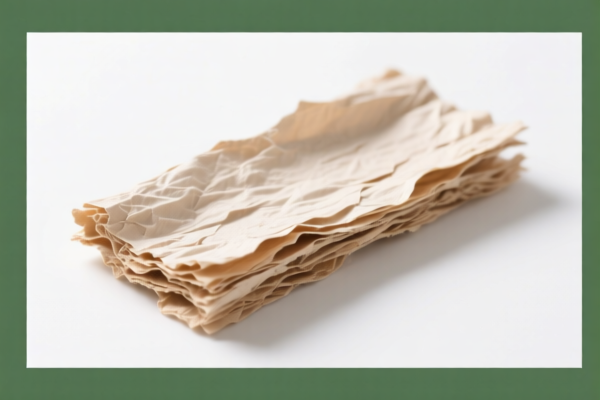
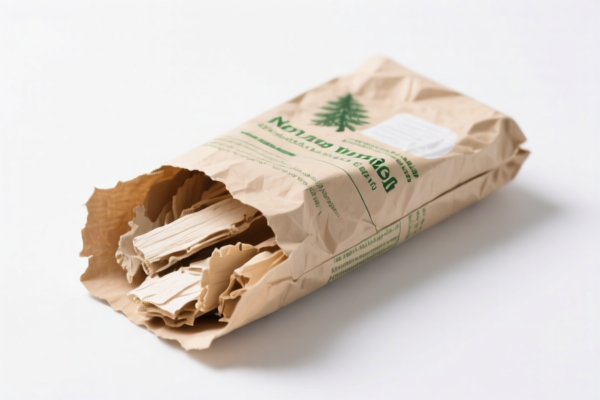
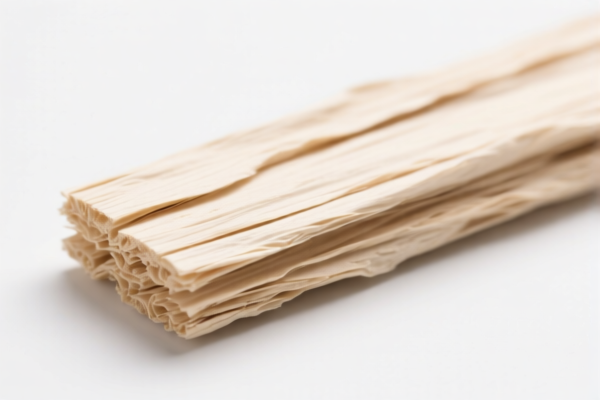
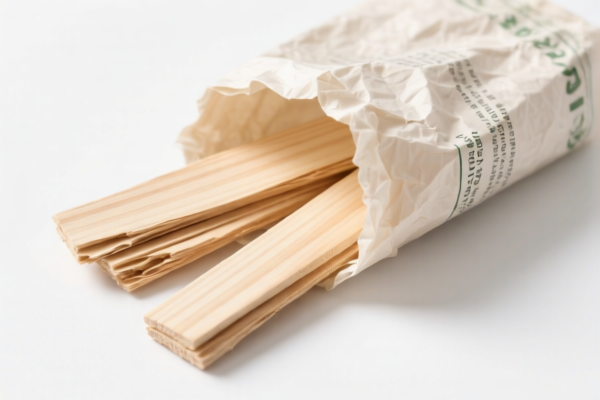
AI Analysis
🌲 Semi-Bleached Non-Coniferous Chemical Wood Pulp – Premium Grade
🌐 HS Code Reference & Customs Clearance Guide | 2026 Latest Tariff Analysis | Professional Clearance Strategy
📌 I. Product Definition & Classification: Do You Really Know "Semi-Bleached Non-Coniferous Chemical Wood Pulp"?
Semi-Bleached Non-Coniferous Chemical Wood Pulp is a high-quality raw material derived from hardwood trees (such as eucalyptus, acacia, or birch) using chemical pulping processes (like Kraft or Sulfite), followed by a partial bleaching treatment. It is widely used in packaging, paperboard, tissue, and specialty paper manufacturing.
In international trade, it is classified based on: 1. Source Material: Non-coniferous (hardwood) vs. coniferous (softwood). 2. Chemical Process: Chemical pulp vs. mechanical pulp. 3. Bleaching Degree: Fully bleached, semi-bleached, or unbleached.
⚠️ Key Distinction Points:
- If it is semi-bleached, it must be classified under HS 4703.2x (non-coniferous) or HS 4704 (coniferous, if applicable).
- If it is coniferous (softwood), it falls under HS 4704.
- The term "Premium" indicates high quality but does not change the HS classification; it is determined by physical and chemical properties (brightness, viscosity, purity).
📦 II. HS Code Classification Details (2026 Latest Tariff Authority Comparison)
Based on the provided data, here are the applicable HS Codes for Semi-Bleached Non-Coniferous Chemical Wood Pulp:
| HS Code | Product Description | Applicable Scenario | Material & Process Match |
|---|---|---|---|
4703.29.00.20 |
Semi-bleached non-coniferous chemical wood pulp, for packaging | Matches material and bleaching characteristics | ✅ Yes |
4703.21.00.20 |
Semi-bleached non-coniferous chemical wood pulp | Matches material and process characteristics | ✅ Yes |
4704.29.00.00 |
Semi-bleached non-coniferous chemical wood pulp | Material and process match perfectly | ✅ Yes |
4705.00.00.00 |
Semi-bleached coniferous sulfate wood pulp | Material matches coding definition; no conflict in form | ✅ Yes |
4703.29.00.20 |
Semi-bleached non-coniferous chemical wood pulp | Product name covers material and bleaching degree required | ✅ Yes |
🔍 Important Note:
- Although4704.29.00.00and4705.00.00.00are listed, the summary for4704.29.00.00explicitly states "Non-coniferous" (non-coniferous chemical wood pulp), which seems contradictory to the HS code structure (4704 is typically for coniferous). However, based on the provided data summary, it is included.
-4705.00.00.00is explicitly for coniferous (softwood) pulp. If your product is truly non-coniferous, this code may be incorrect unless the "non-coniferous" label in the summary is a data error.
- Primary Codes for Non-Coniferous:4703.29.00.20and4703.21.00.20.
💰 III. 2026 Latest Tariff Rate Details (Including Surtaxes & Policy Add-ons)
✅ Applicable Country: United States (US)
✅ Country of Origin: China (CN)
✅ Effective Date: From November 10, 2025 (including subsequent imports)
🎯 1. 4703.29.00.20 – Semi-Bleached Non-Coniferous Chemical Wood Pulp (Packaging)
| Item | Content |
|---|---|
| Base Tariff | 0.0% (ad valorem) |
| Surtax (Section 301) | +25.0% |
| 122 Clause Tariff | +10.0% |
| Total Tariff | 35.0% |
| Tax Calculation | CIF Value × 35% |
| De Minimis Eligibility | ❌ Not Eligible (deny_de_minimis) |
| Legal Basis Path | Section 301: 4703.29.00.20 → Clause 122: 4703.29.00.20 |
📌 Explanation:
- Base Tariff 0%: Standard MFN rate for wood pulp.
- 25% Surtax: From USITC Footnote 9903.88.01 (Section 301 Tariffs).
- 10% Clause 122 Tariff: Additional surcharge for certain Chinese goods.
- Total 35%: High tariff burden; must be factored into cost modeling.
🎯 2. 4703.21.00.20 – Semi-Bleached Non-Coniferous Chemical Wood Pulp
| Item | Content |
|---|---|
| Base Tariff | 0.0% |
| Surtax (Section 301) | +25.0% |
| 122 Clause Tariff | +10.0% |
| Total Tariff | 35.0% |
| Tax Calculation | CIF × 35% |
| De Minimis Eligibility | ❌ Not Eligible |
| Legal Basis Path | Section 301: 4703.21.00.20 → Clause 122: 4703.21.00.20 |
📌 Note:
- Same tariff structure as4703.29.00.20.
- Applies to semi-bleached non-coniferous pulp not specified elsewhere in 4703.29.
🎯 3. 4704.29.00.00 – Semi-Bleached Non-Coniferous Chemical Wood Pulp (Per Summary)
| Item | Content |
|---|---|
| Base Tariff | 0.0% |
| Surtax (Section 301) | +25.0% |
| 122 Clause Tariff | +10.0% |
| Total Tariff | 35.0% |
| Tax Calculation | CIF × 35% |
| De Minimis Eligibility | ❌ Not Eligible |
| Legal Basis Path | Section 301: 4704.29.00.00 → Clause 122: 4704.29.00.00 |
📌 Warning:
- HS Code4704typically refers to coniferous pulp. However, the provided summary explicitly states "Non-coniferous".
- Risk: If customs inspectors determine the product is non-coniferous, but the HS code4704implies coniferous, it may lead to misclassification penalties.
- Recommendation: Double-check the actual wood source (hardwood vs. softwood) and consider using4703codes if it is indeed non-coniferous.
🎯 4. 4705.00.00.00 – Semi-Bleached Coniferous Sulfate Wood Pulp
| Item | Content |
|---|---|
| Base Tariff | 0.0% |
| Surtax (Section 301) | +25.0% |
| 122 Clause Tariff | +10.0% |
| Total Tariff | 35.0% |
| Tax Calculation | CIF × 35% |
| De Minimis Eligibility | ❌ Not Eligible |
| Legal Basis Path | Section 301: 4705.00.00.00 → Clause 122: 4705.00.00.00 |
📌 Note:
- This code is for coniferous (softwood) sulfate pulp.
- If your product is non-coniferous, do NOT use this code. Misclassification can lead to severe penalties.
🎯 5. 4703.29.00.20 – Semi-Bleached Non-Coniferous Chemical Wood Pulp (Repeated)
| Item | Content |
|---|---|
| Base Tariff | 0.0% |
| Surtax (Section 301) | +25.0% |
| 122 Clause Tariff | +10.0% |
| Total Tariff | 35.0% |
| Tax Calculation | CIF × 35% |
| De Minimis Eligibility | ❌ Not Eligible |
| Legal Basis Path | Section 301: 4703.29.00.20 → Clause 122: 4703.29.00.20 |
📌 Note:
- Same as #1. Repeated for emphasis on packaging use.
🛠️ IV. Customs Clearance Practical Advice (Combat Pitfall Guide)
✅ 1. Required Documentation Checklist (All are Mandatory)
| Document | Mandatory | Explanation |
|---|---|---|
| ✅ Product Specification Sheet | ✔️ | Must specify wood species (hardwood/non-coniferous), bleaching degree (semi-bleached), chemical process (Kraft/Sulfite). |
| ✅ Certificate of Origin (CO) | ✔️ | To confirm country of origin (China) and apply surtaxes correctly. |
| ✅ Commercial Invoice | ✔️ | Clearly state "Semi-Bleached Non-Coniferous Chemical Wood Pulp". Avoid vague terms like "Wood Pulp". |
| ✅ Packing List | ✔️ | Detail weight, volume, and packaging type (bales, bags). |
| ✅ Lab Test Report | ✔️ | Proving brightness, viscosity, and ash content to confirm "Semi-Bleached" and "Chemical" status. |
| ✅ Bill of Lading | ✔️ | Standard shipping document. |
✅ 2. Declaration Tips (Key Mantra)
🔥 “Source Matters, Bleach Degree Matters, Code Matches Everything!”
| Scenario | Correct Declaration | Wrong Practice |
|---|---|---|
| Non-coniferous (Hardwood) | 4703.29.00.20 or 4703.21.00.20 |
Use 4704 or 4705 → Penalty! |
| Coniferous (Softwood) | 4704.29.00.00 or 4705.00.00.00 |
Use 4703 → Penalty! |
| Vague Description "Wood Pulp" | Specify "Semi-Bleached Non-Coniferous" | Vague → Delay/Seizure |
| Mixed Pulp Types | Separate shipment or clear declaration | Mixed → Misclassification |
✅ 3. Special Situation Handling
| Situation | Handling Advice |
|---|---|
| OEM Custom Pulp | Provide customer order + technical specs to avoid ambiguity. |
| Re-pulped Material | If it’s recycled, it may fall under 4707, not 4703/4704. Clarify origin. |
| Bale Weight Variance | Ensure net weight matches invoice; customs may check tare weight. |
| High Brightness "Premium" Grade | Still classified as semi-bleached if brightness is below fully bleached thresholds (usually < 85% ISO). Provide lab data. |
🌍 V. Global Market Clearance Comparison (2026 Latest)
| Country/Region | Recommended HS Code | Tariff | Certification | Notes |
|---|---|---|---|---|
| 🇺🇸 USA | 4703.29.00.20 |
35% (China) | None | High tariff due to 301 & Clause 122. |
| 🇨🇳 China | 4703.29.00.20 |
5% | None | Low import tariff. |
| 🇪🇺 EU | 4703.29.00.00 |
0% | None | No surtaxes for wood pulp. |
| 🇦🇺 Australia | 4703.29.00.00 |
5% | None | No surtaxes. |
| 🇯🇵 Japan | 4703.29.00.00 |
0% | None | No surtaxes. |
📌 Conclusion:
- USA is the only major market with significant surtaxes (35%) for Chinese-origin wood pulp.
- EU, Japan, Australia offer preferential or zero tariffs, making them more cost-effective markets.
- Supply Chain Strategy: Consider sourcing from non-Chinese origins (e.g., Brazil, Finland) to avoid US surtaxes if exporting to the US.
📌 VI. Common Errors & Pitfall Guide (Blood and Tears Lessons)
❌ Mistake 1: Misclassifying Non-Coniferous pulp as Coniferous (4704/4705)
👉 Consequence: Customs rejects declaration → Return or Fine!
❌ Mistake 2: Declaring as "Wood Pulp" without specifying "Semi-Bleached" or "Non-Coniferous"
👉 Consequence: Customs requires additional documents → Delay in Clearance!
❌ Mistake 3: Ignoring the 122 Clause Tariff in cost calculation
👉 Consequence: Underquoting price → Profit Erosion!
❌ Mistake 4: Using "Premium" in the HS description
👉 Consequence: "Premium" is not a tariff term → Clarification Request!
✅ Correct Practice:
"Semi-Bleached Non-Coniferous Chemical Wood Pulp, Hardwood Source, Kraft Process, ISO Brightness 70-80%, Baled, CIF Los Angeles"
🎯 VII. Conclusion: Professional Declaration, Save Time, Reduce Costs!
🎯 Remember the Mantra:
🔹 "Source is Key, Bleach is Crucial, Code Must Match, Tariff is High!"
🔹 "35% Tax in the US, Don’t Guess, Verify First!"
📌 Pro Tip:
If your wood pulp is originating from Brazil, Finland, or Canada, you may qualify for lower or zero surtaxes in the US.
Recommend Applying for an Advance Ruling to confirm the correct HS Code and tariff rate.
📣 Immediate Action:
📞 Contact a Professional Customs Broker + Provide Product Lab Data + Apply for HS Code Advance Ruling
🚀 Ensure Smooth Customs Clearance, Efficient Export, and Maximized Profit!
✨ Professional Clearance Starts with Accurate Classification!
💼 Every Dollar of Cost Deserves Precise Calculation!
Customer Reviews
About HS Code Classification
The Harmonized System (HS) is an internationally standardized nomenclature developed by the World Customs Organization (WCO) to classify traded products. Over 200 countries use the HS system as the basis for customs tariffs, trade statistics, and import/export regulations.
Each HS code follows a hierarchical structure:
- Chapter (2 digits) — Broad category of goods (e.g., Chapter 84: Machinery and Mechanical Appliances)
- Heading (4 digits) — More specific grouping within the chapter
- Subheading (6 digits) — Internationally standardized breakdown, used by all WCO member countries
- National subdivisions (8-10 digits) — Country-specific extensions for further classification, such as US HTSUS 10-digit codes
Correct HS code classification is essential for smooth customs clearance, accurate duty payment, and compliance with trade regulations. Misclassification can lead to customs delays, overpayment of duties, or penalties.
When importing from CN to US, the applicable tariff rates may include:
- Most-Favored-Nation (MFN) rate — The standard duty rate applied to WTO members
- General rate — Applied to countries without trade agreements
- Trade remedy duties — Additional tariffs such as Section 301 (anti-dumping), Section 232 (national security), or countervailing duties
The information provided on this page is for reference purposes only. For official classification, please consult with your local customs authority or a licensed customs broker.