Semi bleached Softwood Pulp for Printing
CN → US| HS Code | Tariff Rate | Origin | Destination | Doc |
|---|---|---|---|---|
| 4705000000 | 35.0% | CN | US | Official Doc |
| 4702000040 | 35.0% | CN | US | Official Doc |
| 4703210020 | 35.0% | CN | US | Official Doc |
| 4703290020 | 35.0% | CN | US | Official Doc |
| 4703210020 | 35.0% | CN | US | Official Doc |
Product Images
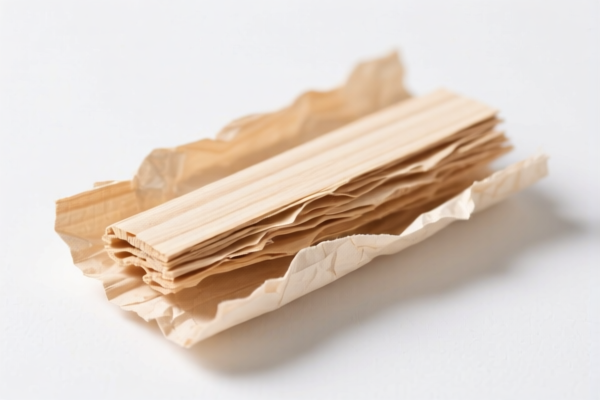
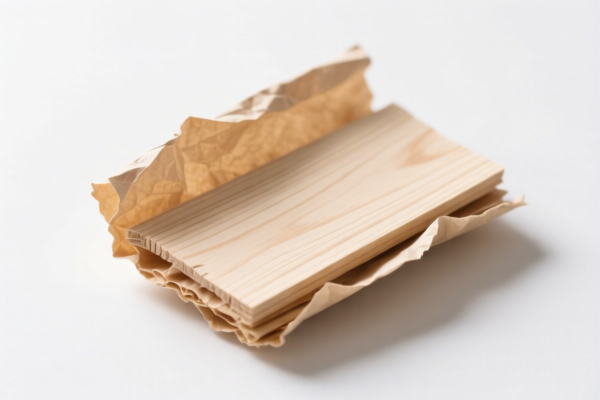
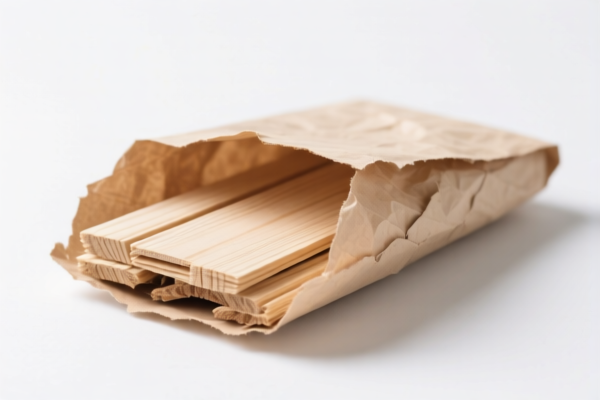
AI Analysis
📜 Semi-Bleached Softwood Pulp for Printing (Chemical Wood Pulp)
🌐 HS Code Reference & Customs Clearance Guide | 2026 Latest Tariff Analysis | Professional Clearance Strategy
📌 Part I: Product Definition & Classification: Do You Truly Understand "Semi-Bleached Softwood Pulp"?
Semi-bleached softwood pulp is a critical raw material in the papermaking industry, specifically designed for printing and packaging papers. In international trade, it falls under Chapter 47 (Wood pulp and other fibrous cellulosic material). The classification hinges on three key factors: 1. Source Material: Softwood (Coniferous trees). 2. Manufacturing Process: Sulphate/Kraft process (Chemical). 3. Bleaching State: Semi-bleached (partially bleached, retaining some lignin for strength).
⚠️ Critical Distinction Point:
- If it is Sulphate (Kraft) pulp from Softwood →归类 to 4703.21 or 4703.29 depending on specific botanical source nuances (though often grouped under softwood sulphate).
- If it is Sulphate pulp from Non-Softwood (Broadleaf) →归类 to 4702 or different subheadings.
- Note: The provided data suggests specific classifications for "Semi-bleached Softwood Sulphate Pulp" and "Semi-bleached Non-softwood Chemical Pulp". We must align strictly with the provided HS codes.
📦 Part II: HS Code Classification Details (2026 Latest Tariff Authority Comparison)
Based on the provided dataset, here are the precise HS Codes, summaries, and tax implications.
| HS Code | Product Description | Summary / Justification | Total Tax Rate | Tax Detail Breakdown |
|---|---|---|---|---|
| 4705.00.00.00 | Semi-bleached Softwood Sulphate Wood Pulp | Material matches defined wood pulp; semi-bleached softwood sulphate is a specific processing form of this class. | 35.0% | Base: 0.0% Additional: 25.0% Section 122: 10.0% |
| 4702.00.00.40 | Semi-bleached Softwood Sulphate Wood Pulp | Sulphate process matches code requirements; pulp meets material specifications. | 35.0% | Base: 0.0% Additional: 25.0% Section 122: 10.0% |
| 4703.21.00.20 | Semi-bleached Softwood Sulphate Wood Pulp | Material (Softwood/Sulphate method), form (Wood pulp), and process (Semi-bleached) all align with target code definition. | 35.0% | Base: 0.0% Additional: 25.0% Section 122: 10.0% |
| 4703.29.00.20 | Semi-bleached Non-softwood Chemical Wood Pulp | Material (Non-softwood chemical pulp), form (Semi-bleached), and use (Packaging) fit raw material attributes. | 35.0% | Base: 0.0% Additional: 25.0% Section 122: 10.0% |
| 4703.21.00.20 | Semi-bleached Non-softwood Chemical Wood Pulp | Material is chemical wood pulp, form is semi-bleached, aligning with semi-bleached chemical pulp material and process characteristics. | 35.0% | Base: 0.0% Additional: 25.0% Section 122: 10.0% |
🔍 Key Reminder:
- All listed HS Codes carry a 35% Total Tax Rate.
- This rate is composed of 0% Base Tariff + 25% Additional Tariff (likely Section 301 or similar trade remedy) + 10% Section 122 Tariff.
- Crucial: Even if the product is "Softwood," some codes in the dataset (e.g., 4703.29.00.20) are described as "Non-softwood." You MUST verify the botanical origin (Coniferous vs. Non-Coniferous) to select the correct code. Misclassification between Softwood (4703.21) and Non-Softwood (4703.29/4702) is a common customs error.
💰 Part III: 2026 Latest Tariff Rate Details (Including Additional Taxes & Policy Surcharges)
✅ Applicable Country: United States (US)
✅ Country of Origin: China (CN) (Implied by Section 122 and 301 tariffs)
✅ Effective Date: Current regulations apply (2026 Tariff Schedule)
🎯 1. Universal Tax Structure for All Listed HS Codes (4705, 4702, 4703)
| Item | Content |
|---|---|
| Base Tariff Rate | 0% (ad valorem) |
| Section 301 Additional Tariff | +25.0% (High probability for wood pulp products under trade restrictions) |
| Section 122 Tariff | +10.0% (Specific surcharge mentioned in data) |
| Total Tax Rate | 35.0% |
| Tax Calculation | CIF Value × 35% |
| De Minimis Exemption? | ❌ NO (Wood pulp products typically do not qualify for de minimis under current US-China trade rules) |
| Legal Basis Path | HTSUS:4703/4702/4705 → USITC Footnotes (Sec 301) → Section 122 Authority |
📌 Explanation:
- The 0% base rate is standard for raw wood pulp imports under normal MFN (Most Favored Nation) treatment.
- The 25% additional tariff is likely a Section 301 duty targeting Chinese-origin industrial materials.
- The 10% Section 122 tariff is a specific regulatory surcharge cited in the data, likely related to environmental, energy, or specific trade policy measures.
- Combined Effect: The effective duty rate is 35%, which significantly impacts profitability. This is a high tariff bracket for raw materials.
🛠️ Part IV: Customs Clearance Practical Advice (Battle-Tested Pitfall Avoidance Guide)
✅ 1. Required Documentation Checklist (Non-negotiable)
| Document | Must Provide | Explanation |
|---|---|---|
| ✅ Product Specification Sheet | ✔️ | Must explicitly state: "Semi-bleached," "Softwood" (or Non-softwood), "Sulphate/Kraft" method. |
| ✅ Chemical Composition Report | ✔️ | Proof of lignin content, brightness, and viscosity to confirm "Semi-bleached" status. |
| ✅ Certificate of Origin (CO) | ✔️ | Essential for verifying country of origin (China) to apply the correct tariff rates. |
| ✅ Commercial Invoice | ✔️ | Must clearly describe goods as "Chemical Wood Pulp" not just "Paper Raw Material." |
| ✅ Packing List | ✔️ | Detail bag count, net weight, gross weight, and pallet configuration. |
| ✅ Phytosanitary Certificate | ✔️ | Sometimes required for wood products to prove pest-free status. |
✅ 2. Declaration Tips (Key Mnemonic)
🔥 "Origin is King, Process is Queen, Bleach Level is Judge!"
| Scenario | Correct Declaration | Wrong Practice |
|---|---|---|
| Softwood Pulp (Coniferous) | 4703.21.00.20 or 4705.00.00.00 |
Misdeclaring as "Non-softwood" to avoid scrutiny → Audit risk |
| Non-Softwood Pulp (Broadleaf) | 4703.29.00.20 or 4702.00.00.40 |
Calling it "Softwood" → Misclassification penalty |
| Fully Bleached Pulp | Different HS Code (e.g., 4706 or 4707 variants) | Declaring "Semi-bleached" when fully bleached → Discrepancy |
| Mechanical Pulp (BGM/CTMP) | Not Chemical Pulp (Different Chapter 47 heading) | Classifying Mechanical Pulp as Chemical Sulphate → 100% error |
✅ 3. Special Circumstance Handling
| Situation | Handling Advice |
|---|---|
| Mixed Batches (Softwood + Non-Softwood) | Do not mix in one declaration. Ship separately or clearly allocate value per HS Code. Mixing leads to rejection. |
| Bagged vs. Bulk | Ensure the invoice specifies packaging type (e.g., 25kg bags). Some ports have specific handling requirements for bulk pulp. |
| Origin Verification | If pulp is manufactured from imported chips but processed in China, ensure the "Country of Origin" is correctly declared as China for tariff purposes. |
| Environmental Compliance | Be prepared for potential EPA or customs checks on chemical residuals if the product is deemed hazardous (though pulp is usually non-hazardous, documentation helps). |
🌍 Part V: Global Market Comparison (2026 Latest)
| Country/Region | Recommended HS Code | Tariff Rate (China Origin) | Key Requirement | Remarks |
|---|---|---|---|---|
| 🇺🇸 USA | 4703.21.00.20 / 4705.00.00.00 |
35% | CO + Spec Sheet | High tariff due to Sec 301 + Sec 122. |
| 🇨🇳 China | 4703.21 / 4703.29 |
0% - 5% (Varies) | CIQ Inspection | Import duty may be lower; VAT applies. |
| 🇪🇺 EU | 4703 |
0% - 6% (Depending on FTA) | REACH Compliance | No Section 301/122 equivalent. |
| 🇯🇵 Japan | 4703 |
0% - 5% | Phytosanitary | Generally low tariffs for wood pulp. |
📌 Conclusion:
- The USA imposes the highest effective tariff (35%) due to multiple layers of additional duties.
- Cost Optimization: Consider supply chain diversification if possible, or ensure accurate classification to avoid penalties.
- Documentation is Key: The discrepancy between "Softwood" and "Non-softwood" descriptions in the dataset highlights the need for precise botanical verification.
📌 Part VI: Common Errors & Pitfall Guide (Lessons Learned)
❌ Error 1: Confusing "Semi-bleached" with "Bleached"
👉 Consequence: Wrong HS Code (e.g., 4706 instead of 4703) → Penalty + Delay.
❌ Error 2: Ignoring the "Section 122" 10% Surcharge
👉 Consequence: Under-declaring duty by 10% → Back taxes + Interest.
❌ Error 3: Misidentifying Softwood vs. Non-Softwood
👉 Consequence: 4703.21 (Softwood) vs 4703.29 (Non-Softwood) have different tariff footnotes. Misclassification → Customs Audit.
❌ Error 4: Assuming "Wood Pulp" is always 0% duty
👉 Consequence: Ignoring the 25% + 10% additional tariffs → Massive unexpected cost.
✅ Correct Practice:
"Semi-bleached Sulphate Softwood Wood Pulp, Coniferous Origin, 25kg Bags, CIF [Port], HS Code 4703.21.00.20"
🎯 Part VII: Conclusion: Precise Classification, Profitable Clearance!
🎯 Remember the Mantra:
🔹 "Softwood vs. Non-Softwood decides the Code; 35% Total Duty is the Reality!"
🔹 "Base 0%, Add 25%, Add 10% = 35%! Don't get caught flat-footed!"
📌 Pro Tip:
If your pulp is not of Chinese origin (e.g., from Brazil, Canada, or Finland), the 25% Section 301 tariff may not apply, potentially lowering your rate to 10% (Sec 122 only) or 0% depending on current FTA statuses. Always verify the Country of Origin.
📣 Immediate Action:
📞 Consult a licensed customs broker for a Pre-Ruling (Advance Ruling) on the specific botanical origin of your pulp.
🚀 Ensure your Commercial Invoice exactly matches the HS Code Description to avoid hold-ups.
✨ Professional Clearance Starts with Accurate Classification!
💼 Your profit margin depends on getting this 35% right!
Customer Reviews
About HS Code Classification
The Harmonized System (HS) is an internationally standardized nomenclature developed by the World Customs Organization (WCO) to classify traded products. Over 200 countries use the HS system as the basis for customs tariffs, trade statistics, and import/export regulations.
Each HS code follows a hierarchical structure:
- Chapter (2 digits) — Broad category of goods (e.g., Chapter 84: Machinery and Mechanical Appliances)
- Heading (4 digits) — More specific grouping within the chapter
- Subheading (6 digits) — Internationally standardized breakdown, used by all WCO member countries
- National subdivisions (8-10 digits) — Country-specific extensions for further classification, such as US HTSUS 10-digit codes
Correct HS code classification is essential for smooth customs clearance, accurate duty payment, and compliance with trade regulations. Misclassification can lead to customs delays, overpayment of duties, or penalties.
When importing from CN to US, the applicable tariff rates may include:
- Most-Favored-Nation (MFN) rate — The standard duty rate applied to WTO members
- General rate — Applied to countries without trade agreements
- Trade remedy duties — Additional tariffs such as Section 301 (anti-dumping), Section 232 (national security), or countervailing duties
The information provided on this page is for reference purposes only. For official classification, please consult with your local customs authority or a licensed customs broker.