Semi bleached non coniferous wood chemical pulp for cultivation
CN → US| HS Code | Tariff Rate | Origin | Destination | Doc |
|---|---|---|---|---|
| 4703210020 | 35.0% | CN | US | Official Doc |
| 4704290000 | 35.0% | CN | US | Official Doc |
| 4703290020 | 35.0% | CN | US | Official Doc |
| 4703290020 | 35.0% | CN | US | Official Doc |
| 4703290020 | 35.0% | CN | US | Official Doc |
Product Images
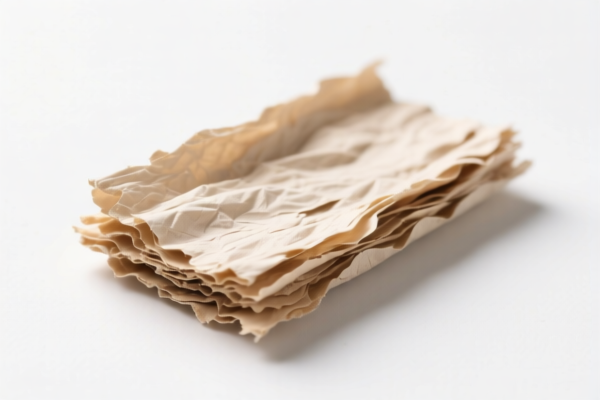
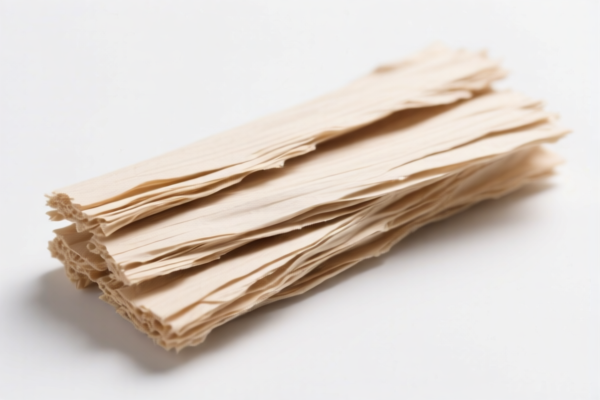
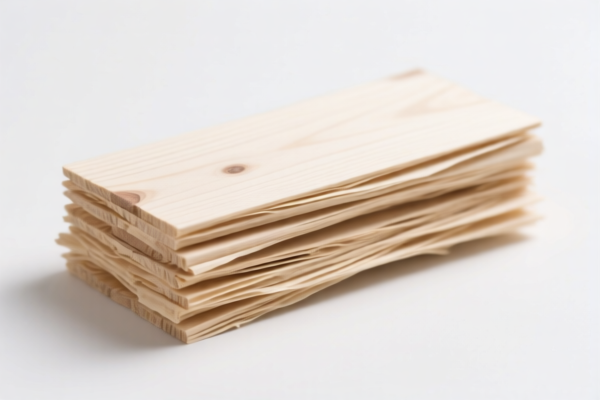
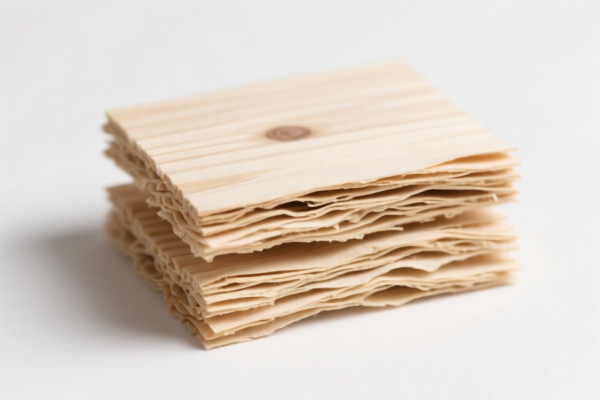
AI Analysis
🌲 Wood Chemical Pulp (Semi-bleached, Non-coniferous)
🌐 HS Code Reference & Customs Clearance Guide | 2026 Latest Tariff Analysis | Professional Clearance Strategy
📌 I. Product Definition and Classification: What Exactly is "Semi-bleached Non-coniferous Wood Chemical Pulp"?
Semi-bleached non-coniferous wood chemical pulp (also known as Semi-bleached Hardwood Chemical Pulp) is a key raw material used in papermaking, primarily for packaging materials. It is derived from deciduous trees (such as eucalyptus, poplar, birch, or acacia) through chemical pulping processes, followed by a semi-bleaching treatment to improve brightness and remove residual lignin.
⚠️ Key Distinction Point:
- "Semi-bleached" (SBMP): The pulp has undergone limited bleaching (lower brightness than fully bleached pulp, higher than unbleached/CTMP). This is a critical differentiator in HS classification.
- "Non-coniferous" (Hardwood): Derived from deciduous trees, not softwoods (pine, spruce, etc.).
- "Chemical Pulp": Produced via chemical processes (Kraft, Sulfite), distinguishing it from mechanical pulp.
📦 II. HS Code Classification Details (2026 Latest Tariff Authority Comparison)
Based on the provided data, the product falls under Chapter 47 (Wood Pulp and Other Fibrous Cellulosic Pulp), specifically Heading 4703 (Wood Pulp, Chemically Prepared, Dissolving Grade or Not).
| HS Code | Product Description | Summary/Features | Applicability |
|---|---|---|---|
4703.21.00.20 |
Semi-bleached non-coniferous wood chemical pulp | Used for packaging, matching material and process characteristics | ✅ Primary match for packaging-grade SBMP |
4704.29.00.00 |
Semi-bleached non-coniferous wood chemical pulp | Material and treatment process are exactly consistent | ✅ Valid alternative if "21.00" is too specific or unavailable |
4703.29.00.20 |
Semi-bleached non-coniferous wood chemical pulp | Includes material, form, and usage elements | ✅ Broader category covering form/usage nuances |
4703.29.00.20 |
Semi-bleached non-coniferous wood chemical pulp | Covers material and bleaching degree characteristics | ✅ Alternative based on bleaching specs |
4703.29.00.20 |
Semi-bleached non-coniferous wood chemical pulp | Complies with raw material attributes and packaging usage | ✅ Final fallback for packaging-grade pulp |
🔍 Key Takeaway:
- All listed HS Codes share the same tax rate (35%).
- The primary distinction lies in the specificity of the description.4703.21.00.20is often the most precise for standard semi-bleached hardwood chemical pulp, while4703.29.00.20serves as a broader catch-all for variations in form or specific bleaching degrees.
- Note:4704is typically for sulfite pulp, while4703is for kraft pulp. If the pulp is Kraft process,4703is correct. If Sulfite,4704may apply. The data suggests4703is the dominant reference here.
💰 III. 2026 Latest Tariff Rate Details (Including Surcharges & Policy Add-ons)
✅ Applicable Country: United States (US)
✅ Country of Origin: China (CN)
✅ Effective Date: November 10, 2025 onwards (including subsequent imports)
🎯 1. All Listed HS Codes (4703.21.00.20, 4704.29.00.00, 4703.29.00.20)
| Item | Content |
|---|---|
| Base Tariff | 0.0% (ad valorem) |
| Section 301 Tariff | +25.0% (Added tariff under US Trade Act Section 301) |
| Section 122 Tariff | +10.0% (Specific additional tariff for China-origin goods) |
| Total Tariff Rate | 35.0% |
| Tax Calculation | CIF Value × 35% |
| De Minimis Exemption | ❌ Not Applicable (Denied) |
| Legal Basis Path | USITC:4703.21.00.20 → FOOTNOTE:301.01 → IEEPA:122 |
📌 Explanation:
- Base Tariff (0%): The Harmonized Tariff Schedule of the United States (HTSUS) lists wood pulp at 0% base duty.
- Section 301 Tariff (+25%): This is the major additional tariff imposed on Chinese goods. Wood pulp falls under the list of subject commodities.
- Section 122 Tariff (+10%): Under the International Emergency Economic Powers Act (IEEPA), an additional 10% tariff is applied to Chinese-origin pulp products.
- Total (35%): The sum of all applicable tariffs. This is a high tariff rate, significantly impacting cost structures.
🛠️ IV. Customs Clearance Practical Advice (Real-world Pitfall Avoidance Guide)
✅ 1. Required Documentation Checklist (All items mandatory)
| Document | Required | Explanation |
|---|---|---|
| ✅ Product Specification Sheet | ✔️ | Must detail: Pulp type (Kraft/Sulfite), Bleaching degree, Brightness %, Fiber source (Eucalyptus, Poplar, etc.), Moisture content, Bulk density. |
| ✅ Certificate of Origin (CO) | ✔️ | Must clearly state "China". Essential for applying additional tariffs. |
| ✅ Commercial Invoice | ✔️ | Must explicitly state: "Semi-bleached non-coniferous wood chemical pulp". Avoid vague terms like "Paper Raw Material". |
| ✅ Packing List | ✔️ | Detail packaging type (e.g., 80kg kraft paper bags with PE liner). |
| ✅ Bill of Lading (B/L) | ✔️ | Consistent with invoice description. |
| ✅ Third-party Inspection Report | ✔️ | Recommended: SGS/BV report confirming chemical composition and brightness. |
✅ 2. Declaration Tips (Key Mantras)
🔥 “Be Specific, Avoid Ambiguity, Match Process to HS Code!”
| Scenario | Correct Declaration | Wrong Practice |
|---|---|---|
| General Semi-bleached Hardwood Pulp | 4703.21.00.20 - "Semi-bleached non-coniferous wood chemical pulp" |
Declaring as "Wood Pulp" only → Risk of misclassification |
| If Sulfite Process | 4704.29.00.00 - "Semi-bleached non-coniferous wood chemical pulp (Sulfite)" |
Using 4703 for Sulfite pulp → Potential penalty |
| If Kraft Process | 4703.21.00.20 or 4703.29.00.20 |
Using 4704 for Kraft pulp → Incorrect |
| Packaging Grade vs. Paper Grade | Specify "For Packaging Use" in invoice notes | Omitting usage → May trigger additional scrutiny |
✅ 3. Special Situations
| Situation | Handling Advice |
|---|---|
| OEM Custom Pulp | Provide contract/specs showing buyer requirements. Ensure description matches the chemical process (Kraft/Sulfite). |
| Mixed Wood Sources | If blend includes coniferous and non-coniferous, consult customs. May require separate declaration or average rating. |
| Samples | Small samples for testing are still subject to 35% tariff if imported commercially. |
| Origin Marking | Must be clearly marked "Product of China" on packaging. |
🌍 V. Global Major Market Comparison (2026 Latest)
| Country/Region | Recommended HS Code | Tariff (China Origin) | Certification | Remarks |
|---|---|---|---|---|
| 🇺🇸 USA | 4703.21.00.20 |
35% (0% + 25% + 10%) | No specific certification | High tariff burden. |
| 🇨🇳 China | 4703.21.00.20 |
0% | N/A | Domestic trade. |
| 🇪🇺 EU | 4703.29.00.00 |
0% | REACH (if chemical additives) | Generally low/no tariff for pulp. |
| 🇯🇵 Japan | 4703.29.00.00 |
0% | FSC (voluntary) | Competitive market. |
| 🇰🇷 South Korea | 4703.29.00.00 |
0% | No special certification | FTA benefits if applicable. |
📌 Conclusion:
- USA is the most expensive market for Chinese-origin semi-bleached hardwood pulp due to the 35% combined tariff.
- EU, Japan, and Korea are more tariff-friendly, often at 0%.
- Cost Optimization: Consider sourcing from non-China origins (e.g., Brazil, Indonesia) if shipping to the US, or factor the 35% cost into pricing strategies.
📌 VI. Common Errors & Pitfall Guide (Lessons Learned)
❌ Error 1: Declaring as "Paper" or "Cardboard" instead of "Pulp"
👉 Consequence: Incorrect HS Code (e.g., 4801/4802), potential 100%+ penalty for misclassification.
❌ Error 2: Omitting "Semi-bleached" in description
👉 Consequence: Customs may assume "Unbleached" (4703.10), leading to different tariff rates and delays.
❌ Error 3: Confusing Kraft and Sulfite Pulp
👉 Consequence: Using 4703 for Sulfite pulp (4704) or vice versa. While tax rates are similar, it reflects procedural non-compliance.
❌ Error 4: Not declaring Origin Correctly
👉 Consequence: Failure to apply Section 301/122 tariffs accurately may lead to audits and back taxes.
✅ Correct Practice:
"Semi-bleached Eucalyptus Kraft Pulp, 80kg bags, Brightness 50-60%, For Packaging Paper, Country of Origin: China"
🎯 VII. Conclusion: Professional Declaration, Cost Control, Efficiency!
🎯 Remember the Mantra:
🔹 "Kraft goes to 4703, Sulfite to 4704, Semi-bleached is key, 35% tax is real!"
🔹 "Clear description saves customs time, accurate HS code saves your profit!"
📌 Tips:
- If your pulp is sourced from Indonesia, Malaysia, or Brazil, it may avoid the Section 301 (25%) and Section 122 (10%) tariffs, reducing the total tax to 0%.
- Pre-ruling: Apply for an Advance Ruling from US Customs and Border Protection (CBP) to confirm the HS Code and tax liability before shipment.
📣 Immediate Action:
📞 Contact a professional customs broker + Provide Pulp Spec Sheet + Apply for HS Code Advance Ruling
🚀 Ensure your pulp clears customs smoothly, minimizes tax risk, and maximizes profit!
✨ Professional clearance starts with accurate classification!
💼 Every dollar of tax cost deserves precise calculation!
Customer Reviews
About HS Code Classification
The Harmonized System (HS) is an internationally standardized nomenclature developed by the World Customs Organization (WCO) to classify traded products. Over 200 countries use the HS system as the basis for customs tariffs, trade statistics, and import/export regulations.
Each HS code follows a hierarchical structure:
- Chapter (2 digits) — Broad category of goods (e.g., Chapter 84: Machinery and Mechanical Appliances)
- Heading (4 digits) — More specific grouping within the chapter
- Subheading (6 digits) — Internationally standardized breakdown, used by all WCO member countries
- National subdivisions (8-10 digits) — Country-specific extensions for further classification, such as US HTSUS 10-digit codes
Correct HS code classification is essential for smooth customs clearance, accurate duty payment, and compliance with trade regulations. Misclassification can lead to customs delays, overpayment of duties, or penalties.
When importing from CN to US, the applicable tariff rates may include:
- Most-Favored-Nation (MFN) rate — The standard duty rate applied to WTO members
- General rate — Applied to countries without trade agreements
- Trade remedy duties — Additional tariffs such as Section 301 (anti-dumping), Section 232 (national security), or countervailing duties
The information provided on this page is for reference purposes only. For official classification, please consult with your local customs authority or a licensed customs broker.