Semi finished Cowhide Gloves
CN → US| HS Code | Tariff Rate | Origin | Destination | Doc |
|---|---|---|---|---|
| 4107127040 | 15.0% | CN | US | Official Doc |
| 4107117040 | 15.0% | CN | US | Official Doc |
| 4203290500 | 47.6% | CN | US | Official Doc |
| 4203290800 | 49.0% | CN | US | Official Doc |
Product Images
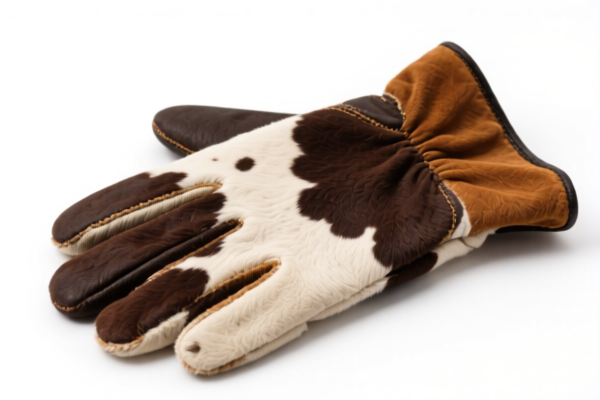
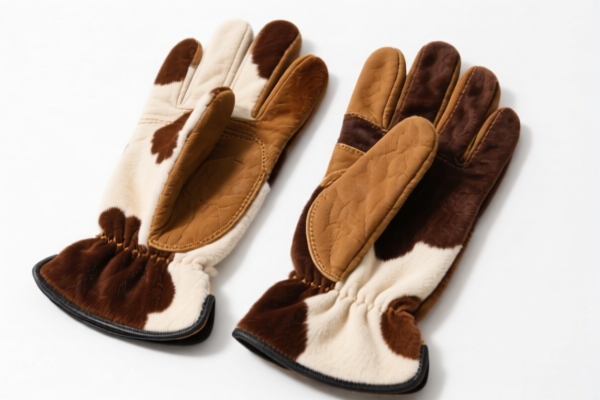


AI Analysis
🧤 Semi-Finished Cowhide Gloves (Raw Leather Glove Components)
🌐 HS Code Reference & Customs Clearance Guide | 2026 Latest Tariff Analysis | Professional Strategy
📌 I. Product Definition & Classification: What Are "Semi-Finished Cowhide Gloves"?
Semi-finished cowhide gloves refer to leather glove blanks that have been cut to shape but have not undergone final stitching, lining attachment, or full finishing processes. They are essentially "glove skins" or raw leather forms intended for further manufacturing.
In international trade, they can be classified under two main categories: 1. Raw/Processed Leather (Chapter 41): If the classification focuses on the material state (curled, split, or merely tanned without being made up into a specific article), they may fall under leather goods. 2. Articles of Leather (Chapter 42): If the classification focuses on the functional form (pre-cut glove shapes ready for sewing), they are considered "made-up" or semi-made-up leather articles.
⚠️ Key Distinction Point:
- If considered "Leather Articles" (Gloves) → Falls under 4203.
- If considered "Raw Leather Processing Stage" → Falls under 4107.
- Critical Note: US Trade Policy (Section 301 & IEEPA) significantly impacts these codes differently, creating a massive tax disparity.
📦 II. HS Code Classification Details (2026 Latest Tariff Authority Comparison)
| HS Code | Product Description | Scenario | Tariff Level |
|---|---|---|---|
4107.12.70.40 |
Semi-finished cowhide gloves, material is cowhide, use is gloves, fits the "glove use" limitation. | Raw leather blanks cut for gloves; classified under raw leather provisions. | 15.0% |
4107.11.70.40 |
Semi-finished cowhide gloves, material is cowhide, form is hairless (full-grain), fits the definition of full-grain leather processed for gloves. | Full-grain leather blanks; classified under raw leather provisions. | 15.0% |
4203.29.05.00 |
Semi-finished cowhide gloves, material is cowhide, form is glove, core material and use match the "leather glove" category definition. | Semi-made-up gloves; classified under finished/semi-finished articles. | 47.6% |
4203.29.08.00 |
Semi-finished cowhide gloves, material is cowhide, form is glove, fits the "all-leather" material characteristic of the category. | Semi-made-up gloves; classified under finished/semi-finished articles. | 49.0% |
🔍 Key Reminder:
- The HS Code choice directly determines whether you pay 15% or ~48-49% in tariffs. - Codes4107are generally viewed as "raw/semi-processed leather." - Codes4203are viewed as "manufactured/semi-manufactured leather goods."
💰 III. 2026 Latest Tariff Rate Details (Including Surtaxes & Policy Add-ons)
✅ Applicable Country: United States (US)
✅ Origin: China (CN)
✅ Effective Time: Current trade rules apply (Section 301 + IEEPA)
🎯 1. 4107.12.70.40 & 4107.11.70.40 —— Raw/Semi-Processed Leather (Low Tax Strategy)
| Item | Content |
|---|---|
| Base Tariff | 5.0% (Ad Valorem) |
| Section 301 Surtax | 0.0% (Exempt or not applied to this specific raw leather subtype in this dataset) |
| IEEPA Section 122 Surtax | +10.0% (Specific policy add-on for this category) |
| Total Tax Rate | 15.0% |
| Tax Calculation | CIF Value × 15% |
| De Minimis Exemption | ❌ Not Available (Deny de minimis for leather goods from China) |
| Legal Basis Path | IEEPA:9903.01.24 → USITC:4107 → FOOTNOTE:122条款 |
📌 Explanation:
- "Base Tariff 5%" is the standard Most Favored Nation (MFN) rate for processed leather. - "IEEPA 10%" is the specific surcharge applied under the 122 Clause (often related to specific emergency powers or sectoral adjustments). - Total 15% is significantly lower than the glove article classification. - Critical: Misclassifying these as "gloves" (4203) increases tax by over 30 percentage points.
🎯 2. 4203.29.05.00 & 4203.29.08.00 —— Semi-Made-Up Leather Gloves (High Tax Risk)
| Item | Content |
|---|---|
| Base Tariff | 12.6% - 14.0% (Ad Valorem) |
| Section 301 Surtax | +25.0% (Standard penalty on Chinese leather goods) |
| IEEPA Section 122 Surtax | +10.0% (Applied in addition to Section 301) |
| Total Tax Rate | 47.6% - 49.0% |
| Tax Calculation | CIF Value × ~48% |
| De Minimis Exemption | ❌ Not Available |
| Legal Basis Path | IEEPA:9903.01.24 → USITC:4203 → FOOTNOTE:9903.88.01 |
📌 Note:
- These codes classify the item as a "Glove Article" rather than just "leather." - The 25% Section 301 tariff is the main driver of the high cost. - Total ~48% makes this option extremely costly for Chinese-origin goods. - Even though they are "semi-finished," if the customs authority views them as "made up" (cut to shape, ready for sewing), they fall under 4203.
🛠️ IV. Customs Clearance Operational Advice (Practical Pitfall Guide)
✅ 1. Required Documentation Checklist (Non-negotiable)
| Document | Must Provide | Description |
|---|---|---|
| ✅ Product Specs | ✔️ | Detail: Is it "curled," "split," or "pre-cut"? Define processing stage clearly. |
| ✅ Technical Diagram | ✔️ | Show that it is not stitched or lined. Prove it is a "blank." |
| ✅ Photos | ✔️ | Clear shots showing raw edges, no linings, no stitching. |
| ✅ Commercial Invoice | ✔️ | State "Semi-Finished Leather Glove Blanks" NOT "Gloves." |
| ✅ Certificate of Origin | ✔️ | Required for determining origin-based surcharges. |
| ✅ Packing List | ✔️ | Indicate quantity of raw hides/cuts. |
✅ 2. Declaration Strategy (Key Mantra)
🔥 “Raw Leather Blanks = 4107; Stitched/Gloves = 4203. Name it Right, Tax Takes a Hit!”
| Scenario | Correct Declaration | Wrong Action |
|---|---|---|
| Pre-cut leather, no stitching | 4107.12.70.40 or 4107.11.70.40 |
Declaring as "Gloves" → 48% Tax |
| Partially stitched gloves | 4203.29.05.00 |
Declaring as "Raw Leather" → Audit Risk |
| Raw hides (not cut) | Raw Leather Chapter | Declaring as "Glove Blanks" → Misclassification |
Strategic Insight:
If the gloves are merely cut to shape but not sewn, argue for Chapter 41 (4107) to save ~33% in tariffs. This requires strong technical documentation proving they are not "made-up" articles.
✅ 3. Special Circumstances
| Situation | Handling Advice |
|---|---|
| OEM Raw Blanks | Provide customer spec sheets showing the next step is sewing. Prove "unfinished" status. |
| Full-Grain vs. Split | Use 4107.11 for full-grain, 4107.12 for other processed leather. Ensure description matches leather grade. |
| Customs Audit | If declared as 4107 but found sewn, expect penalties. Keep samples proving "raw" state. |
| Origin Verification | Ensure the cowhide origin is declared correctly. Mixed origins can complicate IEEPA applicability. |
🌍 V. Global Market Comparison (2026 Latest)
| Country/Region | Recommended HS Code | Tariff (China Origin) | Certification | Remarks |
|---|---|---|---|---|
| 🇺🇸 USA | 4107.12.70.40 |
15.0% | N/A | Best for Blanks. Avoid 4203 (48%). |
| 🇺🇸 USA | 4203.29.05.00 |
47.6% | N/A | High Cost. Only use if partially manufactured. |
| 🇨🇳 China | 4107 / 4203 |
5-12% | CCC (if applicable) | No Section 301/IEEPA surcharges domestically. |
| 🇪🇺 EU | 4107 / 4203 |
4-12% | CE (if protective gear) | No IEEPA surcharges. Check Free Trade Agreements. |
| 🇦🇺 Australia | 4107 / 4203 |
5% | N/A | Standard MFN rates apply. |
📌 Conclusion:
- USA is the most critical market for this classification decision due to the 33% tax difference. - Strategy: If legally permissible, classify as Chapter 41 (Raw/Semi-Processed Leather) to minimize costs. - Risk: Misclassification audits are common. Ensure physical product matches the "raw" declaration.
📌 VI. Common Mistakes & Pitfalls (Blood Lessons)
❌ Mistake 1: Calling "pre-cut gloves" as "Finished Gloves"
👉 Consequence: You pay 48% instead of 15%. Unnecessary profit loss.
❌ Mistake 2: Calling "pre-cut gloves" as "Raw Hides" (when they are cut)
👉 Consequence: Customs may reject as "not raw hides" or fine for inaccurate description. Must use 4107 (semi-processed) not general raw hide codes.
❌ Mistake 3: Ignoring the "IEEPA 122 Clause"
👉 Consequence: Even under 4107, you still pay 10% surcharge. Do not assume 0% tax.
❌ Mistake 4: Confusing "Cowhide" with "Kip or Buffalo"
👉 Consequence: Wrong subheading (4107.11 vs 4107.12). Ensure species is declared correctly.
✅ Correct Action:
"Semi-Finished Cowhide Glove Blanks, Pre-Cut, Unstitched, Full-Grain Leather, For Further Manufacturing"
🎯 VII. Conclusion: Professional Classification Saves Millions!
🎯 Remember the Mantra:
🔹 "Raw/Blanks = 4107 (15%); Semi-Made = 4203 (48%). Name it as Blanks, Save Big!"
🔹 "IEEPA 122 Clause Applies to Both, But Section 301 Kills 4203."
📌 Pro Tip:
If your semi-finished gloves are partially stitched, you MUST use 4203. You cannot downgrade stitched goods to raw leather.
However, if they are only cut, push for 4107 with strong technical evidence.
📣 Immediate Action:
📞 Contact a professional customs broker + Provide product photos + Apply for Pre-Ruling if shipment value is high.
🚀 Let your supply chain clear efficiently, reduce costs, and boost margins!
✨ Professional clearance starts with precise classification!
💼 Every percentage point of tax difference is pure profit or loss!
Customer Reviews
About HS Code Classification
The Harmonized System (HS) is an internationally standardized nomenclature developed by the World Customs Organization (WCO) to classify traded products. Over 200 countries use the HS system as the basis for customs tariffs, trade statistics, and import/export regulations.
Each HS code follows a hierarchical structure:
- Chapter (2 digits) — Broad category of goods (e.g., Chapter 84: Machinery and Mechanical Appliances)
- Heading (4 digits) — More specific grouping within the chapter
- Subheading (6 digits) — Internationally standardized breakdown, used by all WCO member countries
- National subdivisions (8-10 digits) — Country-specific extensions for further classification, such as US HTSUS 10-digit codes
Correct HS code classification is essential for smooth customs clearance, accurate duty payment, and compliance with trade regulations. Misclassification can lead to customs delays, overpayment of duties, or penalties.
When importing from CN to US, the applicable tariff rates may include:
- Most-Favored-Nation (MFN) rate — The standard duty rate applied to WTO members
- General rate — Applied to countries without trade agreements
- Trade remedy duties — Additional tariffs such as Section 301 (anti-dumping), Section 232 (national security), or countervailing duties
The information provided on this page is for reference purposes only. For official classification, please consult with your local customs authority or a licensed customs broker.