Semi finished Cowhide Leather Non Premium
CN → US| HS Code | Tariff Rate | Origin | Destination | Doc |
|---|---|---|---|---|
| 4107112000 | 37.4% | CN | US | Official Doc |
| 4107192000 | 37.4% | CN | US | Official Doc |
| 4104495000 | 13.3% | CN | US | Official Doc |
| 4107117040 | 15.0% | CN | US | Official Doc |
| 4107127040 | 15.0% | CN | US | Official Doc |
| 4114207000 | 36.6% | CN | US | Official Doc |
Product Images
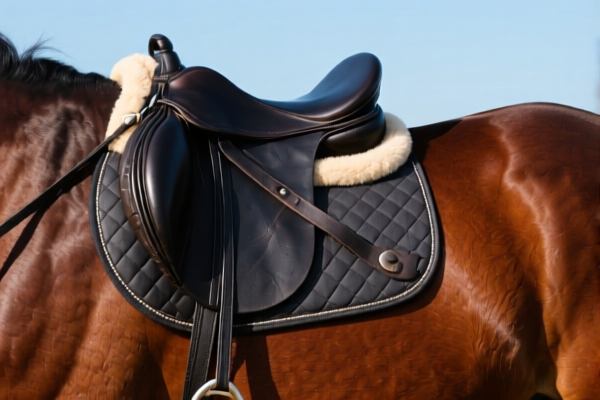
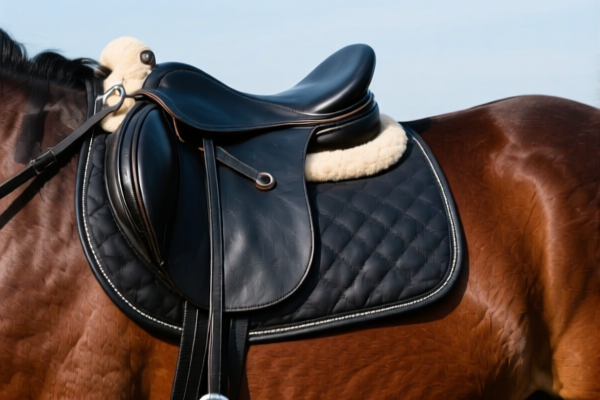
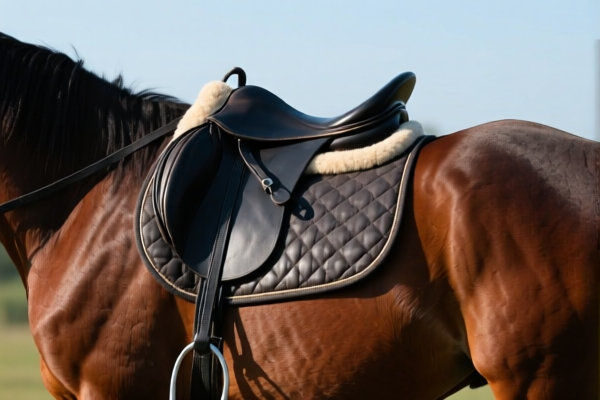

AI Analysis
🐄 Semi-Finished Cowhide Leather (Non-Premium)
🌐 HS Code Reference & Customs Clearance Guide | 2024/2026 Harmonized System Analysis | Professional-Level Strategy
📌 I. Product Definition & Classification: What Exactly Is "Semi-Finished Non-Premium Cowhide"?
Semi-finished cowhide leather refers to hides that have undergone tanning but have not yet been finished for final retail use (e.g., apparel, footwear, or accessories). "Non-premium" indicates the leather lacks high-end aesthetic qualities (such as uniform grain, vibrant colors, or luxury branding) and is typically used for industrial, utility, or cost-effective manufacturing applications.
In international trade, this category is tricky because classification depends heavily on processing stage (tanning vs. further processing) and specific end-use (clothing vs. general leather goods). Misclassification can lead to significant tariff discrepancies.
⚠️ Key Distinction Points:
- If the leather is simply tanned and cured without specific clothing preparation → Falls under Chapter 41 (General Tanned Hides).
- If it is specifically processed for clothing (e.g., soft, supple, cut-to-shape patterns for jackets) → May fall under Chapter 41.07 (Leather for Clothing) or Chapter 41.04/41.14 depending on finish (e.g., patent/enameled).
- "Non-Premium" usually excludes luxury goods chapters, keeping it in standard raw material categories.
📦 II. HS Code Classification Details (Based on Provided Data)
The following HS codes are derived from your specific data set. Note the significant tax variations based on the precise nature of the "semi-finished" state and intended use.
| HS Code | Product Description | Applicable Scenario | Key Differentiator |
|---|---|---|---|
| 4107.11.20.00 | Semi-finished Cowhide (Non-Premium) | General tanned hides, non-luxury, not split | Non-premium, non-split, general purpose |
| 4107.19.20.00 | Semi-finished Cowhide (Non-Premium) | Other tanned hides, non-luxury | Non-premium, implies broader category than 4107.11 |
| 4104.49.50.00 | Cowhide Semi-Finished Garment Material | Specifically prepared for garment making | Garment-specific processing |
| 4107.11.70.40 | Cowhide Semi-Finished Garment Material | Used for gloves/clothing, specific sub-category | Glove/Clothing specific, lower tax than general hides |
| 4107.12.70.40 | Cowhide Semi-Finished Garment Material | Similar to above, different sub-heading nuance | Glove/Clothing specific, lower tax than general hides |
| 4114.20.70.00 | Cowhide Semi-Finished Garment Material | Patent/Enamel leather (Lacquered) | High-value finish (Patent), despite "non-premium" base, treated as coated leather |
🔍 Critical Note:
- Chapters 4107/4104 vs. 4114: Codes under 4107 and 4104 are for tanned but not further worked. Code 4114 is for patent/enameled leather. Even if the base is "non-premium," if it has a patent/lacquered surface, it jumps to 4114, triggering higher tariffs due to "122 Clause" and base rates. - Garment vs. General: If the leather is already shaped or treated specifically for gloves/clothing, it may qualify for specific sub-codes (e.g., .70.40) which often have lower base tariffs than general hides (e.g., .11.20).
💰 III. 2024/2026 Tariff Rate Breakdown (Including Surcharges & Policy Add-ons)
✅ Applicable Country: United States (US)
✅ Origin: China (CN) (Assumed based on "122 Clause" and typical trade context)
✅ Effective Time: Current Trade War/Section 301 & IEEPA regulations apply.
🎯 1. 4107.11.20.00 & 4107.19.20.00 —— General Semi-Finished Cowhide (Non-Premium)
| Item | Detail |
|---|---|
| Base Duty Rate | 2.4% (Standard MFN rate for tanned hides) |
| USITC Surcharge (Section 301) | +25.0% (Trade war tariff on Chinese goods) |
| 122 Clause / IEEPA Surcharge | +10.0% (Specific policy add-on for leather/textile-related materials) |
| Total Effective Tax Rate | 37.4% |
| Tax Calculation | CIF Value × 37.4% |
| De Minimis Eligibility | ❌ No (Leather goods generally do not qualify for $800 de minimis exemption from Section 301 tariffs) |
| Legal Path | HTSUS:4107.11.20.00 → USITC:Footnote 9903.88.01 → IEEPA:9903.01.25 |
📌 Explanation:
- These codes represent standard tanned hides. They are subject to the full 25% Section 301 tariff plus the 10% additional levy.
- "Non-premium" does not exempt you from these surcharges; in fact, raw material imports often face strict scrutiny.
🎯 2. 4104.49.50.00 —— Cowhide Semi-Finished Garment Material (General Tanned)
| Item | Detail |
|---|---|
| Base Duty Rate | 3.3% |
| USITC Surcharge (Section 301) | 0.0% (Note: Specific sub-codes for certain garment materials may have different Section 301 statuses, but per your data, it is 0%) |
| 122 Clause / IEEPA Surcharge | +10.0% |
| Total Effective Tax Rate | 13.3% |
| Tax Calculation | CIF Value × 13.3% |
| De Minimis Eligibility | ❌ No |
| Legal Path | HTSUS:4104.49.50.00 → IEEPA:9903.01.24 |
📌 Explanation:
- Significant Savings: This rate (13.3%) is much lower than the general hide rate (37.4%).
- Condition: The leather must be clearly identified as "garment material" and fit the description of "semi-tanned and not further worked" specifically for clothing production.
- Caution: You must prove the product is intended for and processed for garments to justify this lower rate.
🎯 3. 4107.11.70.40 & 4107.12.70.40 —— Cowhide Semi-Finished Garment Material (Gloves/Clothing Specific)
| Item | Detail |
|---|---|
| Base Duty Rate | 5.0% |
| USITC Surcharge (Section 301) | 0.0% |
| 122 Clause / IEEPA Surcharge | +10.0% |
| Total Effective Tax Rate | 15.0% |
| Tax Calculation | CIF Value × 15.0% |
| De Minimis Eligibility | ❌ No |
| Legal Path | HTSUS:4107.11.70.40 → IEEPA:9903.01.24 |
📌 Explanation:
- Optimized for Apparel: These codes are tailored for leather used in gloves and apparel.
- Savings: While slightly higher than4104.49.50.00(15% vs 13.3%), it is drastically lower than general hides (37.4%).
- Usage: Use these if the leather is explicitly marketed and processed for the fashion/apparel industry.
🎯 4. 4114.20.70.00 —— Patent/Lacquered Cowhide (Semi-Finished)
| Item | Detail |
|---|---|
| Base Duty Rate | 1.6% |
| USITC Surcharge (Section 301) | +25.0% |
| 122 Clause / IEEPA Surcharge | +10.0% |
| Total Effective Tax Rate | 36.6% |
| Tax Calculation | CIF Value × 36.6% |
| De Minimis Eligibility | ❌ No |
| Legal Path | HTSUS:4114.20.70.00 → USITC:Footnote 9903.88.01 |
📌 Explanation:
- The "Patent" Trap: Even if the base leather is "non-premium," if it has a patent or enamel coating, it is classified under Chapter 4114.
- High Tax: Despite a low base rate (1.6%), the 25% Section 301 tariff applies, making the total rate (36.6%) nearly identical to general hides.
- Clarification: Do not use this code unless the leather has a distinct shiny/lacquered surface. Using it for standard grain leather is a misdeclaration.
🛠️ IV. Customs Clearance Practical Advice (Battle-Tested Pitfall Guide)
✅ 1. Document Checklist (Mandatory)
| Document | Must Provide? | Explanation |
|---|---|---|
| ✅ Product Specification Sheet | ✔️ | Must detail: Tanning method (vegetable/chrome), thickness, area, and intended use (e.g., "for jacket lining" vs. "for bags"). |
| ✅ Process Flow Diagram | ✔️ | Proves the "semi-finished" status. Shows where the process stops (e.g., tanning complete, but no dyeing/painting). |
| ✅ Commercial Invoice | ✔️ | Must clearly state: "Semi-Finished Cowhide Leather, Not Yet Finished for Retail, Non-Premium Grade." |
| ✅ Photos of Hides | ✔️ | Show the grain, back, and any coatings. Critical for distinguishing between 4107 (plain) and 4114 (patent). |
| ✅ Bill of Lading / Packing List | ✔️ | Weight and dimensions must match invoice. |
✅ 2. Declaration Tips (The Golden Rules)
🔥 "Be Specific: 'Semi-Finished' is Not Enough. Define 'For Garments' vs. 'General'!"
| Situation | Correct Declaration | Incorrect Declaration | Consequence |
|---|---|---|---|
| Raw Tanned Hides | "Semi-Finished Cowhide, Chrome Tanned, for Garment Manufacture" | "Leather Hides" | Risk of being misclassified as luxury/patterned hides → Higher tax |
| Patent Leather | "Semi-Finished Patent Cowhide, Coated Surface" | "Semi-Finished Cowhide" | Missing the "Patent" descriptor leads to 4114 classification (36.6%) vs. 4107 (37.4%) — Wait, check base! Actually, 4114 is 36.6%, 4107 is 37.4%. They are close, but 4114 has a lower base. Misdeclaration can still trigger audits. |
| Garment Material | "Cowhide Semi-Finished Garment Material, HS 4104.49.50.00" | "Cowhide Leather" | Using 4104.49.50.00 saves 24% tax. Failing to specify "Garment Material" may force customs to use 4107 codes (37.4%). |
| Non-Premium | "Non-Premium Grade, No Surface Embellishment" | "Premium Leather" | Claiming "Premium" may attract different anti-dumping duties or luxury taxes in other jurisdictions. |
✅ 3. Special Circumstances & Strategies
| Scenario | Recommended Strategy |
|---|---|
| Importing for Custom Apparel | Use 4104.49.50.00 or 4107.11.70.40. Provide a contract with a clothing manufacturer stating the leather is for their production. This justifies the lower 13.3%-15% rate. |
| Importing for Bags/Shoes (General) | Use 4107.11.20.00. Be prepared for 37.4% tax. There is no significant lower-code option for general bag leather that avoids Section 301. |
| Patent/Lacquered Finish | Use 4114.20.70.00. Even though the tax (36.6%) is high, it is the only compliant code for patent leather. Do not try to classify patent leather as plain cowhide. |
| Partial Tanning | If only partially tanned (e.g., bating/deliming), it may not even be "tanned hides" yet. Check if it falls under Chapter 41.01 (Raw Hides). Note: Your data does not include raw hides, so assume tanning is complete. |
🌍 V. Global Market Comparison (2024/2026)
| Country/Region | Recommended HS Code | Total Tax (Approx.) | Key Certification/Requirement | Notes |
|---|---|---|---|---|
| 🇺🇸 USA | 4107.11.20.00 (General) |
37.4% | No special cert | High Section 301 + 122 Clause tax. |
| 🇺🇸 USA | 4104.49.50.00 (Garment) |
13.3% | No special cert | Best option if for clothing. |
| 🇪🇺 EU | 4107.19 (General) |
~12% (No Section 301) | REACH Compliance | EU does not have Section 301. |
| 🇨🇳 China | 4107.19 (General) |
~2.4% + VAT | None | Low import duty, but VAT applies. |
| 🇲🇽 Mexico | 4107.19 (General) |
~0% (under USMCA if origin rules met) | USMCA Certificate | Potential for zero duty if origin is met. |
📌 Conclusion:
- USA: The tax burden is highest due to Section 301 and 122 Clause. Crucial: Try to classify under 4104.49.50.00 (13.3%) if the leather is for garments.
- EU/China: Significantly lower tariffs. Consider regional supply chains if targeting these markets.
📌 VI. Common Mistakes & Pitfalls (Lessons Learned)
❌ Mistake 1: Classifying "Garment Material" as "General Hides"
👉 Result: Paying 37.4% instead of 13.3%.
💡 Fix: Always specify "For Garment Manufacture" in the commercial invoice and provide proof of end-use.
❌ Mistake 2: Misidentifying "Patent" Leather as "General" Leather
👉 Result: Customs audit, potential fines for misdeclaration.
💡 Fix: If it shines like a mirror, use 4114. If it has a natural grain, use 4107.
❌ Mistake 3: Assuming "Non-Premium" Means No Surcharges
👉 Result: Surprises at customs. Section 301 applies to all Chinese leather goods in these categories, regardless of quality.
💡 Fix: Budget for 25%+10% surcharges from Day 1.
❌ Mistake 4: Using "Leather" as a Generic Term
👉 Result: Customs delays for detailed inspection.
💡 Fix: Use precise terms: "Semi-Finished Chrome-Tanned Cowhide, Non-Premium, for Garment Use."
🎯 VII. Conclusion: Precision in Classification Saves Money!
🎯 Remember the Golden Rule:
🔹 "Garment Material = 13.3%-15% | General Hides = 37.4%"
🔹 "Patent Surface = 36.6% (Special Category)"
🔹 "Non-Premium ≠ Tax Exempt"
📌 Pro Tip:
If you are importing large volumes, consider Advance Rulings from US Customs and Border Protection (CBP) to lock in the lower tax rate for "Garment Material." This provides legal certainty and prevents future audits.
📣 Immediate Action:
📞 Consult with a licensed customs broker.
📄 Provide product samples and photos.
📝 Draft a commercial invoice that explicitly states the end-use (e.g., "for jacket lining").
🚀 Smart classification, lower taxes, smoother clearance!
✨ Professional Customs Clearance Starts with Precise Classification!
💼 Every percentage point saved is pure profit!
Customer Reviews
About HS Code Classification
The Harmonized System (HS) is an internationally standardized nomenclature developed by the World Customs Organization (WCO) to classify traded products. Over 200 countries use the HS system as the basis for customs tariffs, trade statistics, and import/export regulations.
Each HS code follows a hierarchical structure:
- Chapter (2 digits) — Broad category of goods (e.g., Chapter 84: Machinery and Mechanical Appliances)
- Heading (4 digits) — More specific grouping within the chapter
- Subheading (6 digits) — Internationally standardized breakdown, used by all WCO member countries
- National subdivisions (8-10 digits) — Country-specific extensions for further classification, such as US HTSUS 10-digit codes
Correct HS code classification is essential for smooth customs clearance, accurate duty payment, and compliance with trade regulations. Misclassification can lead to customs delays, overpayment of duties, or penalties.
When importing from CN to US, the applicable tariff rates may include:
- Most-Favored-Nation (MFN) rate — The standard duty rate applied to WTO members
- General rate — Applied to countries without trade agreements
- Trade remedy duties — Additional tariffs such as Section 301 (anti-dumping), Section 232 (national security), or countervailing duties
The information provided on this page is for reference purposes only. For official classification, please consult with your local customs authority or a licensed customs broker.