Semi finished Lamb Skin
CN → USProduct Images
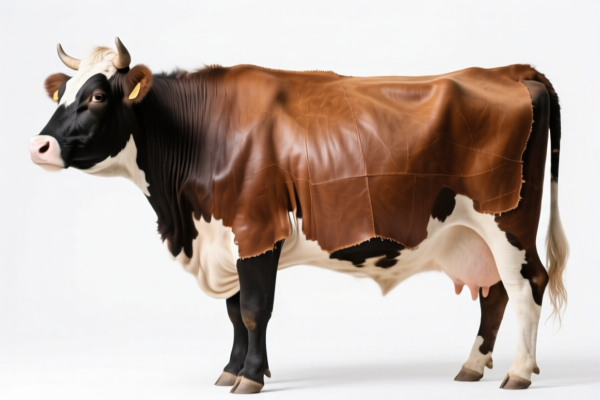
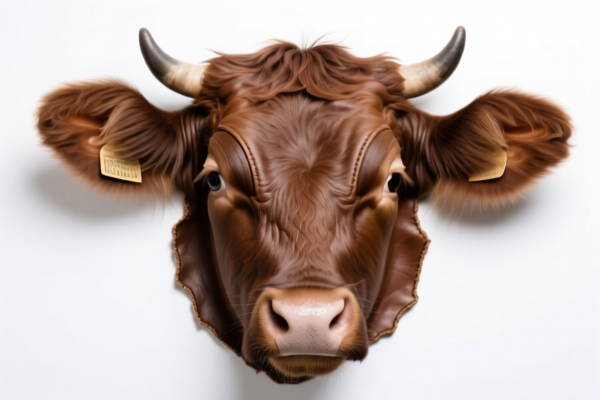
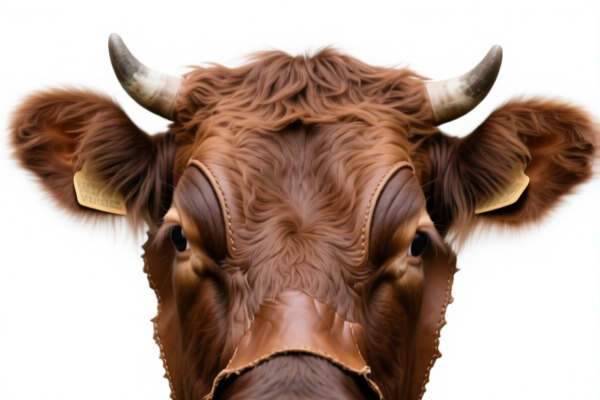
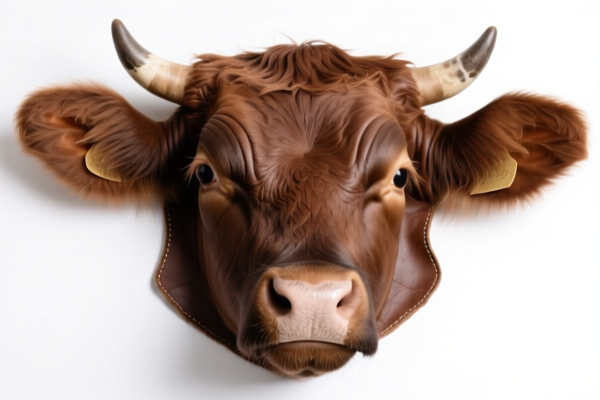
AI Analysis
🐑 Semi-Finished Lamb Skin (Unfinished & Tanned Skins)
🌐 HS Code Reference & Customs Clearance Guide | 2026 Latest Tariff Analysis | Professional Clearance Strategy
📌 I. Product Definition: What Exactly Is "Semi-Finished Lamb Skin"?
In international trade, "Semi-Finished Lamb Skin" is a critical intermediate good, sitting between raw hides and finished leather goods. It is NOT just a raw animal skin, nor is it a final product like a coat or glove.
It typically refers to lamb skins that have undergone specific processing steps such as salting, liming, de-hairing, or light tanning to preserve them for further manufacturing.
⚠️ Key Distinction:
- Raw Skins (Unprocessed): Fresh, salted, or dried without chemical treatment to preserve protein structure → Chapter 41 (Raw Hides & Skins).
- Semi-Finished (Tanned/Dressed): Underwent chemical processes (tanning, bleaching, dyeing) to make them stable and resistant to decay → Chapter 41 (Tanned Hides/Skins).
- Finished Leather: Further processed for specific end-uses (e.g., garment leather, upholstery leather) → Chapter 41 or 42 depending on form.
📦 II. HS Code Classification Details (2026 Latest Tariff Authority)
| HS Code | Product Description | Applicable Scenario | Processing Status |
|---|---|---|---|
4101.21.00.00 |
Raw hides of lambs, fresh, salted, or dried | Fresh lamb skins, lightly salted for transport, no tanning | ✅ Raw |
4101.29.10.00 |
Other raw hides of lambs | Unprocessed lamb skins, not fresh/salted/dried in standard form | ✅ Raw |
4103.20.00.00 |
Tanned or crust lamb skins (Semi-finished) | Lamb skins that are tanned, bleached, or dyed but not yet finished for specific end-use | ✅ Semi-Finished |
4104.31.00.00 |
Bovine leather (for comparison) | Not applicable | ❌ N/A |
4201.00.00.00 |
Saddlery and harness goods | Finished leather goods | ❌ Finished |
🔍 Critical Alert:
- "Semi-finished" in the leather industry usually points to4103.20.00.00(Tanned/Crust Skins) if they have been chemically treated to prevent rotting but are not yet dyed/painted for final use.
- If they are untreated, they fall under4101.21/29(Raw).
- Misclassification Risk: Declaring tanned skins as "raw" to avoid tariffs will result in severe penalties. Declaring raw skins as "tanned" may trigger unnecessary inspections.
💰 III. 2026 Latest Tariff Rate Details (Including Surcharges)
✅ Applicable Country: United States (US)
✅ Origin: China (CN)
✅ Effective Date: From November 10, 2025 (and subsequent imports)
🎯 1. 4103.20.00.00 —— Tanned or Crust Lamb Skins (Semi-Finished)
| Item | Content |
|---|---|
| Base Duty Rate | 4.4% (ad valorem) |
| USITC Surcharge | +25% (Under USITC Footnote 9903.88.01 for certain leather goods/components) |
| IEEPA Surcharge | +10% (Section 301 surcharge for Chinese products) |
| Total Effective Rate | ~39.4% (Calculated cumulatively on CIF value) |
| Tax Calculation | CIF Value × 39.4% |
| De Minimis Exemption | ❌ Denied (Not eligible for $800 de minimis) |
| Legal Path | IEEPA:9903.01.25 → IEEPA:9903.01.24 → USITC:4103.20.00.00 → FOOTNOTE:9903.88.01 |
📌 Explanation:
- The 25% USITC surcharge applies to specific leather articles and components under Section 301.
- The 10% IEEPA surcharge is the base Section 301 tariff for Chinese goods.
- Total ~39.4% is a high duty rate. Importers must factor this into their cost structure.
- No De Minimis: Shipments valued under $800 cannot bypass customs duties for this HS code.
🎯 2. 4101.21.00.00 —— Raw Lamb Skins (Fresh/Salted)
| Item | Content |
|---|---|
| Base Duty Rate | 0% (ad valorem) for most raw hides |
| USITC Surcharge | 0% (Generally exempt from Section 301 if truly raw) |
| IEEPA Surcharge | 0% |
| Total Effective Rate | 0% |
| Tax Calculation | CIF Value × 0% |
| De Minimis Exemption | ✅ Eligible (If < $800) |
| Legal Path | Standard Chapter 41 |
📌 Note:
- If the skins are truly raw (only salted/dried, no chemical tanning), the duty is 0%.
- However, Customs may classify them as "semi-finished" if they detect signs of tanning chemicals.
🛠️ IV. Customs Clearance Practical Advice (Real-World Pitfall Guide)
✅ 1. Required Documentation (Non-Negotiable)
| Document | Must Provide | Description |
|---|---|---|
| ✅ Product Specification Sheet | ✔️ | Detailed processing steps (e.g., "Salted," "Limed," "Chrome-Tanned") |
| ✅ Process Flow Chart | ✔️ | Crucial to prove whether it is "Raw" or "Tanned" |
| ✅ Photos of Skins | ✔️ | Show color, texture, and any chemical treatment residue |
| ✅ Commercial Invoice | ✔️ | Clearly state: "Lamb Skins, Tanned, Semi-Finished" or "Raw Lamb Skins" |
| ✅ Certificate of Origin | ✔️ | To verify origin (China) for accurate surcharge application |
| ✅ Packing List | ✔️ | Weight, quantity, and packaging type |
✅ 2. Declaration Strategy (Key Mnemonics)
🔥 "Raw is Low, Tanned is High, Prove the Process, Avoid the Lie!"
| Scenario | Correct Declaration | Incorrect Practice |
|---|---|---|
| Fresh/Salted Skins | 4101.21.00.00 |
Declaring as "Tanned" → 39.4% duty |
| Tanned/Crust Skins | 4103.20.00.00 |
Declaring as "Raw" → Severe Penalty + Back Taxes |
| Finished Leather | Check Chapter 41/42 | Misclassifying as semi-finished → Lower duty fraud |
| Small Samples (<$800) | 4101.21.00.00 (if raw) |
Declaring tanned skins under $800 → Denied De Minimis |
✅ 3. Special Cases Handling
| Scenario | Handling Advice |
|---|---|
| Mixed Shipments (Raw + Tanned) | Split Declaration! Do not mix. Raw goes to 4101, Tanned to 4103. |
| Chemical Residue Detection | If Customs detects chrome or other tanning agents, they will classify as 4103.20 regardless of claim. |
| OEM for Garment Makers | Provide end-use declaration to support "semi-finished" status, not finished goods. |
| Origin Transshipment | If skins are from China but transshipped via Vietnam, no IEEPA exemption applies unless processed substantially in Vietnam. |
🌍 V. Global Market Clearance Comparison (2026 Latest)
| Country/Region | Recommended HS Code | Duty Rate | Certification Requirement | Notes |
|---|---|---|---|---|
| 🇺🇸 USA | 4103.20.00.00 |
~39.4% | None | High surcharges for Chinese origin |
| 🇨🇳 China | 4103.20.00.00 |
10% | None | Standard import duty |
| 🇪🇺 EU | 4103.20.00.00 |
6.5% | REACH Compliance | Strict chemical regulations |
| 🇦🇺 Australia | 4103.20.00.00 |
5% | None | Moderate duty |
| 🇯🇵 Japan | 4103.20.00.00 |
5.6% | None | Low duty |
📌 Conclusion:
- USA is the most expensive market due to Section 301 & IEEPA surcharges.
- EU has strict REACH regulations on chemical residues in tanned skins.
- Asia-Pacific markets are more favorable for semi-finished leather imports.
📌 VI. Common Mistakes & Pitfalls (Blood & Tears Lessons)
❌ Mistake 1: Declaring Tanned Skins as "Raw" to save 39% duty
👉 Consequence: Customs lab test reveals chemicals → Confiscation + Fine + Blacklist
❌ Mistake 2: Mixing Raw and Tanned Skins in One Invoice
👉 Consequence: Customs rejects entire shipment → Delays + Storage Fees
❌ Mistake 3: Ignoring Chemical Residue Limits in EU
👉 Consequence: Rejected at border due to REACH non-compliance → Return or Destruction
❌ Mistake 4: Assuming De Minimis Applies to Tanned Skins
👉 Consequence: $800 shipment of tanned skins still incurs 39.4% duty → Unexpected Cost
✅ Correct Approach:
"Lamb Skins, Tanned, Chrome-Free, Semi-Finished, for Garment Manufacturing, HS 4103.20.00.00"
🎯 VII. Conclusion: Precision is Profit!
🎯 Remember the Mantra:
🔹 "Raw is Free, Tanned is 39%, Prove the Chemistry!"
🔹 "HS Code 4103 for Tanned, 4101 for Raw, Don't Gamble with Customs!"
📌 Pro Tip:
If your lamb skins are finished leather (dyed, painted, grained for final use), check Chapter 41 or Chapter 42 for different duty rates.
For China-origin semi-finished skins entering the US, consider Third-Country Transshipment (with substantial transformation) to mitigate IEEPA surcharges, but ensure compliance with Rules of Origin.
📣 Immediate Action:
📞 Contact a Customs Broker + Provide Lab Test Reports + Verify HS Code Pre-Ruling
🚀 Ensure your chemical processing is documented to avoid misclassification!
✨ Professional Clearance Starts with Accurate Classification!
💼 Every Dollar Saved Starts with the Right HS Code!
Customer Reviews
About HS Code Classification
The Harmonized System (HS) is an internationally standardized nomenclature developed by the World Customs Organization (WCO) to classify traded products. Over 200 countries use the HS system as the basis for customs tariffs, trade statistics, and import/export regulations.
Each HS code follows a hierarchical structure:
- Chapter (2 digits) — Broad category of goods (e.g., Chapter 84: Machinery and Mechanical Appliances)
- Heading (4 digits) — More specific grouping within the chapter
- Subheading (6 digits) — Internationally standardized breakdown, used by all WCO member countries
- National subdivisions (8-10 digits) — Country-specific extensions for further classification, such as US HTSUS 10-digit codes
Correct HS code classification is essential for smooth customs clearance, accurate duty payment, and compliance with trade regulations. Misclassification can lead to customs delays, overpayment of duties, or penalties.
When importing from CN to US, the applicable tariff rates may include:
- Most-Favored-Nation (MFN) rate — The standard duty rate applied to WTO members
- General rate — Applied to countries without trade agreements
- Trade remedy duties — Additional tariffs such as Section 301 (anti-dumping), Section 232 (national security), or countervailing duties
The information provided on this page is for reference purposes only. For official classification, please consult with your local customs authority or a licensed customs broker.