Semi finished Leather
CN → US| HS Code | Tariff Rate | Origin | Destination | Doc |
|---|---|---|---|---|
| 4115100000 | 35.0% | CN | US | Official Doc |
| 4113903000 | 38.3% | CN | US | Official Doc |
| 4201006000 | 37.8% | CN | US | Official Doc |
| 4104495000 | 13.3% | CN | US | Official Doc |
| 4107127040 | 15.0% | CN | US | Official Doc |
Product Images
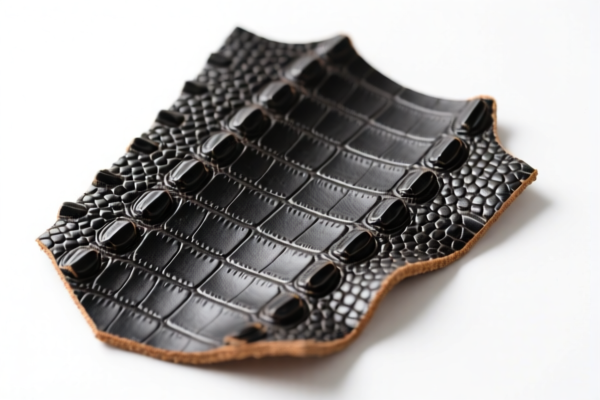
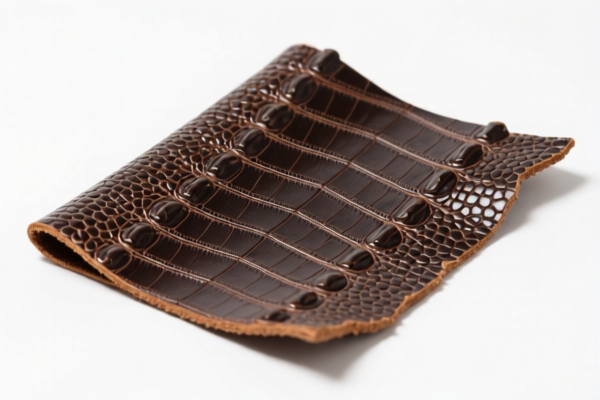
AI Analysis
🧵 Semi-Finished Leather & Equine Products
🌐 HS Code Reference & Customs Clearance Guide | 2026 Latest Tariff Analysis | Professional Clearance Strategy
📌 I. Product Definition & Classification: Understanding "Semi-Finished Leather"
Semi-finished leather refers to rawhide or skins that have undergone processes such as curing, liming, or tanning but have not yet reached the final stage of manufacturing (e.g., finishing, dyeing, or cutting into specific goods). In international trade, the classification depends heavily on the material, form, and intended use.
Key Categories Identified in Data: 1. Equestrian Semi-Finished Goods (HS 4115/4201): Leather specifically processed for horse equipment (saddles, harnesses). 2. Apparel Semi-Finished Goods (HS 4104/4107): Cowhide semi-finished goods specifically for clothing manufacturing.
⚠️ Critical Distinction:
- If the leather is not yet specified for end-use or is general rawhide → Check 4115 or 4104.
- If it is specifically shaped or prepared for equestrian use → Check 4115 or 4201.
- If it is cowhide intended for clothing → Check 4104 or 4107.
📦 II. HS Code Classification Details (2026 Latest Tariff Alignment)
| HS Code | Product Description | Key Matching Criteria |
|---|---|---|
4115.10.00.00 |
Leather semi-finished goods for equine use (Match: Material=Leather, Form=Semi-finished) |
General semi-finished leather intended for horse gear, generic form. |
4113.90.30.00 |
Leather semi-finished goods for equine use (Match: Material=Leather, Form=Further processed semi-finished) |
Further processed semi-finished leather for horse equipment. |
4201.00.60.00 |
Leather semi-finished goods for equine use (Match: Use=Equine, Material=Leather, Form=Semi-finished) |
Specific identification of "Equine Use" drives classification here. |
4104.49.50.00 |
Cowhide semi-finished goods for apparel (Match: Material=Cowhide, Form=Semi-finished) |
General cowhide semi-finished for clothing, no specific apparel intent declared beyond material. |
4107.12.70.40 |
Cowhide semi-finished goods for apparel (Match: Material=Cowhide, Form=Semi-finished, Use=Apparel) |
Explicitly designated for Clothing/Apparel manufacturing. |
🔍 Key Insight:
- 4115 vs. 4113:4115is for general semi-finished equine goods;4113is for further processed semi-finished goods. The tax rate differs due to the level of processing. - 4104 vs. 4107:4104is for generic cowhide semi-finished;4107is specifically for apparel use. Specificity often dictates the subheading.
💰 III. 2026 Latest Tariff Rate Breakdown (Including Surtaxes & Policy Add-ons)
✅ Applicable Country: United States (US)
✅ Origin: China (CN)
✅ Effective Time: 2025-11-10 onwards (inclusive of subsequent imports)
🎯 1. 4115.10.00.00 —— Leather Semi-Finished for Equine Use
| Item | Detail |
|---|---|
| Basic Tariff | 0.0% |
| Surtax (Section 301) | 25.0% |
| 122 Clause Tariff | 10.0% |
| Total Tax Rate | 35.0% |
| Tax Calculation | CIF Value × 35.0% |
| De Minimis Exemption | ❌ Not Applicable (Deny de minimis) |
| Legal Basis Path | 301:4115.10.00.00 → 122:4115.10.00.00 |
📌 Explanation:
- Although the basic tariff is 0%, the 25% Section 301 surtax and 10% Clause 122 tariff apply. - This category is considered a "raw material" but faces high trade barriers due to its origin and category.
🎯 2. 4113.90.30.00 —— Further Processed Leather Semi-Finished for Equine Use
| Item | Detail |
|---|---|
| Basic Tariff | 3.3% |
| Surtax (Section 301) | 25.0% |
| 122 Clause Tariff | 10.0% |
| Total Tax Rate | 38.3% |
| Tax Calculation | CIF Value × 38.3% |
| De Minimis Exemption | ❌ Not Applicable (Deny de minimis) |
| Legal Basis Path | 301:4113.90.30.00 → 122:4113.90.30.00 |
📌 Note:
- Higher total rate (38.3%) due to the non-zero basic tariff (3.3%). - "Further processed" implies a higher value-add, hence the higher base duty.
🎯 3. 4201.00.60.00 —— Leather Semi-Finished for Equine Use (Use-Specific)
| Item | Detail |
|---|---|
| Basic Tariff | 2.8% |
| Surtax (Section 301) | 25.0% |
| 122 Clause Tariff | 10.0% |
| Total Tax Rate | 37.8% |
| Tax Calculation | CIF Value × 37.8% |
| De Minimis Exemption | ❌ Not Applicable (Deny de minimis) |
| Legal Basis Path | 301:4201.00.60.00 → 122:4201.00.60.00 |
📌 Note:
- Classification shifts to Chapter 42 (Articles of leather) when use is the primary identifier. - Rate is 37.8%, slightly lower than4113but higher than4115.
🎯 4. 4104.49.50.00 —— Cowhide Semi-Finished for Apparel (Generic)
| Item | Detail |
|---|---|
| Basic Tariff | 3.3% |
| Surtax (Section 301) | 0.0% |
| 122 Clause Tariff | 10.0% |
| Total Tax Rate | 13.3% |
| Tax Calculation | CIF Value × 13.3% |
| De Minimis Exemption | ❌ Not Applicable (Deny de minimis) |
| Legal Basis Path | 122:4104.49.50.00 |
📌 Key Advantage:
- Significantly lower rate (13.3%). - NO 301 Surtax (0%). This is a major cost saver. - Applicable to cowhide only.
🎯 5. 4107.12.70.40 —— Cowhide Semi-Finished for Apparel (Apparel-Specific)
| Item | Detail |
|---|---|
| Basic Tariff | 5.0% |
| Surtax (Section 301) | 0.0% |
| 122 Clause Tariff | 10.0% |
| Total Tax Rate | 15.0% |
| Tax Calculation | CIF Value × 15.0% |
| De Minimis Exemption | ❌ Not Applicable (Deny de minimis) |
| Legal Basis Path | 122:4107.12.70.40 |
📌 Key Advantage:
- Low rate (15.0%). - NO 301 Surtax (0%). - Higher basic tariff (5.0%) than4104due to specific "Apparel" designation, but still far cheaper than equine categories.
🛠️ IV. Customs Clearance Practical Advice (Avoid Pitfalls)
✅ 1. Required Documentation Checklist
| Document | Mandatory? | Description |
|---|---|---|
| ✅ Product Specification Sheet | ✔️ | Must detail: Material (Cowhide/Leather), Process (Tanned/Cured), Form (Sheet/Raw), Intended Use (Equine/Apparel). |
| ✅ Photos of Goods | ✔️ | Show texture, thickness, and any markings. Distinguish between rawhide and finished leather. |
| ✅ Commercial Invoice | ✔️ | Clearly state: "Semi-Finished Leather for [Apparel/Equine Use]" – Do NOT just write "Leather". |
| ✅ Packing List | ✔️ | Weight and dimensions. |
| ✅ Certificate of Origin | ✔️ | If applicable for other markets, but for US, origin is key for 301/122. |
| ✅ Usage Declaration | ✔️ | Proof of intended end-use (e.g., contract for saddle maker or clothing factory). |
✅ 2. Classification Strategy (Crucial for Cost Saving)
🔥 "Equine = High Tax, Apparel = Low Tax!"
| Scenario | Correct HS Code | Tax Rate | Risk Level |
|---|---|---|---|
| Leather for Saddles/Harnesses | 4115.10.00.00 or 4201.00.60.00 |
35.0% - 37.8% | 🔴 High Tax |
| Further Processed Equine Leather | 4113.90.30.00 |
38.3% | 🔴 Highest Tax |
| Cowhide for Jackets/Pants | 4104.49.50.00 or 4107.12.70.40 |
13.3% - 15.0% | 🟢 Low Tax |
| General Cowhide (No Specific Use) | 4104.49.50.00 |
13.3% | 🟢 Lowest Tax |
📌 Warning:
- If you declare cowhide as "for apparel" but it is actually for equine use, you will face penalties for misclassification. - If you declare equine leather as "general leather" to avoid surtax, it will be rejected if the physical characteristics (shape, tanning type) clearly indicate equine use.
✅ 3. Special Cases & Tips
| Situation | Recommendation |
|---|---|
| OEM for Horse Equipment | Must use 4115 or 4201. Prepare proof of end-use to avoid being classified as general leather (which might have different rules). |
| OEM for Clothing | Must use 4107 if "apparel" is specified. If uncertain, use 4104 (13.3%) to minimize risk, but be prepared to justify "cowhide semi-finished" description. |
| Mixed Shipments | Separate shipments for equine and apparel goods. Do not mix, as it complicates classification and may lead to higher rates for the whole batch. |
| De Minimis ($800) | ❌ NOT APPLICABLE. All these HS codes are subject to Section 301 or Clause 122 surcharges, so the $800 de minimis exemption does not apply. |
🌍 V. Global Market Comparison (2026)
| Country/Region | Recommended HS Code | Tariff (China Origin) | Notes |
|---|---|---|---|
| 🇺🇸 USA | 4107.12.70.40 (Apparel) |
15.0% | Best Value. No 301 surtax. |
| 🇺🇸 USA | 4115.10.00.00 (Equine) |
35.0% | High tax due to 301 + 122. |
| 🇨🇳 China | 4107.12.70.40 |
5.0% | Basic tariff only, no 122/301. |
| 🇪🇺 EU | 4107.12.70.40 |
Varies (0-6%) | Check EBA preferences if applicable. |
| 🇬🇧 UK | 4107.12.70.40 |
Varies | Post-Brexit tariff schedules apply. |
📌 Conclusion:
- US Market: Apparel semi-finished leather (4104/4107) is significantly cheaper than equine semi-finished leather (4115/4201). - Strategy: If possible, reclassify or structure your supply chain to use cowhide for apparel where legally permissible, to save ~20-25% in tariffs.
📌 VI. Common Mistakes & Pitfalls (Lessons Learned)
❌ Mistake 1: Declaring "Leather" without specifying use.
👉 Consequence: Customs may classify as highest duty category (Equine) or demand clarification, causing delays.
❌ Mistake 2: Using 4104 for equine leather.
👉 Consequence: If the leather is clearly shaped for saddles, it will be reclassified to 4115 or 4201, resulting in back taxes + penalties.
❌ Mistake 3: Assuming de minimis applies.
👉 Consequence: Packages under $800 will still be charged 35-38% tax. Do not expect free entry.
❌ Mistake 4: Mixing "Apparel" and "Equine" in one shipment without clear separation.
👉 Consequence: High risk of audit and potential denial of de minimis for the entire shipment if mischaracterized.
✅ Correct Declaration Example:
"Cowhide, Semi-Finished, Tanned, for Apparel Manufacturing, 4107.12.70.40"
vs.
"Leather, Semi-Finished, for Equestrian Use, 4115.10.00.00"
🎯 VII. Conclusion: Precise Classification Saves Money!
🎯 Key Takeaway:
🔹 "Apparel Leather = 13-15% Tax"
🔹 "Equine Leather = 35-38% Tax"
🔹 "No De Minimis for These Categories!"
📌 Final Advice:
- Verify End-Use: Ensure your commercial invoice and product specs clearly state the intended use.
- Separate Shipments: Keep equine and apparel goods separate.
- Consult Experts: For high-value shipments, request a Binding Tariff Information (BTI) or US Customs Ruling to lock in the HS code.
✨ Professional Clearance Starts with Accurate Classification!
💼 Save 20%+ by choosing the right HS Code!
Customer Reviews
About HS Code Classification
The Harmonized System (HS) is an internationally standardized nomenclature developed by the World Customs Organization (WCO) to classify traded products. Over 200 countries use the HS system as the basis for customs tariffs, trade statistics, and import/export regulations.
Each HS code follows a hierarchical structure:
- Chapter (2 digits) — Broad category of goods (e.g., Chapter 84: Machinery and Mechanical Appliances)
- Heading (4 digits) — More specific grouping within the chapter
- Subheading (6 digits) — Internationally standardized breakdown, used by all WCO member countries
- National subdivisions (8-10 digits) — Country-specific extensions for further classification, such as US HTSUS 10-digit codes
Correct HS code classification is essential for smooth customs clearance, accurate duty payment, and compliance with trade regulations. Misclassification can lead to customs delays, overpayment of duties, or penalties.
When importing from CN to US, the applicable tariff rates may include:
- Most-Favored-Nation (MFN) rate — The standard duty rate applied to WTO members
- General rate — Applied to countries without trade agreements
- Trade remedy duties — Additional tariffs such as Section 301 (anti-dumping), Section 232 (national security), or countervailing duties
The information provided on this page is for reference purposes only. For official classification, please consult with your local customs authority or a licensed customs broker.