Semi finished Leather (for Clothing)
CN → US| HS Code | Tariff Rate | Origin | Destination | Doc |
|---|---|---|---|---|
| 4115100000 | 35.0% | CN | US | Official Doc |
| 4104115080 | 13.3% | CN | US | Official Doc |
| 4107917090 | 15.0% | CN | US | Official Doc |
| 4104415000 | 13.3% | CN | US | Official Doc |
| 4107197090 | 15.0% | CN | US | Official Doc |
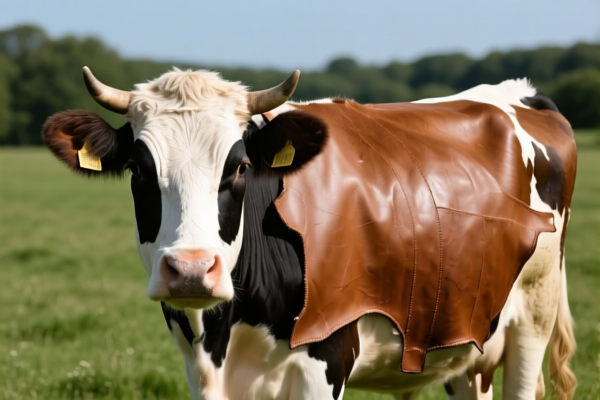
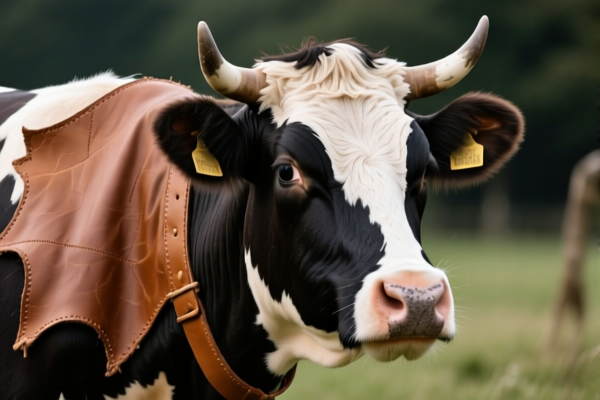
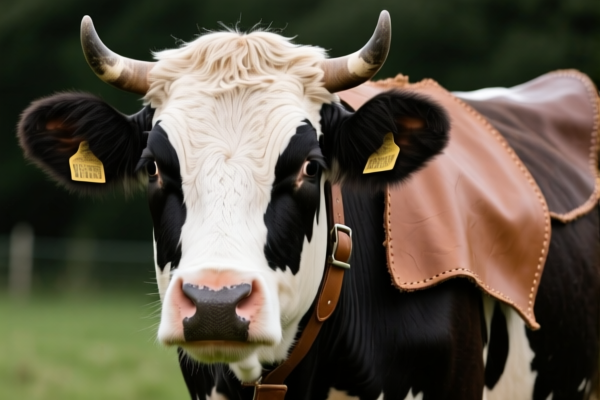
Product Images
AI Analysis
🧥 Semi-Finished Leather (For Clothing)
🌐 HS Code Reference & Clearance Guide | 2026 Latest Tariff Analysis | Professional-Level Customs Strategy
📌 I. Product Definition & Classification: Do You Really Understand "Semi-Finished Leather"?
Semi-finished leather (specifically for clothing applications) refers to bovine leather that has undergone initial tanning processes but has not yet reached the final state required for garment manufacturing. In international trade, the classification hinges strictly on the chemical treatment state (Tan vs. Semi-Tanned vs. Finished) and the physical form (Sheets/Strips).
Key Distinction Points:
- "Semi-Finished" vs. "Finished": If the leather is merely "pre-tanned" or "half-tanned" (retaining raw characteristics but stabilized), it falls under Chapter 41 headings starting with 4104 or 4105.
- "For Clothing" Context: While intended for clothing, the HS Code is determined by the current state of the goods, not the end-use. However, if the leather is already fully tanned and processed (shaved, split, or dyed) suitable for immediate use, it might fall under 4107.
- Material Specificity: "Bovine Leather" (Cow/Steer/Horse) is explicitly defined in subheadings 4104 and 4105.
⚠️ Critical Warning:
- Misclassifying "Semi-Tanned" leather as "Finished Leather" (4107) can lead to underpayment of duties if the semi-finished good actually attracts higher specific rates or different regulatory scrutiny.
- Conversely, declaring fully processed leather as "Semi-Finished" may trigger audits for misdeclaration.
📦 II. HS Code Classification Details (2026 Latest Tariff Authority Cross-Reference)
Based on the provided data, the following HS Codes are matched for Bovine Leather in Semi-Finished state.
| HS Code | Product Description (from Data) | Key Attributes Match | Total Tax Rate |
|---|---|---|---|
| 4115.10.00.00 | Semi-Finished Leather Material (Leather/Leather Fiber) | Material: Bovine Leather (Fits "Leather") Form: Semi-Finished (Fits "Sheets/Strips") |
35.0% |
| 4104.11.50.80 | Semi-Tanned Bovine Leather (Non-Fancy) | Material: Bovine State: Semi-Tanned Type: Non-Fancy (Other) |
13.3% |
| 4107.91.70.90 | Processed Bovine Leather (Non-Fancy) | Material: Bovine State: Semi-Finished/Processed Type: Non-Fancy |
15.0% |
| 4104.41.50.00 | Semi-Tanned Bovine Leather (Other) | Material: Bovine State: Semi-Tanned Condition: Unprocessed further |
13.3% |
| 4107.19.70.90 | Other Processed Bovine Leather | Material: Bovine State: Semi-Finished Type: Non-Specific Use |
15.0% |
🔍 Key Insight:
- Codes4104.11.50.80and4104.41.50.00are the most accurate for "Semi-Finished" (Semi-Tanned) bovine leather, offering the lowest tax burden (13.3%).
- Codes4107.91.70.90and4107.19.70.90classify goods as "Processed/Finished" leather, attracting a higher rate (15.0%).
- Code4115.10.00.00is a high-risk, high-cost classification (35.0%) often applied when the specific leather type doesn't fit the narrow definitions of4104/4105, or if documentation is insufficient.
💰 III. 2026 Latest Tariff Rate Breakdown (Including Surtaxes & Policy Additions)
✅ Applicable Country: United States (US)
✅ Origin: China (CN)
✅ Effective Date: 2025/2026 (Including imports from Nov 10, 2025)
🎯 1. 4104.11.50.80 & 4104.41.50.00 —— Semi-Tanned Bovine Leather (Lowest Risk/Cost)
| Item | Content |
|---|---|
| Base Rate | 3.3% (Ad Valorem) |
| Section 301 Surtax | 0.0% (Note: Some semi-tanned leathers may be excluded or lower than finished goods, see data) |
| IEEPA Surtax | +10% (For China/HK products) |
| Total Rate | 13.3% |
| Tax Calculation | CIF Value × 13.3% |
| De Minimis Eligibility | ❌ Not Applicable (Leather goods generally exempt from de minimis due to high duty rates) |
| Legal Basis Path | IEEPA:9903.01.25 → USITC:4104.11.50.80 / 4104.41.50.00 |
📌 Explanation:
- These codes represent Semi-Tanned leather. The 0% Section 301 surtax suggests these specific semi-processed items may have different trade remedy statuses compared to finished leather.
- The 10% IEEPA tax is mandatory for Chinese origin.
🎯 2. 4107.91.70.90 & 4107.19.70.90 —— Processed/Finished Bovine Leather
| Item | Content |
|---|---|
| Base Rate | 5.0% (Ad Valorem) |
| Section 301 Surtax | 0.0% |
| IEEPA Surtax | +10% |
| Total Rate | 15.0% |
| Tax Calculation | CIF Value × 15.0% |
| De Minimis Eligibility | ❌ Not Applicable |
| Legal Basis Path | IEEPA:9903.01.25 → USITC:4107.91.70.90 / 4107.19.70.90 |
📌 Note:
- "Non-Fancy" means the leather is not dyed, patterned, or embossed for decorative purposes. It is plain leather.
- If the leather is "Fancy" (dyed/embossed), rates may vary significantly.
🎯 3. 4115.10.00.00 —— Other Leather/Leather Fiber Products
| Item | Content |
|---|---|
| Base Rate | 0.0% |
| Section 301 Surtax | +25% |
| IEEPA Surtax | +10% |
| Total Rate | 35.0% |
| Tax Calculation | CIF Value × 35.0% |
| De Minimis Eligibility | ❌ Not Applicable |
| Legal Basis Path | IEEPA:9903.01.25 → USITC:4115.10.00.00 |
📌 Critical Warning:
- This is the highest tax bracket. Only use if the goods do not fit4104/4105/4107.
- Misclassification here due to poor documentation can cost 20% more in duties than correctly classifying as4104.
🛠️ IV. Clearance Operational Advice (Practical Pitfall Avoidance Guide)
✅ 1. Documentation Checklist (Essential)
| Document | Required? | Explanation |
|---|---|---|
| ✅ Product Specification Sheet | ✔️ | Must specify: Tanning Process (Chrome vs. Vegetable), State (Semi-Tanned vs. Finished), Thickness, Weight per sqm. |
| ✅ Material Composition Proof | ✔️ | Confirm 100% Bovine Leather. Mixed materials may shift classification. |
| ✅ Process Description | ✔️ | Detail steps: Skinning → Fleshing → Tanning → Drying. If "Finished," describe dyeing/finishing. |
| ✅ Commercial Invoice | ✔️ | Clearly state: "Semi-Tanned Bovine Leather, Non-Fancy" NOT just "Leather for Clothing." |
| ✅ Origin Certificate | ✔️ | Essential for IEEPA tax application. |
| ✅ Photos (Real Product) | ✔️ | Show texture, edges, and any markings. Helps customs verify "Non-Fancy" status. |
✅ 2. Declaration Tips (Key Mantra)
🔥 "Semi-Tanned is Key, Non-Fancy Saves Tax, Docs Must Prove State!"
| Scenario | Correct Declaration | Wrong Declaration | Consequence |
|---|---|---|---|
| Semi-Tanned, Plain Cowhide | 4104.11.50.80 (13.3%) |
"Finished Leather" | Underpayment Risk + Audit |
| Semi-Tanned, Plain Cowhide | 4104.41.50.00 (13.3%) |
"Other Leather" (4115) |
Overpayment Risk (Pay 35% instead of 13.3%) |
| Fully Dyed/Embossed Leather | 4107.xxxx.xxxx (15%+) |
"Semi-Finished" | Misdeclaration + Penalties |
✅ 3. Special Situation Handling
| Situation | Handling Advice |
|---|---|
| "For Clothing" Label | Do NOT declare as "Garments." It is Leather Material. Garments are Chapter 61/62. |
| Mixed Lots | If some pieces are semi-tanned and others are finished, split the declaration to optimize tax. |
| Unknown Tanning Agent | If unsure Chrome vs. Vegetable, declare as 4104.11 (Chrome) as default, but provide TDS (Technical Data Sheet). |
| Origin Ambiguity | Ensure Certificate of Origin matches the exporter. IEEPA tax applies strictly to Chinese origin. |
🌍 V. Global Market Clearance Comparison (2026 Latest)
| Country/Region | Recommended HS Code | Duty Rate | Certification | Remarks |
|---|---|---|---|---|
| 🇺🇸 USA | 4104.11.50.80 |
13.3% | No special | High IEEPA 10% + Base 3.3% |
| 🇨🇳 China | 4104.11.50.80 |
~2.5-5% | N/A | Lower base duty, no IEEPA |
| 🇪🇺 EU | 4104.11.00 |
~5.5% | REACH Compliance | No Section 301 equivalent |
| 🇬🇧 UK | 4104.11.00 |
~5.5% | UKCA | Post-Brexit rules |
| 🇯🇵 Japan | 4104.11.000 |
~4.8% | Phytosanitary (if raw) | Lower rates for processed leather |
📌 Conclusion:
- USA is the most expensive market due to IEEPA 10% + Section 301/Trade Remedies.
- Correct Classification as4104(Semi-Tanned) vs4107(Finished) saves 1.7% immediately.
- Avoid4115unless necessary, as it adds 25% Section 301 surtax.
📌 VI. Common Errors & Pitfalls Guide (Blood Lessons)
❌ Error 1: Declaring "Semi-Finished Leather" as "Finished Leather" (4107)
👉 Consequence: You pay 15.0% instead of 13.3%. Small difference, but indicates lack of precision.
❌ Error 2: Declaring "Semi-Tanned" as "Other Leather" (4115)
👉 Consequence: You pay 35.0% instead of 13.3%. Overpayment of 21.7%! Huge loss.
❌ Error 3: Using "Leather for Clothes" as the only description
👉 Consequence: Customs may reject the declaration for lack of technical detail (Tanning state). Request RFE (Request for Evidence).
❌ Error 4: Ignoring IEEPA Tax on Origin
👉 Consequence: If origin is China, 10% IEEPA applies. If declared as non-China, Fraud Penalty and potential seizure.
✅ Correct Practice:
"Semi-Tanned Bovine Leather, Split, Non-Fancy, Unfinished, For Garment Manufacturing, Origin China"
🎯 VII. Conclusion: Professional Classification Saves Thousands!
🎯 Remember the Mantra:
🔹 "Semi-Tanned is 13.3%, Finished is 15.0%, 'Other' is 35.0%!"
🔹 "Docs prove the State, Origin triggers IEEPA!"
📌 Pro Tip:
- If your leather is Vegetable Tanned, it may fall under
4104.19or4104.39depending on thickness. Verify thickness!- If you are uncertain, apply for an Advance Ruling (US CBP) before shipment. It provides legal certainty for 3 years.
📣 Immediate Action:
📞 Contact your customs broker with TDS (Technical Data Sheet)
📄 Provide Photos of the raw hide state
🚀 Declare accurately to avoid 35% tax traps!
✨ Professional Clearance Starts with Precise Classification!
💼 Every 1% Duty Difference is Pure Profit!
Customer Reviews
About HS Code Classification
The Harmonized System (HS) is an internationally standardized nomenclature developed by the World Customs Organization (WCO) to classify traded products. Over 200 countries use the HS system as the basis for customs tariffs, trade statistics, and import/export regulations.
Each HS code follows a hierarchical structure:
- Chapter (2 digits) — Broad category of goods (e.g., Chapter 84: Machinery and Mechanical Appliances)
- Heading (4 digits) — More specific grouping within the chapter
- Subheading (6 digits) — Internationally standardized breakdown, used by all WCO member countries
- National subdivisions (8-10 digits) — Country-specific extensions for further classification, such as US HTSUS 10-digit codes
Correct HS code classification is essential for smooth customs clearance, accurate duty payment, and compliance with trade regulations. Misclassification can lead to customs delays, overpayment of duties, or penalties.
When importing from CN to US, the applicable tariff rates may include:
- Most-Favored-Nation (MFN) rate — The standard duty rate applied to WTO members
- General rate — Applied to countries without trade agreements
- Trade remedy duties — Additional tariffs such as Section 301 (anti-dumping), Section 232 (national security), or countervailing duties
The information provided on this page is for reference purposes only. For official classification, please consult with your local customs authority or a licensed customs broker.