Semi finished Leather Gloves
CN → US| HS Code | Tariff Rate | Origin | Destination | Doc |
|---|---|---|---|---|
| 4203290800 | 49.0% | CN | US | Official Doc |
| 4107127040 | 15.0% | CN | US | Official Doc |
| 4107117040 | 15.0% | CN | US | Official Doc |
Product Images
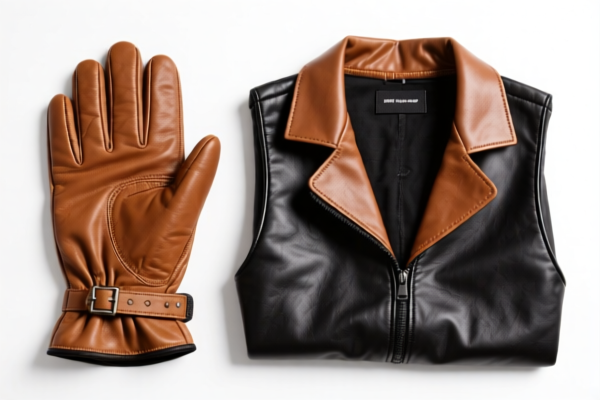
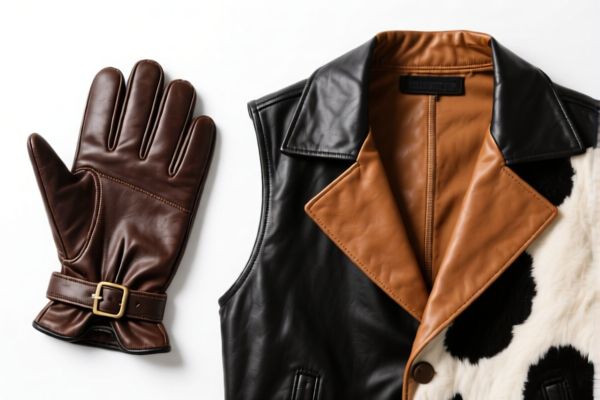
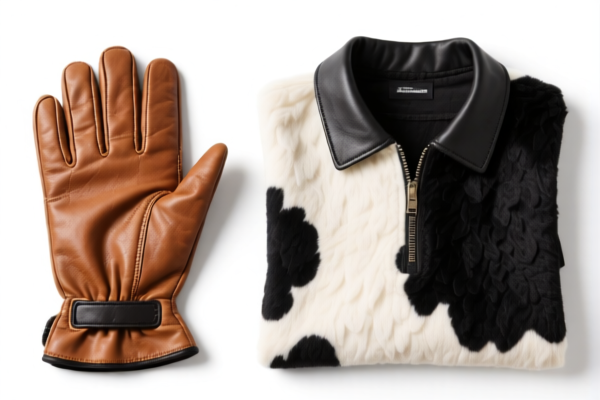
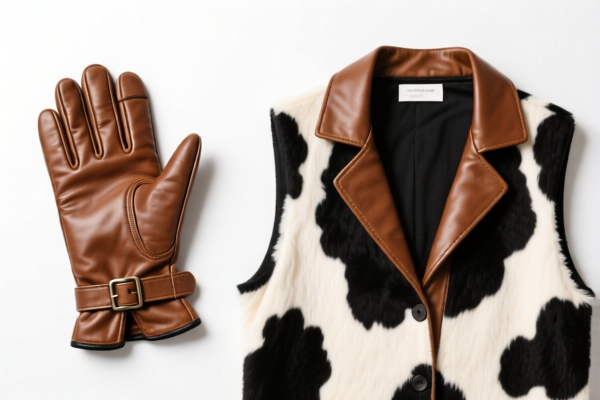
AI Analysis
🧤 Semi-Finished Leather Gloves (Unfinished Cowhide)
🌐 HS Code Reference & Customs Clearance Guide | 2026 Latest Tariff Analysis | Professional Compliance Strategy
📌 I. Product Definition & Classification: What Are "Semi-Finished Leather Gloves"?
Semi-finished leather gloves, specifically those made from unfurrowed cowhide (无毛牛革), refer to gloves that have been cut, sewn, or formed but have not undergone final finishing processes such as dyeing, polishing, or hardware attachment. They are essentially "half-done" products ready for further processing or final sale depending on the buyer’s needs.
⚠️ Key Distinction:
- If the gloves are fully finished (dyed, polished, with hardware), they typically fall under 4203.29.
- If they are semi-finished (raw cut leather, partially assembled, no final finish), they may fall under 4107.1x (prepared leather) or 4203.29.08.00 depending on specific state of completion.
- Crucial Factor: The level of finishing and whether they are considered "prepared leather" vs. "articles of leather."
📦 II. HS Code Classification Details (2026 Latest Tariff Authority Comparison)
| HS Code | Product Description | Application Scenario | Tax Rate (Total) |
|---|---|---|---|
4203.29.08.00 |
Semi-finished gloves made of cowhide, unfinished state, fits leather glove characteristics | Gloves in intermediate stage, raw leather, not yet dyed/polished | 49.0% |
4107.12.70.40 |
Semi-finished cowhide gloves, material: cowhide/unfurrowed leather, purpose: gloves/apparel | Prepared leather intended for glove manufacturing | 15.0% |
4107.11.70.40 |
Semi-finished cowhide gloves, material: cowhide, state: unfurrowed, purpose: gloves/apparel leather | Unfurrowed cowhide prepared for glove use | 15.0% |
🔍 Key Reminder:
-4203.29.08.00: Higher tax rate (49%) due to being classified as "gloves" in a semi-finished state but still under Chapter 42 (Articles of Leather).
-4107.12.70.40&4107.11.70.40: Lower tax rate (15%) because they are classified under Chapter 41 (Prepared Leather), which applies to leather that is prepared but not yet made into finished articles.
- Classification Tip: If the gloves are clearly identifiable as "gloves" (even semi-finished), customs may lean toward 4203. If they are just "prepared leather" cut to shape, 4107 might apply. Documentation must clearly state the state of completion.
💰 III. 2026 Latest Tariff Rate Details (Including Surtaxes & Policy Add-ons)
✅ Applicable Country: United States (US)
✅ Origin: China (CN)
✅ Effective Date: November 10, 2025 onwards (including subsequent imports)
🎯 1. 4203.29.08.00 —— Semi-Finished Leather Gloves (Chapter 42)
| Item | Content |
|---|---|
| Base Tariff Rate | 14.0% (ad valorem) |
| USITC Surtax (Section 301) | +25.0% |
| 122 Clause Tariff (IEEPA) | +10.0% |
| Total Tax Rate | 49.0% |
| Tax Calculation | CIF Value × 49% |
| De Minimis Eligibility | ❌ Not Eligible (deny_de_minimis) |
| Legal Basis Path | IEEPA:122 → USITC:4203.29.08.00 → FOOTNOTE:301.88.01 |
📌 Explanation:
- The 25% surtax is under U.S. Trade Act Section 301 for Chinese-origin goods.
- The 10% IEEPA tariff applies specifically to Chinese products under Section 122 of the Trade Expansion Act.
- Total 49% is extremely high. This classification treats the item as a "glove article," triggering higher duties.
🎯 2. 4107.12.70.40 —— Prepared Leather for Gloves (Chapter 41)
| Item | Content |
|---|---|
| Base Tariff Rate | 5.0% |
| USITC Surtax (Section 301) | 0.0% (Exempt or lower bracket) |
| 122 Clause Tariff (IEEPA) | +10.0% |
| Total Tax Rate | 15.0% |
| Tax Calculation | CIF Value × 15% |
| De Minimis Eligibility | ❌ Not Eligible |
| Legal Basis Path | IEEPA:122 → USITC:4107.12.70.40 |
📌 Note:
- This classification applies if the goods are considered prepared leather rather than finished goods.
- The 301 surtax does not apply here, significantly reducing the total duty burden.
- Key Argument: Submit documentation proving the items are not yet usable as finished gloves (e.g., lack of stitching, no lining, raw cut).
🎯 3. 4107.11.70.40 —— Unfurrowed Cowhide for Gloves (Chapter 41)
| Item | Content |
|---|---|
| Base Tariff Rate | 5.0% |
| USITC Surtax (Section 301) | 0.0% |
| 122 Clause Tariff (IEEPA) | +10.0% |
| Total Tax Rate | 15.0% |
| Tax Calculation | CIF Value × 15% |
| De Minimis Eligibility | ❌ Not Eligible |
| Legal Basis Path | IEEPA:122 → USITC:4107.11.70.40 |
📌 Note:
- Similar to above, this applies to unfurrowed cowhide prepared for glove manufacturing.
- Difference from 4107.12.70.40: Specifically refers to unfurrowed leather. Ensure product descriptions match this technical specification.
🛠️ IV. Customs Clearance Practical Advice (Real-World Pitfall Avoidance)
✅ 1. Required Documentation Checklist (Mandatory)
| Document | Must Provide | Description |
|---|---|---|
| ✅ Product Specification Sheet | ✔️ | Detail the stage of completion (e.g., "cut but not sewn," "no lining") |
| ✅ Product Photos (Raw State) | ✔️ | Show raw leather, lack of hardware, unfinished edges |
| ✅ Commercial Invoice | ✔️ | Clearly state "Semi-Finished Leather Gloves" or "Prepared Leather for Gloves" |
| ✅ Packing List | ✔️ | Separate items if mixed with finished goods |
| ✅ Certificate of Origin (CO) | ✔️ | For origin proof, especially if claiming exemptions |
| ✅ Third-Party Inspection Report | ✔️ | Confirm material composition and finish state |
✅ 2. Declaration Tips (Key Mantra)
🔥 "State of Finish Determines Tax: Chapter 41 vs. Chapter 42!"
| Scenario | Correct Declaration | Wrong Approach |
|---|---|---|
| Raw cut leather, not sewn | 4107.11.70.40 or 4107.12.70.40 |
Misdeclare as "gloves" → 49% |
| Partially sewn, no lining | 4107.12.70.40 |
Misdeclare as "finished gloves" → 49% |
| Fully assembled, raw leather | 4203.29.08.00 |
Try to declare as "leather" → Risk of penalty |
| Finished gloves (dyed, polished) | 4203.29.08.00 |
N/A |
✅ 3. Special Cases Handling
| Situation | Handling Advice |
|---|---|
| OEM Custom Orders | Provide customer design specs showing incomplete state |
| Mixed Shipments | Declare separately: finished vs. semi-finished |
| Leather vs. Glove Classification | Argue "preparation stage" to qualify for Chapter 41 |
| USITC 301 Exemption Claims | Check if specific SKUs are exempt; usually not for leather goods |
🌍 V. Global Market Customs Comparison (2026 Latest)
| Country/Region | Recommended HS Code | Tariff | Certification | Notes |
|---|---|---|---|---|
| 🇺🇸 USA | 4107.12.70.40 / 4107.11.70.40 |
15.0% | None specific | Avoid 4203.29.08.00 unless necessary (49%) |
| 🇨🇳 China | 4107.12.70.40 / 4107.11.70.40 |
5.0% | None | Low duty for imports into China |
| 🇪🇺 EU | 4107.21.99 / 4107.29.99 |
0-6.5% | REACH | Check for "prepared leather" classification |
| 🇬🇧 UK | 4107.21.99 / 4107.29.99 |
0-6.5% | UKCA | Post-Brexit rules apply |
| 🇦🇺 Australia | 4107.21.99 / 4107.29.99 |
5.0% | ACMA | Standard duty rates |
📌 Conclusion:
- USA is the most critical market due to high tariffs on Chapter 42 goods.
- Strategic Goal: Classify under Chapter 41 (Prepared Leather) to reduce tax from 49% to 15%.
- Key Argument: Emphasize "semi-finished" and "prepared leather" status in documentation.
📌 VI. Common Errors & Pitfall Guide (Lessons Learned)
❌ Error 1: Declaring semi-finished gloves as "finished gloves"
👉 Consequence: Tax jumps from 15% to 49% → 34% extra cost!
❌ Error 2: Not providing photos of the raw state
👉 Consequence: Customs doubts classification → Delays & penalties
❌ Error 3: Mixing finished and semi-finished goods in one shipment without separation
👉 Consequence: Entire shipment may be taxed at higher rate → Unnecessary losses
❌ Error 4: Using vague terms like "leather goods" instead of specific HS codes
👉 Consequence: Customs assigns default high rate → Manual review required
✅ Correct Practice:
"Semi-Finished Cowhide Gloves, Unfurrowed, Unlined, Raw State, Not for Retail Sale, HS Code: 4107.12.70.40"
🎯 VII. Conclusion: Professional Declaration, Cost Efficiency!
🎯 Remember the Mantra:
🔹 "Chapter 41 = 15%, Chapter 42 = 49%!"
🔹 "Prove it’s semi-finished: Photos + Specs + Invoice Clarity!"
📌 Pro Tip:
- If your gloves are shipped from Vietnam, Mexico, or Thailand, check for IEEPA exemptions or lower duties.
- Apply for Advance Rulings with US Customs to secure classification confidence.
📣 Immediate Action:
📞 Consult with a licensed customs broker + Submit product images + Request HS Code Pre-Ruling
🚀 Ensure your semi-finished leather gloves clear customs smoothly, minimize duties, and maximize profit!
✨ Professional clearance starts with accurate classification!
💼 Every dollar saved counts in global trade!
Customer Reviews
About HS Code Classification
The Harmonized System (HS) is an internationally standardized nomenclature developed by the World Customs Organization (WCO) to classify traded products. Over 200 countries use the HS system as the basis for customs tariffs, trade statistics, and import/export regulations.
Each HS code follows a hierarchical structure:
- Chapter (2 digits) — Broad category of goods (e.g., Chapter 84: Machinery and Mechanical Appliances)
- Heading (4 digits) — More specific grouping within the chapter
- Subheading (6 digits) — Internationally standardized breakdown, used by all WCO member countries
- National subdivisions (8-10 digits) — Country-specific extensions for further classification, such as US HTSUS 10-digit codes
Correct HS code classification is essential for smooth customs clearance, accurate duty payment, and compliance with trade regulations. Misclassification can lead to customs delays, overpayment of duties, or penalties.
When importing from CN to US, the applicable tariff rates may include:
- Most-Favored-Nation (MFN) rate — The standard duty rate applied to WTO members
- General rate — Applied to countries without trade agreements
- Trade remedy duties — Additional tariffs such as Section 301 (anti-dumping), Section 232 (national security), or countervailing duties
The information provided on this page is for reference purposes only. For official classification, please consult with your local customs authority or a licensed customs broker.