Semi finished Leather Waste
CN → US| HS Code | Tariff Rate | Origin | Destination | Doc |
|---|---|---|---|---|
| 4115100000 | 35.0% | CN | US | Official Doc |
| 4113903000 | 38.3% | CN | US | Official Doc |
| 4201006000 | 37.8% | CN | US | Official Doc |
| 4107117040 | 15.0% | CN | US | Official Doc |
| 4104495000 | 13.3% | CN | US | Official Doc |
Product Images
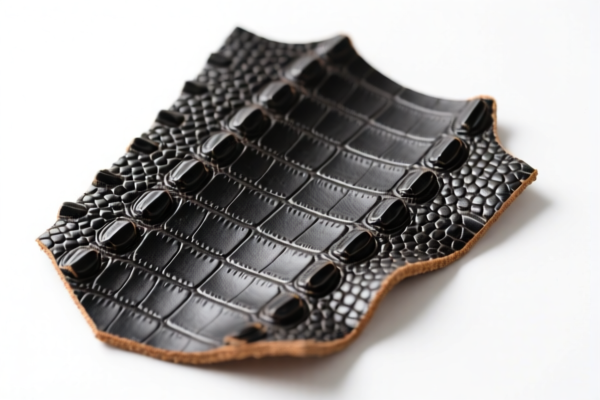
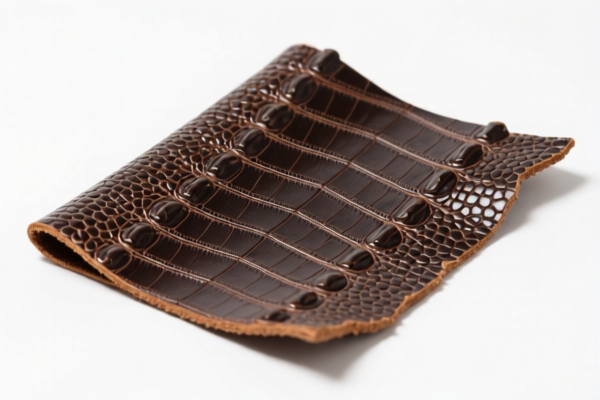

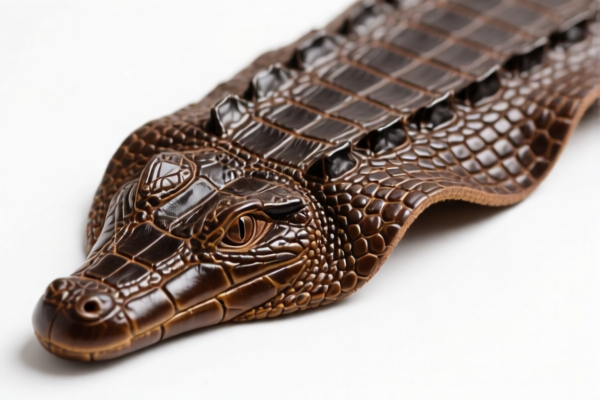
AI Analysis
🐎 Semi-Finished Leather Waste & Equestrian Articles
🌐 HS Code Reference & Clearance Guide | 2026 Latest Tariff Analysis | Professional Customs Strategy
📌 I. Product Definition & Classification: What is "Semi-Finished Leather Waste"?
In international trade, "Semi-Finished Leather Waste" is a broad term that often leads to classification errors. It generally refers to leather that has undergone tanning or further processing but is not yet a finished article (like a shoe or bag). However, customs authorities strictly distinguish between:
- Raw/Partially Tanned Leather: Unworked or simply tanned hides/skins (Chapter 41, Heading 4104/4107).
- Further Processed Semi-Finished Leather: Tanned leather that has been mechanically worked, dyed, or prepared for specific uses but remains a "material" rather than an "article" (Chapter 41, Heading 4113).
- Equestrian Articles: Specific leather goods designed for horse use, even if technically "semi-finished" (Chapter 42, Heading 4201).
⚠️ Key Distinction Point:
- If the item is plain tanned leather (raw material) →归入 4107 or 4104
- If the item is specifically for horses (bridles, saddle parts, etc.) →归入 4201 or 4115
- If the item is further processed leather waste/reclaim →归入 4113
📦 II. HS Code Classification Details (2026 Latest Tariff Authority)
Based on the provided data, here are the specific HS Codes applicable to different forms of "Semi-Finished Leather Waste":
| HS Code | Product Description | Application Scenario | Key Identifier |
|---|---|---|---|
4107.11.70.40 |
Semi-finished cowhide leather materials for apparel | Raw/Partially Tanned Cowhide | ✅ Material: Cowhide; Use: Apparel |
4104.49.50.00 |
Semi-finished cowhide clothing materials | Semi-tanned/Unprocessed Cowhide | ✅ Material: Cowhide; State: Semi-tanned |
4201.00.60.00 |
Semi-finished leather for equestrian use | Horse gear (partially made) | ✅ Use: Equestrian; Form: Semi-finished |
4115.10.00.00 |
Semi-finished leather waste (general) | General leather waste/reclaim | ✅ Material: Leather; Form: Waste/Semi-finished |
4113.90.30.00 |
Further processed semi-finished leather | Reconstituted/Advanced semi-leather | ✅ Form: Further processed semi-finished |
🔍 Critical Reminder:
- Do not classify specific equestrian items under general "leather waste" (4115) if they fall under4201.
- Do not classify plain tanned hides as "further processed" (4113) if they are merely semi-tanned (4104/4107).
- The use case (apparel vs. equestrian vs. general waste) is the primary driver for differentiation.
💰 III. 2026 Latest Tariff Rate Breakdown (Including Surcharges & Policy Add-ons)
✅ Applicable Country: United States (US)
✅ Origin: China (CN)
✅ Effective Date: From November 10, 2025 onwards
🎯 1. 4107.11.70.40 – Cowhide Semi-Finished for Apparel
| Item | Content |
|---|---|
| Base Duty Rate | 5.0% (ad valorem) |
| USITC Surcharge | +0.0% (Section 301 Exemption applies) |
| IEEPA Surcharge | +10.0% (China-specific IEEPA tariff) |
| Total Duty Rate | 15.0% |
| Tax Calculation | CIF Value × 15% |
| De Minimis Eligibility | ❌ Not Applicable (Deny de minimis for China origin in this category) |
| Legal Basis Path | IEEPA:9903.01.25 → USITC:4107.11.70.40 |
📌 Explanation:
- The base rate is 5%, which is relatively low compared to other leather goods.
- There is NO Section 301 surcharge (0%) for this specific subheading, making it favorable.
- However, the 10% IEEPA tariff still applies, resulting in a total of 15%.
🎯 2. 4104.49.50.00 – Semi-Tanned Cowhide Materials
| Item | Content |
|---|---|
| Base Duty Rate | 3.3% (ad valorem) |
| USITC Surcharge | +0.0% (Section 301 Exemption applies) |
| IEEPA Surcharge | +10.0% (China-specific IEEPA tariff) |
| Total Duty Rate | 13.3% |
| Tax Calculation | CIF Value × 13.3% |
| De Minimis Eligibility | ❌ Not Applicable |
| Legal Basis Path | IEEPA:9903.01.25 → USITC:4104.49.50.00 |
📌 Explanation:
- This is the lowest total tax rate (13.3%) among the options.
- It applies to semi-tanned or unfurther-processed cowhide.
- Ensure the product is not fully tanned or dyed, as that would shift it to4107or4113.
🎯 3. 4201.00.60.00 – Semi-Finished Equestrian Leather
| Item | Content |
|---|---|
| Base Duty Rate | 2.8% (ad valorem) |
| USITC Surcharge | +25.0% (Section 301 applies) |
| IEEPA Surcharge | +10.0% (China-specific IEEPA tariff) |
| Total Duty Rate | 37.8% |
| Tax Calculation | CIF Value × 37.8% |
| De Minimis Eligibility | ❌ Not Applicable |
| Legal Basis Path | IEEPA:9903.01.25 → USITC:4201.00.60.00 → FOOTNOTE:9903.88.01 |
📌 Explanation:
- High Tax Warning: This category suffers from the 25% Section 301 surcharge.
- Even though the base rate is low (2.8%), the total 37.8% is significant.
- Applies to items like saddle parts, bridles, or reins that are semi-finished.
🎯 4. 4115.10.00.00 – General Semi-Finished Leather Waste
| Item | Content |
|---|---|
| Base Duty Rate | 0.0% (ad valorem) |
| USITC Surcharge | +25.0% (Section 301 applies) |
| IEEPA Surcharge | +10.0% (China-specific IEEPA tariff) |
| Total Duty Rate | 35.0% |
| Tax Calculation | CIF Value × 35.0% |
| De Minimis Eligibility | ❌ Not Applicable |
| Legal Basis Path | IEEPA:9903.01.25 → USITC:4115.10.00.00 → FOOTNOTE:9903.88.01 |
📌 Explanation:
- Despite a 0% base rate, the 25% Section 301 surcharge makes this expensive.
- "Leather Waste" here refers to shavings, scraps, or reclaimed leather, not finished goods.
🎯 5. 4113.90.30.00 – Further Processed Semi-Finished Leather
| Item | Content |
|---|---|
| Base Duty Rate | 3.3% (ad valorem) |
| USITC Surcharge | +25.0% (Section 301 applies) |
| IEEPA Surcharge | +10.0% (China-specific IEEPA tariff) |
| Total Duty Rate | 38.3% |
| Tax Calculation | CIF Value × 38.3% |
| De Minimis Eligibility | ❌ Not Applicable |
| Legal Basis Path | IEEPA:9903.01.25 → USITC:4113.90.30.00 → FOOTNOTE:9903.88.01 |
📌 Explanation:
- Highest Total Tax (38.3%).
- Applies to leather that has been reconstituted (e.g., split leather bonded with rubber/plastic) or further mechanically worked beyond simple tanning.
🛠️ IV. Customs Clearance Practical Advice (Live Pit-Avoidance Guide)
✅ 1. Required Documentation Checklist (Non-negotiable)
| Document | Mandatory | Description |
|---|---|---|
| ✅ Product Specification Sheet | ✔️ | Must specify: Material (Cowhide/Sheepskin), Processing Level (Semi-tanned/Reclaimed), and Intended Use (Apparel/Equestrian). |
| ✅ Composition Analysis Report | ✔️ | For 4113 vs 4104: Prove if it is "further processed" or "reconstituted". |
| ✅ Commercial Invoice | ✔️ | Must clearly state: "Semi-Finished Leather for [Apparel/Horse Gear]" – NOT just "Leather Waste". |
| ✅ Packing List | ✔️ | Detail net weight and dimensions. |
| ✅ Original Certificate of Origin | ✔️ | Required to prove China origin (and thus applicability of IEEPA/Section 301). |
| ✅ Photos of Product | ✔️ | Show grain side, flesh side, and any markings/logos. |
✅ 2. Declaration Tips (Key Mnemonic)
🔥 "Use Defines Code, Processing Defines Tax, Don't Mix Apparel and Equestrian!"
| Scenario | Correct Declaration | Wrong Action |
|---|---|---|
| Cowhide for Jackets | 4107.11.70.40 or 4104.49.50.00 |
Declaring as "Leather Waste" → Risk of misclassification audit. |
| Horse Bridle Parts | 4201.00.60.00 |
Declaring as 4115 (Waste) → Underpayment Risk + Penalties. |
| Leather Shavings/Scraps | 4115.10.00.00 |
Declaring as 4107 (Tanned Hide) → Overpayment Risk (35% vs 15%). |
| Reconstituted Leather | 4113.90.30.00 |
Declaring as plain tanned leather → High Penalty. |
✅ 3. Special Circumstances Handling
| Situation | Handling Advice |
|---|---|
| Mixed Shipments | Do NOT mix equestrian (4201) with general waste (4115). Declare separately to avoid rate confusion. |
| OEM Custom Orders | Provide the end-user contract or design specs to prove "Equestrian Use" if claiming 4201. |
| "Waste" vs "Semi-Finished" | If the material is salvageable and usable for manufacturing (e.g., shoe uppers), it is NOT "waste" (4115). It is likely 4104 or 4107. |
| Reclaimed Leather | If bound with rubber/plastic, it MUST be 4113. Do not declare as natural leather. |
🌍 V. Global Market Comparison (2026 Latest)
| Country/Region | Recommended HS Code | Total Duty (China Origin) | Notes |
|---|---|---|---|
| 🇺🇸 USA | 4107.11.70.40 |
15.0% | Lowest tax for apparel leather. |
| 🇺🇸 USA | 4104.49.50.00 |
13.3% | Lowest overall tax for semi-tanned hides. |
| 🇺🇸 USA | 4201.00.60.00 |
37.8% | High tax due to Section 301. |
| 🇨🇳 China | 4107.11.70.40 |
5.0% | No IEEPA/Section 301. |
| 🇪🇺 EU | 4107.11.70.40 |
0-6% | Check EBA preferences; no Section 301. |
| 🇦🇺 Australia | 4107.11.70.40 |
5-10% | FTAA benefits may apply. |
📌 Conclusion:
- USA is the most expensive market for leather imports from China due to IEEPA + Section 301.
- Apparel Leather (4107/4104) is significantly cheaper (13-15%) than Equestrian or Waste (4115/4201/4113) (35-38%).
- Strategy: If possible, design products to fall under Apparel Leather (4107/4104) rather than "Waste" or "Equestrian" to save 20-25% in duties.
📌 VI. Common Mistakes & Pitfalls (Blood & Tears Lessons)
❌ Mistake 1: Calling "Semi-Tanned Cowhide" as "Leather Waste" (4115)
👉 Consequence: You pay 35% instead of 13.3%. Overpayment of ~22%!
❌ Mistake 2: Calling "Equestrian Leather" as "General Leather" (4107)
👉 Consequence: Customs may reclassify to 4201 (37.8%) or 4113 (38.3%). Underpayment Risk + Interest.
❌ Mistake 3: Not specifying "Cowhide" in the description
👉 Consequence: Customs may default to a higher duty rate or require additional verification, causing delays.
❌ Mistake 4: Ignoring the "Further Processed" status
👉 Consequence: If it's 4113 but declared as 4104, you face penalties for misdeclaration.
✅ Correct Action:
"Semi-Finished Cowhide, Semi-Tanned, Unfinished, For Use in Apparel Manufacturing, Model XYZ"
OR
"Semi-Finished Leather Parts for Horse Saddles, Unassembled"
🎯 VII. Conclusion: Professional Declaration, Cost Saving & Efficiency!
🎯 Remember the Mnemonic:
🔹 "Apparel Leather: 13-15%, Equestrian/Waste: 35-38%. Don't Mix, Don't Lie!"
🔹 "Code Determines Cost, Description Saves Days, Tax Saves Thousands!"
📌 Pro Tip:
- If your leather is exported to the US, try to structure your supply chain to qualify for HTS 4104/4107 (Apparel Raw Materials) whenever possible, as it has 0% Section 301.
- Apply for an Advance Ruling from CBP if your product is borderline between "Waste" and "Semi-Finished".
- Document everything: Keep photos and specs ready for every shipment.
📣 Immediate Action:
📞 Contact a licensed customs broker + Provide Product Specs + Apply for CBP Advance Ruling
🚀 Clear Customs Smoothly, Reduce Costs, Maximize Profits!
✨ Professional Clearance Starts with Precise Classification!
💼 Every Cent of Tax Saved is Pure Profit!
Customer Reviews
About HS Code Classification
The Harmonized System (HS) is an internationally standardized nomenclature developed by the World Customs Organization (WCO) to classify traded products. Over 200 countries use the HS system as the basis for customs tariffs, trade statistics, and import/export regulations.
Each HS code follows a hierarchical structure:
- Chapter (2 digits) — Broad category of goods (e.g., Chapter 84: Machinery and Mechanical Appliances)
- Heading (4 digits) — More specific grouping within the chapter
- Subheading (6 digits) — Internationally standardized breakdown, used by all WCO member countries
- National subdivisions (8-10 digits) — Country-specific extensions for further classification, such as US HTSUS 10-digit codes
Correct HS code classification is essential for smooth customs clearance, accurate duty payment, and compliance with trade regulations. Misclassification can lead to customs delays, overpayment of duties, or penalties.
When importing from CN to US, the applicable tariff rates may include:
- Most-Favored-Nation (MFN) rate — The standard duty rate applied to WTO members
- General rate — Applied to countries without trade agreements
- Trade remedy duties — Additional tariffs such as Section 301 (anti-dumping), Section 232 (national security), or countervailing duties
The information provided on this page is for reference purposes only. For official classification, please consult with your local customs authority or a licensed customs broker.