Semi finished Leather for Horses
CN → US| HS Code | Tariff Rate | Origin | Destination | Doc |
|---|---|---|---|---|
| 4115100000 | 35.0% | CN | US | Official Doc |
| 4113903000 | 38.3% | CN | US | Official Doc |
| 4201006000 | 37.8% | CN | US | Official Doc |
| 4205004000 | 36.8% | CN | US | Official Doc |
| 4205008000 | 35.0% | CN | US | Official Doc |
Product Images
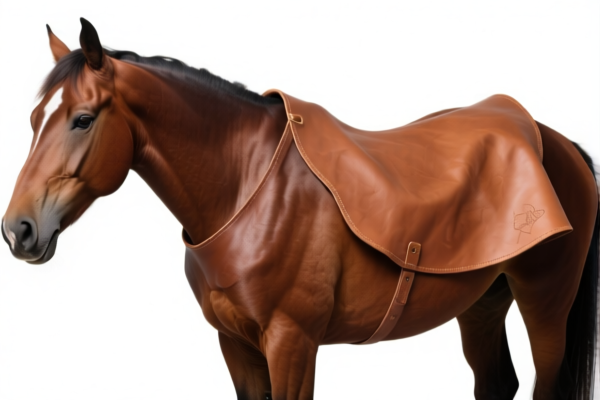
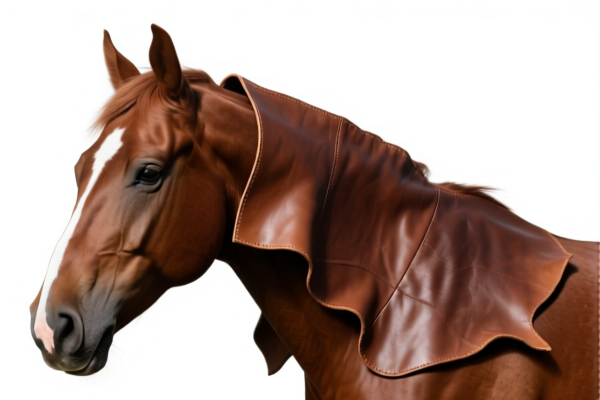


AI Analysis
🐎 Semi-Finished Leather for Horses (Equestrian Leather Goods)
🌐 HS Code Reference & Customs Clearance Guide | 2026 Latest Tariff Analysis | Professional Logistics Strategy
📌 I. Product Definition: What is "Semi-Finished Leather for Horses"?
This product category refers to leather materials that are partially processed (semi-finished) and specifically intended for equestrian use (harnesses, saddles, reins, etc.) or are leather products/components designed for horse tack. In international trade, classification depends heavily on two factors: 1. Material State: Is it raw semi-finished leather (Chapter 41) or processed leather goods/components (Chapter 42)? 2. Specific Use: Is it specifically for "horses" (Chapter 42, Heading 4201) or general leather goods?
⚠️ Critical Distinction:
- If the product is raw/partially processed leather (e.g., untanned, partially tanned, or finished skins in strips) without being a specific article of apparel or accessory → Chapter 41.
- If the product is a specific article or component made of leather for horses (e.g., straps, blank strips for harnesses classified as "other leather articles") → Chapter 42.
📦 II. HS Code Classification Matrix (2026 Latest Tariff Authority Match)
Based on the provided data, here are the five potential classifications, ordered by their logical fit and tax implications.
| HS Code | Product Description & Matching Logic | Applicable Scenario | Key Tax Rate (Total) |
|---|---|---|---|
| 4115.10.00.00 | Raw/Semi-finished Leather ✅ Match Logic: "Leather" (material) + "Semi-finished" (state). Fits the broad category of prepared skins in sheet/strip form. |
Raw leather sheets, unmade straps, general semi-finished leather products. | 35.0% |
| 4113.90.30.00 | Other Semi-finished Leather ✅ Match Logic: "Leather" + "Semi-finished" with further processing characteristics. Treated as "other" prepared skins when not falling under specific headings. |
Further processed leather skins not specifically designated for saddlery in Ch.41. | 38.3% |
| 4201.00.60.00 | Leather Saddlery/Harness Trimming ✅ Match Logic: "For Horses" (Use) + "Leather" (Material) + "Semi-finished" (Other). Fits "other" items of saddlery/harness goods. |
Semi-finished components specifically designed for horse tack (reins, harness parts). | 37.8% |
| 4205.00.40.00 | Other Leather Articles (Parts) ✅ Match Logic: "Leather" (Material) + "Parts" (Form). Includes accessories/components for various leather goods. |
Leather parts/components that are not specifically saddlery but are leather accessories. | 36.8% |
| 4205.00.80.00 | Other Leather Articles (Residual) ✅ Match Logic: "Leather" (Material) + "Parts" (Form). A catch-all for leather articles not elsewhere specified. |
Generic leather parts/components not fitting specific use cases. | 35.0% |
🔍 Key Insight:
- 4115.10.00.00 and 4205.00.80.00 share the lowest base rate (35.0%).
- 4201.00.60.00 is highly specific to "Horses" but has a slightly higher base rate due to specific equestrian classification.
- 4113.90.30.00 is the most expensive (38.3%) due to higher base tariff.
💰 III. 2026 Tariff Rate Breakdown (Including Additional Taxes)
✅ Applicable Country: United States (US)
✅ Country of Origin: China (CN)
✅ Effective Date: November 10, 2025 (and subsequent imports)
🎯 1. 4115.10.00.00 — Semi-finished Leather (Most Common Raw Material)
| Item | Detail |
|---|---|
| Base Duty | 0.0% (ad valorem) |
| Section 301 Duty | +25.0% (Added by USITC Footnote 9903.88.01) |
| IEEPA Duty | +10.0% (Targeting China/HK products under IEEPA) |
| Total Effective Rate | 35.0% |
| Tax Calculation | CIF Value × 35% |
| De Minimis Exemption | ❌ NO (Denied) |
| Legal Basis Path | IEEPA:9903.01.25 → IEEPA:9903.01.24 → USITC:4115.10.00.00 → FOOTNOTE:9903.88.01 |
📌 Explanation:
- Base duty is 0% for this semi-finished leather heading.
- However, 35% total tax applies due to the combination of 25% Section 301 and 10% IEEPA tariffs.
- High Impact: This is a significant cost driver for raw leather imports.
🎯 2. 4113.90.30.00 — Other Semi-finished Leather
| Item | Detail |
|---|---|
| Base Duty | 3.3% |
| Section 301 Duty | +25.0% |
| IEEPA Duty | +10.0% |
| Total Effective Rate | 38.3% |
| Tax Calculation | CIF Value × 38.3% |
| De Minimis Exemption | ❌ NO |
| Legal Basis Path | IEEPA:9903.01.25 → IEEPA:9903.01.24 → USITC:4113.90.30.00 → FOOTNOTE:9903.88.01 |
📌 Note:
- This is the most expensive classification in the list.
- Use only if the product does not fit 4115.10.00.00 or 4201.00.60.00.
🎯 3. 4201.00.60.00 — Other Articles of Saddlery/Harness Goods
| Item | Detail |
|---|---|
| Base Duty | 2.8% |
| Section 301 Duty | +25.0% |
| IEEPA Duty | +10.0% |
| Total Effective Rate | 37.8% |
| Tax Calculation | CIF Value × 37.8% |
| De Minimis Exemption | ❌ NO |
| Legal Basis Path | IEEPA:9903.01.25 → IEEPA:9903.01.24 → USITC:4201.00.60.00 → FOOTNOTE:9903.88.01 |
📌 Explanation:
- Specifically for "Horses." If your product is explicitly "for horses" (e.g., blank straps for harnesses), this is the most accurate descriptive classification, even though it is slightly cheaper than 4113 but more expensive than 4115.
- The 2.8% base duty reflects the finished/goods nature vs. raw material.
🎯 4. 4205.00.40.00 — Other Leather Articles (Parts)
| Item | Detail |
|---|---|
| Base Duty | 1.8% |
| Section 301 Duty | +25.0% |
| IEEPA Duty | +10.0% |
| Total Effective Rate | 36.8% |
| Tax Calculation | CIF Value × 36.8% |
| De Minimis Exemption | ❌ NO |
| Legal Basis Path | IEEPA:9903.01.25 → IEEPA:9903.01.24 → USITC:4205.00.40.00 → FOOTNOTE:9903.88.01 |
📌 Note:
- A middle-ground option for leather parts that are not specifically saddlery.
- Lower base duty (1.8%) makes it attractive if the product can be broadly defined as a "leather part" rather than raw leather.
🎯 5. 4205.00.80.00 — Other Leather Articles (Residual)
| Item | Detail |
|---|---|
| Base Duty | 0.0% |
| Section 301 Duty | +25.0% |
| IEEPA Duty | +10.0% |
| Total Effective Rate | 35.0% |
| Tax Calculation | CIF Value × 35.0% |
| De Minimis Exemption | ❌ NO |
| Legal Basis Path | IEEPA:9903.01.25 → IEEPA:9903.01.24 → USITC:4205.00.80.00 → FOOTNOTE:9903.88.01 |
📌 Note:
- Tied for the lowest total tax rate (35.0%) with 4115.10.00.00.
- Suitable for generic leather parts/components not otherwise specified.
🛠️ IV. Customs Clearance Practical Advice (Actionable Tips)
✅ 1. Documentation Checklist (Mandatory)
| Document | Required | Notes |
|---|---|---|
| ✅ Product Specification Sheet | ✔️ | Must clearly state: Material (Leather), State (Semi-finished), Intended Use (Horse Tack). |
| ✅ Commercial Invoice | ✔️ | Description must match HS Code logic (e.g., "Semi-finished Leather, for Equestrian Use"). |
| ✅ Packing List | ✔️ | Details weight, dimensions, and packaging. |
| ✅ Certificate of Origin (CO) | ✔️ | Essential for determining eligibility for any future exemptions (though currently none apply for China). |
| ✅ Photos of Goods | ✔️ | Show texture, form, and any markings. Helps CBP verify "semi-finished" status. |
| ✅ Bill of Lading/Air Waybill | ✔️ | Standard shipping document. |
⚠️ Critical: Do NOT use vague terms like "Leather Stuff." Use precise terms: "Semi-finished Leather Strips for Horse Harnesses."
✅ 2. Classification Strategy (Key Mnemonics)
🔥 "Raw Goes to Ch.41, Goods to Ch.42, Horses to 4201, Parts to 4205!"
| Scenario | Recommended HS Code | Reason |
|---|---|---|
| Raw/Untanned Leather Sheets | 4115.10.00.00 |
Base duty 0%, Total 35%. Best for raw material. |
| Semi-finished Leather Parts (General) | 4205.00.80.00 |
Base duty 0%, Total 35%. Best for generic leather parts. |
| Specifically for Horses (Tack/Harness) | 4201.00.60.00 |
Base duty 2.8%, Total 37.8%. Most accurate for equestrian use. |
| Further Processed Leather Skins | 4113.90.30.00 |
Avoid if possible (38.3% is highest). |
| Leather Parts (Not General) | 4205.00.40.00 |
Middle ground (36.8%). |
✅ 3. Special Cases & Risk Mitigation
| Scenario | Advice |
|---|---|
| OEM Custom Leather Strips | Provide design files + sample. Declare as "Semi-finished Leather for Horses" to justify 4201.00.60.00 or 4115.10.00.00. |
| Mixed Shipment (Leather + Non-Leather) | Separate shipments if possible. Leather parts attract 35%+ tax; non-leather may be lower. |
| Origin Misdeclaration | STRICT WARNING: Misdeclaring origin to avoid IEEPA 10% is fraud. Penalties are severe. |
| De Minimis Loophole | ❌ Not Available: All these codes have deny_de_minimis: true. No matter how small the value, tax applies. |
🌍 V. Global Market Comparison (2026)
| Country/Region | Recommended HS Code | Estimated Total Tax (China Origin) | Notes |
|---|---|---|---|
| 🇺🇸 USA | 4115.10.00.00 / 4205.00.80.00 |
35.0% | High due to Section 301 + IEEPA. |
| 🇨🇳 China | 4115.10.00.00 |
~0%~10% | Depends on specific import duty. No Section 301. |
| 🇪🇺 EU | 4115.10.00.00 |
~0% | Generally low duty for semi-finished leather. |
| 🇬🇧 UK | 4115.10.00.00 |
~0% | Post-Brexit tariffs may vary, but generally lower than US. |
| 🇯🇵 Japan | 4115.10.00.00 |
~0% | Low duty for raw materials. |
📌 Conclusion:
- USA is the most expensive market for semi-finished leather due to 35% total tariff.
- EU, UK, Japan, and China have significantly lower or zero duties for raw/semi-finished leather.
- Strategy: Consider supply chain adjustment (e.g., processing in Vietnam/Mexico) if exporting to the US to avoid IEEPA/Section 301 tariffs.
📌 VI. Common Mistakes & Pitfalls (Lessons Learned)
❌ Mistake 1: Declaring "Leather Parts" as 4205.00.80.00 when they are specifically for Horses (4201.00.60.00).
👉 Risk: CBP may reclassify and assess penalties for misdeclaration, even if tax rate is similar.
❌ Mistake 2: Using vague description "Leather Goods" without specifying "Semi-finished."
👉 Risk: CBP may classify as finished leather goods (e.g., 4203.00.00.00), which could have higher base duties or different compliance requirements.
❌ Mistake 3: Assuming de minimis applies to small shipments.
👉 Result: Tax will be charged on every shipment, regardless of value.
❌ Mistake 4: Ignoring IEEPA 10% in cost calculations.
👉 Result: Profit margin erosion. Always include 35% total tax in FOB/CIF calculations.
✅ Correct Declaration Example:
"Semi-finished Leather Strips, Cowhide, For Equestrian Harnesses, Not Yet Made Up, HS Code 4115.10.00.00"
🎯 VII. Conclusion: Precision in Classification, Profit in Logistics
🎯 Remember These Rules:
🔹 "Raw Leather = 35% Tax (US), Horse Tack = 37.8% Tax (US)"
🔹 "No De Minimis for Leather from China!"
🔹 "Accurate Description Prevents CBP Penalties!"
📌 Pro Tip:
If your semi-finished leather is processed in Vietnam, Mexico, or Thailand, you may qualify for IEEPA Exemptions or lower Section 301 rates.
✅ Recommendation: Apply for an Advance Ruling from CBP if your product is unique. This provides legal certainty before shipment.
📣 Immediate Action Plan:
📞 Contact Your Customs Broker: Provide product samples + specs.
📄 Request Advance Ruling: For complex "semi-finished horse leather" items.
🚀 Optimize Supply Chain: Consider third-country processing to reduce 35% tax burden.
✨ Professional Customs Clearance Starts with Accurate Classification!
💼 Every Percentage Point Saved is Pure Profit!
Customer Reviews
About HS Code Classification
The Harmonized System (HS) is an internationally standardized nomenclature developed by the World Customs Organization (WCO) to classify traded products. Over 200 countries use the HS system as the basis for customs tariffs, trade statistics, and import/export regulations.
Each HS code follows a hierarchical structure:
- Chapter (2 digits) — Broad category of goods (e.g., Chapter 84: Machinery and Mechanical Appliances)
- Heading (4 digits) — More specific grouping within the chapter
- Subheading (6 digits) — Internationally standardized breakdown, used by all WCO member countries
- National subdivisions (8-10 digits) — Country-specific extensions for further classification, such as US HTSUS 10-digit codes
Correct HS code classification is essential for smooth customs clearance, accurate duty payment, and compliance with trade regulations. Misclassification can lead to customs delays, overpayment of duties, or penalties.
When importing from CN to US, the applicable tariff rates may include:
- Most-Favored-Nation (MFN) rate — The standard duty rate applied to WTO members
- General rate — Applied to countries without trade agreements
- Trade remedy duties — Additional tariffs such as Section 301 (anti-dumping), Section 232 (national security), or countervailing duties
The information provided on this page is for reference purposes only. For official classification, please consult with your local customs authority or a licensed customs broker.