Semi finished Paper Crafts
CN → US| HS Code | Tariff Rate | Origin | Destination | Doc |
|---|---|---|---|---|
| 4911996000 | 17.5% | CN | US | Official Doc |
| 4823901000 | 35.0% | CN | US | Official Doc |
| 4823908620 | 35.0% | CN | US | Official Doc |
| 4911911500 | 17.5% | CN | US | Official Doc |
| 4819200020 | 35.0% | CN | US | Official Doc |
| 4819502000 | 35.0% | CN | US | Official Doc |
Product Images
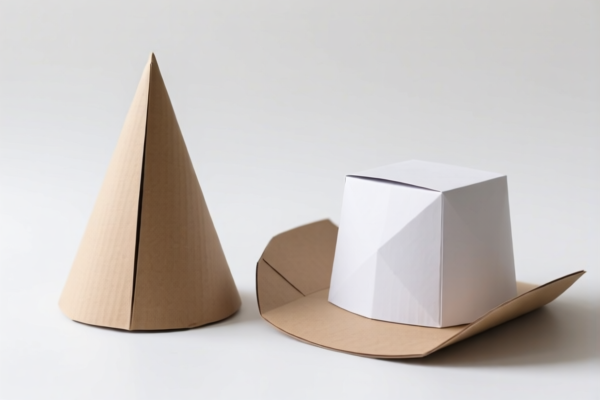



AI Analysis
📜 Semi-finished Paper Crafts: The "Paper Paradise" Tariff Trap
🌐 HS Code Reference & Customs Clearance Guide | 2026 Latest Tariff Analysis | Professional Clearance Strategy
📌 I. Product Definition: Are You Selling "Art" or "Packaging"?
"Semi-finished paper crafts" is a broad and highly ambiguous term in international trade. In the customs world, this ambiguity is dangerous. Are these items destined to be gift boxes (Chapter 48)? Are they printed materials with design elements (Chapter 49)? Or are they generic unclassified paper goods?
The Core Distinction:
- Chapter 48 (Paper & Paperboard): Focuses on the material. Items like blanks for boxes, cutouts, or basic folded structures fall here.
- Chapter 49 (Printed Matter): Focuses on the content. Items that are pre-printed, designed, or have specific graphic information often fall here.
⚠️ Key Classification Point:
- If the item is primarily a packaging container (even if semi-finished) → HS 4819 / 4823
- If the item is primarily a printed design/art piece → HS 4911
- Misclassification Risk: Declaring a printed paper art blank as a "paperboard box" can lead to significant duty discrepancies due to the "Section 301" and "122" tariffs.
📦 II. HS Code Classification Matrix (2026 Latest Tariff Authority)
Based on the provided data, here is the precise breakdown for "Semi-finished Paper Crafts" entering the US market from China.
| HS Code | Product Description (Summary) | Key Attribute | Total Tax Rate |
|---|---|---|---|
4911.99.60.00 |
Semi-finished paper art goods | Printing/Design category. Matches paper material attributes without conflict. | 17.5% |
4911.91.15.00 |
Semi-finished paper art goods | Printing/Design category. No material conflict. | 17.5% |
4823.90.10.00 |
Semi-finished paper products | Processed Paper. Matches HS 4823.90.10.00 description for processed paper forms. | 35.0% |
4823.90.86.20 |
Semi-finished paper commodities | Processed Paper. Matches auxiliary dictionary for semi-finished forms & paper material. | 35.0% |
4819.20.00.20 |
Semi-finished paper folding boxes/cases | Packaging. Paper material + semi-finished state. No usage conflict. | 35.0% |
4819.50.20.00 |
Semi-finished paper packaging/containers | Packaging. Core material: Paper. Classification match: Packaging/Container. | 35.0% |
🔍 Critical Observation:
There is a 17.5% Tax Differential between Chapter 49 (Art/Print) and Chapter 48 (Packaging/Processing).
- Chapter 49 (Art): Lower duty (17.5%).
- Chapter 48 (Packaging/General): Higher duty (35.0%).
Choosing the wrong chapter costs you nearly double the tariff!
💰 III. 2026 Latest Tariff Rate Breakdown (Including Surcharges & Policy Add-ons)
✅ Applicable Country: United States (US)
✅ Origin: China (CN)
✅ Effective Time: Current Rates (Post-2025 Adjustments)
🎯 1. Chapter 49 Classification (4911.99.60.00 & 4911.91.15.00)
Best for: Pre-printed paper art, design drafts, printed craft blanks.
| Item | Content |
|---|---|
| Base Duty Rate | 0.0% (Ad Valorem) |
| Section 301 Surcharge | +7.5% (USITC Footnote related to Chapter 49) |
| Section 122 Tariff | +10.0% (Targeted at specific Chinese imports) |
| Total Effective Rate | 17.5% |
| Tax Calculation | CIF Value × 17.5% |
| De Minimis Eligibility | ❌ Not Eligible (High duty rate excludes it from de minimis exemption) |
| Legal Basis Path | Base: 0% → S301: 7.5% → Sec 122: 10% |
📌 Explanation:
- These items are classified under "Printed Matter."
- The base duty is free, but the 17.5% total is driven entirely by surcharges.
- Cost Advantage: This is the cheapest classification option in the dataset. If your product is printed or has design value, fight for this classification.
🎯 2. Chapter 48 Classification (4823.90.10.00, 4823.90.86.20)
Best for: Unprinted paper cutouts, generic processed paper semi-finished goods.
| Item | Content |
|---|---|
| Base Duty Rate | 0.0% (Ad Valorem) |
| Section 301 Surcharge | +25.0% (High tariff rate for general processed paper) |
| Section 122 Tariff | +10.0% |
| Total Effective Rate | 35.0% |
| Tax Calculation | CIF Value × 35.0% |
| De Minimis Eligibility | ❌ Not Eligible |
| Legal Basis Path | Base: 0% → S301: 25% → Sec 122: 10% |
📌 Explanation:
- These items are classified as "Paper Articles, Not Elsewhere Specified."
- The 25% Section 301 surcharge is significantly higher than the 7.5% in Chapter 49.
- Cost Disadvantage: This is a high-cost classification. Only use this if the item is unprinted, structural, and clearly not "printed matter."
🎯 3. Packaging Classification (4819.20.00.20 & 4819.50.20.00)
Best for: Box blanks, carton shells, semi-finished packaging containers.
| Item | Content |
|---|---|
| Base Duty Rate | 0.0% (Ad Valorem) |
| Section 301 Surcharge | +25.0% |
| Section 122 Tariff | +10.0% |
| Total Effective Rate | 35.0% |
| Tax Calculation | CIF Value × 35.0% |
| De Minimis Eligibility | ❌ Not Eligible |
| Legal Basis Path | Base: 0% → S301: 25% → Sec 122: 10% |
📌 Explanation:
- Even though these are "packaging," they fall under the high-tariff Chapter 48 general articles.
- Warning: Do not assume "packaging" equals low duty. In this specific dataset, packaging semi-finished goods are taxed at 35%, same as generic paper articles.
🛠️ IV. Customs Clearance Practical Advice (Avoiding Pitfalls)
✅ 1. Document Preparation Checklist (Mandatory)
| Document | Must Provide | Purpose |
|---|---|---|
| ✅ Product Specifications | ✔️ | Must explicitly state: "Semi-finished," "Unprinted" OR "Pre-printed Design." |
| ✅ Photos (Clear View) | ✔️ | Show edges, print quality, and structural state. Is it a box? A card? A cutout? |
| ✅ Bill of Lading (B/L) | ✔️ | Ensure description matches HS Code intent (e.g., "Paper Art Blanks" vs. "Box Blanks"). |
| ✅ Commercial Invoice | ✔️ | Itemize separately if mixing different HS codes. |
| ✅ Origin Certificate | ✔️ | Proof of Chinese origin triggers the Section 301 & 122 tariffs. |
✅ 2. Declaration Strategy (Key Mantra)
🔥 “Printed? Go 49! Unprinted? Go 48! Packaged? Watch the 35%!”
| Scenario | Recommended HS Code | Why? |
|---|---|---|
| Pre-printed paper art/card | 4911.99.60.00 or 4911.91.15.00 |
Chapter 49 attracts only 17.5% duty. Lower cost. |
| Plain white paper cutout | 4823.90.10.00 or 4823.90.86.20 |
Chapter 48 attracts 35% duty. Higher cost, but accurate for unprinted goods. |
| Folded box shell (plain) | 4819.20.00.20 |
Classified as packaging paper product. 35% duty. |
| Folded box shell (printed) | ⚠️ Caution | If printed, it might qualify for Chapter 49 (4911...), but Customs may argue it's packaging. Risk Assessment Needed. |
✅ 3. Special Handling Tips
| Situation | Advice |
|---|---|
| "Semi-finished" Ambiguity | Provide a sample to the broker for pre-classification. Define "semi-finished" clearly: Is it glued? Cut? Printed? |
| Mixing Printed & Unprinted | Do NOT mix in one shipment if possible. Mixed shipments trigger detailed scrutiny. Separate consignments for 4911 and 4823 items. |
| Section 122 Impact | Remember the +10% is applied on top of the base + Section 301. It is non-negotiable for Chinese origin. |
| De Minimis (Under $800) | ❌ Blocked. Because the total rate >10%, these items cannot enter under Section 321 de minimis. Full entry required. |
🌍 V. Global Market Comparison (2026 Update)
| Market | Recommended HS | Total Duty (CN Origin) | Notes |
|---|---|---|---|
| 🇺🇸 USA | 4911.99.60.00 / 4823.90.10.00 |
17.5% / 35.0% | Heavy surcharges (S301 + Sec 122). |
| 🇨🇳 China (Import) | 4911.99.00.00 |
~10-15% | No Section 301/122. Lower cost. |
| 🇪🇺 EU | 4911.99.00 / 4823.90 |
0-6.5% | No equivalent to US Section 301. Much cheaper. |
| 🇬🇧 UK | 4911.99.00 |
0-6.5% | Post-Brexit rules apply, but no US-style punitive tariffs. |
📌 Conclusion:
The US market is the most expensive for semi-finished paper crafts due to the dual-layer surcharges (25% or 7.5% + 10%).
Strategy: If you are manufacturing in China, consider Value-Add Processing in a third country (e.g., Vietnam) to avoid "China Origin" triggers, or optimize product design to fit Chapter 49 (17.5%) rather than Chapter 48 (35%).
📌 VI. Common Errors & Pitfalls (Lessons Learned)
❌ Error 1: Declaring printed paper art as "Packaging" (4819...)
👉 Result: You pay 35% instead of 17.5%. Overpayment of 17.5%!
❌ Error 2: Declaring plain paper cutouts as "Printed Art" (4911...)
👉 Result: Customs inspection fails. Penalties, delays, or retroactive adjustment to 35% + fines.
❌ Error 3: Assuming "Semi-finished" means low duty
👉 Result: In the US, "semi-finished" paper goods from China are heavily taxed. Do not rely on "incomplete" status for lower rates.
✅ Correct Approach:
"Semi-finished Printed Paper Art Cards, Model XYZ, Pre-printed with Logo, Unfolded" → HS 4911.99.60.00
"Semi-finished White Cardboard Box Shells, No Printing, Flat Packed" → HS 4819.20.00.20
🎯 VII. Conclusion: Precision Saves Money!
🎯 Remember the Golden Rule:
🔹 "Printed = 17.5% (Chapter 49)"
🔹 "Plain/Packaging = 35.0% (Chapter 48)"
🔹 "China Origin = +10% Sec 122 on Top!"
📌 Pro Tip:
If your "semi-finished" items are lightly printed (e.g., single color logo), consult a customs broker on whether they still qualify as "Printed Matter" (Chapter 49) or if the printing is considered minor decoration keeping them in Chapter 48. This single decision can save you 17.5% on every shipment.
📣 Immediate Action:
📞 Audit your current HS Codes.
📸 Send photos of your semi-finished products to your broker.
📉 Request a Pre-Ruling if your volume is high.
✨ Professional clearance starts with accurate classification!
💼 Don't let "Semi-finished" become "Over-priced"!
Customer Reviews
About HS Code Classification
The Harmonized System (HS) is an internationally standardized nomenclature developed by the World Customs Organization (WCO) to classify traded products. Over 200 countries use the HS system as the basis for customs tariffs, trade statistics, and import/export regulations.
Each HS code follows a hierarchical structure:
- Chapter (2 digits) — Broad category of goods (e.g., Chapter 84: Machinery and Mechanical Appliances)
- Heading (4 digits) — More specific grouping within the chapter
- Subheading (6 digits) — Internationally standardized breakdown, used by all WCO member countries
- National subdivisions (8-10 digits) — Country-specific extensions for further classification, such as US HTSUS 10-digit codes
Correct HS code classification is essential for smooth customs clearance, accurate duty payment, and compliance with trade regulations. Misclassification can lead to customs delays, overpayment of duties, or penalties.
When importing from CN to US, the applicable tariff rates may include:
- Most-Favored-Nation (MFN) rate — The standard duty rate applied to WTO members
- General rate — Applied to countries without trade agreements
- Trade remedy duties — Additional tariffs such as Section 301 (anti-dumping), Section 232 (national security), or countervailing duties
The information provided on this page is for reference purposes only. For official classification, please consult with your local customs authority or a licensed customs broker.