Semi finished Western Red Cedar Wood
CN → US| HS Code | Tariff Rate | Origin | Destination | Doc |
|---|---|---|---|---|
| 4407190068 | 35.0% | CN | US | Official Doc |
| 4407190069 | 35.0% | CN | US | Official Doc |
Product Images
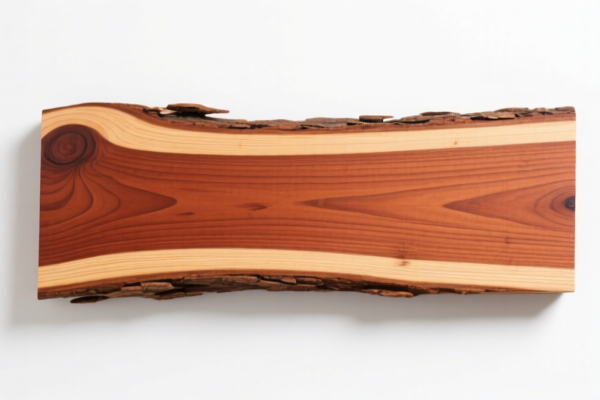
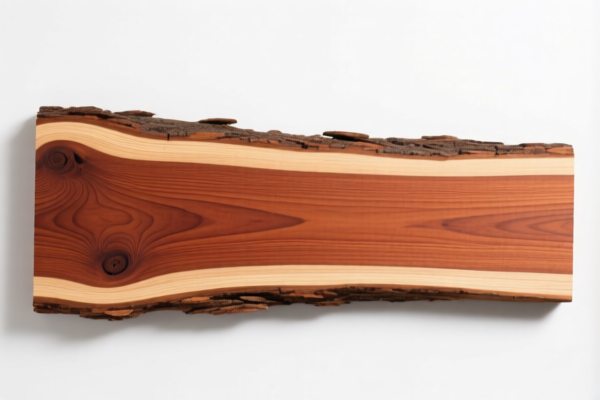
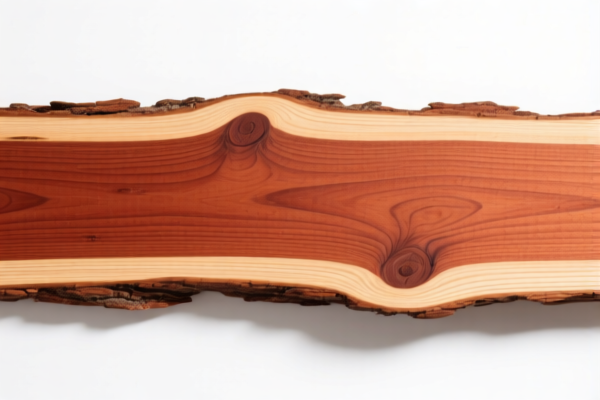
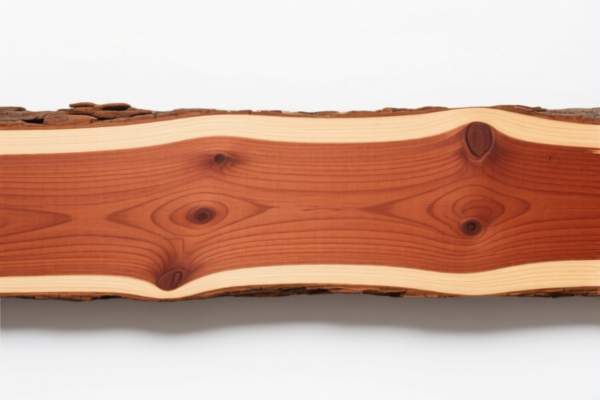
AI Analysis
🌲 Western Red Cedar Wood (Sawn/Chipped Lengthwise, >6mm)
🌐 HS Code Reference & Customs Clearance Guide | 2026 Tariff Analysis | Professional Clearance Strategy
📌 I. Product Definition & Classification: What Exactly is "Semi-Finished Cedar"?
Western Red Cedar is a premium softwood widely used in construction, outdoor decking, and high-end joinery. In international trade, "semi-finished" wood generally refers to logs that have been processed into specific dimensions but are not yet final consumer goods (like furniture or finished flooring).
Based on the provided data, the key characteristics are: * Processing Method: Sawn or chipped lengthwise, sliced, or peeled. * Post-Processing: May be planed, sanded, or end-jointed. * Thickness: Exceeds 6 mm (This is the critical threshold; if ≤6mm, it might be classified differently as veneer or plywood). * Tree Type: Coniferous (Softwood). * Treatment Status: Not treated (Untreated timber).
⚠️ Key Distinction Point:
- If the wood is treated (pressure-treated, painted, stained), it does NOT fall under these specific codes and may require different HS codes and higher tariffs.
- If the thickness is ≤ 6 mm, it is considered veneer or thin sheet, not "sawn wood" in this context.
- Rough vs. Other: "Rough" implies minimal surface preparation (just cut/sawn), whereas "Other" implies additional processing like planing, sanding, or end-joining.
📦 II. HS Code Classification Details (Based on Provided Data)
| HS Code | Product Description | Processing Level | Surface Condition |
|---|---|---|---|
4407.19.00.68 |
Rough Western Red Cedar | Sawn/chipped/sliced/peeled | Untreated, minimal surface preparation (Saw marks visible, not planed/sanded) |
4407.19.00.69 |
Other Western Red Cedar | Sawn/chipped/sliced/peeled | Untreated, but processed further (e.g., Planed, Sanded, or End-jointed) |
🔍 Critical Note:
- Both codes fall under Chapter 44: Wood and articles of wood.
- Subheading 4407: "Wood sawn or chipped lengthwise... of a thickness exceeding 6 mm."
- The distinction between.68and.69is purely based on surface finish quality, not the base material.
- Do not use these codes for treated lumber; treated wood has different regulatory requirements (e.g., FIFRA in the US, REACH in EU).
💰 III. 2026 Tariff Rate Details (Detailed Breakdown)
✅ Applicable Country: United States (US)
✅ Origin: China (CN) (Implied by the "Add-on Tariff" structure typical of US-China trade data)
✅ Effective Time: Current rates as per provided data
🎯 1. 4407.19.00.68 —— Rough Western Red Cedar
| Item | Content |
|---|---|
| Base Tariff Rate | 0.0% (Ad valorem) |
| Add-on Tariff (Section 301 / USITC) | +25.0% |
| Total Tariff Rate | 25.0% |
| Tax Calculation | CIF Value × 25% |
| Is De Minimis Exemption Applicable? | ❌ No (De minimis values for wood products from China are generally not exempt from Section 301 tariffs if they meet the threshold, and typically, bulk lumber shipments are not eligible for the $800 de minimis exception in the same way as small parcels). |
| Legal Basis Path | USITC:4407.19.00.68 → FOOTNOTE:SECTION_301 |
📌 Explanation:
- Base Rate (0%): Recognized as a raw material with no duty in standard trade agreements.
- Add-on (25%): This is the significant cost driver. It reflects the retaliatory or protective tariffs imposed on Chinese-origin softwood lumber products.
- Total Cost Impact: For every $10,000 of CIF value, you pay $2,500 in duties.
🎯 2. 4407.19.00.69 —— Other (Planed/Sanded/End-Jointed) Western Red Cedar
| Item | Content |
|---|---|
| Base Tariff Rate | 0.0% (Ad valorem) |
| Add-on Tariff (Section 301 / USITC) | +25.0% |
| Total Tariff Rate | 25.0% |
| Tax Calculation | CIF Value × 25% |
| Is De Minimis Exemption Applicable? | ❌ No |
| Legal Basis Path | USITC:4407.19.00.69 → FOOTNOTE:SECTION_301 |
📌 Explanation:
- Despite being "processed" (planed/sanded), the tariff rate remains identical to rough lumber.
- This is because the "add-on" tariff applies to the HS Code family of Western Red Cedar sawn wood, regardless of minor surface treatments.
- Value Add vs. Tariff Hit: Processing the wood increases its value but does not reduce the percentage-based tariff.
🛠️ IV. Customs Clearance Practical Advice (Pitfall Avoidance Guide)
✅ 1. Preparation Checklist (Mandatory Documents)
| Document | Required? | Explanation |
|---|---|---|
| ✅ Commercial Invoice | ✔️ | Must clearly state: "Western Red Cedar," "Sawn Wood," "Thickness >6mm," "Untreated." |
| ✅ Packing List | ✔️ | Detail dimensions, volume (board feet/cubic meters), and number of bundles. |
| ✅ Phytosanitary Certificate | ✔️ | CRITICAL. Wood is a high-risk category for pests. Must be issued by the country of origin's agricultural authority. |
| ✅ Fumigation Certificate | ✔️ | If required by destination country (e.g., US requires ISPM 15 compliant packaging if in wood pallets, though the wood itself needs treatment/certification). |
| ✅ Bill of Lading/Air Waybill | ✔️ | Standard transport document. |
| ✅ Certificate of Origin | ✔️ | To prove origin (China) for tariff calculation. |
| ✅ Product Specifications | ✔️ | Confirm thickness (>6mm) and treatment status (Untreated). |
⚠️ Warning:
- Untreated Declaration: If the wood has any hint of chemical treatment (stain, sealant), it must be declared. Misdeclaring treated wood as "untreated" can lead to severe penalties, seizure, and destruction of goods.
- Pest Risk: Western Red Cedar is susceptible to borers and fungi. Ensure the Phytosanitary Certificate explicitly states "Free from pests and diseases."
✅ 2. Declaration Tips (Key Mnemonics)
🔥 "Rough is .68, Sanded is .69. Untreated is Key. >6mm is the Threshold!"
| Scenario | Correct HS Code | Common Mistake |
|---|---|---|
| Rough-sawn, no planing/sanding | 4407.19.00.68 |
Using .69 (wrong) |
| Planed, sanded, or end-jointed | 4407.19.00.69 |
Using .68 (wrong) |
| Thickness ≤ 6mm | ❌ Not these codes | Likely 4408 (Veneer sheets) or 4412 (Plywood) |
| Treated/Painted/Stained | ❌ Not these codes | May fall under 4407 sub-headings for treated wood or other chapters |
| Logs (Un-sawn) | ❌ Not these codes | 4403 (Wood in the rough) |
✅ 3. Special Case Handling
| Scenario | Recommendation |
|---|---|
| Mixed Shipments (Rough + Planed) | You must split the shipment into two separate entries or clearly itemize them with separate HS codes on the invoice to avoid classification disputes. |
| Wood Pallets in Shipment | If shipped on wood pallets, ensure pallets are ISPM 15 compliant (heat-treated/fumigated and stamped). Even if the cedar is untreated, the pallets can cause customs holds if not compliant. |
| Destination: United States | Be aware of the Lacey Act. While Western Red Cedar from China is not inherently prohibited, you must declare the botanical name (Thuja plicata) and country of harvest to comply with US wildlife protection laws. |
🌍 V. Global Market Comparison (2026 Overview)
| Country/Region | Recommended HS Code | Tariff (China Origin) | Key Certification | Notes |
|---|---|---|---|---|
| 🇺🇸 USA | 4407.19.00.68 / .69 |
25% (Total) | Phytosanitary + Lacey Act | High duty due to trade war; strict pest control. |
| 🇨🇳 China | 4407.19.00.68 / .69 |
Varies (Import) | N/A | Data provided is for export from China. |
| 🇪🇺 EU | 4407.10.90 |
0% (Usually) | Fumigation Certificate | Generally lower tariffs for raw timber, but strict EUTR (Eco-Timber Regulation) for legality verification. |
| 🇬🇧 UK | 4407.10.90 |
0% | Fumigation Certificate | Post-Brexit rules apply; similar to EU. |
| 🇦🇺 Australia | 4407.10.90 |
5% | Biosecurity Approval | Extremely strict biosecurity; may require additional treatments. |
📌 Conclusion:
- The US market is the most expensive for this product due to the 25% add-on tariff.
- Biosecurity is the universal bottleneck, not just tariffs. Ensure impeccable documentation.
📌 VI. Common Errors & Pitfall Guide (Lessons Learned)
❌ Error 1: Declaring "Sanded" wood as "Rough" to save time?
👉 Result: Customs may re-classify and assess penalties, or more likely, reject the inaccurate description. The HS code must match the physical state of the goods.
❌ Error 2: Ignoring the Lacey Act in the US?
👉 Result: Fine up to $10,000 per violation and potential seizure. You must declare the species name (Thuja plicata).
❌ Error 3: Assuming "Untreated" means no Phytosanitary Certificate needed?
👉 Result: Major Delay. Untreated wood is the #1 carrier for invasive pests. Customs will hold the shipment until proof of pest freedom is provided.
❌ Error 4: Confusing "Sawn Wood" (>6mm) with "Veneer" (≤6mm)?
👉 Result: Wrong HS Code → Wrong Duty Calculation → Audit Risk.
✅ Correct Declaration Example:
"Western Red Cedar Sawn Lumber, Rough, Untreated, Thuja plicata, Thickness 25mm, Origin: Canada/China (as applicable), Lacey Act Compliant."
🎯 VII. Conclusion: Precision Pays Off
🎯 Remember the Mantra:
🔹 "Rough .68, Sanded .69. Untreated is King. 25% Tax Stings. Lacey Act Must Ring."
🔹 "Thickness Matters: >6mm for this Code. <6mm Goes Elsewhere."
📌 Pro Tip:
If you are shipping to the US, consider pre-clearance services or engaging a customs broker experienced in timber products to handle the Phytosanitary and Lacey Act declarations accurately. The 25% tariff is unavoidable for Chinese-origin goods, so accuracy in classification prevents costly delays that add demurrage fees.
📣 Immediate Action:
📞 Consult a licensed customs broker for US imports.
📄 Ensure Phytosanitary Certificate is obtained before shipment.
🚫 Double-check Treatment Status – if there's any doubt, declare it.
✨ Accurate Classification Saves 25% and Your Sanity!
💼 In Timber Trade, Paperwork is as Valuable as the Wood Itself!
Customer Reviews
About HS Code Classification
The Harmonized System (HS) is an internationally standardized nomenclature developed by the World Customs Organization (WCO) to classify traded products. Over 200 countries use the HS system as the basis for customs tariffs, trade statistics, and import/export regulations.
Each HS code follows a hierarchical structure:
- Chapter (2 digits) — Broad category of goods (e.g., Chapter 84: Machinery and Mechanical Appliances)
- Heading (4 digits) — More specific grouping within the chapter
- Subheading (6 digits) — Internationally standardized breakdown, used by all WCO member countries
- National subdivisions (8-10 digits) — Country-specific extensions for further classification, such as US HTSUS 10-digit codes
Correct HS code classification is essential for smooth customs clearance, accurate duty payment, and compliance with trade regulations. Misclassification can lead to customs delays, overpayment of duties, or penalties.
When importing from CN to US, the applicable tariff rates may include:
- Most-Favored-Nation (MFN) rate — The standard duty rate applied to WTO members
- General rate — Applied to countries without trade agreements
- Trade remedy duties — Additional tariffs such as Section 301 (anti-dumping), Section 232 (national security), or countervailing duties
The information provided on this page is for reference purposes only. For official classification, please consult with your local customs authority or a licensed customs broker.