Semi gloss Coated Paper
CN → US| HS Code | Tariff Rate | Origin | Destination | Doc |
|---|---|---|---|---|
| 4810131140 | 35.0% | CN | US | Official Doc |
| 4810131900 | 35.0% | CN | US | Official Doc |
Product Images
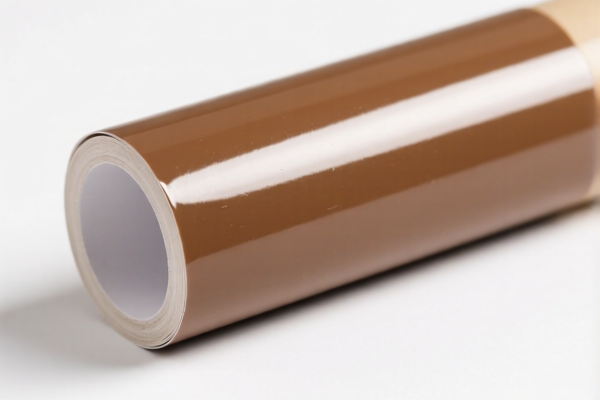
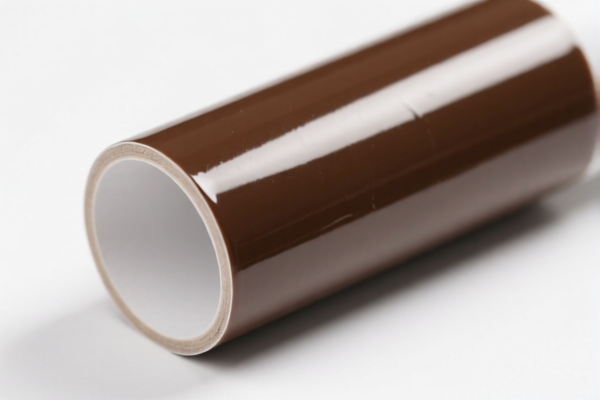
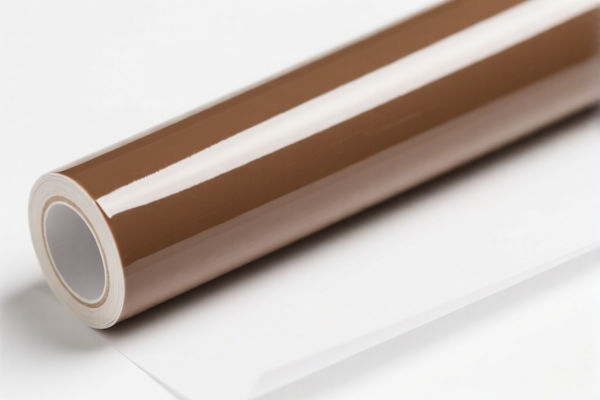
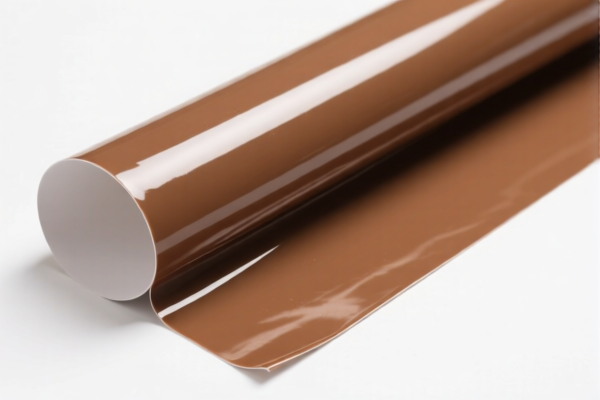
AI Analysis
📄 Semi-Gloss Coated Paper: HS Code Classification & Customs Clearance Guide (2026)
🌐 HS Code Reference & Customs Clearance Guide | Latest 2026 Tariff Analysis | Professional Clearance Strategy
📌 I. Product Definition & Classification: Do You Really Know "Semi-Gloss Coated Paper"?
Semi-gloss coated paper, also known as Satin Coated Paper, is a widely used paper product in the packaging, publishing, and graphic arts industries. It sits between Gloss Paper (high shine, high reflectivity) and Matte Paper (low shine, soft touch).
In international trade, this product is strictly categorized under Heading 4810 of the Harmonized System (HS). The classification depends heavily on: 1. Coating Material: Kaolin (China clay) or other inorganic substances. 2. Fiber Content: Specifically whether it contains fibers obtained by mechanical/chemi-mechanical processes (wood pulp) or non-mechanical fibers. 3. Dimensions: Width of the roll or size of sheets. 4. Specific Use: Whether it is "Basic paper to be sensitized for use in photography."
⚠️ Key Distinction:
- If the paper is kaolin-coated and used for general printing/writing → Look at 4810.13.
- If it contains >10% mechanical fibers (common for standard offset paper) → It falls under specific subheadings.
- If it is sensitized for photography (light-sensitive) → It requires a specific HS code (e.g.,4810.13.11.40).
- If it is standard semi-gloss paper for commercial printing → It falls under the "Other" category (e.g.,4810.13.19.00).
📦 II. HS Code Classification Details (2026 Latest Tariff Authority)
Based on the provided data, there are two primary HS codes for this product, differentiated by specific usage (Photography vs. General Use) and resulting in vastly different tax liabilities.
| HS Code | Product Description | Application Scenario | Tax Rate (Total) | Key Differentiator |
|---|---|---|---|---|
4810.13.11.40 |
Sensitized Paper for Photography Paper & paperboard coated with kaolin/inorganic substances, used for writing/printing, width >15cm, weight ≤150 g/m², in rolls. |
Photo printing labs, industrial photo materials, sensitized substrates. | 0.0% | ✅ Must be "Basic paper to be sensitized for use in photography." |
4810.13.19.00 |
Other Coated Paper (General Use) Same physical specs as above, but NOT for photography sensitization. |
Commercial packaging, brochures, magazines, general office printing. | 25.0% | ❌ Standard semi-gloss paper for general graphic purposes. |
🔍 Critical Alert:
- The 25% tariff difference is massive. Misdeclaring a standard semi-gloss paper as "sensitized photographic paper" to avoid taxes is a high-risk customs violation. - Sensitized paper must have specific chemical coatings (light-sensitive emulsions) and cannot just be "semi-gloss." Ordinary semi-gloss paper uses clay and binders for aesthetic finish, not light sensitivity.
💰 III. 2026 Latest Tariff Rate Breakdown (Including Additional Taxes)
✅ Applicable Country: United States (US)
✅ Origin: China (CN)
✅ Effective Date: November 10, 2025 (and subsequent imports)
🎯 1. 4810.13.11.40 —— Sensitized Paper for Photography
| Item | Detail |
|---|---|
| Base Tariff | 0.0% (ad valorem) |
| Section 301 Additional Tariff | 0.0% |
| Total Tariff | 0.0% |
| De Minimis Eligibility | ❌ No (Subject to strict scrutiny; photo chemicals may have restrictions) |
| Legal Basis | Heading 4810, Subheading 13 |
📌 Explanation:
- This code enjoys a 0% tariff. It is considered a specialized industrial material for photography.
- Note: Even though the tariff is 0%, customs may request proof that the paper is indeed "sensitized" (e.g., chemical specifications, SDS for light-sensitive agents).
🎯 2. 4810.13.19.00 —— Other Coated Paper (Standard Semi-Gloss)
| Item | Detail |
|---|---|
| Base Tariff | 0.0% |
| Section 301 Additional Tariff | +25.0% |
| Total Tariff | 25.0% |
| De Minimis Eligibility | ❌ No |
| Legal Basis | Heading 4810, Subheading 19 |
📌 Explanation:
- The Base Tariff is 0%, but it is subject to the 25% Section 301 additional duty on Chinese goods.
- This is the standard rate for general-purpose coated paper (like semi-gloss brochure paper).
- Total Cost Impact: For a $10,000 shipment, you pay $2,500 in additional tariffs.
🛠️ IV. Customs Clearance Practical Advice (Pitfall Avoidance Guide)
✅ 1. Required Documentation Checklist
| Document | Mandatory? | Description |
|---|---|---|
| ✅ Product Specification Sheet | ✔️ | Must detail: Coating material (Kaolin/Clay), fiber content (mechanical vs. chemical), basis weight (g/m²), width, and intended use. |
| ✅ Commercial Invoice | ✔️ | Clearly state "Semi-Gloss Coated Paper" and specify HS Code. Do not use vague terms like "Art Paper" without clarification. |
| ✅ Certificate of Origin | ✔️ | To prove Chinese origin and apply correct Section 301 rates. |
| ✅ Photos/Samples | ✔️ | Visual proof of the coating finish (semi-gloss vs. matte/gloss). |
| ✅ Declaration of Non-Sensitization | ❌ (If using 4810.13.19.00) |
If declaring under "Other," you may need to declare that it is NOT sensitized for photography to avoid fraud accusations. |
| ✅ Chemical Safety Data Sheet (SDS) | ⚠️ (If claiming 4810.13.11.40) |
Required to prove light-sensitive properties if using the 0% code. |
✅ 2. Classification Strategy (Key Rules)
🔥 “Coat with Clay, Not with Chem: Check the Use, Not Just the Shine!”
| Scenario | Correct HS Code | Reasoning |
|---|---|---|
| Standard semi-gloss paper for booklets, magazines, or packaging | 4810.13.19.00 |
Used for general graphic purposes; no light-sensitive chemicals. Tax: 25% |
| Photo paper for inkjet/laser photo printers (sensitized) | 4810.13.11.40 |
Specifically processed to be sensitized for photography. Tax: 0% |
| Paper with >10% mechanical fibers | May fall under 4810.13.11/19 but verify fiber content | If mechanical fibers >10%, it still falls here if it meets other criteria. If mechanical fibers are 0%, it may move to different subheadings. |
| Paper with Other Coatings (e.g., Plastic, Metallic) | NOT 4810 | Must check other chapters (e.g., 4811 if laminated, 3920 if plastic-coated). |
✅ 3. Special Cases & Warnings
| Case | Handling Advice |
|---|---|
| "Semi-Gloss" vs. "Gloss" | Both can fall under 4810.13 if coated with kaolin. The key is not the shine level, but the coating material and use. |
| Misclassification Risk | Declaring standard paper as "Photo Paper" to save 25% is fraud. Customs can demand lab tests. Penalties include fines, seizure, and loss of Importer Security Filing (ISF) standing. |
| Width Restrictions | The HS code 4810.13.11.40 and 4810.13.19.00 specify "In rolls: Of a width exceeding 15 cm". If your paper is in sheets <15cm or narrow rolls, different codes may apply. |
| Weight Limit | These codes apply to paper weighing not more than 150 g/m². Heavier semi-gloss paper (e.g., cardstock >150 g/m²) falls under different subheadings (e.g., 4810.19). |
🌍 V. Global Market Comparison (2026)
| Country/Region | Recommended HS Code | Tariff Rate (China Origin) | Key Certification | Notes |
|---|---|---|---|---|
| 🇺🇸 USA | 4810.13.19.00 |
25% (Section 301) | None specific | Highest cost. 0% only if truly sensitized photo paper. |
| 🇪🇺 EU | 4810.13 | 0% | CE (if packaging) | Lower tariffs. VAT varies by country (19-27%). |
| 🇨🇳 China | 4810.13 | 0% | None | Export-friendly. Domestic VAT 13% applies on sale. |
| 🇬🇧 UK | 4810.13 | 0% | UKCA (if packaging) | Post-Brexit rules apply. Generally low duties on paper. |
| 🇨🇦 Canada | 4810.13 | 0% | None | FTA benefits may apply if originating in Canada/Mexico. |
📌 Conclusion:
- The US market is the most expensive for standard semi-gloss paper due to the 25% Section 301 duty. - No tariff advantage exists for standard semi-gloss paper in the US compared to other coated papers in this category.
📌 VI. Common Mistakes & Pitfalls (Lessons Learned)
❌ Mistake 1: Calling standard semi-gloss paper "Photo Paper" to get 0% tax.
👉 Consequence: Customs audit, penalties, and potential seizure. Penalty: Up to 3x the value of the goods.
❌ Mistake 2: Ignoring the 150 g/m² limit.
👉 Consequence: If your semi-gloss paper is 200 g/m² (e.g., postcards), it falls under 4810.19, which may have different tax rates or restrictions.
❌ Mistake 3: Not declaring fiber content.
👉 Consequence: If the paper contains >10% mechanical fibers, it is still classified under 4810.13, but customs may question the accuracy of the declaration if it’s claimed as "100% chemical pulp."
❌ Mistake 4: Using "Art Paper" as the description.
👉 Consequence: Too vague. Customs may assign a higher duty code or demand additional info, causing delays.
✅ Correct Approach:
"Semi-Gloss Coated Paper, Kaolin-Coated, Width 60cm, Weight 120g/m², Roll Form, for Commercial Printing, HS 4810.13.19.00"
🎯 VII. Conclusion: Precision in Classification Saves Money!
🎯 Remember the Key Rule:
🔹 "Semi-Gloss ≠ Photo Paper."
🔹 "Kaolin + General Use = 25% Tax."
🔹 "Kaolin + Photo Sensitization = 0% Tax."
📌 Pro Tip:
If your company produces semi-gloss paper for general printing, ensure your invoice explicitly states "Not for Photographic Use" to align with 4810.13.19.00. This prevents customs from suspecting misclassification. For photographic paper, provide technical data sheets proving light sensitivity to qualify for 4810.13.11.40.
📣 Immediate Action:
📞 Contact your customs broker with product specs (weight, width, coating type) and intended use.
🚀 Avoid the 25% trap by getting it right the first time!
✨ Professional clearance starts with accurate classification!
💼 Your profit margin depends on the 25% difference!
Customer Reviews
About HS Code Classification
The Harmonized System (HS) is an internationally standardized nomenclature developed by the World Customs Organization (WCO) to classify traded products. Over 200 countries use the HS system as the basis for customs tariffs, trade statistics, and import/export regulations.
Each HS code follows a hierarchical structure:
- Chapter (2 digits) — Broad category of goods (e.g., Chapter 84: Machinery and Mechanical Appliances)
- Heading (4 digits) — More specific grouping within the chapter
- Subheading (6 digits) — Internationally standardized breakdown, used by all WCO member countries
- National subdivisions (8-10 digits) — Country-specific extensions for further classification, such as US HTSUS 10-digit codes
Correct HS code classification is essential for smooth customs clearance, accurate duty payment, and compliance with trade regulations. Misclassification can lead to customs delays, overpayment of duties, or penalties.
When importing from CN to US, the applicable tariff rates may include:
- Most-Favored-Nation (MFN) rate — The standard duty rate applied to WTO members
- General rate — Applied to countries without trade agreements
- Trade remedy duties — Additional tariffs such as Section 301 (anti-dumping), Section 232 (national security), or countervailing duties
The information provided on this page is for reference purposes only. For official classification, please consult with your local customs authority or a licensed customs broker.