Semi processed cowhide (for furniture)
CN → US| HS Code | Tariff Rate | Origin | Destination | Doc |
|---|---|---|---|---|
| 4107115000 | 12.8% | CN | US | Official Doc |
| 4107125000 | 12.8% | CN | US | Official Doc |
Product Images
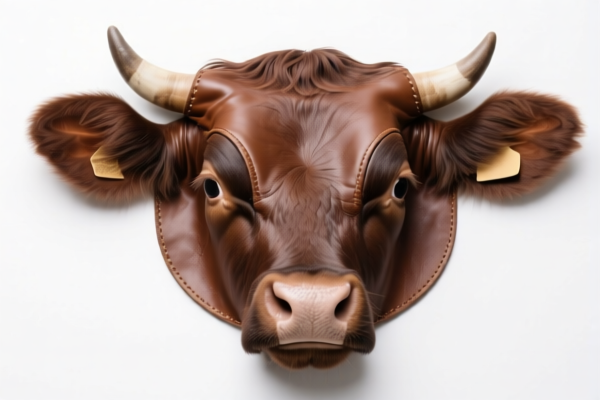
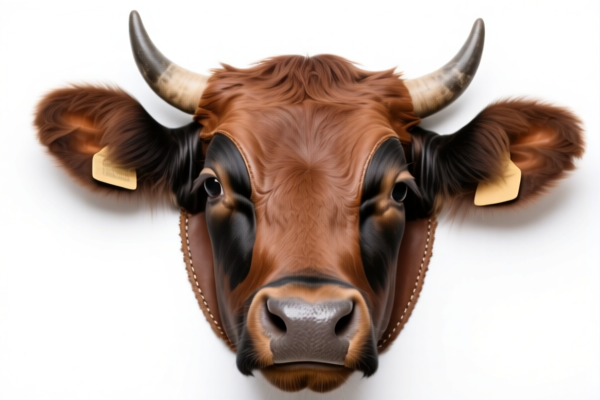
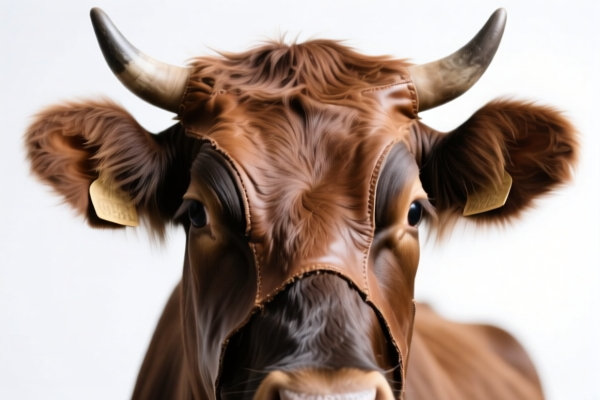
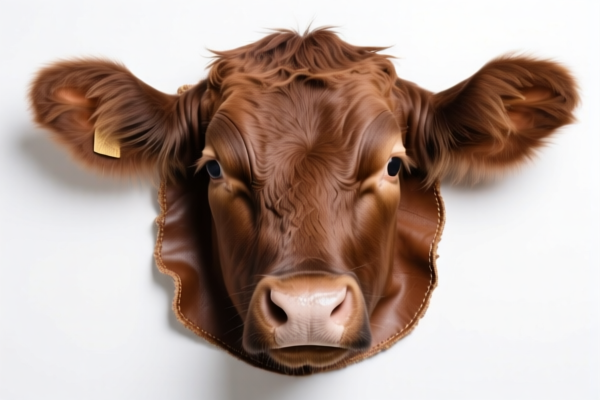
AI Analysis
🐄 Semi-Processed Cowhide (For Furniture)
🌐 HS Code Reference & Customs Clearance Guide | 2026 Latest Tariff Analysis | Professional Clearance Strategy
📌 I. Product Definition & Classification: Do You Really Understand "Semi-Processed Cowhide"?
Semi-processed cowhide refers to raw hides or skins that have undergone initial processing steps (such as curing, liming, or deliming) but have not yet undergone final tanning or further processing suitable for direct use in specific end-products like furniture upholstery. In international trade, these materials are critical intermediates in the leather industry.
Key characteristics: - Material: Cowhide (bovine). - State: Semi-processed (not fully tanned or finished). - Intended Use: Specifically identified for furniture decoration/upholstery.
⚠️ Key Distinction:
- If the hide is merely "semi-processed" (e.g., pickled or limed) and not yet tanned → Classified under 4107.11.50.00 / 4107.12.50.00.
- If the hide is "fully tanned" and finished for furniture → It would typically fall under 4107.21 or 4107.29 (depending on finish), NOT 4107.11/12.
- Note: The provided data explicitly states "Semi processed," so we strictly adhere to Chapter 41.10/4107 codes.
📦 II. HS Code Classification Details (2026 Latest Tariff Authority Comparison)
Based on the provided data, the relevant HS Codes for Semi-processed cowhide (for furniture) are:
| HS Code | Product Description | Material | Intended Use | Processing State |
|---|---|---|---|---|
4107.11.50.00 |
Semi-processed cowhide (for furniture) | Cowhide | Furniture decoration | Semi-processed (not fully tanned) |
4107.12.50.00 |
Semi-processed cowhide (for furniture) | Cowhide | Furniture decoration | Semi-processed (not fully tanned) |
🔍 Key Clarification:
- Both4107.11.50.00and4107.12.50.00appear in the data with identical descriptions, tax rates, and tariff details.
- This may reflect minor sub-classification differences (e.g., specific processing stage, weight, or origin nuances) that are not detailed in the summary, but for clearance purposes, both fall under the same tax treatment.
- Do NOT confuse with "Finished Leather" (e.g.,4107.21) which has different tariff structures.
💰 III. 2026 Latest Tariff Rate Details (Including Surcharges & Policy Add-ons)
✅ Applicable Country: United States (US)
✅ Origin: China (CN)
✅ Effective Date: 2025-11-10 onwards (including subsequent imports)
🎯 1. 4107.11.50.00 / 4107.12.50.00 —— Semi-Processed Cowhide (For Furniture)
| Item | Content |
|---|---|
| Basic Tariff Rate | 2.8% (Ad Valorem) |
| Retaliatory Surcharge | 0.0% |
| Section 122 Tariff | 10% |
| Total Tax Rate | 12.8% |
| Tax Calculation | CIF Value × 12.8% |
| De Minimis Exemption Applicable? | ❌ No (Section 122 tariffs generally do not allow de minimis exemption for Chinese origin goods) |
| Legal Basis Path | Section 122: 10% → Basic Tariff: 2.8% → HS Code: 4107.11.50.00 / 4107.12.50.00 |
📌 Explanation:
- Basic Tariff (2.8%): The standard Most Favored Nation (MFN) rate for semi-processed hides under Chapter 41.
- Section 122 Tariff (10%): Imposed under Section 122 of the Trade Act of 1962, often used for national security or economic protection reasons on specific imports from China.
- Retaliatory Tariff (0.0%): No additional Section 301 retaliatory tariff is listed in the provided data for these specific codes.
- Total: 12.8% is the effective landed cost multiplier for tariffs alone (excluding duties, storage, etc.).
🛠️ IV. Customs Clearance Practical Advice (Battle-Tested Pitfall Guide)
✅ 1. Required Documentation Checklist (All Mandatory)
| Document | Mandatory? | Notes |
|---|---|---|
| ✅ Commercial Invoice | ✔️ | Must clearly state "Semi-Processed Cowhide, for Furniture Use" |
| ✅ Packing List | ✔️ | Detail weight, dimensions, and number of hides/skins |
| ✅ Certificate of Origin | ✔️ | To prove Chinese origin (critical for Section 122 application) |
| ✅ Product Specification Sheet | ✔️ | Include processing stage (e.g., "pickled," "limed") to confirm "semi-processed" status |
| ✅ Bill of Lading/Air Waybill | ✔️ | Standard shipping document |
| ✅ Import License/Permit | ⚠️ | Check if specific leather imports require additional permits from USDA or other agencies |
✅ 2. Declaration Tips (Key Mantras)
🔥 “State ‘Semi-Processed’, Not ‘Finished’; Declare ‘For Furniture’; Avoid Misclassification!”
| Scenario | Correct Declaration | Wrong Approach |
|---|---|---|
| Semi-processed hides | 4107.11.50.00 or 4107.12.50.00 |
Declare as "Leather Garments" → Wrong Chapter |
| Fully tanned hides for furniture | 4107.21 or 4107.29 |
Declare as "Semi-Processed" → Delayed clearance, penalties |
| Mixed shipments (semi-processed + finished) | Split declaration by HS Code | Combined declaration → Customs holds entire shipment |
✅ 3. Special Cases Handling
| Scenario | Handling Advice |
|---|---|
| Origin Non-China | If from Brazil, Argentina, etc., Section 122 (10%) may not apply. Verify country-specific tariffs. |
| Misclassification Risk | If customs suspects hides are "finished" (e.g., dyed, polished), they may reclassify under higher duty codes. Provide processing certificates. |
| Packaging | Ensure hides are packed in moisture-proof, secure containers to prevent deterioration during transit. |
| Biosecurity | Cowhides may require USDA phytosanitary or veterinary inspection to prevent disease transmission. |
🌍 V. Global Main Market Clearance Comparison (2026 Latest)
| Country/Region | Recommended HS Code | Tariff Rate | Certification/Requirements | Notes |
|---|---|---|---|---|
| 🇺🇸 United States | 4107.11.50.00 / 4107.12.50.00 |
12.8% (China) | USDA Inspection | Section 122 10% applies |
| 🇪🇺 European Union | 4107.10 (varies by subheading) |
~2.5% - 4.5% | REACH, CE (if applicable) | No Section 122 equivalent |
| 🇨🇳 China (Import) | 4107.11 / 4107.12 |
~5% - 10% | CIQ Inspection | Import duties may vary |
| 🇦🇺 Australia | 4107.10 |
~5% | Biosecurity Quarantine | Strict animal product rules |
📌 Conclusion:
- USA imposes the highest effective tariff (12.8%) on Chinese semi-processed cowhides due to Section 122.
- EU and other markets are more favorable, but strict environmental and animal welfare regulations apply.
- Cost Efficiency Tip: If sourcing from non-Chinese origins (e.g., South America), tariffs in the US may be lower (no Section 122).
📌 VI. Common Mistakes & Pitfall Guide (Blood & Tears Lessons)
❌ Mistake 1: Declaring semi-processed hides as "finished leather"
👉 Consequence: Wrong HS code, potential penalty, or seizure if not compliant with final use regulations.
❌ Mistake 2: Ignoring Section 122 tariff (10%)
👉 Consequence: Underpayment of duties, leading to back taxes + penalties + interest.
❌ Mistake 3: Not providing proof of "semi-processed" status
👉 Consequence: Customs reclassifies as higher-duty finished leather, increasing costs.
❌ Mistake 4: Poor packaging leading to mold/rot
👉 Consequence: Rejection at port, destruction fees, or return shipment.
✅ Correct Approach:
"Semi-Processed Cowhide, Pickled, For Furniture Upholstery, HS Code 4107.11.50.00, Origin: China, CIF Value: $X"
🎯 VII. Conclusion: Professional Declaration, Time-Saving, Cost-Efficiency!
🎯 Remember the Mantra:
🔹 “Semi-Processed ≠ Finished; Section 122 Adds 10%; Declare Accurately to Avoid Delays!”
🔹 “HS Code Determines Duty Rate; 12.8% Total for China; Plan Accordingly!”
📌 Pro Tip:
- If your cowhide is originating from Brazil, Argentina, or Italy, the Section 122 (10%) tariff may not apply. Verify with a customs broker.
- Consider Advance Ruling (Ruling Letter) from US CBP to confirm classification and avoid post-clearance audits.
📣 Immediate Action:
📞 Consult a licensed customs broker + Provide product specs + Apply for HS Code advance ruling
🚀 Ensure smooth clearance, control costs, and maximize profit margins!
✨ Professional clearance starts with precise classification!
💼 Every cent of your cost deserves accurate calculation!
Customer Reviews
About HS Code Classification
The Harmonized System (HS) is an internationally standardized nomenclature developed by the World Customs Organization (WCO) to classify traded products. Over 200 countries use the HS system as the basis for customs tariffs, trade statistics, and import/export regulations.
Each HS code follows a hierarchical structure:
- Chapter (2 digits) — Broad category of goods (e.g., Chapter 84: Machinery and Mechanical Appliances)
- Heading (4 digits) — More specific grouping within the chapter
- Subheading (6 digits) — Internationally standardized breakdown, used by all WCO member countries
- National subdivisions (8-10 digits) — Country-specific extensions for further classification, such as US HTSUS 10-digit codes
Correct HS code classification is essential for smooth customs clearance, accurate duty payment, and compliance with trade regulations. Misclassification can lead to customs delays, overpayment of duties, or penalties.
When importing from CN to US, the applicable tariff rates may include:
- Most-Favored-Nation (MFN) rate — The standard duty rate applied to WTO members
- General rate — Applied to countries without trade agreements
- Trade remedy duties — Additional tariffs such as Section 301 (anti-dumping), Section 232 (national security), or countervailing duties
The information provided on this page is for reference purposes only. For official classification, please consult with your local customs authority or a licensed customs broker.