Semi tanned Cowhide, Other, Split Grain
CN → US| HS Code | Tariff Rate | Origin | Destination | Doc |
|---|---|---|---|---|
| 4107127090 | 15.0% | CN | US | Official Doc |
| 4107122000 | 37.4% | CN | US | Official Doc |
Product Images
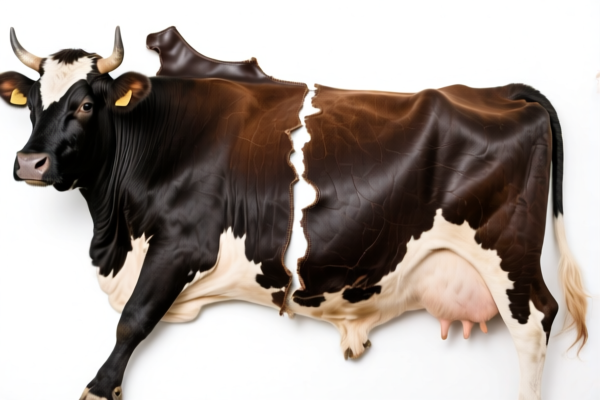
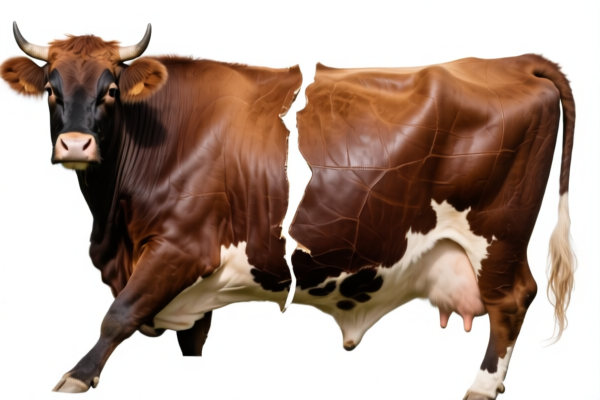
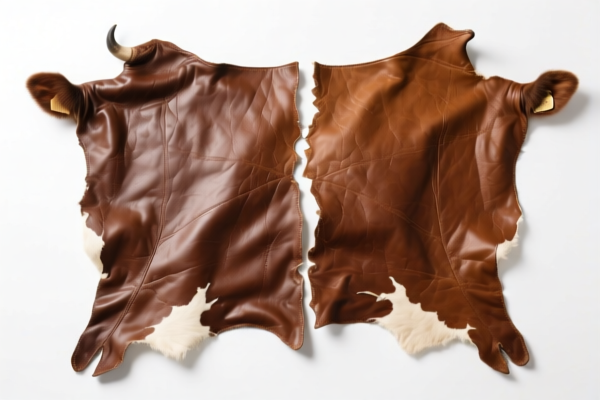
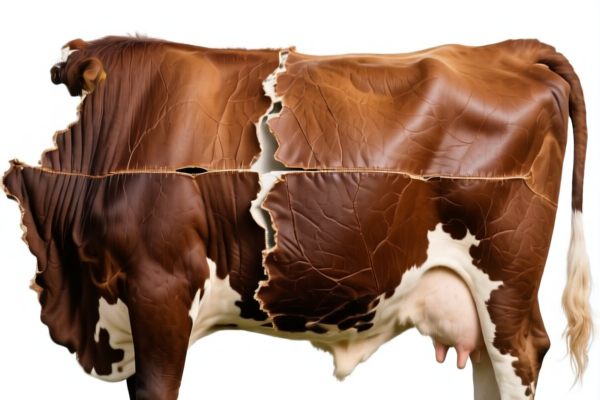
AI Analysis
🐂 Semi-Tanned Cowhide: Split Grain & Other Varieties
🌐 HS Code Reference & Customs Clearance Guide | 2024/2025 Tariff Analysis | Professional通关 Strategy
📌 I. Product Definition & Classification: What Exactly is "Semi-Tanned Cowhide"?
In international trade, leather classification is strictly governed by the degree of preparation. Semi-tanned leather (often referred to as "crust leather" or "wet blue" if chrome-tanned but not finished) sits between raw hides and fully finished leather.
For Bovine animals (including buffalo), the key distinction lies in: 1. Surface Type: Grain (smooth, outer layer) vs. Split (inner layer). 2. Finish Status: Fully prepared (dyed, painted, corrected) vs. Semi-prepared (tanned/crusted but not fully finished). 3. Quality: Fancy (high-end, natural grain) vs. Non-Fancy (standard, corrected, or split).
⚠️ Critical Distinction:
- If the leather is fully finished (dyed, polished, embossed for fashion), it may fall under 4114 (Chamois-dressed, patent leather, etc.).
- If it is semi-prepared (tanned but not fully finished), it falls under 4107.
- Split Grain specifically refers to leather derived from the lower layers of the hide, often used for suede or corrected grain leather.
📦 II. HS Code Classification Details (Based on Provided Data)
According to the provided <DATA>, two specific HS codes apply to semi-tanned bovine/equine leather, split grain, non-fancy.
| HS Code | Product Description | Key Characteristics | Tax Rate (Total) |
|---|---|---|---|
| 4107.12.20.00 | Leather further prepared after tanning... of bovines, unit surface area ≤ 28 sq. ft (2.6 m²): Grain splits: Other: Not fancy | - Size Constraint: ≤ 2.6 m² per hide - Type: Grain splits (lower layer) - Finish: Non-fancy (standard) - Animal: Bovine/Buffalo |
0.0% |
| 4107.12.70.90 | Leather further prepared after tanning... whole hides and skins: Grain splits: Other: Other: Not fancy | - No Size Constraint: Applies to larger hides or those > 2.6 m² - Type: Grain splits - Finish: Non-fancy - Animal: Bovine/Buffalo |
0.0% |
🔍 Key Insight:
The primary differentiator between these two codes is the unit surface area.
- If your cowhide is smaller or equal to 2.6 square meters, use 4107.12.20.00.
- If your cowhide is larger than 2.6 square meters (or if the specific sub-heading for size doesn't cover it), use 4107.12.70.90.
- Both codes explicitly exclude Leather of Heading 4114 (fully prepared leather). If your product is fully dyed, polished, or treated for immediate fashion use, it might be misclassified here. Ensure it is truly "semi-prepared" (crust/wet blue).
💰 III. Tariff Rate Detailed Breakdown (2024/2025)
✅ Applicable Country: United States (US)
✅ Origin: China (CN) (Assumed based on common trade context, but verify origin)
✅ Effective Date: Current applicable rates as per provided data
🎯 1. HS Code 4107.12.20.00 — Bovine, ≤ 2.6 m², Split, Non-Fancy
| Item | Content |
|---|---|
| Base Tariff | 0.0% (Ad Valorem) |
| Section 301 Tariff | 0.0% |
| Total Tax Rate | 0.0% |
| Tax Calculation | CIF Value × 0% = $0 |
| De Minimis Eligibility | N/A (Imports are typically commercial, not de minimis) |
| Legal Basis | USITC Tariff Schedule, Heading 4107 |
📌 Explanation:
- This code benefits from a 0% base tariff.
- Unlike electronics or steel, leather products (especially semi-tanned hides) are not currently subject to the 25% Section 301 tariffs under the provided data.
- Zero Cost: Importers face no additional duty burden for this specific classification.
🎯 2. HS Code 4107.12.70.90 — Bovine, > 2.6 m² or Other, Split, Non-Fancy
| Item | Content |
|---|---|
| Base Tariff | 0.0% (Ad Valorem) |
| Section 301 Tariff | 0.0% |
| Total Tax Rate | 0.0% |
| Tax Calculation | CIF Value × 0% = $0 |
| De Minimis Eligibility | N/A |
| Legal Basis | USITC Tariff Schedule, Heading 4107 |
📌 Explanation:
- Same tax advantage as above.
- The "Other" category in 4107.12.70.90 captures hides that do not fit the specific size limit of 20.00, ensuring no hidden duties apply.
🛠️ IV. Customs Clearance Practical Advice (Avoid Pitfalls)
✅ 1. Required Documentation Checklist
| Document | Must Provide | Notes |
|---|---|---|
| ✅ Commercial Invoice | ✔️ | Must clearly state: "Semi-tanned Bovine Leather, Split, Non-Fancy, Untreated/Crust" |
| ✅ Packing List | ✔️ | List hide dimensions (length x width) to prove surface area ≤ or > 2.6 m² |
| ✅ Product Specification Sheet | ✔️ | Detail tanning process (e.g., "Chrome Tanned, Crust Finish") to prove it is NOT heading 4114 |
| ✅ Photos of Goods | ✔️ | Show raw/unfinished surface, no color/paint, no embossing |
| ✅ Certificate of Origin | ✔️ | To confirm origin for potential FTZ or anti-dumping queries |
📌 Why is this critical?
Customs officers may confuse semi-tanned leather (4107) with fully prepared leather (4114). If they classify it as 4114, the tariff might differ, and additional scrutiny applies. Proof of "unfinished" state is key.
✅ 2. Declaration Tips (Key Mnemonics)
🔥 "Size Matters: ≤2.6m² = 20.00, >2.6m² = 70.90. Don't Finish It, or You Lose It!"
| Scenario | Correct HS Code | Incorrect HS Code | Risk |
|---|---|---|---|
| Cowhide, Split, Unfinished, 2.0 m² | 4107.12.20.00 |
4107.12.70.90 |
Minor delay, but tax is same. |
| Cowhide, Split, Unfinished, 3.0 m² | 4107.12.70.90 |
4107.12.20.00 |
Misclassification → Potential penalty. |
| Cowhide, Split, Dyed/Polished | 4114.xxxx | 4107.xxxx |
Major Error → Wrong tax rate, potential seizure. |
| Sheep/Goat Leather | N/A (Bovine Only) | 4107.12.xxxx |
Wrong Heading → 4107 is for Bovine/Equine only. |
✅ 3. Special Considerations
| Situation | Advice |
|---|---|
| Split Leather | Ensure the description specifies "Split" (not full grain). Split leather is cheaper and has different uses (suede, corrected grain). |
| "Non-Fancy" | Do not claim "Fancy" status unless it is premium natural grain. "Non-fancy" is the safe default for standard commercial hides. |
| Equine vs. Bovine | The provided codes are for Bovine/Equine. If the hide is from a pig or sheep, these codes are invalid. |
| Chemical Content | If using Chrome, ensure compliance with REACH/EPA regulations. Though not a tariff issue, it's a customs compliance issue. |
🌍 V. Global Market Comparison (2024/2025)
| Country/Region | Recommended HS Code | Tariff (China Origin) | Notes |
|---|---|---|---|
| 🇺🇸 United States | 4107.12.20.00 / 4107.12.70.90 |
0.0% | No Section 301 duties on these specific leather codes. |
| 🇨🇳 China | 4107.12.20 / 4107.12.70 |
Varies | Check local customs for import duties. |
| 🇪🇺 European Union | 4107 21 10 / 4107 21 90 |
0% - 6.5% | VAT applies. Ensure "Crust Leather" definition matches EU standards. |
| 🇬🇧 United Kingdom | 4107 21 10 |
0% - 6.5% | Post-Brexit rules apply. Check UK Tariff. |
📌 Conclusion:
- The US offers a significant advantage with 0% tariffs for these semi-tanned bovine hides.
- Ensure your supplier provides accurate hide dimensions to select the correct 10-digit HS code.
- Avoid describing the product as "Finished" or "Fashion Leather" to prevent reclassification under Heading 4114.
📌 VI. Common Errors & Pitfalls (Lessons Learned)
❌ Error 1: Declaring "Leather" without specifying "Semi-Tanned" or "Crust"
👉 Consequence: Customs may assume it's finished leather (4114), leading to delays or incorrect tax assessment.
❌ Error 2: Ignoring Hide Size (2.6 m² threshold)
👉 Consequence: Using 4107.12.20.00 for a large hide (>2.6 m²) is a misclassification. While tax is 0% in both cases, it reflects poor documentation practice and may trigger audits.
❌ Error 3: Confusing "Split" with "Full Grain"
👉 Consequence: "Split" leather is cheaper. If you declare "Full Grain" but send "Split," it’s fraud. If you declare "Split" but send "Full," you might under-declare value/tax.
✅ Correct Practice:
"BOVINE LEATHER, SEMI-TANNED (CRUST), SPLIT GRAIN, NON-FANCY, UNIT AREA 2.2 M², MODEL NO. XYZ, CHROME TANNED"
🎯 VII. Conclusion: Professional Classification for Zero-Tariff Clearance
🎯 Remember the Key Rules:
🔹 "Semi-Tanned = 4107, Not 4114"
🔹 "Split = Non-Fancy by Default"
🔹 "Check Size: ≤2.6m² = .20, >2.6m² = .90"
🔹 "Zero Duty in US for These Codes!"
📌 Pro Tip:
If you are importing large volumes, consider applying for a Binding Ruling from US Customs and Border Protection (CBP) to lock in the HS code classification for 5 years. This provides certainty for your supply chain.
📣 Action Required:
📞 Confirm Hide Dimensions with Supplier
📄 Specify "Semi-Tanned Crust Leather" in Invoice
🚀 Ensure Smooth, Zero-Tariff Entry into the US Market!
✨ Precision in Classification, Profit in Tariff Savings!
💼 Your Leather, Your Competitive Edge!
Customer Reviews
About HS Code Classification
The Harmonized System (HS) is an internationally standardized nomenclature developed by the World Customs Organization (WCO) to classify traded products. Over 200 countries use the HS system as the basis for customs tariffs, trade statistics, and import/export regulations.
Each HS code follows a hierarchical structure:
- Chapter (2 digits) — Broad category of goods (e.g., Chapter 84: Machinery and Mechanical Appliances)
- Heading (4 digits) — More specific grouping within the chapter
- Subheading (6 digits) — Internationally standardized breakdown, used by all WCO member countries
- National subdivisions (8-10 digits) — Country-specific extensions for further classification, such as US HTSUS 10-digit codes
Correct HS code classification is essential for smooth customs clearance, accurate duty payment, and compliance with trade regulations. Misclassification can lead to customs delays, overpayment of duties, or penalties.
When importing from CN to US, the applicable tariff rates may include:
- Most-Favored-Nation (MFN) rate — The standard duty rate applied to WTO members
- General rate — Applied to countries without trade agreements
- Trade remedy duties — Additional tariffs such as Section 301 (anti-dumping), Section 232 (national security), or countervailing duties
The information provided on this page is for reference purposes only. For official classification, please consult with your local customs authority or a licensed customs broker.