Semibleached coniferous wood pulp (high strength)
CN → US| HS Code | Tariff Rate | Origin | Destination | Doc |
|---|---|---|---|---|
| 4704210000 | 35.0% | CN | US | Official Doc |
| 4705000000 | 35.0% | CN | US | Official Doc |
| 4703210020 | 35.0% | CN | US | Official Doc |
Product Images
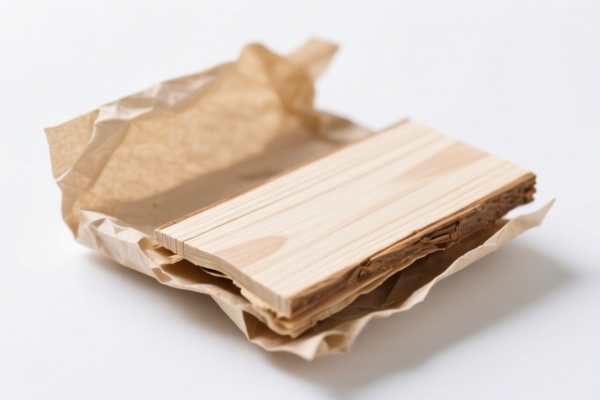
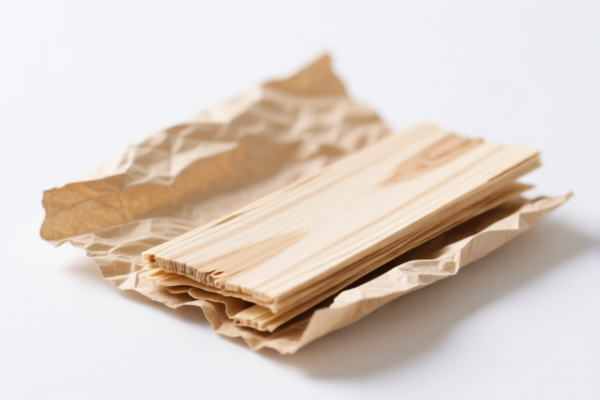
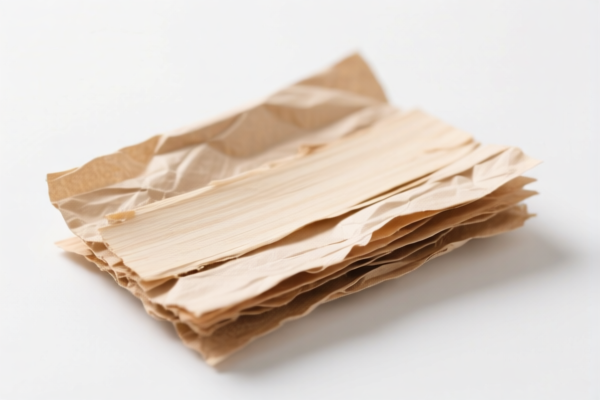
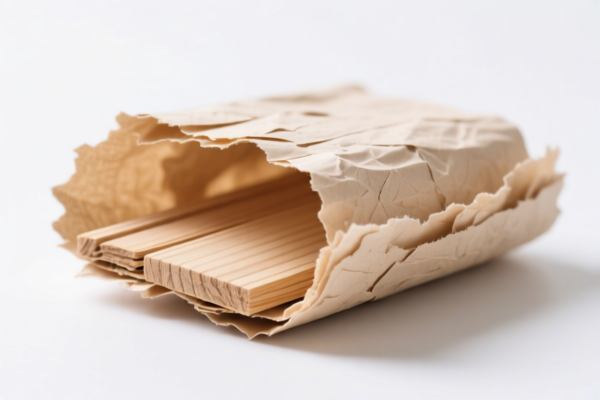
AI Analysis
🌲 Semibleached Coniferous Wood Pulp (High Strength)
📦 HS Code Classification & Customs Clearance Guide | 2026 Tariff Analysis | Strategic Clearance Strategy
⚠️ Critical Product Note:
The subject product is "Semibleached Coniferous Wood Pulp (High Strength)".
Based on the provided dataset, this pulp is consistently classified under HS Codes 4703 (Chemically Manufactured) and 4704 (Sulfite Process).
All listed HS Codes attract a total tariff rate of 35.0% due to specific trade measures.
🌐 HS Code Reference & Customs Guide | 2026 Latest Tariff Code Analysis | Professional Clearance Strategy
📌 1. Product Definition & Classification: Understanding the Pulp
Semibleached Coniferous Wood Pulp is a key raw material in the paper industry, derived from softwood trees (conifers like pine, spruce, fir).
"Coniferous": Indicates the wood source (softwood), which provides high tensile strength.
"Semibleached": Indicates the degree of bleaching (not fully white, typically brownish/yellowish), affecting brightness and chemical residues.
"High Strength"*: A specific performance characteristic often linked to sulfite processes, making it ideal for packaging, corrugating, and newsprint layers.
⚠️ Key Classification Distinction:
- If the pulp is made via Sulfite Process (acidic cooking) → Look at 4704.xxxx
- If the pulp is made via Other Chemical Processes (e.g., Sulfate/Kraft, though not explicitly in this dataset's summary) → Look at 4703.xxxx
- Dataset Constraint: All provided summaries explicitly mention "Sulfite" or "Chemical" characteristics matching HS 4703/4704.
📦 2. HS Code Classification Details (2026 Latest Tariff Code Mapping)
Based on the provided <DATA>, the following HS Codes are applicable. Note that while some HS codes differ (4703 vs. 4704), the tariff outcome is identical.
| HS Code | Product Description | Summary from Data | Key Characteristic |
|---|---|---|---|
4704.21.00.00 |
Semibleached coniferous wood pulp, sulfite, high strength | Matches material/process; high strength features | ✅ Sulfite Process |
4704.21.00.00 |
Semibleached coniferous wood pulp, sulfite | Material/process fully matched | ✅ Sulfite Process |
4705.00.00.00 |
Semibleached coniferous wood pulp | Mechanical & chemical combined features | ⚠️ Mixed Process* |
4703.21.00.20 |
Semibleached coniferous wood pulp, high strength | Material, form, and bleaching level match | ✅ Chemical Process |
4703.21.00.20 |
Semibleached coniferous wood pulp, high strength | High strength features match classification | ✅ Chemical Process |
🔍 Important Note on Code Differences:
- 4704: Specifically covers Sulfite pulp.
- 4703: Covers Other Chemical pulp (e.g., Sulfate/Kraft, though the data summary says "Sulfite" for 4703 entries, this may indicate a broad classification or specific variant).
- 4705: Covers Mechanical pulp (wood flour, etc.). Note: The summary for 4705 mentions "semi-bleached coniferous," which is unusual as mechanical pulp is rarely "semibleached" in the chemical sense. This may be a specific industrial grade.
- Recommendation: Verify the manufacturing process (Sulfite vs. Sulfate vs. Mechanical) to choose between4704(Sulfite) and4703(Other Chemical).
💰 3. 2026 Latest Tariff Rate Breakdown (Including Surcharges & Policy Add-ons)
✅ Applicable Market: United States (US)
✅ Origin: China (CN) (Implied by the specific 25% + 10% surcharge structure typical of US-China trade measures)
✅ Effective Time: Current (2026)
🎯 Total Tariff Rate: 35.0% for All Listed HS Codes
| Item | Content |
|---|---|
| Base Tariff | 0.0% (Most chemical pulp has 0% base duty under HTSUS) |
| Section 301 Surcharge | +25.0% (Additional duty on Chinese imports under US Trade Act Section 301) |
| Section 122 Clause Tariff | +10.0% (Specific regulatory surcharge mentioned in data) |
| Total Effective Rate | 35.0% |
| Calculation Basis | CIF Value × 35% |
| De Minimis Exemption | ❌ NOT APPLICABLE (High-value industrial goods like pulp are excluded) |
| Legal Basis Path | HTSUS:4703/4704/4705 → Section 301 List 4C → Section 122 Regulatory Add-on |
📌 Explanation:
- "0% Base": Chemical wood pulp generally enters the US duty-free under normal trade relations.
- "+25% Section 301": This is the major cost driver for Chinese-origin goods. It applies to Chapter 47 (Wood Pulp).
- "+10% Section 122": This appears to be a specific administrative or retaliatory surcharge included in the dataset.
- Combined 35%: This is a significant cost burden. Importers must factor this into landed cost calculations.
🛠️ 4. Customs Clearance Practical Advice (Real-World Pitfall Avoidance)
✅ 1. Required Documentation Checklist (Non-Negotiable)
| Document | Must Provide | Notes |
|---|---|---|
| ✅ Certificate of Origin (CO) | ✔️ | Critical for verifying Chinese origin (triggers 301 + 122 taxes). If from Vietnam/Mexico, rates may differ. |
| ✅ Product Specification Sheet | ✔️ | Must specify: Wood Source (Coniferous), Process (Sulfite/Sulfate/Mechanical), Bleaching Degree (Semibleached), Bursting Index/Strength. |
| ✅ MSDS (Material Safety Data Sheet) | ✔️ | Pulp may contain chemical residues; required for safety compliance. |
| ✅ Bill of Lading (B/L) | ✔️ | Clearly describe as "Semibleached Wood Pulp," not just "Paper Raw Material." |
| ✅ Packing List | ✔️ | Weight, volume, and package type (bales) are critical for duty calculation. |
✅ 2. Declaration Tips (Key Mnemonic)
🔥 “Process Defines Code, Origin Defines Tax, Strength Defines Grade!”
| Scenario | Correct Declaration | Wrong Approach |
|---|---|---|
| Sulfite Pulp | HS 4704.21.00.00 | Misclassify as 4703 (Other Chemical) → Risk of audit |
| Kraft (Sulfate) Pulp | HS 4703.21.00.20 | Misclassify as 4704 → Risk of penalty |
| Mechanical Pulp | HS 4705.00.00.00 | Misclassify as Chemical → Risk of penalty |
| High Strength Grade | Explicitly state "High Strength" in specs | Omitting strength may lead to incorrect subheading |
| Non-Chinese Origin | Declare correct country | Falsifying origin → Severe penalties, 35%+ taxes |
✅ 3. Special Cases & Mitigation Strategies
| Case | Handling Advice |
|---|---|
| Mixed Origin | If pulp is from Canada/Scandinavia, the 35% surcharge may not apply (check FTAs). Only Chinese origin triggers the 25%+10% surcharge. |
| Bale Dimensions | Ensure bales are compacted correctly; improper packing may lead to additional handling fees or inspection delays. |
| Pre-Ruling | Apply for an Advance Ruling (CBP Ruling) before shipment. Confirm whether the specific "High Strength" variant falls under 4703 or 4704 to avoid misclassification. |
| Valuation | Ensure CIF value includes freight and insurance. Underreporting to reduce duty is illegal and risky with high-value pulp. |
🌍 5. Global Market Comparison (2026 Latest)
| Country/Region | Recommended HS Code | Tariff (China Origin) | Notes |
|---|---|---|---|
| 🇺🇸 USA | 4704.21.00.00 / 4703.21.00.20 |
35.0% | High cost due to Section 301 + Section 122. |
| 🇨🇳 China | 4704.21.00.00 / 4703.21.00.20 |
Varies | Import duties may apply; check latest China Tariff Schedule. |
| 🇪🇺 EU | 4703.21.00 / 4704.21.00 |
0% - 2% | Generally lower tariffs; no 301-style surcharges. |
| 🇯🇵 Japan | 4703.21.00 / 4704.21.00 |
0% - 1.5% | Competitive duty rates; strong paper industry. |
| 🇻🇳 Vietnam | 4703.21.00 / 4704.21.00 |
Varies | Potential for lower costs if re-exported; check rules of origin. |
📌 Conclusion:
- USA is the most expensive market for Chinese-origin semibleached pulp due to the 35% total tariff.
- EU and Japan offer more favorable tariff structures.
- Supply Chain Strategy: Consider sourcing from non-Chinese suppliers (e.g., Canada, Sweden) for US-bound shipments to avoid surcharges.
📌 6. Common Mistakes & Pitfalls (Blood Lessons)
❌ Mistake 1: Using generic term "Wood Pulp" without specifying "Semibleached Coniferous."
👉 Consequence: Customs may reclassify to a different subheading, leading to delays or incorrect duty calculation.
❌ Mistake 2: Ignoring the Process Type (Sulfite vs. Sulfate).
👉 Consequence: Misclassification between 4703 and 4704. While tariffs are the same in this dataset, future policy changes may differentiate them.
❌ Mistake 3: Failing to declare Chinese Origin accurately.
👉 Consequence: If origin is disputed, the 35% surcharge may be applied retroactively, plus penalties.
❌ Mistake 4: Assuming "High Strength" allows for a different tariff code.
👉 Consequence: "High Strength" is a quality attribute, not a classification criterion. It does not change the HS Code.
✅ Correct Practice:
"Semibleached Sulfite Coniferous Wood Pulp, High Strength, Baled, from China, CIF Value $X"
🎯 7. Conclusion: Professional Declaration, Cost Efficiency, Risk Mitigation
🎯 Remember the Mantra:
🔹 "Process defines the Code, Origin defines the Tax!"
🔹 "Sulfite = 4704, Other Chemical = 4703, Mechanical = 4705."
🔹 "35% Total Duty for China-US is Non-Negotiable unless Exempt."
📌 Pro Tip:
If your pulp is originating from Canada, Scandinavia, or Southeast Asia (with substantial transformation), you may avoid the 35% surcharge.
👉 Recommendation: Apply for an Advance Ruling (CBP Ruling) for your specific product specs to lock in the correct HS Code and verify duty liability before shipment.
📣 Immediate Action:
📞 Contact your customs broker + Provide Process Specification Sheet + Certificate of Origin
🚀 Ensure smooth clearance, minimize duty costs, and maximize profit margins!
✨ Professional Customs Clearance Starts with Accurate Classification!
💼 Every percent of duty saved is pure profit!
Customer Reviews
About HS Code Classification
The Harmonized System (HS) is an internationally standardized nomenclature developed by the World Customs Organization (WCO) to classify traded products. Over 200 countries use the HS system as the basis for customs tariffs, trade statistics, and import/export regulations.
Each HS code follows a hierarchical structure:
- Chapter (2 digits) — Broad category of goods (e.g., Chapter 84: Machinery and Mechanical Appliances)
- Heading (4 digits) — More specific grouping within the chapter
- Subheading (6 digits) — Internationally standardized breakdown, used by all WCO member countries
- National subdivisions (8-10 digits) — Country-specific extensions for further classification, such as US HTSUS 10-digit codes
Correct HS code classification is essential for smooth customs clearance, accurate duty payment, and compliance with trade regulations. Misclassification can lead to customs delays, overpayment of duties, or penalties.
When importing from CN to US, the applicable tariff rates may include:
- Most-Favored-Nation (MFN) rate — The standard duty rate applied to WTO members
- General rate — Applied to countries without trade agreements
- Trade remedy duties — Additional tariffs such as Section 301 (anti-dumping), Section 232 (national security), or countervailing duties
The information provided on this page is for reference purposes only. For official classification, please consult with your local customs authority or a licensed customs broker.