Semiconductor
CN → US| HS Code | Tariff Rate | Origin | Destination | Doc |
|---|---|---|---|---|
| 8542390090 | 60.0% | CN | US | Official Doc |
| 8543702000 | 37.5% | CN | US | Official Doc |
| 8541590080 | 60.0% | CN | US | Official Doc |
| 8542900000 | 60.0% | CN | US | Official Doc |
| 8543709860 | 37.6% | CN | US | Official Doc |
Product Images
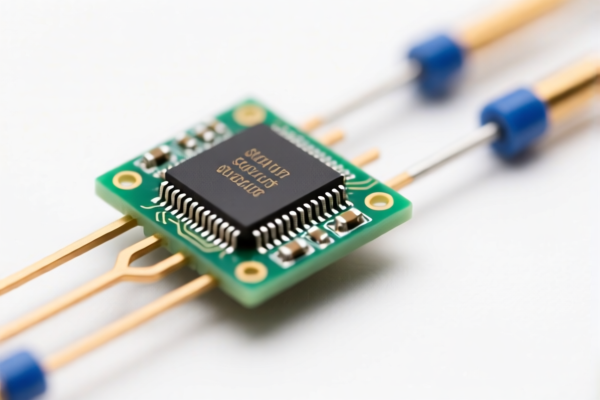
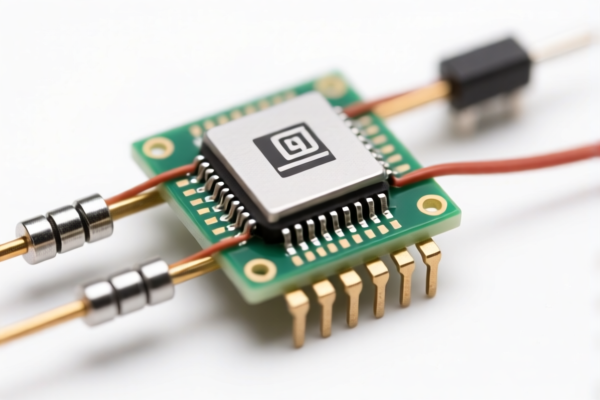
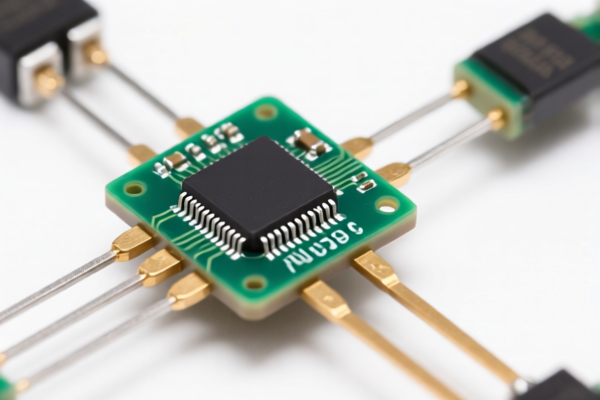
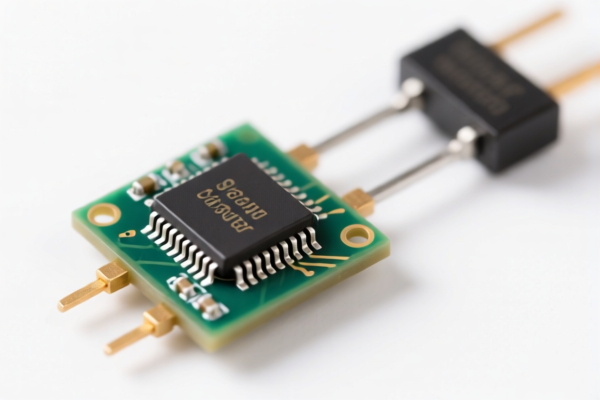
AI Analysis
🧩 Semiconductors (Integrated Circuits & Electronic Components)
🌐 HS Code Reference & Customs Clearance Guide | 2026 Latest Tariff Analysis | Professional Level Strategy
📌 I. Product Definition & Classification: Do You Really Understand "Semiconductors"?
Semiconductors are the fundamental building blocks of modern electronics, ranging from microprocessors to power management chips. In international trade, they are broadly categorized based on their function, integration level, and physical form:
Integrated Circuits (ICs): Chips containing complete electronic circuits on a semiconductor body. These fall primarily under Chapter 85, Heading 8542.
Discrete Components & Devices: Individual components like transistors, diodes, or thyristors. These fall under Heading 8541.
Electronic Apparatus/Devices: Devices containing semiconductors but serving a specific mechanical or electrical function beyond basic logic. These may fall under Heading 8543.
⚠️ Key Distinction Points:
- If the item is a standard logic/memory chip → It is likely 8542 (Integrated Circuits).
- If the item is a standalone transistor/diode → It is likely 8541 (Semiconductor Devices).
- If the item is a custom apparatus or specialized module (e.g., using PVD tech) → It may fall under 8543 (Other Electrical Machines).
📦 II. HS Code Classification Details (2026 Latest Tariff Authority Comparison)
| HS Code | Product Description | Summary of Classification Logic | Total Tax Rate |
|---|---|---|---|
8542.39.00.90 |
Other electronic integrated circuits (Non-specific function) | Classified as an integrated circuit falling under the "catch-all" definition for non-specific function ICs. | 60.0% |
8543.70.20.00 |
Electrical machines and apparatus (Physical Vapor Deposition tech) | Classified as an electronic component involving Physical Vapor Deposition (PVD) technology, considered part of electrical apparatus. | 37.5% |
8541.59.00.80 |
Other semiconductor devices (Transistors, Diodes, etc.) | Material and usage characteristics fully align with the scope of this heading for semiconductor devices. | 60.0% |
8542.90.00.00 |
Parts of electronic integrated circuits | Material and usage align with the attribute of "parts of ICs," even if physically resembling a device. | 60.0% |
8543.70.98.60 |
Other machines and apparatus (Electronic components) | Classified as electronic components and "other machines/devices," with no conflict in physical form or usage. | 37.6% |
🔍 Critical Reminder:
- Integrated Circuits (8542) generally face higher tariffs due to their strategic importance and specific US trade policies.
- Specialized Apparatus (8543) may benefit from slightly lower base tariffs but are subject to scrutiny regarding their "specific function."
- Discrete Devices (8541) are often treated similarly to ICs in terms of tax burden if deemed strategic.
💰 III. 2026 Latest Tariff Rate Details (Including Surcharges & Policy Add-ons)
✅ Applicable Country: United States (US)
✅ Country of Origin: China (CN)
✅ Effective Time: 2025 November 10 onwards (and subsequent imports)
🎯 1. 8542.39.00.90 — Other Electronic Integrated Circuits
| Item | Content |
|---|---|
| Base Tariff | 0.0% (ad valorem) |
| Section 301 Surcharge | +50.0% (Specific to 8542.39.00.90) |
| Section 122 Tariff | +10.0% (Targeting Chinese products) |
| Total Rate | 60.0% |
| Tax Calculation | CIF Value × 60.0% |
| De Minimis Exemption | ❌ Not Eligible (High value threshold exceeded) |
| Legal Path | Base: 8542 → 301: 50% → 122: 10% |
📌 Explanation:
- This is a standard integrated circuit that does not fit into more specific subheadings (like microprocessors or memories), so it falls into the "other" category.
- The 50% Section 301 tariff is heavily applied to strategic electronics.
- The 10% Section 122 tariff is an additional levy on semiconductors from China.
- Total 60% is a very high burden, requiring precise documentation to prove it is not a more specific, potentially exempted type.
🎯 2. 8543.70.20.00 — Electrical Machines/Apparatus (PVD Tech)
| Item | Content |
|---|---|
| Base Tariff | 2.5% (ad valorem) |
| Section 301 Surcharge | +25.0% |
| Section 122 Tariff | +10.0% |
| Total Rate | 37.5% |
| Tax Calculation | CIF Value × 37.5% |
| De Minimis Exemption | ❌ Not Eligible |
| Legal Path | Base: 8543 → 301: 25% → 122: 10% |
📌 Note:
- This classification applies if the semiconductor device is part of a machined apparatus or uses Physical Vapor Deposition (PVD) in its operation/application.
- The base tariff is 2.5%, significantly lower than the 0% base for ICs, but the 301 surcharge is only 25% (not 50%), leading to a lower total rate (37.5%).
- Strategy: If the product can be argued as an "apparatus" rather than a bare "IC," this lower rate may apply, but it requires strong technical justification.
🎯 3. 8541.59.00.80 — Other Semiconductor Devices
| Item | Content |
|---|---|
| Base Tariff | 0.0% (ad valorem) |
| Section 301 Surcharge | +50.0% |
| Section 122 Tariff | +10.0% |
| Total Rate | 60.0% |
| Tax Calculation | CIF Value × 60.0% |
| De Minimis Exemption | ❌ Not Eligible |
| Legal Path | Base: 8541 → 301: 50% → 122: 10% |
📌 Explanation:
- This covers discrete semiconductors like transistors, diodes, and thyristors.
- Like ICs, discrete semiconductors are subject to the full 50% Section 301 tariff.
- Total 60% is identical to the IC rate. Misclassification from 8542 to 8541 (or vice versa) does not reduce tax burden in this specific case.
🎯 4. 8542.90.00.00 — Parts of Electronic Integrated Circuits
| Item | Content |
|---|---|
| Base Tariff | 0.0% (ad valorem) |
| Section 301 Surcharge | +50.0% |
| Section 122 Tariff | +10.0% |
| Total Rate | 60.0% |
| Tax Calculation | CIF Value × 60.0% |
| De Minimis Exemption | ❌ Not Eligible |
| Legal Path | Base: 8542 → 301: 50% → 122: 10% |
📌 Note:
- This heading is for parts of ICs (e.g., bare die, leads, specific packaging components).
- If the item is a complete functional IC, it should not be classified here to avoid misdeclaration penalties.
- If it is truly a part, the rate is still 60%, so the classification logic must be strictly based on functionality (is it a part or a complete device?).
🎯 5. 8543.70.98.60 — Other Machines and Apparatus
| Item | Content |
|---|---|
| Base Tariff | 2.6% (ad valorem) |
| Section 301 Surcharge | +25.0% |
| Section 122 Tariff | +10.0% |
| Total Rate | 37.6% |
| Tax Calculation | CIF Value × 37.6% |
| De Minimis Exemption | ❌ Not Eligible |
| Legal Path | Base: 8543 → 301: 25% → 122: 10% |
📌 Explanation:
- This is the catch-all for "Other Machines and Apparatus" in Chapter 8543.
- If the semiconductor device is part of a specialized machine or has a specific electrical function beyond being a raw component, it may qualify here.
- Total 37.6% is the lowest risk rate among the options, but requires convincing evidence that it is not a standard IC or discrete device.
🛠️ IV. Customs Clearance Practical Advice (Real-World Pitfall Avoidance)
✅ 1. Required Documentation Checklist (Mandatory)
| Document | Must Provide | Explanation |
|---|---|---|
| ✅ Technical Specification Sheet | ✔️ | Must detail function, integration level, and application (e.g., "Logic IC" vs. "Power Apparatus"). |
| ✅ Circuit Diagram / Block Diagram | ✔️ | Critical for distinguishing between 8542 (IC) and 8543 (Apparatus). |
| ✅ Product Photos (Markings) | ✔️ | Clear images of model numbers, logos, and physical form factor. |
| ✅ Third-Party Test Reports | ✔️ | FCC, CE, RoHS, UL (if applicable) to prove compliance and end-use. |
| ✅ Commercial Invoice | ✔️ | Must accurately describe the item (e.g., "Semiconductor Device" vs. "Integrated Circuit"). |
| ✅ Certificate of Origin (CO) | ✔️ | Essential for proving Chinese origin (and thus applicability of Section 301/122). |
| ✅ Packing List | ✔️ | Show relationship between main unit and accessories. |
✅ 2. Declaration Strategy (Key Mantras)
🔥 “Define Function, Not Just Form! ICs are 60%, Apparatus is ~37%!”
| Scenario | Correct Declaration | Incorrect Approach |
|---|---|---|
| Standard Logic/Memory Chip | 8542.39.00.90 (60%) |
Misdeclare as "Apparatus" → Customs rejection/penalty |
| Discrete Transistor/Diode | 8541.59.00.80 (60%) |
Misdeclare as "IC Part" → No savings, higher audit risk |
| Specialized Module (PVD/Apparatus) | 8543.70.20.00 or 8543.70.98.60 (37.5-37.6%) |
Declare as "IC" → Pay 60% unnecessarily |
| Bare Die/IC Components | 8542.90.00.00 (60%) |
Declare as "Apparatus" → False classification |
✅ 3. Special Case Handling
| Situation | Handling Advice |
|---|---|
| OEM Custom Chips | Provide customer orders + design docs to prove it’s a specific IC (8542), not a generic apparatus. |
| Semiconductor + Housing | If the housing is essential for function, argue for 8543 (37.5%) if it’s a specialized device. Otherwise, still 8542 (60%). |
| Semiconductors for Medical/Aerospace | If the end-use is highly specialized, document thoroughly. However, HS Code is based on product nature, not end-use, so 8542/8541 likely still apply. |
| Importing from Non-China Origins | If from Vietnam, Thailand, etc., Section 301 may not apply. Check origin rules carefully! |
🌍 V. Global Market Clearance Comparison (2026 Latest)
| Country/Region | Recommended HS Code | Tariff (China Origin) | Certification | Notes |
|---|---|---|---|---|
| 🇺🇸 USA | 8542.39.00.90 / 8541.59.00.80 |
60.0% | FCC + RoHS | High tariff due to Section 301 & 122. |
| 🇺🇸 USA | 8543.70.20.00 / 8543.70.98.60 |
37.5% - 37.6% | FCC + RoHS | Possible if classified as "Apparatus." |
| 🇨🇳 China | 8542.39.00.90 |
5% - 15% (Varies) | CCC | Lower base tariffs, no 301. |
| 🇪🇺 EU | 8542.39.00 |
0% - 4% | CE + RoHS | No major surcharges for most semiconductors. |
| 🇯🇵 Japan | 8542.39.00 |
0% - 3% | PSE | Low tariffs, focus on technical standards. |
📌 Conclusion:
- USA is the most expensive market for Chinese semiconductors, with rates reaching 60%.
- Diversification or Value-Added Processing (e.g., integrating into a specialized apparatus) might lower the rate to ~37.5%, but requires strong technical justification.
- Non-China origins offer significant tariff advantages.
📌 VI. Common Errors & Pitfall Guide (Lessons Learned)
❌ Error 1: Declaring a complete IC as "Parts of ICs" (8542.90) to avoid scrutiny.
👉 Consequence: Customs will inspect, find it functional, and assess 60% + penalties.
❌ Error 2: Declaring a standard IC as "Apparatus" (8543) to save on Section 301.
👉 Consequence: High audit risk. If rejected, you pay 60% anyway + delay costs.
❌ Error 3: Ignoring Section 122.
👉 Consequence: Even if 301 is mitigated, 10% Section 122 applies to most semiconductors from China.
❌ Error 4: Incorrect description on Invoice (e.g., "Chip" vs. "Semiconductor Device").
👉 Consequence: Customs may downgrade or reject, leading to holds.
✅ Correct Practice:
“Integrated Circuit, Model XYZ, Logic Type, 8542.39.00.90, FCC Certified, Origin: China”
OR
“Specialized Electrical Apparatus using PVD Technology, Model ABC, 8543.70.20.00, No 301 Penalty”
🎯 VII. Conclusion: Professional Declaration, Cost Control, Efficiency!
🎯 Remember the Mantra:
🔹 “ICs and Discretes are 60% (301+122). Apparatus is ~37.5%. Prove the Function!”
🔹 “HS Code determines the rate. 25% difference is huge. Declare accurately to avoid penalties.”
📌 Pro Tip:
If your semiconductors are assembled or packaged in a way that makes them a specialized device (not just a raw chip), investigate 8543 classification carefully.
For high-value shipments, consider Pre-Ruling (Advance Ruling) from CBP to lock in the HS Code and avoid disputes.
📣 Immediate Action:
📞 Contact Professional Customs Broker + Provide Technical Specs + Apply for Pre-Ruling
🚀 Ensure your semiconductors clear customs smoothly, efficiently, and cost-effectively!
✨ Professional Clearance Starts with Accurate Classification!
💼 Every cent of cost is worth precise calculation!
Customer Reviews
About HS Code Classification
The Harmonized System (HS) is an internationally standardized nomenclature developed by the World Customs Organization (WCO) to classify traded products. Over 200 countries use the HS system as the basis for customs tariffs, trade statistics, and import/export regulations.
Each HS code follows a hierarchical structure:
- Chapter (2 digits) — Broad category of goods (e.g., Chapter 84: Machinery and Mechanical Appliances)
- Heading (4 digits) — More specific grouping within the chapter
- Subheading (6 digits) — Internationally standardized breakdown, used by all WCO member countries
- National subdivisions (8-10 digits) — Country-specific extensions for further classification, such as US HTSUS 10-digit codes
Correct HS code classification is essential for smooth customs clearance, accurate duty payment, and compliance with trade regulations. Misclassification can lead to customs delays, overpayment of duties, or penalties.
When importing from CN to US, the applicable tariff rates may include:
- Most-Favored-Nation (MFN) rate — The standard duty rate applied to WTO members
- General rate — Applied to countries without trade agreements
- Trade remedy duties — Additional tariffs such as Section 301 (anti-dumping), Section 232 (national security), or countervailing duties
The information provided on this page is for reference purposes only. For official classification, please consult with your local customs authority or a licensed customs broker.