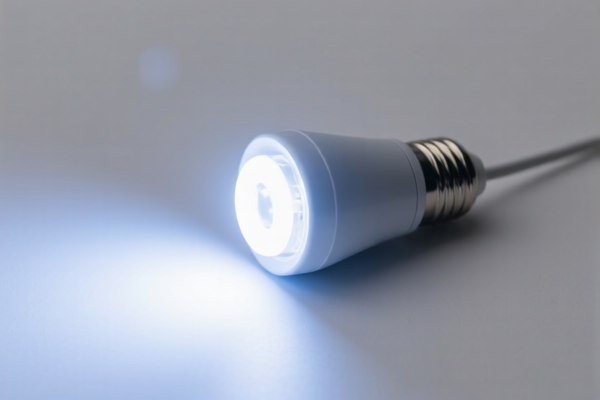
Sensor Night Light
CN → US| HS Code | Tariff Rate | Origin | Destination | Doc |
|---|---|---|---|---|
| 8543707100 | 37.0% | CN | US | Official Doc |
| 8543709860 | 37.6% | CN | US | Official Doc |
| 9405218010 | 38.9% | CN | US | Official Doc |
| 9405298010 | 38.9% | CN | US | Official Doc |
| 8513104000 | 13.5% | CN | US | Official Doc |
| 8513102000 | 22.5% | CN | US | Official Doc |
Product Images


AI Analysis
🌙 Sensor Night Light (Smart Lighting Solutions)
🌐 HS Code Classification & Tariff Strategy | 2026 Customs Guide | Professional Compliance Protocol
📌 I. Product Definition & Classification: Is Your "Night Light" a Lamp or an Apparatus?
The "Sensor Night Light" is a multifaceted product in international trade. Its classification depends entirely on its power source, functionality, and light source technology.
In customs clearance, it is typically split into two distinct categories: 1. Portable Battery-Powered Lamps: Self-contained units (e.g., motion-sensor flashlights or wall-mounted battery units). 2. Electrical/Luminaires: Plug-in units, LED-specific fixtures, or specialized electrical apparatus with individual functions.
⚠️ Critical Classification Distinction:
- Battery Operated (No Grid Connection): Likely falls under Chapter 85 (8513) as "Portable Electric Lamps."
- Fixed/Plug-in with LED Technology: Likely falls under Chapter 94 (9405) as "Luminaires" or Chapter 85 (8543) if it contains specialized electrical apparatus beyond a simple lamp.
- Searchlights vs. General Lighting: If it functions strictly as a directional spotlight, it may have different rates than general ambient lighting.
📦 II. HS Code Classification Breakdown (2026 Tariff Schedule)
Based on your specific product data, here are the four primary classifications for "Sensor Night Lights":
| HS Code | Product Description | Classification Logic | Light Source Type |
|---|---|---|---|
| 8513.10.20.00 | Portable electric lamps (battery/magneto); Flashlights | Strictly portable, self-powered, directional beam. Often includes sensor-controlled flashlights. | Any (Bulb/LED) |
| 8513.10.40.00 | Portable electric lamps (battery/magneto); Other Lamps | Portable, self-powered, but NOT classified as "flashlights" (e.g., ambient glow lamps). | Any (Bulb/LED) |
| 9405.21.80.10 | Electric luminaires: Table/Desk/Bedside; Designed for LED ONLY; Other Household | Plug-in or fixed installation. Specifically designed for LED. | LED Only |
| 9405.29.80.10 | Electric luminaires: Table/Desk/Bedside; Other (Non-LED or Mixed); Other Household | Plug-in/fixed. Not exclusively LED or general household lighting. | Any (except pure LED exclusivity) |
| Note: 8543.70 variants | Electrical apparatus with individual functions | Specialized electronic control units (less common for simple lights). | N/A |
💰 III. Detailed Tariff Rate Analysis (2026 Customs Duties)
✅ Applicable Market: Import into the US (implied by "Additional Duties" in data)
✅ Origin: China (CN)
✅ Status: 2026 Tariff Schedule (Subject to Section 301 & Additional Tariffs)
🎯 1. HS Code: 8513.10.20.00 (Portable Lamps: Flashlights)
Best for: Motion-sensor flashlights, tactical night lights powered by batteries.
| Tax Component | Rate | Details |
|---|---|---|
| Base Duty | 12.5% | Standard MFN (Most Favored Nation) rate for portable lamps. |
| Section 301 / Additional | 0.0% | No additional tariffs on this specific subheading in current data. |
| Total Tax Rate | 12.5% | Low-Moderate Risk. |
| Calculation | CIF Value × 12.5% |
📌 Strategy: This is the safest and cheapest entry point for battery-operated sensor lights. Ensure the product is truly "flashlight" style (handheld or portable) and not a fixed fixture.
🎯 2. HS Code: 8513.10.40.00 (Portable Lamps: Other)
Best for: Portable night lights that are not directional "flashlights" (e.g., small battery-operated glow sticks).
| Tax Component | Rate | Details |
|---|---|---|
| Base Duty | 3.5% | Standard MFN rate for non-flashlight portable lamps. |
| Section 301 / Additional | 0.0% | No additional tariffs on this specific subheading in current data. |
| Total Tax Rate | 3.5% | Lowest Risk. |
| Calculation | CIF Value × 3.5% |
📌 Strategy: Highly Recommended for small, portable, battery-operated night lights. This is the lowest duty rate in your dataset. Crucial: Must be portable and battery-powered.
🎯 3. HS Code: 9405.21.80.10 (LED Luminaires: Household)
Best for: Plug-in table/bedside night lights specifically designed for LEDs.
| Tax Component | Rate | Details |
|---|---|---|
| Base Duty | 3.9% | Standard duty for LED household luminaires. |
| Section 301 / Additional | 25.0% | Heavy Additional Tariff (Trade War / Section 301). |
| Total Tax Rate | 28.9% | High Risk. |
| Calculation | CIF Value × 28.9% |
📌 Strategy: High cost. This applies if the light is plugged in (AC power) or fixed and uses LEDs. The 25% additional tariff makes this category expensive for Chinese origins.
🎯 4. HS Code: 9405.29.80.10 (Other Household Luminaires)
Best for: Non-LED plug-in night lights or general household fixtures.
| Tax Component | Rate | Details |
|---|---|---|
| Base Duty | 3.9% | Standard duty for other luminaires. |
| Section 301 / Additional | 25.0% | Heavy Additional Tariff. |
| Total Tax Rate | 28.9% | High Risk. |
| Calculation | CIF Value × 28.9% |
📌 Strategy: Same as above. High cost due to additional tariffs on electrical luminaires.
🎯 5. HS Code: 8543.70.71.00 (Other Electrical Apparatus: Luminescent Lamps)
Specialized cases: Electronic control circuits.
| Tax Component | Rate | Details |
|---|---|---|
| Base Duty | 2.0% | |
| Additional | 25.0% | |
| Total Tax Rate | 27.0% | High Risk. |
| Note | Often used for specialized lighting control units, not simple lamps. |
🛠️ IV. Customs Clearance Strategy & Practical Advice
✅ 1. Product Configuration Optimization
-
The "Battery vs. Plug-In" Switch:
- If your sensor night light can run on batteries (dry or storage), classify under 8513.10.40.00 (3.5%) or 8513.10.20.00 (12.5%).
- If it is plugged in (AC adapter) or hardwired, it falls under 9405 (28.9% + 25% tariff).
- Pro Tip: Design the product as battery-only (or dual-power where the primary function is battery) to save 25.4% in duties.
-
The "LED Exclusivity" Trap:
- If you claim it is "LED Only" but it can accept other bulbs, or vice versa, the classification becomes ambiguous. Ensure the marketing and spec sheet explicitly state "Designed for LED" or "General" to match the HS Code.
✅ 2. Critical Documentation Checklist
To avoid audits and delays, provide the following:
| Document | Requirement | Why It Matters |
|---|---|---|
| Product Specification Sheet | Must state Power Source (Battery vs. AC) | Determines if it goes to 8513 (Low) or 9405 (High). |
| Technical Drawing | Show internal components (Battery compartment vs. Power Cord) | Proves "Portability" for 8513.10.40.00. |
| Commercial Invoice | Declare "Portable Electric Lamp, Battery Operated" | Avoids "Luminaire" keywords that trigger 9405. |
| Certifications | FCC, UL, Energy Star (if applicable) | Essential for electrical safety compliance. |
| Photos | Clear shot of the battery compartment or power adapter | Visual proof of power source. |
✅ 3. Classification Logic Flowchart
text Is it Plug-in / Hardwired? └── YES → Check Light Source: ├── LED Only? → 9405.21.80.10 (28.9% Total) └── Other? → 9405.29.80.10 (28.9% Total) └── NO (Battery Powered) → Check Type: ├── Flashlight / Directional? → 8513.10.20.00 (12.5% Total) └── General Ambient / Other? → 8513.10.40.00 (3.5% Total) ✅ BEST OPTION
✅ 4. Special Alerts & Pitfalls
- 🚫 Pitfall 1: Misclassifying Plug-in Lights as Portable.
- Risk: Customs will reclassify to 9405 and levy the 25% additional tariff + penalties.
- Fix: Do not use the term "Portable" if the product is designed to be plugged into a wall outlet.
- 🚫 Pitfall 2: Ignoring the "Flashlight" Definition.
- Risk: "Flashlight" (8513.10.20.00) has a higher base rate (12.5%) than "Other Lamps" (3.5%).
- Fix: If your sensor light is a wide-area ambient glow (not a beam), declare it as "Other Lamps" (8513.10.40.00) to save 9%.
- 🚫 Pitfall 3: Mixed Packaging.
- Risk: Shipping batteries and plugs together in one box might confuse the classifier.
- Fix: Ship Battery-only units in one shipment and Plug-in units in another to maintain clear classification.
🌍 V. Market Comparison (US vs. Global)
| Market | Recommended HS Code | Effective Duty (China Origin) | Strategy |
|---|---|---|---|
| 🇺🇸 USA | 8513.10.40.00 | 3.5% | Best for battery-only sensor lights. Avoid 9405 codes if possible. |
| 🇺🇸 USA | 9405.21.80.10 | 28.9% | High cost for plug-in LED lights. |
| 🇨🇳 China | 8513.10.40.00 | ~3.5% | Low export duty. |
| 🇪🇺 EU | 8513.10.40.00 | ~0-2% | Generally lower tariffs than US Section 301. |
📌 VI. Conclusion & Action Plan
The Bottom Line:
For Sensor Night Lights, the Battery-Powered route (8513) is vastly superior to the Plug-in/LED route (9405).
* Savings: Avoiding the 25% additional tariff saves 25.4% of your landed cost.
* Action: Design your product as a self-contained, battery-operated portable lamp.
* Declaration: Use "Portable Electric Lamp, Battery Operated, Other" (8513.10.40.00) for the lowest 3.5% duty.
🚀 Final Tip: If your design requires AC power, consider exporting the control module separately to a third country (e.g., Vietnam/Mexico) to avoid Section 301 tariffs, then assemble the final product there.
✨ Professional Compliance Starts with Accurate HS Codes!
💼 Don't let a 25% tariff kill your margin. Optimize your classification today!
Customer Reviews
About HS Code Classification
The Harmonized System (HS) is an internationally standardized nomenclature developed by the World Customs Organization (WCO) to classify traded products. Over 200 countries use the HS system as the basis for customs tariffs, trade statistics, and import/export regulations.
Each HS code follows a hierarchical structure:
- Chapter (2 digits) — Broad category of goods (e.g., Chapter 84: Machinery and Mechanical Appliances)
- Heading (4 digits) — More specific grouping within the chapter
- Subheading (6 digits) — Internationally standardized breakdown, used by all WCO member countries
- National subdivisions (8-10 digits) — Country-specific extensions for further classification, such as US HTSUS 10-digit codes
Correct HS code classification is essential for smooth customs clearance, accurate duty payment, and compliance with trade regulations. Misclassification can lead to customs delays, overpayment of duties, or penalties.
When importing from CN to US, the applicable tariff rates may include:
- Most-Favored-Nation (MFN) rate — The standard duty rate applied to WTO members
- General rate — Applied to countries without trade agreements
- Trade remedy duties — Additional tariffs such as Section 301 (anti-dumping), Section 232 (national security), or countervailing duties
The information provided on this page is for reference purposes only. For official classification, please consult with your local customs authority or a licensed customs broker.