Sensory Balance Board
CN → US| HS Code | Tariff Rate | Origin | Destination | Doc |
|---|---|---|---|---|
| 9506910010 | 22.1% | CN | US | Official Doc |
| 9506910030 | 22.1% | CN | US | Official Doc |
| 9506910030 | 22.1% | CN | US | Official Doc |
| 9506910010 | 22.1% | CN | US | Official Doc |
Product Images
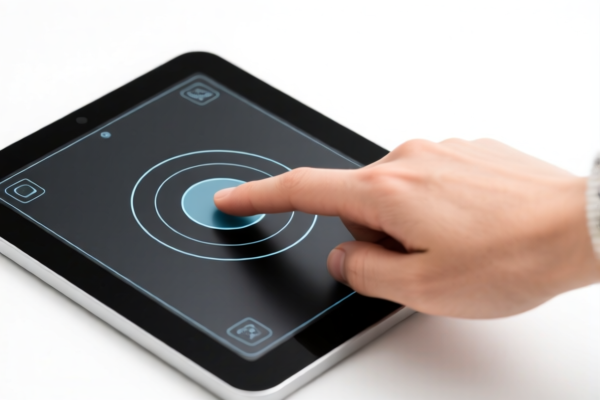
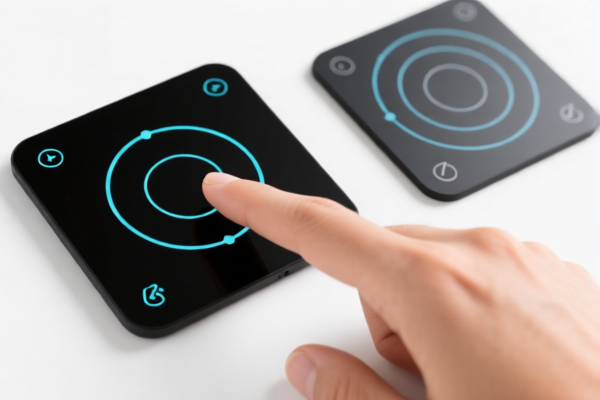
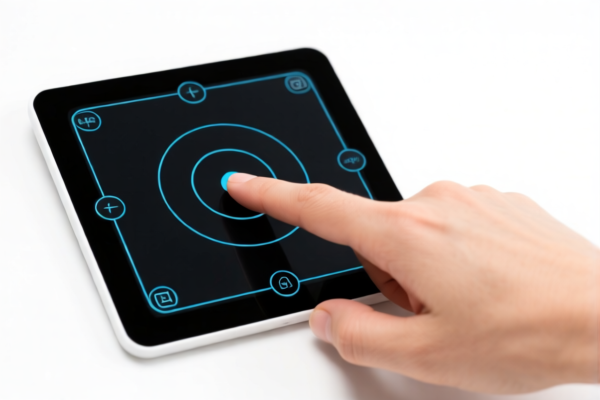
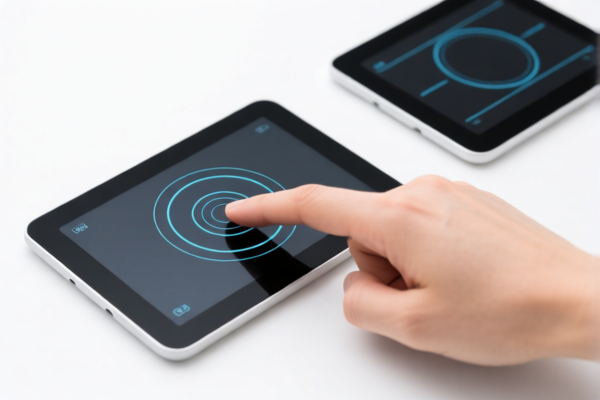
AI Analysis
⚖️ Sensory Balance Board (Fitness & Rehabilitation Equipment)
🌐 HS Code Reference & Customs Clearance Guide | 2026 Latest Tariff Analysis | Professional Clearance Strategy 📌 I. Product Definition & Classification: Do You Understand "Sensory Balance Boards"?
Sensory Balance Boards are specialized training devices designed to improve physical balance, coordination, and sensory development. In international trade, these items fall under the category of Sports/Fitness Equipment or Rehabilitation Aids. They are not considered general household furniture but rather specialized apparatuses for physical training.
The classification hinges on two main factors: 1. Function: Used for balance training, sensory integration, or general fitness. 2. Material Compatibility: The materials used (wood, plastic, rubber, etc.) do not conflict with the standard material definitions for sports equipment.
⚠️ Key Distinction:
- If the product is primarily for gymnastics or specific sports training (e.g., wobble boards for surfers, balance beams for gymnasts) → Often归类 to 9506.91.00.10
- If the product is for general fitness, rehab, or sensory integration therapy → Often归类 to 9506.91.00.30
📦 II. HS Code Classification Details (2026 Latest Tariff Authority Comparison)
| HS Code | Product Description | Application Scenario | Material Conflict? |
|---|---|---|---|
9506.91.00.10 |
Sports/Gymnastics Equipment (Balance Sensory Boards) | Gymnastics balance beams, specialized sports training boards | ❌ No |
9506.91.00.30 |
General Sports/Rehabilitation Training Equipment | Sensory integration therapy, general fitness balance trainers, rehab aids | ❌ No |
🔍 Key Reminder:
- Both9506.91.00.10and9506.91.00.30fall under Chapter 95 (Toys, Games, and Sports Equipment). - The distinction lies in the specific usage: "Sports/Gymnastics" vs. "General Sports/Rehab". - No material conflicts: Whether made of wood, EVA foam, or plastic, these codes are valid as long as the function aligns with sports or rehab equipment.
💰 III. 2026 Latest Tariff Rate Breakdown (Including Additional Taxes & Policy Surcharges)
✅ Applicable Country: United States (US)
✅ Origin: China (CN)
✅ Effective Date: 2025/2026 Import Terms (Subject to current Section 301 & 122 Rules)
🎯 1. 9506.91.00.10 & 9506.91.00.30 – Balance & Sensory Training Boards
| Item | Content |
|---|---|
| Base Tariff Rate | 4.6% (Ad Valorem) |
| Section 301 Additional Tariff | +7.5% (Standard 301 tariff for sports equipment parts/accessories) |
| Section 122 Tariff | +10% (For certain steel, aluminum, copper products if material composition triggers this; otherwise, check specific bill of materials) |
| Steel/Aluminum/Copper Additional Tariff | +50% (Applicable ONLY if the board contains significant structural steel, aluminum, or copper components meeting the criteria of Section 232/122 rules. Note: Most foam/wood balance boards may NOT trigger this, but verify material composition.) |
| Total Effective Tariff | 22.1% (Base 4.6% + 301 7.5% + 122 10% = 22.1%, excluding potential 50% metal surcharge) ⚠️ Or Higher if 50% metal surcharge applies |
| Tax Calculation | CIF Value × Total Rate |
| De Minimis Exemption | ❌ Not Applicable (Value usually exceeds $800 threshold for Section 301 goods) |
| Legal Basis Path | HTSUS:9506.91.00 → USITC:9506.91.00.10/30 → IEEPA:301 → Section 122/232 (if metal) |
📌 Explanation:
- Base Tariff (4.6%): Standard US duty for sports equipment. - Section 301 Tariff (7.5%): Additional duty imposed on Chinese goods for list 4B/4C items, which includes many sports training accessories. - Section 122 Tariff (10%): May apply to certain industrial products. Verify if the balance board’s frame/material qualifies. - Steel/Aluminum/Copper Surcharge (50%): CRITICAL CHECK! If the board has a metal base or reinforcement, this 50% tariff might apply. If it’s purely wood, plastic, or foam, this 50% likely does not apply. The 22.1% figure provided in data assumes Base + 301 + 122. If metal components are present, total could reach 72.1%.
🛠️ IV. Customs Clearance Practical Advice (Avoid Pitfalls)
✅ 1. Required Documents Checklist (Mandatory)
| Document | Required? | Description |
|---|---|---|
| ✅ Product Specification Sheet | ✔️ | Detailed description: Dimensions, weight, material composition (wood/foam/plastic/metal), intended use. |
| ✅ Product Photos | ✔️ | Clear images showing the board, any handles, non-slip surfaces, and packaging. |
| ✅ Material Breakdown | ✔️ | Crucial for determining if 50% Steel/Aluminum tariff applies. |
| ✅ Commercial Invoice | ✔️ | Must clearly state: "Sensory Balance Board for Fitness/Rehab Training" |
| ✅ Packing List | ✔️ | Itemized list of contents. |
| ✅ Certificate of Origin (CO) | ✔️ | Required for origin verification, though preferential tariffs are limited for China-origin sports gear. |
✅ 2. Declaration Tips (Key Mantra)
🔥 "Function First, Material Second, Avoid 'Metal' if Possible!"
| Scenario | Correct Declaration | Wrong Practice |
|---|---|---|
| Wooden/Plastic Balance Board | 9506.91.00.30 (General Sports/Rehab) |
Declare as "Gymnastics Equipment" if not specialized → Risk of audit |
| Board with Metal Base/Frame | 9506.91.00.10 or 30 + Declare Metal Content |
Hide metal components → Customs penalty for misdeclaration |
| Sensory Integration Therapy Aid | 9506.91.00.30 |
Declare as "Medical Device" → Wrong chapter, higher scrutiny |
✅ 3. Special Case Handling
| Scenario | Handling Advice |
|---|---|
| Pure Foam/Wood Board | Declare as 9506.91.00.30. Total tariff ~22.1% (Base+301+122). No metal surcharge. |
| Metal-Framed Board | Verify if 50% Steel/Aluminum tariff applies. If yes, total tariff could be ~72.1%. Consider alternative materials. |
| Sensory Toys for Kids | If marketed strictly as a "toy" for children under 12, check HS 9503.00 (Toys). However, "Balance Boards" are often classified under Sports Equipment. Consult custom broker. |
| OEM Custom Boards | Provide design specs to prove intended use (sports vs. medical). |
🌍 V. Global Market Comparison (2026 Latest)
| Country/Region | Recommended HS Code | Tariff (China Origin) | Certification Requirements | Notes |
|---|---|---|---|---|
| 🇺🇸 USA | 9506.91.00.30 |
22.1% (Min) | CPC (Children’s Product Certificate) if for kids; FCC if electronic | High scrutiny on Section 301 & 122 |
| 🇨🇳 China | 9506.91.00.30 |
~10-15% | CCC (if applicable) | Lower import barriers |
| 🇪🇺 EU | 9506.91 |
0-4.5% | CE, EN71 (Toy Safety), REACH | No major additional tariffs |
| 🇦🇺 Australia | 9506.91 |
5% | ACS (if toy), Compliance Mark | Moderate tariffs |
| 🇬🇧 UK | 9506.91 |
0-5% | UKCA, Compliance | Post-Brexit rules apply |
📌 Conclusion:
- USA is the most complex market due to layered tariffs (Base + 301 + 122 + Metal Surcharges). - Material composition is critical: Avoid metal components if possible to avoid the 50% surcharge. - China-origin goods face high duties in the US; consider supply chain diversification for cost optimization.
📌 VI. Common Errors & Pitfalls (Lessons Learned)
❌ Error 1: Declaring a metal-framed board as "Foam Board" to avoid metal tariffs
👉 Consequence: Customs penalty, detention, and retroactive 50% tariff + fines.
❌ Error 2: Misclassifying as "Medical Device" (HS 9019) to avoid Section 301
👉 Consequence: Rejection, as sensory balance boards are primarily for fitness/rehab, not strict medical treatment.
❌ Error 3: Ignoring Section 122
👉 Consequence: Underpayment of 10% duty on eligible goods.
✅ Correct Practice:
"Sensory Balance Board, EVA Foam Surface, Wood Core, for Home Fitness & Balance Training, Model XYZ, CPC Certified"
🎯 VII. Conclusion: Professional Declaration for Smooth Clearance
🎯 Remember the Mantra:
🔹 "Function defines HS, Material defines Surcharge."
🔹 "22.1% is the floor, 72.1% is the ceiling (with metal)."
🔹 "Declare accurately, avoid penalties, protect profit margins."
📌 Pro Tip:
If your balance board contains significant steel, aluminum, or copper components, consult a customs broker to determine if the 50% Section 232/122 tariff applies. If it does, consider non-metal materials (wood, plastic, composite) to reduce the total tariff burden from ~72% to ~22%.
📣 Immediate Action:
📞 Contact a licensed customs broker + Provide material breakdown + Request Advance Ruling for HS Code classification.
🚀 Ensure smooth clearance, optimize costs, and expand your global market reach!
✨ Professional Customs Clearance Starts with Accurate Classification!
💼 Every cent counts in global trade!
Customer Reviews
About HS Code Classification
The Harmonized System (HS) is an internationally standardized nomenclature developed by the World Customs Organization (WCO) to classify traded products. Over 200 countries use the HS system as the basis for customs tariffs, trade statistics, and import/export regulations.
Each HS code follows a hierarchical structure:
- Chapter (2 digits) — Broad category of goods (e.g., Chapter 84: Machinery and Mechanical Appliances)
- Heading (4 digits) — More specific grouping within the chapter
- Subheading (6 digits) — Internationally standardized breakdown, used by all WCO member countries
- National subdivisions (8-10 digits) — Country-specific extensions for further classification, such as US HTSUS 10-digit codes
Correct HS code classification is essential for smooth customs clearance, accurate duty payment, and compliance with trade regulations. Misclassification can lead to customs delays, overpayment of duties, or penalties.
When importing from CN to US, the applicable tariff rates may include:
- Most-Favored-Nation (MFN) rate — The standard duty rate applied to WTO members
- General rate — Applied to countries without trade agreements
- Trade remedy duties — Additional tariffs such as Section 301 (anti-dumping), Section 232 (national security), or countervailing duties
The information provided on this page is for reference purposes only. For official classification, please consult with your local customs authority or a licensed customs broker.