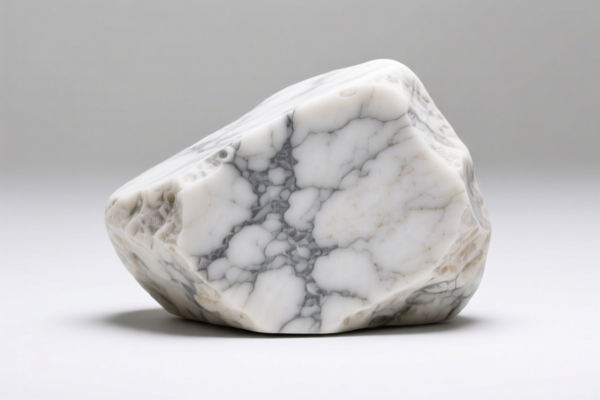
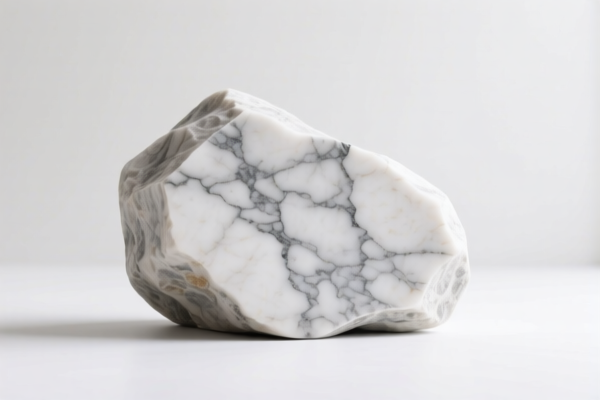
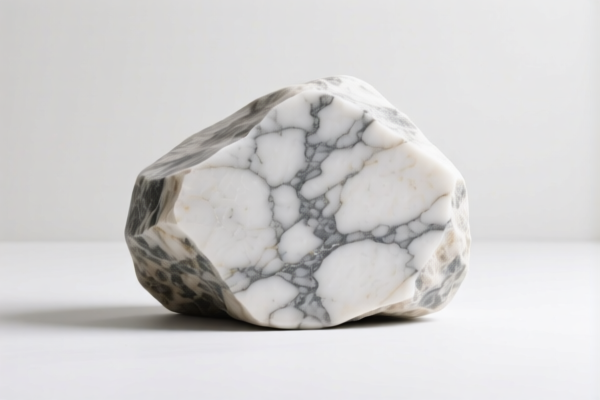
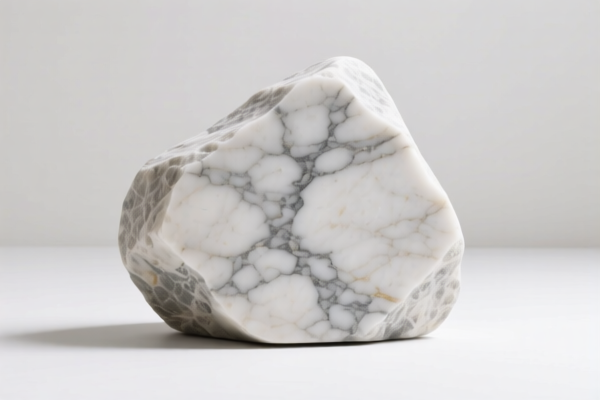
Sensory Integration Balance Stone
CN → US| HS Code | Tariff Rate | Origin | Destination | Doc |
|---|---|---|---|---|
| 6913905000 | 23.5% | CN | US | Official Doc |
| 6913105000 | 17.5% | CN | US | Official Doc |
| 9503000090 | 10.0% | CN | US | Official Doc |
Product Images
AI Analysis
🧘 Sensory Integration Balance Stone
🌐 HS Code Reference & Customs Clearance Guide | 2024 Latest Tariff Analysis | Professional Clearance Strategy
📌 I. Product Definition & Classification: Do You Really Understand the "Balance Stone"?
A Sensory Integration Balance Stone is a specialized tool used in occupational therapy, physical education, and pediatric sensory processing training. It is typically a stone-like object (natural stone or ceramic) designed to challenge equilibrium, proprioception, and vestibular systems.
In international trade, these products fall into different categories depending on their primary material and primary intended use: * As a Decorative/Stone Item: If viewed primarily as a stone ornament or ceramic piece. * As a Toy/Gymnastic Equipment: If viewed primarily as a fitness aid, balance trainer, or children's play equipment.
⚠️ Key Distinction Point:
- If the product is marketed as a decorative artifact or raw stone material → Likely Chapter 69 (Ceramics/Stone)
- If the product is marketed as a balance trainer, therapy tool, or toy → Likely Chapter 95 (Toys/Games)
📦 II. HS Code Classification Details (Latest Tariff Concordance)
Based on the provided data, here are the three potential classifications with detailed tax breakdowns:
| HS Code | Product Description | Application Scenario | Primary Basis |
|---|---|---|---|
6913.90.50.00 |
Other ceramic statues and other ceramic ornaments | Natural stone or ceramic balance stones categorized under "Other" decorative ceramics | Material Inference: Assumed to be natural stone or ceramic based on material. |
6913.10.50.00 |
Other decorative ceramic articles | Ceramic or stone decorative items classified as "Other" decorative ceramic products | Name Inference: Inferred as ceramic/stone decorative items from product name. |
9503.00.00.90 |
Other toys, reduced-size ("scale") models, and similar recreational models | Balance/fitness toys or puzzle equipment, falling under the "Other" catch-all for unlisted toys/models | Usage Inference: Inferred as balance/fitness toy or educational equipment. |
🔍 Important Reminder:
-6913.90.50.00and6913.10.50.00rely heavily on material. If it's clearly stone/ceramic and marketed decoratively, these apply.
-9503.00.00.90relies on function. If marketed as a "therapy tool," "balance trainer," or "kids' toy," this is the most favorable rate.
- Misclassification Risk: Declaring a fitness toy as a "ceramic ornament" may lead to audits if the packaging/usage clearly indicates therapeutic/fitness purpose.
💰 III. 2024 Latest Tariff Rate Breakdown (Including Surtaxes & Policy Surcharges)
✅ Applicable Country: United States (US)
✅ Origin: China (CN)
✅ Effective Date: 2025 (Based on 122 Clause and Section 301/IEEPA rules)
🎯 1. 6913.90.50.00 — Ceramic Statues & Ornaments (Material-Based)
| Item | Content |
|---|---|
| Base Tariff | 6.0% |
| Section 301 Surtax | 7.5% |
| 122 Clause Tariff | 10% |
| Total Tariff Rate | 23.5% |
| Calculation | CIF Value × 23.5% |
| De Minimis Exemption | ❌ Not Eligible (High tariff rate usually blocks de minimis) |
| Legal Basis Path | Base: 6913.90.50.00 → Section 301: 7.5% → 122 Clause: 10% |
📌 Explanation:
- This classification incurs three layers of tariffs: Base, Section 301, and the specific "122 Clause" (likely referring to a specific trade remedy or recent policy addition).
- Total burden: 23.5%. This is moderate-high compared to toy classifications.
🎯 2. 6913.10.50.00 — Other Decorative Ceramic Articles
| Item | Content |
|---|---|
| Base Tariff | 0.0% |
| Section 301 Surtax | 7.5% |
| 122 Clause Tariff | 10% |
| Total Tariff Rate | 17.5% |
| Calculation | CIF Value × 17.5% |
| De Minimis Exemption | ❌ Not Eligible |
| Legal Basis Path | Base: 6913.10.50.00 → Section 301: 7.5% → 122 Clause: 10% |
📌 Note:
- While the base tariff is 0%, the Surtax + 122 Clause still totals 17.5%.
- This is 6% cheaper than the previous code (6913.90.50.00), but still higher than the toy classification.
🎯 3. 9503.00.00.90 — Other Toys / Balance Fitness Equipment
| Item | Content |
|---|---|
| Base Tariff | 0.0% |
| Section 301 Surtax | 0.0% |
| 122 Clause Tariff | 10% |
| Total Tariff Rate | 10.0% |
| Calculation | CIF Value × 10.0% |
| De Minimis Exemption | ❌ Check Eligibility (Base 0% may help, but Surtax rules vary) |
| Legal Basis Path | Base: 9503.00.00.90 → Section 301: 0.0% → 122 Clause: 10% |
📌 Key Advantage:
- Lowest Total Tariff: 10%.
- Why? Toys/fitness equipment often enjoy 0% Base and 0% Section 301 Surtax in certain classifications, leaving only the 122 Clause (10%).
- Strategy: If the product is used for therapy, balance training, or fitness, classify under HS 9503 to save 7.5–13.5% in duties.
🛠️ IV. Customs Clearance Practical Advice (Avoid Pitfalls)
✅ 1. Documentation Checklist (Must-Haves)
| Document | Required | Notes |
|---|---|---|
| ✅ Product Description | ✔️ | Clearly state "Sensory Integration Balance Stone" or "Therapy Balance Trainer" |
| ✅ Intended Use Statement | ✔️ | Specify: "For occupational therapy," "Balance training," or "Children's fitness toy" |
| ✅ Material Composition | ✔️ | e.g., "Natural Granite" or "Ceramic" |
| ✅ Photos (Product & Packaging) | ✔️ | Show usage context (e.g., child using it, therapist using it) |
| ✅ Commercial Invoice | ✔️ | Align HS Code with description; avoid vague terms like "Stone Decor" if used as toy |
| ✅ Origin Certificate | ✔️ | Essential for determining Surtax applicability |
✅ 2. Declaration Strategy (Critical Tips)
🔥 “Function Over Material: If It’s Used as a Toy, Declare as a Toy!”
| Scenario | Recommended HS Code | Why? |
|---|---|---|
| Sold to Therapy Clinics / Schools | 9503.00.00.90 |
Best rate (10%); justified by "fitness/educational toy" use |
| Sold to Home Decor Stores | 6913.90.50.00 |
Justified by "ceramic ornament" use; rate 23.5% |
| Mixed Use (Home & Therapy) | 9503.00.00.90 |
Argue primary function is balance/fitness; lower tax burden |
| Raw Stone Material | 6913.10.50.00 |
Only if no therapeutic context is presented |
⚠️ Warning:
- Do not misdeclare a therapy tool as a "ceramic vase" to avoid tariffs. CBP may audit based on end-use and marketing materials.
- If the packaging shows children using it, CBP will likely reclassify to 9503 anyway, but if you declare it as 6913, you pay more. If you declare 9503, you save money. Always declare the most accurate, low-risk, and beneficial classification.
✅ 3. Special Cases
| Situation | Recommendation |
|---|---|
| OEM Private Label | Ensure your client’s marketing materials emphasize "therapy" or "balance training" to support HS 9503. |
| Set with Other Items | If sold as a "Sensory Kit," the kit may be classified as a whole. Check GRI 3(b). |
| Pre-Cutting/Polishing | If it’s just a rough stone, it might fall under Chapter 71 (Pearls/Steones), but balance stones are usually finished goods. |
🌍 V. Global Market Comparison (2024 Update)
| Market | Recommended HS Code | Estimated Total Duty | Notes |
|---|---|---|---|
| 🇺🇸 USA | 9503.00.00.90 |
10.0% | Best for cost-saving. Avoid 6913 if possible. |
| 🇪🇺 EU | 9503.00.00 |
~6.8% | Low duty. Requires CE marking if sold as toy. |
| 🇬🇧 UK | 9503.00.00 |
~6.8% | Post-Brexit alignment with EU. |
| 🇨🇦 Canada | 9503.00.00 |
~5.0% | Favorable for toys/fitness. |
| 🇯🇵 Japan | 9503.00.00 |
~6.0% | No significant surtax for toys. |
📌 Conclusion:
- USA is the key market for Surcharge Analysis.
- Classification as9503saves 7.5–13.5% vs. ceramic classifications.
- Always provide usage evidence (photos, brochures) to support HS 9503.
📌 VI. Common Mistakes & Pitfalls
❌ Mistake 1: Declaring as "Stone Ornament" (6913) when used as a therapy tool.
👉 Result: Pay 23.5% instead of 10%. Overpaying by 13.5%.
❌ Mistake 2: Declaring as "Toy" (9503) but packaging shows no fitness/therapy context.
👉 Result: CBP may reclassify to 6913, demand back duties, and impose penalties.
❌ Mistake 3: Ignoring the "122 Clause."
👉 Result: Unexpected 10% surtax applies to all three classifications in the provided data. Cannot be avoided.
✅ Correct Approach:
"Sensory Balance Stone for Occupational Therapy – Ceramic/Natural Stone Material – For Balance Training & Proprioception Development"
🎯 VII. Conclusion: Smart Classification, Maximize Profit!
🎯 Remember:
🔹 "Use Determines Classification: Therapy → Toy → Lower Tax"
🔹 "Save 13.5% by Choosing HS 9503 Over 6913"
🔹 "Always Support with Usage Evidence!"
📌 Pro Tip:
If your product is also sold as home decor, consider dual listing or separate SKUs:
- SKU A: "Therapy Balance Stone" → HS9503.00.00.90(10%)
- SKU B: "Decorative Garden Stone" → HS6913.10.50.00(17.5%)This allows you to optimize duty costs based on the customer segment.
📣 Immediate Action:
📞 Consult a Customs Broker to verify the "122 Clause" applicability.
📸 Update Product Photos to emphasize therapeutic/fitness use.
🚀 Optimize Your Supply Chain for maximum profit with HS 9503.
✨ Precise Classification, Smarter Trade!
💼 Every Percent Saved is Pure Profit!
Customer Reviews
About HS Code Classification
The Harmonized System (HS) is an internationally standardized nomenclature developed by the World Customs Organization (WCO) to classify traded products. Over 200 countries use the HS system as the basis for customs tariffs, trade statistics, and import/export regulations.
Each HS code follows a hierarchical structure:
- Chapter (2 digits) — Broad category of goods (e.g., Chapter 84: Machinery and Mechanical Appliances)
- Heading (4 digits) — More specific grouping within the chapter
- Subheading (6 digits) — Internationally standardized breakdown, used by all WCO member countries
- National subdivisions (8-10 digits) — Country-specific extensions for further classification, such as US HTSUS 10-digit codes
Correct HS code classification is essential for smooth customs clearance, accurate duty payment, and compliance with trade regulations. Misclassification can lead to customs delays, overpayment of duties, or penalties.
When importing from CN to US, the applicable tariff rates may include:
- Most-Favored-Nation (MFN) rate — The standard duty rate applied to WTO members
- General rate — Applied to countries without trade agreements
- Trade remedy duties — Additional tariffs such as Section 301 (anti-dumping), Section 232 (national security), or countervailing duties
The information provided on this page is for reference purposes only. For official classification, please consult with your local customs authority or a licensed customs broker.