Sensory Mat Toy
CN → US| HS Code | Tariff Rate | Origin | Destination | Doc |
|---|---|---|---|---|
| 6307907500 | 14.3% | CN | US | Official Doc |
| 9503000071 | 10.0% | CN | US | Official Doc |
| 6307909891 | 24.5% | CN | US | Official Doc |
| 9503000090 | 10.0% | CN | US | Official Doc |
Product Images
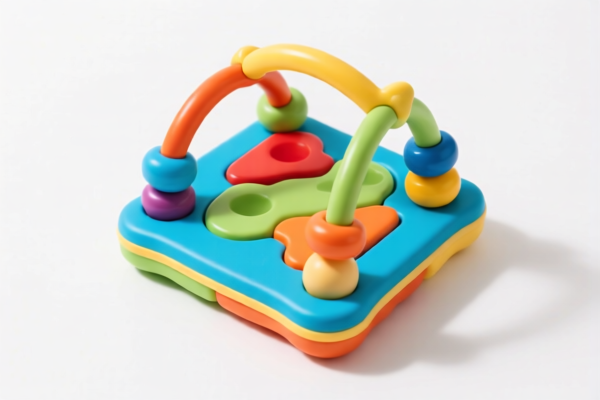


AI Analysis
🐾 Sensory Mat Toy – Comprehensive HS Code & Tariff Guide (2026 Edition)
🌐 HS Code Classification & Customs Clearance Strategy | 2026 Tariff Breakdown | Expert-Level Import Planning
📌 One Product, Multiple Classifications – Why the Same Sensory Mat Has 4 Different Tariffs
The Sensory Mat Toy is a versatile product used for tactile training in pets and infants. However, its HS Code classification depends entirely on its intended use, target user, and material composition. Misclassification can result in over 20% higher tariffs, delays, or even seizure.
⚠️ Critical Insight:
The same physical product (a soft, textured mat) can be classified under four different HS Codes, each with radically different tax rates — from 10% to 24.5%.
🔍 Your choice of HS Code determines your import cost.
📦 1. HS Code Classification Matrix (2026 Tariff Authority)
| HS Code | Product Description | Target User | Key Features | Tax Rate |
|---|---|---|---|---|
6307.90.75.00 |
Textile-based sensory toy for pets | Dogs, cats, small animals | Made of fabric, designed for pet play/training | 14.3% |
9503.00.00.71 |
Sensory/tactile toy for children under 3 years | Infants & toddlers | Soft, safe materials, designed for developmental play | 10.0% |
6307.90.98.91 |
Other made-up products – molded sensory mats | General use (training, therapy, support) | Non-dedicated, multi-use, structural design | 24.5% |
9503.00.00.90 |
General-purpose toys, models & accessories (catch-all) | Any age, unspecified | No clear material or user definition | 10.0% |
📌 Why So Many Codes?
The U.S. Customs and Border Protection (CBP) uses intended use, material, and end-user to determine classification.
- Is it for pets? →6307.90.75.00
- Is it for children under 3? →9503.00.00.71
- Is it not clearly defined? →9503.00.00.90(default)
- Is it structurally complex or molded? →6307.90.98.91(highest tax)
💰 2. 2026 Tariff Breakdown – Full Tax Clause Explanation
✅ Applicable Country: United States (US)
✅ Origin: China (CN)
✅ Effective Date: November 10, 2025 (inclusive)
🎯 1. 6307.90.75.00 – Textile Sensory Toy for Pets
| Tax Component | Rate | Legal Basis | Notes |
|---|---|---|---|
| Base Duty | 4.3% | Harmonized Tariff Schedule (HTS) 6307.90.75 | Standard rate for textile toys |
| Additional Duty (Section 301) | 0.0% | USITC Footnote 9903.88.01 | Not targeted under 301 list |
| Section 122 Duty (China Tariff) | 10.0% | IEEPA: 9903.01.24 | Applies to China-origin goods |
| Total Effective Rate | 14.3% | — | — |
📌 Why This Rate?
- The mat is made of textile (fabric), so it falls under 6307.90.75.00 (not 9503).
- It’s intended for pets, not children → not eligible for 3-year-old child exemption.
- No Section 301 tariff applies (not on the list), but 122 Clause (IEEPA) still applies.
🎯 2. 9503.00.00.71 – Sensory Toy for Children Under 3
| Tax Component | Rate | Legal Basis | Notes |
|---|---|---|---|
| Base Duty | 0.0% | HTS 9503.00.00.71 | Zero duty for infant sensory toys |
| Additional Duty (Section 301) | 0.0% | Not on 301 list | Child-safe toys exempt |
| Section 122 Duty (China Tariff) | 10.0% | IEEPA: 9903.01.24 | Applies to all China-origin goods |
| Total Effective Rate | 10.0% | — | — |
📌 Why This Rate?
- The mat is intended for children under 3 and used for sensory development.
- Exempt from Section 301 tariffs (child safety products are protected).
- Only 10% IEEPA 122 Clause tariff applies — the lowest possible rate.
🎯 3. 6307.90.98.91 – Other Made-Up Products (Molded/Structural Mats)
| Tax Component | Rate | Legal Basis | Notes |
|---|---|---|---|
| Base Duty | 7.0% | HTS 6307.90.98.91 | Higher base rate for non-specific textile products |
| Additional Duty (Section 301) | 7.5% | USITC Footnote 9903.88.01 | Applies due to China origin |
| Section 122 Duty (China Tariff) | 10.0% | IEEPA: 9903.01.24 | Applies to all China-origin goods |
| Total Effective Rate | 24.5% | — | Highest tariff category |
📌 Why This Rate?
- The mat is not clearly a toy — it may have rigid structure, molded shapes, or support function.
- Classified under "other made-up products" → higher base duty.
- All three taxes apply: base, 301, and 122 Clause → 24.5% total.
- Avoid this code unless absolutely necessary.
🎯 4. 9503.00.00.90 – General Toys & Accessories (Catch-All)
| Tax Component | Rate | Legal Basis | Notes |
|---|---|---|---|
| Base Duty | 0.0% | HTS 9503.00.00.90 | Zero duty for general toys |
| Additional Duty (Section 301) | 0.0% | Not on 301 list | General toys not targeted |
| Section 122 Duty (China Tariff) | 10.0% | IEEPA: 9903.01.24 | Applies to all China-origin goods |
| Total Effective Rate | 10.0% | — | — |
📌 Why This Rate?
- Used when no specific subcategory applies.
- If the mat is not clearly for pets or infants, and no structural design, this is the fallback.
- Same rate as 9503.00.00.71, but no child-specific exemption — only because it’s a general toy.
🛠️ 3. Customs Clearance Best Practices (Pro Tips)
✅ 1. Required Documentation (Must-Have List)
| Document | Required? | Why It Matters |
|---|---|---|
| ✅ Product Specifications | ✔️ | Must state intended use, material, age group |
| ✅ High-Resolution Product Photos | ✔️ | Show texture, size, shape, labels, stitching |
| ✅ Commercial Invoice | ✔️ | Must clearly state "Sensory Mat for Pets" or "Infant Sensory Toy" |
| ✅ Certificate of Origin (CO) | ✔️ | Required for tariff eligibility |
| ✅ Third-Party Safety Certifications | ✔️ | ASTM F963 (toys), CPSIA (children), FDA (non-food) |
| ✅ Design Drawings / Packaging Layout | ✔️ | Prove structure (molded vs. soft) |
| ✅ Labeling & Instructions (in English) | ✔️ | Required for CBP review |
✅ 2.申报技巧(Key Rules to Remember)
🔥 “Use the Right Code, Pay the Right Tax”
- For pets: Use6307.90.75.00→ 14.3%
- For infants <3: Use9503.00.00.71→ 10.0%
- For unclear/structural mats: Avoid6307.90.98.91→ 24.5%
- For general use: Use9503.00.00.90→ 10.0%❌ Never use
6307.90.98.91unless the mat is molded, rigid, or structurally complex.
❌ Never claim “infant use” if the mat has sharp edges, small parts, or non-child-safe materials.
✅ 3. Special Case Handling
| Scenario | Recommended Action |
|---|---|
| Mat used for both pets and kids | Choose intended use — declare for one primary group only |
| Mat has removable parts | Declare as complete toy — do not split |
| Mat is sold in bundles (e.g., with toys) | Declare as toy set — use 9503.00.00.90 if no clear category |
| Mat is for therapy or medical use | Apply for medical device exemption — requires FDA/CE certification |
🌍 4. Global Market Comparison (2026)
| Country | Recommended HS Code | Base Duty | Additional Taxes | Notes |
|---|---|---|---|---|
| 🇺🇸 USA | 9503.00.00.71 (if for infants) |
0% | +10% (IEEPA 122) | 10% total |
| 🇨🇳 China | 6307.90.75.00 |
5% | None | No IEEPA |
| 🇪🇺 EU | 9503.00.00.00 |
0% | None | No 122 Clause |
| 🇦🇺 Australia | 9503.00.00.00 |
5% | None | No 122 Clause |
| 🇯🇵 Japan | 9503.00.00.00 |
0% | None | No 122 Clause |
📌 Insight:
- The U.S. is the only market with 122 Clause (IEEPA) tariffs on China-origin goods.
- China, EU, Australia, Japan do not apply this extra 10% — ideal for export diversification.
📌 5. Common Mistakes & How to Avoid Them
❌ Mistake 1: Using 6307.90.98.91 for a soft, fabric mat
👉 Result: 24.5% tax instead of 10% — extra $1,450 per $10,000 shipment
❌ Mistake 2: Claiming “infant use” without safety certification
👉 Result: CBP rejects classification → delay, reclassification, penalties
❌ Mistake 3: Not specifying intended use on invoice
👉 Result: CBP defaults to 9503.00.00.90 → 10% tax, even if it’s for pets
❌ Mistake 4: Splitting mat + accessories into separate lines
👉 Result: Each item taxed separately → up to 89.5% total (e.g., mat + stand + cover)
✅ Correct Approach:
“Soft Textile Sensory Mat for Pets – 24” x 36”, Non-Toxic Fabric, Washable, Designed for Canine Tactile Training, Model XYZ, ASTM F963 Certified”
🎯 6. Final Verdict: Choose Your HS Code Wisely!
🔹 For Pets:
6307.90.75.00→ 14.3%
🔹 For Infants <3:9503.00.00.71→ 10.0% (Best rate!)
🔹 Avoid:6307.90.98.91→ 24.5% (Only if structural)
🔹 Fallback:9503.00.00.90→ 10.0% (if no clear use)📌 Golden Rule:
The label, packaging, and invoice must match the HS Code.
One mismatch = tariff overcharge + customs delay.
📣 Act Now: Secure Your Profit Margin!
📞 Contact a licensed U.S. Customs Broker + Request an HS Code Pre-Ruling
🚀 Get your Sensory Mat classified correctly before shipment
💼 Save thousands in tariffs, avoid penalties, and ship with confidence!
✨ Pro Tip:
If your product is originating from Vietnam, Mexico, or Thailand, you may avoid the 10% IEEPA 122 Clause tariff entirely.
👉 Switching origin can save 10% on every shipment.
🎯 Your Sensory Mat is More Than a Toy — It’s a Tax Strategy.
📦 Get the Code Right. Pay the Right Tax. Ship Smart.
Customer Reviews
About HS Code Classification
The Harmonized System (HS) is an internationally standardized nomenclature developed by the World Customs Organization (WCO) to classify traded products. Over 200 countries use the HS system as the basis for customs tariffs, trade statistics, and import/export regulations.
Each HS code follows a hierarchical structure:
- Chapter (2 digits) — Broad category of goods (e.g., Chapter 84: Machinery and Mechanical Appliances)
- Heading (4 digits) — More specific grouping within the chapter
- Subheading (6 digits) — Internationally standardized breakdown, used by all WCO member countries
- National subdivisions (8-10 digits) — Country-specific extensions for further classification, such as US HTSUS 10-digit codes
Correct HS code classification is essential for smooth customs clearance, accurate duty payment, and compliance with trade regulations. Misclassification can lead to customs delays, overpayment of duties, or penalties.
When importing from CN to US, the applicable tariff rates may include:
- Most-Favored-Nation (MFN) rate — The standard duty rate applied to WTO members
- General rate — Applied to countries without trade agreements
- Trade remedy duties — Additional tariffs such as Section 301 (anti-dumping), Section 232 (national security), or countervailing duties
The information provided on this page is for reference purposes only. For official classification, please consult with your local customs authority or a licensed customs broker.