Separable Cable
CN → US| HS Code | Tariff Rate | Origin | Destination | Doc |
|---|---|---|---|---|
| 8544429010 | 87.6% | CN | US | Official Doc |
| 8544429090 | 87.6% | CN | US | Official Doc |
| 8547900030 | 89.6% | CN | US | Official Doc |
| 8547900040 | 89.6% | CN | US | Official Doc |
Product Images
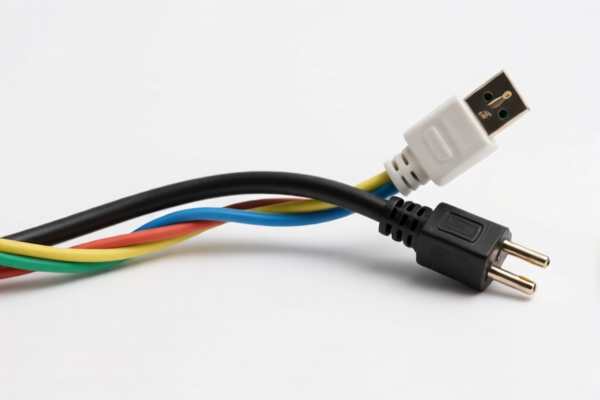
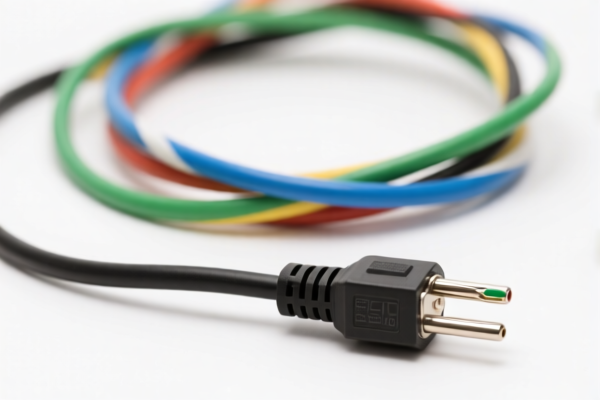
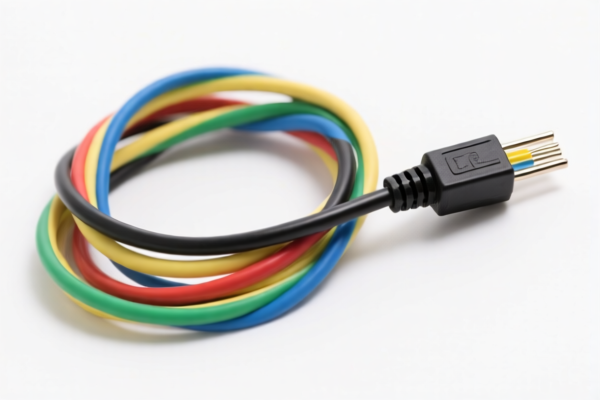
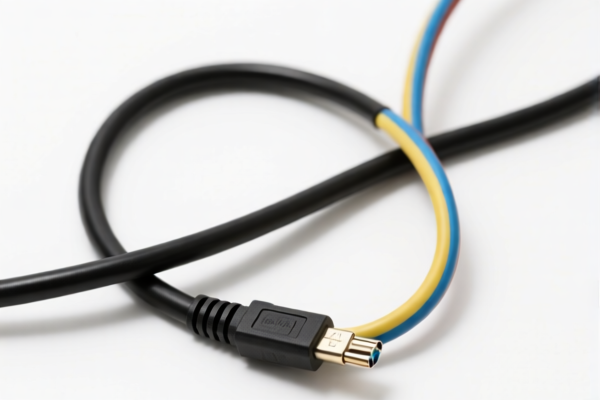
AI Analysis
🔌 Separable Cable: The Hidden Tariff Trap (HS Codes 8544 & 8547)
🌐 HS Code Reference & Customs Clearance Guide | 2026 Latest Tariff Analysis | Professional Clearance Strategy
📌 I. Product Definition & Classification: What is a "Separable Cable"?
In international trade, the term "Separable Cable" (or Separable Cord Set) refers to flexible electric conductors fitted with plugs and/or socket-outlets, designed to connect electrical equipment to the main power supply or to other devices. They are distinct from permanently wired connections.
The classification depends heavily on two factors: 1. Voltage: Is it low voltage (≤1000V) or high voltage (>1000V)? 2. Construction: Is it just a wire/cord with connectors (8544), or is it a metal conduit/joint system with insulation lining (8547)?
⚠️ Key Distinction:
- If it is a flexible cord with plugs/sockets (e.g., extension cords, power cords for appliances) → Chapter 8544
- If it is a rigid/flexible metal conduit with insulating lining and threaded joints → Chapter 8547
📦 II. HS Code Classification Details (2026 Latest Tariff Authority Mapping)
Based on the provided data, here are the relevant HS Codes and their specific definitions:
| HS Code | Product Description | Application Scenario | Key Features |
|---|---|---|---|
8544.42.90.10 |
Insulated Electric Conductors, ≤1000V, Fitted with Connectors, Other: Extension Cords | Standard extension cords, appliance power cords, IT equipment cables | Has plugs/sockets; Voltage ≤1000V; Defined as "Extension Cord" in Stat Note 6 |
8544.42.90.90 |
Insulated Electric Conductors, ≤1000V, Fitted with Connectors, Other: Other | Generic power cords not meeting "Extension Cord" definition, specialized cable assemblies | Has plugs/sockets; Voltage ≤1000V; Not an "Extension Cord" |
8547.90.00.30 |
Electrical Conduit Tubing & Joints, Base Metal Lined with Insulating Material: Joints: Threaded | Metal conduits with insulating lining, specifically threaded joints | Base metal conduit; Insulated lining; Threaded connection |
8547.90.00.40 |
Electrical Conduit Tubing & Joints, Base Metal Lined with Insulating Material: Joints: Other | Metal conduits with insulating lining, non-threaded joints | Base metal conduit; Insulated lining; Non-threaded connection |
🔍 Critical Note:
- 8544 covers the cables themselves (wire + insulation + connectors).
- 8547 covers conduit systems (metal tubing + insulation lining). Do not confuse a flexible power cord (8544) with a conduit system (8547).
💰 III. 2026 Latest Tariff Rate Breakdown (Including Surcharge Policies)
✅ Applicable Country: United States (US)
✅ Country of Origin: China (CN) (Note: Rates apply to Chinese-origin goods under current trade measures)
✅ Effective Time: Ongoing (Refer to specific footnote dates for updates)
🎯 1. 8544.42.90.10 —— Extension Cords (≤1000V)
| Item | Content |
|---|---|
| Base Tariff | 2.6% |
| Section 301 Surcharge (China) | +25% |
| Section 232 Surcharge (Steel/Alu/Cu) | +50% (Applicable if the cable contains significant steel, aluminum, or copper components as per trade remedy lists) |
| Total Tariff | 77.6% |
| Tax Calculation | CIF Value × 77.6% |
| De Minimis Exemption | ❌ Not Applicable (Deny De Minimis applies to Section 301 goods) |
| Legal Basis Path | HTS:8544.42.90.10 → Section 301: 25% → Section 232: 50% |
📌 Explanation:
- Base 2.6%: Standard US Most Favored Nation (MFN) rate for insulated conductors.
- +25%: Section 301 tariff on Chinese electrical goods.
- +50%: Section 232 tariff on steel, aluminum, or copper products. Note: Even if it's a cable, if the conductors or fittings are classified under steel/aluminum/copper remediation measures, this surcharge may apply. Check specific material composition.
🎯 2. 8544.42.90.90 —— Other Insulated Conductors (≤1000V)
| Item | Content |
|---|---|
| Base Tariff | 0.0% |
| Section 301 Surcharge (China) | +0.0% (Note: Data shows 0% surcharge for this specific subcode in the provided snippet) |
| Section 232 Surcharge (Steel/Alu/Cu) | +50% (If material triggers steel/aluminum/copper rules) |
| Total Tariff | 50.0% |
| Tax Calculation | CIF Value × 50.0% |
| De Minimis Exemption | ❌ Not Applicable |
| Legal Basis Path | HTS:8544.42.90.90 → Section 232: 50% |
📌 Note:
- Unlike extension cords (8544.42.90.10), this category has 0% base and 0% Section 301 (according to provided data).
- However, the 50% Section 232 surcharge remains if the product is deemed to fall under steel/aluminum/copper trade measures.
🎯 3. 8547.90.00.30 & 8547.90.00.40 —— Electrical Conduit Joints (Base Metal + Insulation)
| Item | Content |
|---|---|
| Base Tariff | 0.0% |
| Section 301 Surcharge | 0.0% |
| Section 232 Surcharge (Steel/Alu/Cu) | +50% |
| Total Tariff | 50.0% |
| Tax Calculation | CIF Value × 50.0% |
| De Minimis Exemption | ❌ Not Applicable |
📌 Applicability:
- These codes apply to rigid/flexible metal conduits with insulating linings, not flexible power cords.
- If your product is a conduit joint (e.g., threaded connector for metal wiring pipe), use these codes.
- The 50% tariff is driven by the base metal content (steel/aluminum/copper).
🛠️ IV. Customs Clearance Practical Advice (Pitfall Avoidance Guide)
✅ 1. Document Preparation Checklist (Essential for Clearance)
| Document | Required | Explanation |
|---|---|---|
| Product Specification Sheet | ✔️ | Must specify: Voltage (≤1000V?), Length, Wire Gauge (AWG), Material (Copper/Aluminum), Connector Type |
| Bill of Lading / Commercial Invoice | ✔️ | Clearly state: "Insulated Electric Conductor, Fitted with Connectors" |
| Material Composition Statement | ✔️ | Crucial for Section 232: Confirm if conductors are Copper, Aluminum, or Steel. |
| Country of Origin Certificate | ✔️ | Must indicate China if origin is CN to trigger accurate tariff calculation. |
| FCC Certification | ✔️ | For US import, electrical cables often require FCC compliance proof. |
| UL/ETL Listing | ✔️ | Highly recommended for safety compliance, though not always mandatory for entry. |
✅ 2. Classification Strategy (Key Rules)
🔥 "Wire vs. Conduit: Know the Difference!"
| Scenario | Correct HS Code | Reason |
|---|---|---|
| Power cord with plug (e.g., for a computer, lamp, extension cord) | 8544.42.90.10 or 8544.42.90.90 |
It is an insulated conductor fitted with connectors. |
| Extension Cord (defined in Stat Note 6) | 8544.42.90.10 |
Specifically designated as "Extension Cord" → Higher base tariff (2.6%) but no Section 301 (per data). |
| Metal Pipe Conduit with Insulation | 8547.90.00.30 or 8547.90.00.40 |
It is a "conduit tubing" with insulating lining. Not a flexible wire. |
| Flexible Metal Conduit (FMC) with Insulation | 8547.90.00.30/40 |
If it functions as a conduit for wiring, not as a conductive path itself. |
⚠️ Common Mistake:
- Reporting a flexible power cord as "Electrical Fitting" or "Conduit" → Classification Error.
- Reporting a conduit joint as a "Cable" → Classification Error.
✅ 3. Special Case Handling
| Situation | Recommendation |
|---|---|
| Cable contains Steel/Aluminum Conductors | Expect 50% Section 232 Surcharge. Verify material specs. |
| Product is "Partially Assembled" | If connectors are added later, classify as bare wire (8544.3x) if no connectors, or 8544.4x if fitted. |
| Mixed Shipment (Cables + Conduits) | Declare separately. Do not bundle different HS Codes in one line item. |
| Origin Non-China | If from Vietnam/Mexico, Section 301 (25%) may be eliminated. Check USMCA/ASEAN agreements. |
🌍 V. Global Market Comparison (2026 Outlook)
| Market | Recommended HS Code | Tariff (China Origin) | Certification |
|---|---|---|---|
| 🇺🇸 USA | 8544.42.90.10 / 8544.42.90.90 |
50% - 77.6% | FCC, UL |
| 🇪🇺 EU | 8544.42.90 (varies) |
4% - 6% | CE, RoHS |
| 🇨🇳 China | 8544.42.90 |
0% - 6% | CCC (if applicable) |
| 🇬🇧 UK | 8544.42.90 |
4% - 6% | UKCA |
📌 Conclusion:
- USA is the most costly market due to Section 301 (25%) and Section 232 (50%) surcharges.
- Total tax can reach 77.6% for extension cords.
- Strategic Advice: Consider Third-Country Assembly (Vietnam, Thailand, Mexico) to bypass Section 301 tariffs if feasible.
📌 VI. Common Errors & Pitfalls (Lessons Learned)
❌ Mistake 1: Classifying Extension Cords as "Other Conductors" (8544.42.90.90)
👉 Result: You might save the 2.6% base tax, but you risk misclassification penalties if it fits the Stat Note 6 definition of "Extension Cord." Plus, 8544.42.90.10 has 0% Section 301, which could be cheaper overall than 8544.42.90.90 if Section 301 applies to the latter (note: data shows 0% for both in snippet, but verify current USTR lists).
❌ Mistake 2: Ignoring Section 232 on Copper/Aluminum Cables
👉 Result: Missing the 50% surcharge. If your cable has aluminum or steel shielding, you owe 50% extra.
❌ Mistake 3: Confusing Conduit with Cable
👉 Result: Using 8547 for a power cord. Customs may reclassify and demand back taxes + penalties.
✅ Best Practice:
"Specify Voltage, Material, and Function.
Copper? Aluminum? Steel?
Wire or Conduit?
Plugged or Bare?"
🎯 VII. Conclusion: Professional Clearance Saves Money
🎯 Key Takeaway:
🔹 Extension Cords (
8544.42.90.10): 77.6% Total Tariff (2.6% Base + 25% S301 + 50% S232).
🔹 Other Conductors (8544.42.90.90): 50% Total Tariff (0% Base + 50% S232).
🔹 Conduit Joints (8547): 50% Total Tariff (0% Base + 50% S232).📌 Action Plan:
1. Verify Material: Is it Copper, Aluminum, or Steel?
2. Define Product: Is it a Cord (8544) or Conduit (8547)?
3. Check Origin: If not China, leverage FTA benefits.
4. Pre-Apply Ruling: Get an Advance Ruling from US CBP to confirm HS Code and Surcharge applicability.
📣 Immediate Action:
📞 Consult a customs broker with detailed material specs.
🚀 Optimize Supply Chain: If tariffs exceed 50%, evaluate nearshoring or third-country processing.
✨ Precision in Classification, Profit in Clearance!
💼 Every percentage point counts in today’s trade war environment.
Customer Reviews
About HS Code Classification
The Harmonized System (HS) is an internationally standardized nomenclature developed by the World Customs Organization (WCO) to classify traded products. Over 200 countries use the HS system as the basis for customs tariffs, trade statistics, and import/export regulations.
Each HS code follows a hierarchical structure:
- Chapter (2 digits) — Broad category of goods (e.g., Chapter 84: Machinery and Mechanical Appliances)
- Heading (4 digits) — More specific grouping within the chapter
- Subheading (6 digits) — Internationally standardized breakdown, used by all WCO member countries
- National subdivisions (8-10 digits) — Country-specific extensions for further classification, such as US HTSUS 10-digit codes
Correct HS code classification is essential for smooth customs clearance, accurate duty payment, and compliance with trade regulations. Misclassification can lead to customs delays, overpayment of duties, or penalties.
When importing from CN to US, the applicable tariff rates may include:
- Most-Favored-Nation (MFN) rate — The standard duty rate applied to WTO members
- General rate — Applied to countries without trade agreements
- Trade remedy duties — Additional tariffs such as Section 301 (anti-dumping), Section 232 (national security), or countervailing duties
The information provided on this page is for reference purposes only. For official classification, please consult with your local customs authority or a licensed customs broker.