Sequin Handbag
CN → US| HS Code | Tariff Rate | Origin | Destination | Doc |
|---|---|---|---|---|
| 4202920807 | 42.0% | CN | US | Official Doc |
| 3926903500 | 24.0% | CN | US | Official Doc |
| 6307909891 | 24.5% | CN | US | Official Doc |
| 3926903300 | 16.5% | CN | US | Official Doc |
| 4202920809 | 42.0% | CN | US | Official Doc |
| 6307909875 | 24.5% | CN | US | Official Doc |
Product Images
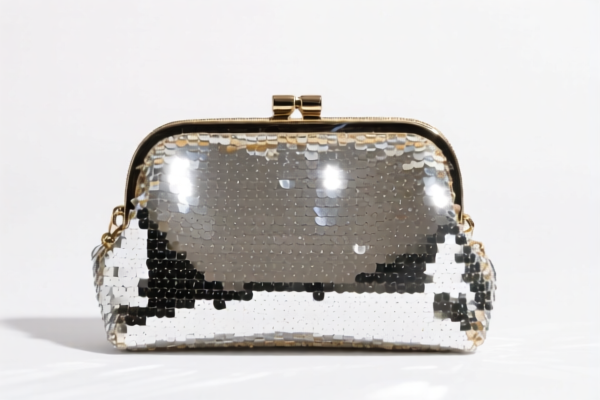
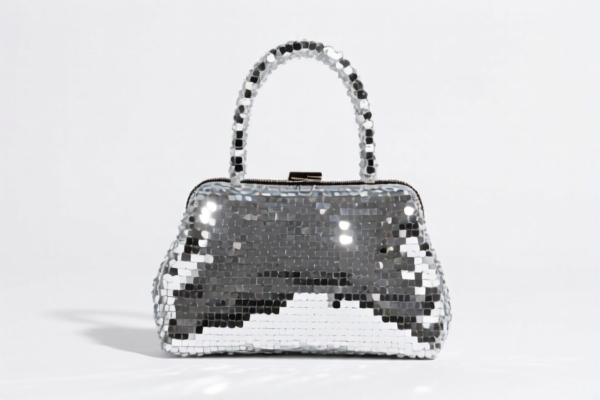
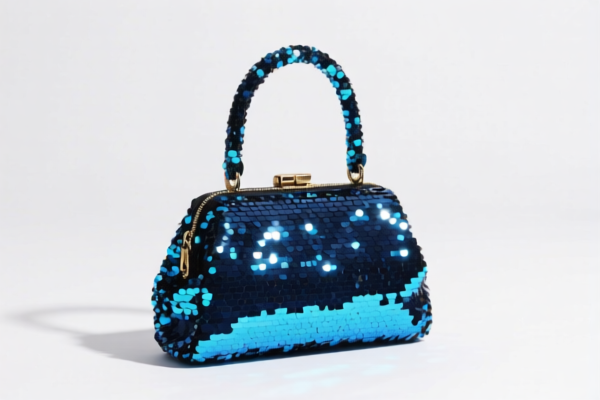
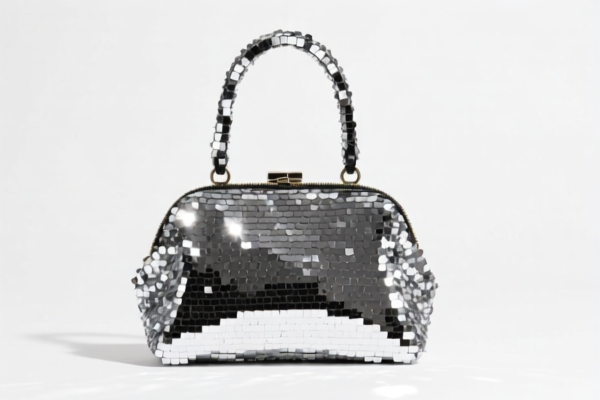
AI Analysis
👜 Sequin Handbag (The Glamorous Statement Accessory)
🌐 HS Code Reference & Customs Clearance Guide | 2026 Tariff Breakdown | Strategic Compliance Strategy
📌 I. Product Definition & Classification: Do You Really Know a "Sequin Handbag"?
A "Sequin Handbag" is a luxury or fashion accessory designed to carry personal items, distinguished by its surface embellished with sequins (small, shiny disks). In international trade, classification is critical because material composition and primary function dictate the duty rate.
The core debate lies in whether the item is viewed as: 1. A Bag/Vessel (Headed under Chapter 42: Articles of Apparel or Accessories of Leather; Travel Goods, Handbags...); 2. A Plastic/Textile Accessory (Headed under Chapter 39: Plastics or Chapter 63: Other Made-up Textile Articles).
⚠️ Critical Distinction:
- If the bag is made primarily of textiles or man-made fibers (common for fabric-based sequin bags) → Likely Chapter 42.
- If the bag is essentially a plastic container or the sequins are integrated into a plastic sheet → Likely Chapter 39.
- If it is a decorative textile item not primarily functioning as a rigid container → Likely Chapter 63.
📦 II. HS Code Classification Details (Based on Provided Data)
Based on the specific analysis provided in your data, here are the four possible classifications with their corresponding tax implications.
| HS Code | Summary & Logic | Total Tax Rate | Tax Breakdown |
|---|---|---|---|
| 4202.92.08.07 | Classification: Food/Bev Bag Shape. Logic: Morphology matches food/drink bags; material inferred as textile/synthetic fiber. |
42.0% | Base: 7.0% Section 301: 25.0% Section 122: 10.0% |
| 3926.90.35.00 | Classification: Other Plastic Articles. Logic: Name includes "sequins"; contains plastic material, matching "other plastic products" and "sequin articles." |
24.0% | Base: 6.5% Section 301: 7.5% Section 122: 10.0% |
| 6307.90.98.91 | Classification: Made-up Textile Articles. Logic: Classified as a "manufactured product"; sequins are typically applied to textile/synthetic surfaces, no material conflict. |
24.5% | Base: 7.0% Section 301: 7.5% Section 122: 10.0% |
| 3926.90.33.00 | Classification: Sequin Articles/Plastics. Logic: Contains plastic sequin decorations; morphology fits "sequin and other articles made thereof"; non-specific handbag plastic item. |
16.5% | Base: 6.5% Section 301: 0.0% Section 122: 10.0% |
| 4202.92.08.09 | Classification: Lunch Bag / Other. Logic: Classified as "lunch bag"; sequin items are typically textile/synthetic; fits "other" category with no material conflict. |
42.0% | Base: 7.0% Section 301: 25.0% Section 122: 10.0% |
🔍 Key Observation:
The most competitive tariff is3926.90.33.00at 16.5%, which avoids the heavy Section 301 (25%) tariff by classifying under a different plastic subheading. However, this requires proving the item is primarily a "plastic article" rather than a "handbag."
The highest tariffs (42.0%) apply when classified strictly as a textile/plastic bag under Chapter 42.
💰 III. 2026 Tariff Rate Detailed Analysis
✅ Applicable Country: United States (US)
✅ Origin: China (CN)
✅ Effective Date: Post-November 2025 (Based on 122 Clause & Section 301 data)
🎯 1. The "High Cost" Route: Chapter 42 (Bags/Vessels)
HS Codes: 4202.92.08.07 / 4202.92.08.09
Total Tax: 42.0%
| Component | Rate | Description |
|---|---|---|
| Base Duty | 7.0% | Standard MFN rate for other articles of apparel/accessories. |
| Section 301 | 25.0% | Additional duty on Chinese imports under Trade Act of 1974, Section 301. |
| Section 122 | 10.0% | Additional duty under Section 122 of the Trade Act of 1974 (often related to specific trade remedies). |
| Total | 42.0% | Extremely High. Likely to deter direct import unless luxury margin allows. |
📌 Note: These codes are aggressive. Customs may reject them if the product is clearly a "handbag" and not a "food/beverage bag," potentially leading to reclassification and penalties.
🎯 2. The "Balanced" Route: Chapter 39 & 63 (Plastics/Textiles)
HS Codes: 3926.90.35.00 / 6307.90.98.91
Total Tax: 24.0% - 24.5%
| Component | Rate (3926.90.35.00) | Rate (6307.90.98.91) |
|---|---|---|
| Base Duty | 6.5% | 7.0% |
| Section 301 | 7.5% | 7.5% |
| Section 122 | 10.0% | 10.0% |
| Total | 24.0% | 24.5% |
📌 Note: This is a moderate-cost strategy. It requires proving the product is either a plastic article (39) or a generic made-up textile article (63), rather than a specific "handbag."
🎯 3. The "Optimal" Route: Plastic Sequin Articles
HS Code: 3926.90.33.00
Total Tax: 16.5%
| Component | Rate | Description |
|---|---|---|
| Base Duty | 6.5% | Standard rate for other plastic articles. |
| Section 301 | 0.0% | Exempt from the 25% Section 301 tariff. |
| Section 122 | 10.0% | Additional duty under Section 122. |
| Total | 16.5% | Lowest Cost. Significant savings of ~25.5% compared to Chapter 42. |
📌 Crucial Warning: To use this code, you must demonstrate that the item is classified as a "sequin article" or "other plastic article" rather than a handbag. If Customs determines it is primarily a handbag, they will reclassify it to Chapter 42, leading to back taxes and penalties.
🛠️ IV. Customs Clearance Practical Advice
✅ 1. Documentation Checklist (Non-Negotiable)
| Document | Requirement | Explanation |
|---|---|---|
| Product Photos | ✔️ Must Have | Clear images showing material texture (plastic vs. textile), structure, and sequin attachment method. |
| Material Composition | ✔️ Must Have | Detailed breakdown: % of plastic, % of textile, type of glue/thread. |
| Function Declaration | ✔️ Critical | Explicitly state if it is a "decoration," "sequin panel," or "handbag." For 3926.90.33.00, emphasize "Sequin Article." |
| Commercial Invoice | ✔️ Must Have | Accurate description matching the HS code logic. |
| Packing List | ✔️ Must Have | Weight and dimensions. |
| Pre-Ruling | 🌟 Recommended | Apply for an Advance Ruling from CBP to confirm 3926.90.33.00 eligibility. |
✅ 2. Strategic Classification Tips
🔥 Golden Rule: "Material Defines Code, Function Defines Risk."
| Strategy | Action | Outcome |
|---|---|---|
Target 3926.90.33.00 |
Describe as "Plastic Sequin Articles" or "Decorative Plastic Items." | Saves ~25% in duties. High risk of challenge if bag structure is obvious. |
Target 6307.90.98.91 |
Describe as "Other Made-up Textile Articles." | Moderate cost (24.5%). Good middle ground if textile dominant. |
Avoid 4202.92.08.xx |
Do NOT declare as "Handbag" if seeking low taxes. | Triggers 42% tax. Only use if product is undeniably a bag and margin allows. |
✅ 3. Special Scenarios
| Scenario | Recommendation |
|---|---|
| Mixed Material Bag | If >50% plastic by weight/value, push for Chapter 39. If >50% textile, push for Chapter 63 or 42. |
| OEM Custom Design | Provide design specs showing sequins are integral to the plastic sheet, not just attached to a bag. |
| Small Quantity Samples | Still subject to full duties. De Minimis (Section 321) may not apply if value > $800 or if restricted. |
| Disputed Classification | If CBP challenges 3926.90.33.00, be prepared to pay the difference + interest. Always file a protest within 180 days. |
🌍 V. Global Market Comparison (Contextual)
| Market | Preferred HS Code | Est. Duty | Notes |
|---|---|---|---|
| 🇺🇸 USA | 3926.90.33.00 |
16.5% | Best Option if structure allows. Avoid Chapter 42 due to 25% Section 301. |
| 🇨🇳 China | 4202.92.00.00 |
~10% | Standard import duty for bags. Lower non-tariff barriers. |
| 🇪🇺 EU | 4202.92.00 |
4% - 12% | Depends on material. No Section 301/122 equivalent. |
| 🇬🇧 UK | 4202.92.00 |
12% | Post-Brexit tariffs. |
📌 Conclusion:
For the US Market, the goal is to avoid Chapter 42. The optimal strategy is to argue for3926.90.33.00(16.5%) by framing the item as a plastic sequin article. If rejected,6307.90.98.91(24.5%) is the next best alternative. Do not voluntarily classify as a handbag (4202...) unless you have no choice, as you will pay 42%.
📌 VI. Common Errors & Pitfalls (Lessons Learned)
❌ Error 1: Calling it a "Handbag" in the description while using 3926.90.33.00.
👉 Consequence: CBP will reclassify to Chapter 42 → Back taxes of 25.5% + Penalties.
❌ Error 2: Ignoring Section 122.
👉 Consequence: Even if Section 301 is 0%, Section 122 (10%) still applies. Total cost is not just Base Duty.
❌ Error 3: Assuming all sequin items are textiles.
👉 Consequence: Many "sequins" are actually plastic/PET. Misidentifying material leads to wrong HS Code.
✅ Correct Approach:
"Plastic Sequin Decorative Panels" or "Artificial Sequin Articles (Plastic)" for
3926.90.33.00.
Ensure product structure does not clearly resemble a functional bag with straps/lid unless using Chapter 42.
🎯 VII. Conclusion: Precision Saves Money!
🎯 Key Takeaway:
🔹 "Sequin" ≠ "Bag" in customs language.
🔹 "Plastic" beats "Textile" in duty savings under Section 301.
🔹 16.5% vs 42.0%: A 25.5% difference is massive. Fight for the right classification!
📌 Pro Tip:
Apply for a CBP Advance Ruling before your first shipment. Provide detailed photos and material specs. Get it in writing. This protects you from audits and back taxes.
📣 Action Item:
📞 Consult a licensed customs broker to review your product's material composition and structural design.
🚀 Optimize your HS Code to3926.90.33.00where possible.
✨ Accurate Classification is the First Step to Profitability!
💼 Don't let avoidable duties erase your margin!
Customer Reviews
About HS Code Classification
The Harmonized System (HS) is an internationally standardized nomenclature developed by the World Customs Organization (WCO) to classify traded products. Over 200 countries use the HS system as the basis for customs tariffs, trade statistics, and import/export regulations.
Each HS code follows a hierarchical structure:
- Chapter (2 digits) — Broad category of goods (e.g., Chapter 84: Machinery and Mechanical Appliances)
- Heading (4 digits) — More specific grouping within the chapter
- Subheading (6 digits) — Internationally standardized breakdown, used by all WCO member countries
- National subdivisions (8-10 digits) — Country-specific extensions for further classification, such as US HTSUS 10-digit codes
Correct HS code classification is essential for smooth customs clearance, accurate duty payment, and compliance with trade regulations. Misclassification can lead to customs delays, overpayment of duties, or penalties.
When importing from CN to US, the applicable tariff rates may include:
- Most-Favored-Nation (MFN) rate — The standard duty rate applied to WTO members
- General rate — Applied to countries without trade agreements
- Trade remedy duties — Additional tariffs such as Section 301 (anti-dumping), Section 232 (national security), or countervailing duties
The information provided on this page is for reference purposes only. For official classification, please consult with your local customs authority or a licensed customs broker.