Sequin Memo Pad
CN → US| HS Code | Tariff Rate | Origin | Destination | Doc |
|---|---|---|---|---|
| 3926908800 | 0.0% | CN | US | Official Doc |
| 3926904800 | 13.4% | CN | US | Official Doc |
| 4820102060 | 35.0% | CN | US | Official Doc |
| 4820900000 | 35.0% | CN | US | Official Doc |
Product Images
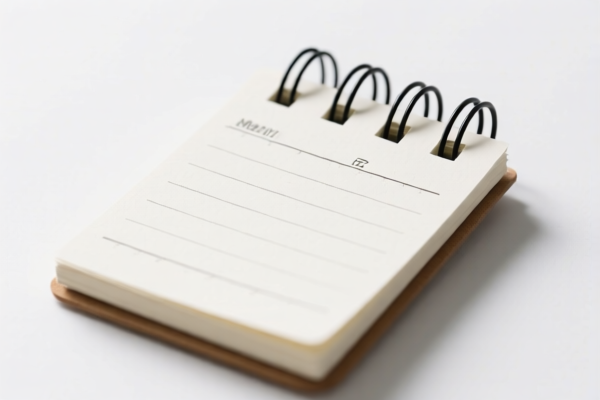
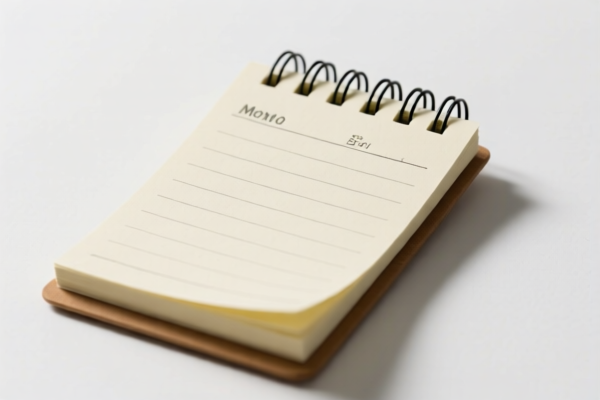
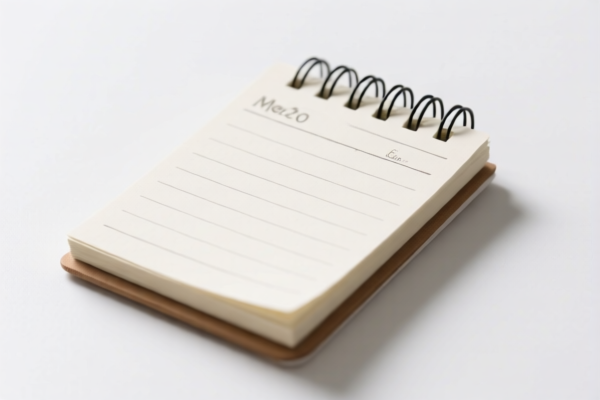
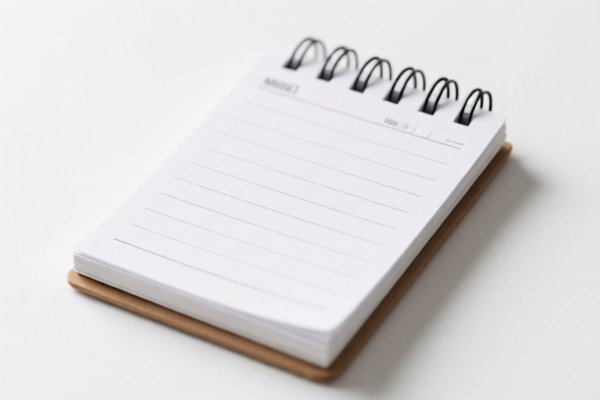
AI Analysis
✨ Sequin Memo Pad (Glitter Note Pads)
🌐 HS Code Reference & Customs Clearance Guide | 2026 Latest Tariff Analysis | Professional-Level Customs Strategy
📌 1. Product Definition & Classification: What Exactly is a "Sequin Memo Pad"?
A Sequin Memo Pad (also known as a Glitter Memo Pad, Sequined Notebook, or Decorative Stationery) is a paper-based stationary item featuring adhesive-backed sequins or glittered surfaces, typically used for taking quick notes, reminders, or decorative journaling.
In international trade, its classification depends heavily on its structure and primary material: - Paper-Based: The core is paper/paperboard, covered or printed with sequins/glitter. → Classify under Chapter 48. - Plastic-Based: The core or the entire sheet is made of plastic films (e.g., PVC/PE sheets with sequin attachments). → Classify under Chapter 39.
⚠️ Key Distinction Point:
- If the base is paper/paperboard (even if covered in sequins), it belongs to Heading 4802/4820.
- If the base is plastic (e.g., a plastic sleeve or sheet with sequins attached), it belongs to Heading 3926.
- Do NOT classify as "Toys" or "Art Supplies" unless specifically marketed as such, but standard memo pads fall under Stationery.
📦 2. HS Code Classification Details (2026 Latest Tariff Authority Comparison)
Based on your provided data (<DATA>), here are the precise HS Codes for Sequin Memo Pads:
| HS Code | Product Description | Applicable Scenario | Material Core |
|---|---|---|---|
4820.10.20.60 |
Diaries, notebooks, and address books, bound; memorandum pads, letter pads, and similar articles | Standard Sequin Memo Pads (Paper base, bound or loose) | ✅ Paper/Paperboard |
4820.90.00.00 |
Other articles of stationery of paper or paperboard (e.g., loose-leaf pads, unbound sequin sheets) | Loose-Leaf Sequin Pads, single sheets, or non-bound memo blocks | ✅ Paper/Paperboard |
3926.90.88.00 |
Other articles of plastics: Flexible plastic document binders with tabs, rolled or flat | Plastic-Based Memo Pads (e.g., plastic cover with sequins, or plastic sheet memo pad) | ✅ Plastic |
3926.90.48.00 |
Other articles of plastics: Photo albums | Not Applicable (Sequin Memo Pads are NOT photo albums) | ✅ Plastic |
🔍 Critical Reminder:
- Most "Sequin Memo Pads" are Paper-Based → Use4820.10.20.60(Bound) or4820.90.00.00(Loose/Other).
- Plastic ones are rare but possible if the core is plastic film. Use3926.90.88.00.
- Never use3926.90.48.00(Photo Albums) unless you are actually shipping photo albums. This is a common misclassification error.
💰 3. 2026 Latest Tariff Rate Breakdown (Including Additional Taxes & Policy Surcharges)
✅ Applicable Country: United States (US)
✅ Origin: China (CN)
✅ Effective Date: 2025-11-10 (Includes subsequent imports)
🎯 1. 4820.10.20.60 —— Sequin Memo Pads (Paper-Based, Bound/Memo Pads)
| Item | Content |
|---|---|
| Base Tariff | 0.0% (ad valorem) |
| Additional Tax (Section 301) | +25.0% |
| Total Tax Rate | 25.0% |
| Tax Calculation | CIF Value × 25% |
| De Minimis Eligibility | ❌ No (Not eligible for de minimis exemption) |
| Legal Basis Path | USITC:4820.10.20.60 → Footnote: 9903.88.01 (Section 301) |
📌 Explanation:
- Base Rate 0%: Paper stationery has no base tariff.
- 25% Surcharge: Applies to Chinese-origin goods under Section 301 tariffs.
- Total Cost Impact: For every $1,000 of goods, expect $250 in taxes.
- No IEEPA 10%: This specific HS code does not appear to trigger the additional 10% IEEPA surcharge in the provided data (only 25% is listed). Always verify if IEEPA applies to your specific origin certificate.
🎯 2. 4820.90.00.00 —— Other Paper Stationery (Loose Sequin Pads)
| Item | Content |
|---|---|
| Base Tariff | 0.0% |
| Additional Tax (Section 301) | +25.0% |
| Total Tax Rate | 25.0% |
| Tax Calculation | CIF Value × 25% |
| De Minimis Eligibility | ❌ No |
| Legal Basis Path | USITC:4820.90.00.00 → Footnote: 9903.88.01 |
📌 Note:
- Same tariff rate as bound pads.
- Applies to unbound memo blocks, loose sheets, or non-notebook stationery items.
🎯 3. 3926.90.88.00 —— Plastic-Based Memo Pads
| Item | Content |
|---|---|
| Base Tariff | N/A (Error in retrieval) |
| Additional Tax | Error (Tax info not available in provided data) |
| Total Tax Rate | Error |
| Recommendation | ⚠️ Do Not Use Without Verification |
📌 Warning:
- Tax information for3926.90.88.00is missing/error in the provided dataset.
- Plastic stationery often faces different tariff rates (potentially higher or lower).
- Action Required: Contact a customs broker to verify the current Section 301 status for plastic stationery items. It may or may not be subject to the 25% surcharge.
🚫 4. 3926.90.48.00 —— Photo Albums (Plastic)
| Item | Content |
|---|---|
| Base Tariff | 3.4% |
| Additional Tax | 0.0% |
| Total Tax Rate | 3.4% |
| Applicability | ❌ NOT APPLICABLE to Sequin Memo Pads |
📌 Important:
- This code is for Photo Albums.
- Misclassifying memo pads as photo albums to save on taxes is high-risk and may lead to audits, penalties, and seizure.
🛠️ 4. Customs Clearance Practical Advice (Avoid Pitfalls)
✅ 1. Documentation Checklist (Mandatory)
| Document | Required | Description |
|---|---|---|
| ✅ Product Specifications | ✔️ | Include materials (paper vs. plastic), dimensions, binding type (bound vs. loose). |
| ✅ Product Photos | ✔️ | Clear images of the sequin surface, binding, and interior pages. |
| ✅ Commercial Invoice | ✔️ | Clearly state "Sequin Memo Pad" or "Glitter Note Pad," not vague terms like "Gift Item." |
| ✅ Packing List | ✔️ | Detail weight, quantity, and packaging type. |
| ✅ Material Declaration | ✔️ | Specify if the core is paper (HS 48) or plastic (HS 39). This is critical for correct classification. |
✅ 2. Declaration Tips (Key Rules)
🔥 "Know Your Core: Paper = 48, Plastic = 39. Don't Guess!"
| Scenario | Correct Declaration | Incorrect Practice |
|---|---|---|
| Paper Memo Pad with Sequins | HS Code: 4820.10.20.60 |
Misclassifying as Plastic (HS 39) |
| Loose Sequin Sheets | HS Code: 4820.90.00.00 |
Calling it a "Diary" when it's loose |
| Plastic Cover Memo Pad | HS Code: 3926.90.88.00 (Verify Tax!) |
Using Paper HS Code to avoid plastic tariffs |
| Photo Album with Sequins | HS Code: 3926.90.48.00 |
Calling it a "Memo Pad" to avoid album tariffs |
✅ 3. Special Considerations
| Situation | Handling Advice |
|---|---|
| Mixed Materials | If the pad has a plastic cover but paper pages, consult a broker. Often, the core function (writing) determines classification under Chapter 48, but the cover material may affect it. |
| OEM Custom Orders | Provide design proofs to prove the item is a "memo pad" and not a "toy" or "art supply." |
| Low-Value Shipments | Even if under $800 (de minimis), US Customs may still require proper HS classification for Section 301 goods. Do not assume exemption. |
🌍 5. Global Market Comparison (2026 Latest)
| Country/Region | Recommended HS Code | Tariff Rate (China Origin) | Notes |
|---|---|---|---|
| 🇺🇸 USA | 4820.10.20.60 |
25.0% | High due to Section 301. |
| 🇨🇳 China | 4820.10.20.60 |
0–5% (Import) | No additional surcharges. |
| 🇪🇺 EU | 4820.10.20.00 |
0–6.5% | No Section 301 equivalent. |
| 🇬🇧 UK | 4820.10.20.00 |
0–6.5% | Post-Brexit tariffs apply. |
| 🇦🇺 Australia | 4820.10.20.00 |
5% | No major surcharges. |
📌 Conclusion:
- USA is the most expensive market for Chinese-origin paper stationery due to the 25% Section 301 tariff.
- EU/UK/AU have significantly lower tariffs (0–6.5%), making them more profitable for Chinese exports.
📌 6. Common Mistakes & Pitfalls (Lessons Learned)
❌ Mistake 1: Classifying Sequin Memo Pads as Plastic (3926) when they are Paper (4820).
👉 Consequence: May face higher base tariffs or incorrect regulatory requirements (e.g., plastic recycling fees).
❌ Mistake 2: Using 3926.90.48.00 (Photo Albums) for Memo Pads to save tax.
👉 Consequence: Customs audit, penalty, and potential seizure. Strictly prohibited.
❌ Mistake 3: Ignoring the 25% Surcharge for US-bound paper goods.
👉 Consequence: Underpayment of duties, leading to debt recovery and delays.
✅ Correct Practice:
"Sequin Memo Pad, Paper Base, Bound, 100 Sheets, Model XYZ, Origin: China"
🎯 7. Conclusion: Professional Classification, Efficient Clearance, Cost Optimization!
🎯 Remember the Rule:
🔹 "Paper Core = HS 48 (25% Tax in US)"
🔹 "Plastic Core = HS 39 (Check Error Status, May Be Different)"
🔹 "Never Call a Memo Pad a Photo Album!"📌 Tip:
If you are shipping Plastic Memo Pads, verify the tax status for3926.90.88.00with a customs broker, as the provided data shows an error. It may or may not be subject to the 25% surcharge.
📣 Immediate Action:
📞 Contact a Customs Broker for plastic-based items.
📄 Ensure Accurate Material Declaration (Paper vs. Plastic).
💰 Calculate 25% Tariff for US-bound paper goods.
✨ Professional Clearance Starts with Accurate Classification!
💼 Every Tax Dollar Counted Precisely!
Customer Reviews
About HS Code Classification
The Harmonized System (HS) is an internationally standardized nomenclature developed by the World Customs Organization (WCO) to classify traded products. Over 200 countries use the HS system as the basis for customs tariffs, trade statistics, and import/export regulations.
Each HS code follows a hierarchical structure:
- Chapter (2 digits) — Broad category of goods (e.g., Chapter 84: Machinery and Mechanical Appliances)
- Heading (4 digits) — More specific grouping within the chapter
- Subheading (6 digits) — Internationally standardized breakdown, used by all WCO member countries
- National subdivisions (8-10 digits) — Country-specific extensions for further classification, such as US HTSUS 10-digit codes
Correct HS code classification is essential for smooth customs clearance, accurate duty payment, and compliance with trade regulations. Misclassification can lead to customs delays, overpayment of duties, or penalties.
When importing from CN to US, the applicable tariff rates may include:
- Most-Favored-Nation (MFN) rate — The standard duty rate applied to WTO members
- General rate — Applied to countries without trade agreements
- Trade remedy duties — Additional tariffs such as Section 301 (anti-dumping), Section 232 (national security), or countervailing duties
The information provided on this page is for reference purposes only. For official classification, please consult with your local customs authority or a licensed customs broker.