Sequin Paper
CN → US| HS Code | Tariff Rate | Origin | Destination | Doc |
|---|---|---|---|---|
| 3921905010 | 39.8% | CN | US | Official Doc |
| 3921904010 | 39.2% | CN | US | Official Doc |
Product Images
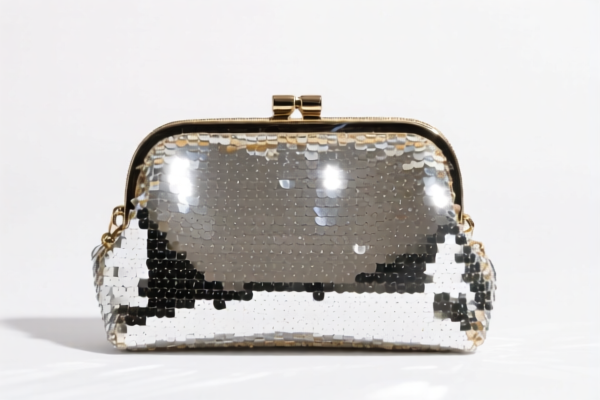
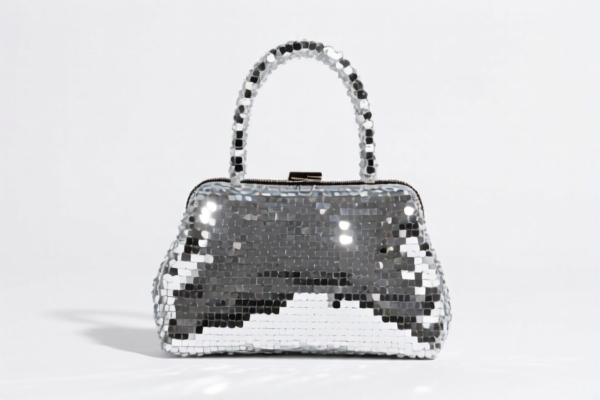
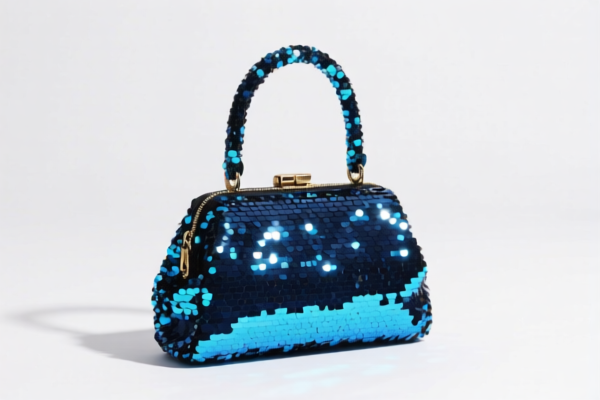
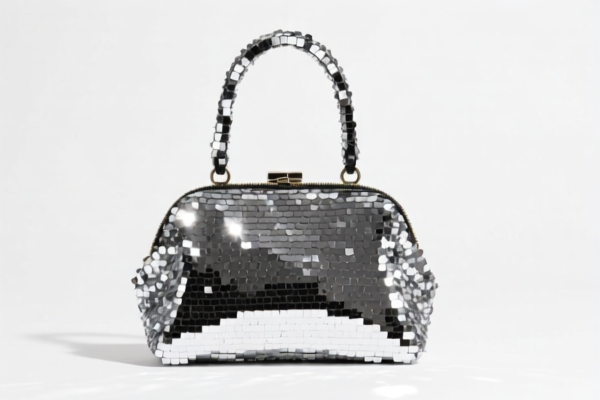
AI Analysis
✨ Sequin Paper (Decorative Laminates & Flexible Reinforced Sheets)
🌐 HS Code Reference & Customs Clearance Guide | 2026 Latest Tariff Analysis | Professional Clearance Strategy
📌 I. Product Definition & Classification: Do You Really Understand "Sequin Paper"?
Sequin Paper (often referred to as decorative laminates or paper-reinforced plastic sheets) is a composite material widely used in furniture manufacturing, interior decoration, and luxury packaging. It typically consists of a plastic matrix (usually melamine, PVC, or PET) reinforced with paper layers and coated with decorative sequins, foils, or patterns.
In international trade, it is NOT classified as simple "paper" or "textile." Instead, it falls under Chapter 39: Plastics and articles thereof. The classification depends heavily on its physical structure and reinforcement:
1. High-Pressure Decorative Laminates (HPL):
- Characterized by high density, extreme durability, and heat resistance.
- Typically used for countertops, cabinetry, and heavy-duty furniture surfaces.
- Structure: Paper impregnated with resin, pressed under high pressure, bonded to a substrate.
2. Flexible Reinforced Plastic Sheets:
- Characterized by flexibility, thinness, and ease of application (e.g., vinyl wraps, decorative films).
- Structure: Plastic film/sheet reinforced with paper or fabric, not subjected to high-pressure curing like HPL.
⚠️ Key Distinction Point:
- If the product is rigid, thick, and made via high-pressure lamination → It is a High Pressure Paper Reinforced Decorative Laminate.
- If the product is flexible, thin, and acts as a film/sheet → It is a Flexible Reinforced with Paper.
- Do NOT classify as plain paper (Chapter 48) or pure plastic film (Chapter 39 without reinforcement) without verifying the composite nature.
📦 II. HS Code Classification Details (2026 Latest Tariff Authoritative Comparison)
Based on the provided data, here are the two primary classifications for Sequin Paper/Decorative Laminates:
| HS Code | Product Description | Applicable Scenario | Reinforcement Type | Physical Property |
|---|---|---|---|---|
3921.90.50.10 |
High pressure paper reinforced decorative laminates | Kitchen countertops, high-end furniture panels, wall cladding | Paper | Rigid |
3921.90.40.10 |
Flexible Reinforced with paper | Decorative wraps, self-adhesive films, thin decorative sheets, packaging overlays | Paper | Flexible |
🔍 Key Reminder:
- Rigidity vs. Flexibility is the deciding factor.
- If you can easily bend the sheet without cracking or breaking under normal handling, it likely falls under3921.90.40.10.
- If it is a solid, rigid board used as a structural surface, it falls under3921.90.50.10.
- Both are sub-categories of HS 3921: "Other plates, sheets, film, foil and strip, of plastics."
💰 III. 2026 Latest Tariff Rate Breakdown (Including Additional Duties)
✅ Applicable Country: United States (US)
✅ Origin: China (CN)
✅ Effective Time: Current 2025/2026 Trade Rules (Section 301 & IEEPA implications)
🎯 1. 3921.90.50.10 —— High Pressure Paper Reinforced Decorative Laminates
| Item | Content |
|---|---|
| Base Tariff Rate | 4.8% (ad valorem) |
| Additional Tariff (Section 301) | +25.0% |
| Total Tax Rate | 29.8% |
| Tax Calculation | CIF Value × 29.8% |
| De Minimis Exemption | ❌ Not Eligible (De Minimis rules generally do not apply to Section 301 goods from China) |
| Legal Basis | USHTS 3921.90.50.10 → Section 301 Footnotes |
📌 Explanation:
- The 4.8% is the standard Most Favored Nation (MFN) rate for plastic plates/sheets.
- The 25.0% is the punitive tariff added under Section 301 of the Trade Act of 1974, targeting specific Chinese manufacturing inputs, including composite plastic products.
- Total Liability: 29.8% of the declared customs value (including cost, insurance, and freight).
🎯 2. 3921.90.40.10 —— Flexible Reinforced with Paper
| Item | Content |
|---|---|
| Base Tariff Rate | 4.2% (ad valorem) |
| Additional Tariff (Section 301) | +25.0% |
| Total Tax Rate | 29.2% |
| Tax Calculation | CIF Value × 29.2% |
| De Minimis Exemption | ❌ Not Eligible |
| Legal Basis | USHTS 3921.90.40.10 → Section 301 Footnotes |
📌 Explanation:
- The 4.2% base rate is slightly lower than the rigid laminate rate, reflecting its classification as a "flexible sheet" rather than a structural plate.
- The 25.0% Section 301 surcharge still applies.
- Total Liability: 29.2% of the declared customs value.
🛠️ IV. Customs Clearance Practical Advice (Pitfall Avoidance Guide)
✅ 1. Essential Documentation Checklist (Non-Negotiable)
| Document | Required? | Purpose |
|---|---|---|
| ✅ Product Specification Sheet | ✔️ | Must specify: Material composition (Plastic % vs. Paper %), Thickness, Flexibility test results, Resin type (Melamine/PVC/PET). |
| ✅ Commercial Invoice | ✔️ | Must clearly state: "Decorative Laminate" or "Reinforced Plastic Sheet," NOT just "Paper" or "Sequin Paper." |
| ✅ Packing List | ✔️ | List net weight and gross weight. Ensure weight matches the declared material density. |
| ✅ Test Report / Lab Data | ✔️ | Provide data proving flexibility (for 3921.90.40.10) or hardness/density (for 3921.90.50.10). This is critical for correct classification. |
| ✅ Certificate of Origin (CO) | ✔️ | Required to prove origin is China (to apply the correct 301 tariffs). |
| ✅ Photos of Product | ✔️ | Clear images showing the cross-section (if possible) to prove paper reinforcement within plastic. |
✅ 2. Declaration Tips (Key Mnemonics)
🔥 “Flexibility Defines the Code, Plastic Defines the Chapter!”
| Scenario | Correct HS Code | Common Mistake | Consequence |
|---|---|---|---|
| Rigid Countertop Laminate | 3921.90.50.10 |
Misclassifying as plain wood or paper | 29.8% vs. lower rates for wood (but wrong code leads to penalties) |
| Flexible Decorative Vinyl Wrap | 3921.90.40.10 |
Misclassifying as textiles or pure plastic film | 29.2% vs. higher rates for pure plastic if misidentified |
| Pure Paper with Sequins | N/A (Not in DATA) | If truly just paper (no plastic matrix), it would be Chapter 48, but "Sequin Paper" usually implies a plastic coating | If declared as paper when it’s plastic-composite → Customs Rejection & Fraud Penalty |
📌 Critical Note:
- Even though it contains paper, the plastic matrix determines the chapter (Chapter 39).
- Do NOT declare as "Paper" (Chapter 48) or "Textiles" (Chapter 50-63). This is a classic customs error that leads to delays.
✅ 3. Special Situation Handling
| Situation | Handling Advice |
|---|---|
| OEM Custom Patterns | Provide the customer’s design file or approval email to prove it’s a commercial decorative product, not a sample. |
| Mixed Containers (Laminate + Other Goods) | Ensure the invoice clearly separates the value of 3921.90.50.10 vs. other items. Do not lump into a generic "Plastic Goods" category. |
| Small Samples via Courier | Beware! De Minimis (Section 321) exemptions usually do not apply to goods subject to Section 301 tariffs from China. Expect duty collection even for small packages if declared correctly. |
🌍 V. Global Market Clearance Comparison (2026 Latest)
| Country/Region | Recommended HS Code | Base Tariff | Additional Tariff (China) | Total Est. Rate | Certification Requirements |
|---|---|---|---|---|---|
| 🇺🇸 USA | 3921.90.50.10 / 3921.90.40.10 |
4.8% / 4.2% | +25.0% | 29.8% / 29.2% | None specific for plastic, but must comply with labeling |
| 🇪🇺 EU | 3921.90 | 6.5% | None (unless trade war) | ~6.5% | REACH (Chemical compliance), CE if applicable |
| 🇨🇳 China | 3921.90 | 6.5% | None | ~6.5% | CCC (if electrical, not applicable here) |
| 🇯🇵 Japan | 3921.90 | 6.0% | None | ~6.0% | JLAC (if applicable) |
📌 Conclusion:
- The USA market is the most expensive due to the flat 25% Section 301 tariff on top of the base rate.
- Total landed cost in the US will be nearly 30% of the product value in taxes alone.
- EU, Japan, and China do not currently impose these specific punitive tariffs on this HS code.
📌 VI. Common Errors & Pitfall Guide (Lessons Learned)
❌ Mistake 1: Declaring as "Decorative Paper" (HS 4805/4823)
👉 Consequence: Customs will reclassify as Plastic (Chapter 39) because of the plastic matrix, leading to underpayment penalties and delayed clearance.
❌ Mistake 2: Failing to distinguish between Rigid and Flexible
👉 Consequence: If you declare flexible sheets as rigid laminates, you may pay a higher base rate (4.8% vs 4.2%) unnecessarily, though the 301 tariff is the same. Conversely, misclassifying rigid as flexible can lead to compliance flags.
❌ Mistake 3: Ignoring the "Reinforced" Aspect
👉 Consequence: If declared as "Unreinforced Plastic Film," customs may suspect fraud if the weight/density doesn't match pure plastic. The paper reinforcement must be explicitly stated.
✅ Correct Declaration Example:
"Plastic Decorative Laminate, Rigid, Paper-Reinforced, Melamine Impregnated, for Furniture Use, Model SQ-2026, Origin China"
OR
"Flexible Plastic Sheet, Reinforced with Paper, Decorative Sequin Coating, for Wrapping, Model FL-2026, Origin China"
🎯 VII. Conclusion: Professional Classification, Cost Optimization!
🎯 Remember the Mnemonic:
🔹 "Plastic Matrix, Chapter 39; Paper Inside, Reinforced Class."
🔹 "Rigid goes to .50, Flexible goes to .40; 25% Tax is a Must."
🔹 "Don't call it Paper, or Customs will catch you later!"
📌 Pro Tip:
- Pre-Ruling: If you are importing large volumes, consider applying for an Advance Ruling from U.S. Customs and Border Protection (CBP) to confirm the classification of 3921.90.50.10 vs 3921.90.40.10. This protects you from retroactive duty adjustments.
- Supply Chain Strategy: Given the 29.8% effective tariff rate in the US, consider value-addition in a third country (e.g., cutting/shaping in Vietnam or Mexico) if feasible, though rules of origin must be carefully checked to avoid circumvention charges.
📣 Immediate Action:
📞 Contact a licensed Customs Broker + Provide Product Photos & Specs + Verify Flexibility/Rigidity
🚀 Ensure accurate HS Code selection to avoid 30%+ tax shocks and customs seizures!
✨ Professional Clearance Starts with Precise Classification!
💼 Every Percentage Point of Tax Affects Your Bottom Line!
Customer Reviews
About HS Code Classification
The Harmonized System (HS) is an internationally standardized nomenclature developed by the World Customs Organization (WCO) to classify traded products. Over 200 countries use the HS system as the basis for customs tariffs, trade statistics, and import/export regulations.
Each HS code follows a hierarchical structure:
- Chapter (2 digits) — Broad category of goods (e.g., Chapter 84: Machinery and Mechanical Appliances)
- Heading (4 digits) — More specific grouping within the chapter
- Subheading (6 digits) — Internationally standardized breakdown, used by all WCO member countries
- National subdivisions (8-10 digits) — Country-specific extensions for further classification, such as US HTSUS 10-digit codes
Correct HS code classification is essential for smooth customs clearance, accurate duty payment, and compliance with trade regulations. Misclassification can lead to customs delays, overpayment of duties, or penalties.
When importing from CN to US, the applicable tariff rates may include:
- Most-Favored-Nation (MFN) rate — The standard duty rate applied to WTO members
- General rate — Applied to countries without trade agreements
- Trade remedy duties — Additional tariffs such as Section 301 (anti-dumping), Section 232 (national security), or countervailing duties
The information provided on this page is for reference purposes only. For official classification, please consult with your local customs authority or a licensed customs broker.