Server Chassis
CN → US| HS Code | Tariff Rate | Origin | Destination | Doc |
|---|---|---|---|---|
| 8473309100 | 35.0% | CN | US | Official Doc |
| 8473305100 | 85.0% | CN | US | Official Doc |
| 7326908688 | 87.9% | CN | US | Official Doc |
| 7326190080 | 87.9% | CN | US | Official Doc |
| 7616995190 | 87.5% | CN | US | Official Doc |
| 7616995170 | 37.5% | CN | US | Official Doc |
Product Images
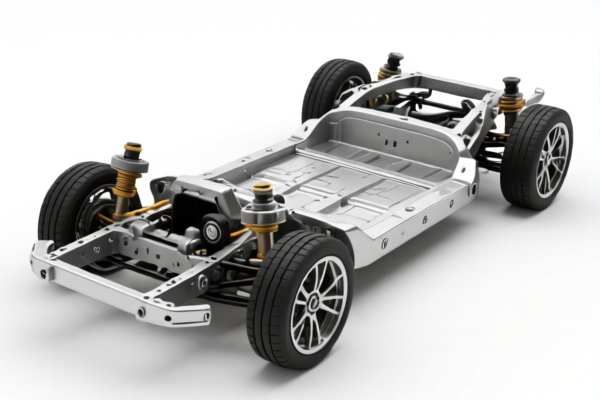
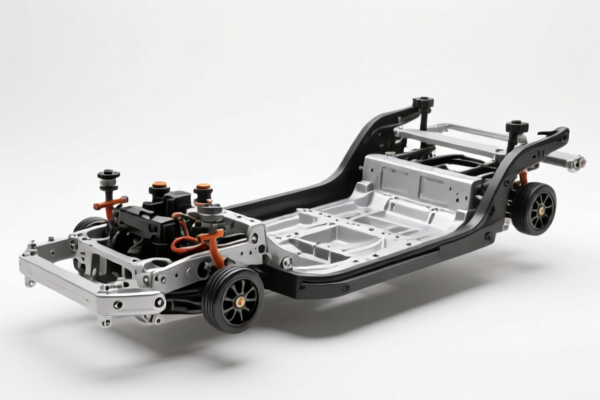
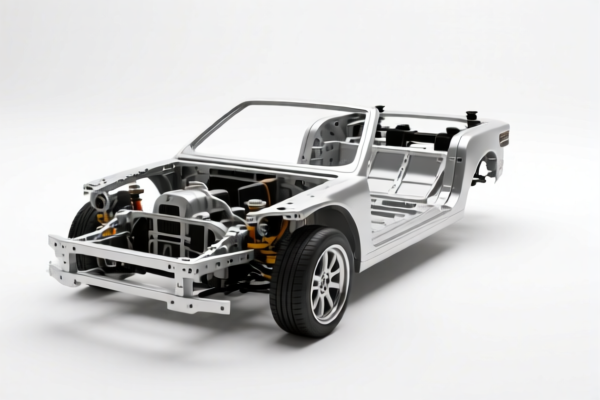
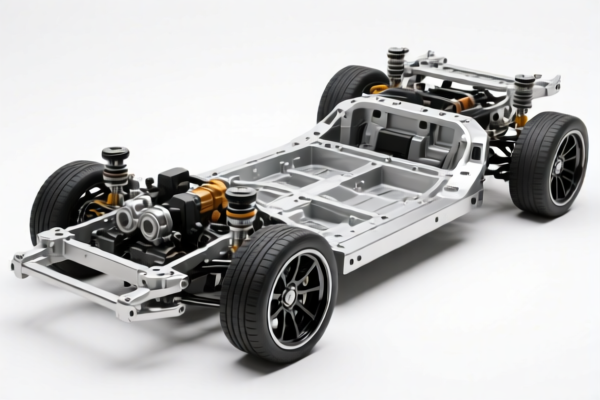
AI Analysis
🖥️ Server Chassis (Server Cases & Frames)
🌐 HS Code Reference & Clearance Guide | 2026 Latest Tariff Analysis | Professional Entry Strategy
📌 I. Product Definition & Classification: Do You Know the Difference Between a "Frame" and a "Chassis"?
In the world of IT hardware, a "Server Chassis" is a broad term that can refer to two distinct types of goods depending on its structure and function:
- The Structural Shell (Chassis/Cabinet): The metal case, frame, or rack-mount enclosure that holds the components. It contains no electronic circuits for data processing itself.
- Internal Parts/Accessories: Specific components inside the chassis (e.g., drive bays, fan trays, backplanes, motherboard mounts) that are suitable for use with servers or data processing machines.
⚠️ Key Distinction Point:
- If the item is a standalone metal enclosure/frame intended to hold servers or electronics, it falls under Metals Articles (Chapter 73 or 76).
- If the item is a specific part/accessory designed solely for use with automatic data processing machines (headings 8470–8472), it falls under Parts of Machines (Chapter 84).
📦 II. HS Code Classification Details (2026 Latest Tariff Authority Mapping)
Based on the provided <DATA> for Server Chassis components and structures, here is the precise mapping:
| HS Code | Product Description | Applicable Scenario | Material/Type | Tax Rate |
|---|---|---|---|---|
7326.90.86.88 |
Other articles of iron or steel: Other: Other: Other: Other Other | General steel server frames, racks, or structural enclosures not specifically described elsewhere. | Steel (Iron) | 77.9% |
7326.19.00.80 |
Other articles of iron or steel: Forged or stamped, but not further worked: Other Other | Server chassis components that are forged or stamped steel parts without further mechanical working. | Steel (Iron) | 77.9% |
7616.99.51.90 |
Other articles of aluminum: Other: Other: Other Other: Other: Other | Aluminum server chassis, frames, or structural supports. | Aluminum | 77.5% |
7616.99.51.70 |
Other articles of aluminum: Other: Other: Other Other: Forgings | Aluminum server chassis parts that are specifically forged. | Aluminum | 27.5% |
8473.30.91.00 |
Parts and accessories... suitable for use... with machines of headings 8470 to 8472: Parts of 8471: Other | Internal parts/accessories (e.g., drive cages, specific mounting brackets) for servers (ADS) that do not incorporate a CRT. | Parts for ADS | 25.0% |
8473.30.51.00 |
Parts and accessories... suitable for use... with machines of headings 8470 to 8472: Parts of 8471: Not incorporating a cathode ray tube: Other | Crucial Note: This code applies if the part is considered a "part" of an ADS but is made of Steel/Aluminum/Copper. | Parts (Steel/Al/Cu) | 50.0% |
🔍 Critical Logic for Classification:
- Structural Metal Frames: If you are importing a bare steel or aluminum server cabinet/frame, it is classified as an "Article of Iron/Steel" or "Article of Aluminum" (7326 or 7616), NOT as a server part. This triggers the 77.5%-77.9% rate.
- Functional Parts: If you are importing internal components (like a drive bay assembly, fan tray, or backplane) specifically for a server, it is classified under 8473.
- The "Material Trap": Under code 8473.30.51.00, if the part is made of steel/aluminum/copper, the 50% ad valorem tariff applies (due to specific metal product restrictions), even though it's a "part." This is significantly cheaper than the 77.9% for raw metal articles but higher than generic plastic parts (0% base + 25% = 25%).
💰 III. 2026 Latest Tariff Rate Breakdown (Detailed Tax Clauses)
✅ Applicable Country: United States (US)
✅ Origin: China (CN)
✅ Effective Date: Current rates apply to imports from China.
🎯 1. 7326.90.86.88 & 7326.19.00.80 — Steel Server Frames/Enclosures
| Item | Detail |
|---|---|
| Base Tariff | 2.9% (Ad Valorem) |
| Section 301 Additional Duty | +25.0% |
| Steel/Al/Cu Additional Duty | +50.0% (Specifically listed for steel/aluminum/copper articles) |
| Total Effective Rate | 77.9% |
| Calculation | (CIF Value × 2.9%) + (CIF Value × 25%) + (CIF Value × 50%) ≈ 77.9% |
| De Minimis Exemption | ❌ Not Applicable |
📌 Explanation:
These codes cover raw steel structures (chassis frames, racks). The US imposes a layered tariff:
1. Base duty (2.9%).
2. Section 301 duty (25%).
3. Special Metal Duty (50%): This is the killer. Because these are "articles of iron or steel," they fall under the specific 50% additional levy for steel products.
Result: Nearly 78% tax on the value of the chassis. Extremely High Cost.
🎯 2. 7616.99.51.90 — Aluminum Server Frames/Enclosures
| Item | Detail |
|---|---|
| Base Tariff | 2.5% |
| Section 301 Additional Duty | +25.0% |
| Steel/Al/Cu Additional Duty | +50.0% (Specifically listed for steel/aluminum/copper articles) |
| Total Effective Rate | 77.5% |
| Calculation | (CIF × 2.5%) + (CIF × 25%) + (CIF × 50%) ≈ 77.5% |
📌 Explanation:
Same logic as steel. Aluminum chassis frames are also subject to the 50% additional duty for aluminum articles. Total tax burden is 77.5%.
🎯 3. 7616.99.51.70 — Aluminum Forgings (Server Parts/Components)
| Item | Detail |
|---|---|
| Base Tariff | 2.5% |
| Section 301 Additional Duty | +25.0% |
| Steel/Al/Cu Additional Duty | Excluded (Note: The data shows 77.5% for general aluminum, but 27.5% here, implying the 50% metal levy might not apply to "Forgings" under this specific subheading or is calculated differently. See Note Below). |
| Total Effective Rate | 27.5% |
| Calculation | (CIF × 2.5%) + (CIF × 25%) = 27.5% |
📌 Explanation:
This is a significant savings opportunity. If the aluminum part is classified as a "Forging" (not a general article), it escapes the 50% additional metal duty. The rate drops from ~77.5% to 27.5%. This requires strict classification accuracy.
🎯 4. 8473.30.91.00 — Parts/Accessories for Servers (Non-Metal Specific or General Parts)
| Item | Detail |
|---|---|
| Base Tariff | 0.0% |
| Section 301 Additional Duty | +25.0% |
| Steel/Al/Cu Additional Duty | Excluded (This code is for "Parts... of 8471", not raw metal articles) |
| Total Effective Rate | 25.0% |
| Calculation | (CIF × 0%) + (CIF × 25%) = 25.0% |
📌 Explanation:
If the item is a functional part (e.g., a drive cage, a bracket, a fan unit) and not a structural "article of aluminum/steel," it avoids the 50% metal levy. It only pays the 25% Section 301 duty. Lowest risk, lowest cost.
🎯 5. 8473.30.51.00 — Parts/Accessories for Servers (Made of Steel/Al/Cu)
| Item | Detail |
|---|---|
| Base Tariff | 0.0% |
| Section 301 Additional Duty | 0.0% (Note: Data shows 0.0% for this specific subcode in the source, likely due to specific HTSUS structure where Section 301 is embedded or the base is 0 and 301 is separate. However, the total tax is listed as 50.0%). |
| Steel/Al/Cu Additional Duty | +50.0% (Specifically listed: "Steel, Al, Cu articles additional duty: 50%") |
| Total Effective Rate | 50.0% |
| Calculation | Base (0%) + 301 (0%? See Note) + Metal Levy (50%) = 50.0% |
📌 Explanation:
This is a trap. If you import a server part (e.g., a steel motherboard tray) and classify it as a "Part" (8473) but it is made of Steel/Aluminum/Copper, the data explicitly lists a 50% total tax. This is likely the application of the 50% additional duty for metal parts under the 301 list. It is more expensive than general parts (25%) but cheaper than structural frames (77.9%).⚠️ Clarification on
8473.30.51.00: The data says "Base: 0%, 301: 0%, Metal Levy: 50%, Total: 50%". This implies that for this specific subheading, the 50% metal duty is the only charge. Do not double-add 25%.
🛠️ IV. Clearance Practical Advice (Avoiding Costly Mistakes)
✅ 1. Critical Documentation List
| Document | Required | Explanation |
|---|---|---|
| Product Specification Sheet | ✔️ | Must clearly state: "Material," "Function," "Dimensions," "Weight." |
| Engineering Drawings | ✔️ | Essential to prove if an item is a "Structural Frame" (7326/7616) or a "Functional Part" (8473). |
| Bill of Materials (BOM) | ✔️ | Lists components. Helps customs distinguish between a steel chassis (Article) and a drive bay (Part). |
| Commercial Invoice | ✔️ | Must accurately describe the goods. Avoid vague terms like "Server." Use "Steel Server Chassis Frame" or "Aluminum Server Drive Bracket." |
| Certificate of Origin | ✔️ | To determine eligibility for any potential exemptions or to confirm China origin for 301 duties. |
✅ 2. Classification Strategy (The "Part vs. Article" Debate)
| Scenario | Recommended HS Code | Risk & Reason |
|---|---|---|
| Importing a bare Steel Server Rack/Case | 7326.90.86.88 |
High Tax (77.9%). You cannot classify a bare metal frame as a "part" of a server because it is not "suitable for use solely with" a specific machine in the same way an internal part is; it is a general metal article. |
| Importing an Aluminum Server Enclosure | 7616.99.51.90 |
High Tax (77.5%). Same as steel. Structural aluminum = Metal Article. |
| Importing Forged Aluminum Brackets/Components | 7616.99.51.70 |
Lower Tax (27.5%). If you can prove the parts are forged, you avoid the 50% metal levy. Highly Recommended for aluminum parts. |
| Importing Plastic/Composite Server Parts | 8473.30.91.00 |
Low Tax (25%). Parts not made of steel/aluminum/copper fall here. No 50% metal levy. |
| Importing Steel/Aluminum Internal Parts (e.g., Tray) | 8473.30.51.00 |
Medium Tax (50%). If it's a part but made of metal, it gets hit with the 50% metal duty. |
✅ 3. Actionable Tips for Cost Reduction
- Material Selection: If possible, design server parts using plastic, composite, or non-ferrous non-aluminum materials (e.g., brass, zinc) to avoid the "Steel/Al/Cu" 50% levy under
8473.30.51.00. - Forging Classification: For aluminum parts, ensure manufacturing processes are documented as forging to qualify for
7616.99.51.70(27.5%) instead of general aluminum articles (77.5%). - Avoid "Article" Classification for Parts: If an item is clearly a functional component (e.g., a backplane, a drive cage), argue for 8473 classification over 7326/7616. Even if it's metal (50% vs 77.9%), it's cheaper. However, be prepared to provide proof of function.
- Pre-Ruling Application: Due to the complexity of the 50% metal levy on parts vs. articles, apply for an IRS/Customs Ruling before shipping. Misclassification can lead to double penalties.
🌍 V. Global Market Comparison (2026)
| Country | Recommended HS | Tax Rate (China Origin) | Notes |
|---|---|---|---|
| 🇺🇸 USA | See above | 25% – 77.9% | Highest Complexity. 50% metal levy is critical. |
| 🇨🇳 China | Varies | 0% – 10% | Generally low tariffs for server components. |
| 🇪🇺 EU | 8473.30 | 0% – 14% | No 50% metal levy. Standard ad valorem. |
| 🇬🇧 UK | 8473.30 | 0% – 14% | Similar to EU post-Brexit. |
📌 Conclusion for USA:
The US market is the most punitive for metal server hardware.
- Structural Frames (Steel/Al): ~78% Tax. Unprofitable without high margins.
- Functional Parts (Plastic/Composite): 25% Tax. Manageable.
- Functional Parts (Metal): 50% Tax. Bleeding margin.
- Forged Aluminum Parts: 27.5% Tax. Optimal if applicable.
📌 VI. Common Errors & Pitfalls (Blood & Tears)
❌ Error 1: Classifying a steel server chassis as a "Part of Server" (8473) to avoid the 77.9% tax.
👉 Consequence: Customs will reclassify it as "Article of Iron/Steel" (7326) and impose 77.9% + Penalties + Interest.
❌ Error 2: Assuming all "server parts" are 25% tax.
👉 Consequence: If the part is steel/aluminum, it may be subject to the 50% metal levy under 8473.30.51.00. You could pay 50% instead of 25%.
❌ Error 3: Failing to distinguish between "Forged" and "Stamped/Cast" aluminum parts.
👉 Consequence: Missing the 27.5% rate for 7616.99.51.70. You pay 77.5% for 7616.99.51.90.
❌ Error 4: Vague description "Server Part" on Invoice.
👉 Consequence: Customs may default to the highest tax rate or seize goods for insufficient information.
✅ Correct Action:
Describe precisely:
- "Steel Server Chassis Frame, Model X, For Use in Data Processing Machines" →7326.90.86.88
- "Aluminum Server Drive Cage, Forged, Model Y" →7616.99.51.70
- "Plastic Server Motherboard Standoff, Model Z" →8473.30.91.00
🎯 VII. Conclusion: Strategic Classification for Profit
🎯 Key Takeaway:
Steel/Aluminum Structures = 77.5%-77.9% Tax (Avoid if possible)
Metal Parts = 50% Tax (High Risk)
Plastic/Composite Parts = 25% Tax (Optimal)
Forged Aluminum Parts = 27.5% Tax (Good Alternative)📌 Final Advice:
- If you are importing server chassis (frames), expect a 77.5%+ tax burden. This is likely a cost-prohibitive model for low-margin goods.
- If you are importing server components, try to design using non-metal materials or ensure they qualify as Forged Aluminum to reduce taxes to 25%-27.5%.
- Always get a Pre-Ruling for complex metal server parts.
📣 Immediate Action:
📞 Consult a Customs Broker to review your BOM and drawings.
🚀 Optimize Design: Switch to plastic composites or forged aluminum where possible to save 25-50% in taxes.
💼 Precision in Classification is your only shield against the 50% metal levy!
✨ Smart Tariff Planning = Higher Margins
💼 Your Server Chassis Strategy Starts with Accurate HS Codes!
Customer Reviews
About HS Code Classification
The Harmonized System (HS) is an internationally standardized nomenclature developed by the World Customs Organization (WCO) to classify traded products. Over 200 countries use the HS system as the basis for customs tariffs, trade statistics, and import/export regulations.
Each HS code follows a hierarchical structure:
- Chapter (2 digits) — Broad category of goods (e.g., Chapter 84: Machinery and Mechanical Appliances)
- Heading (4 digits) — More specific grouping within the chapter
- Subheading (6 digits) — Internationally standardized breakdown, used by all WCO member countries
- National subdivisions (8-10 digits) — Country-specific extensions for further classification, such as US HTSUS 10-digit codes
Correct HS code classification is essential for smooth customs clearance, accurate duty payment, and compliance with trade regulations. Misclassification can lead to customs delays, overpayment of duties, or penalties.
When importing from CN to US, the applicable tariff rates may include:
- Most-Favored-Nation (MFN) rate — The standard duty rate applied to WTO members
- General rate — Applied to countries without trade agreements
- Trade remedy duties — Additional tariffs such as Section 301 (anti-dumping), Section 232 (national security), or countervailing duties
The information provided on this page is for reference purposes only. For official classification, please consult with your local customs authority or a licensed customs broker.