Sewing Machines
CN → US| HS Code | Tariff Rate | Origin | Destination | Doc |
|---|---|---|---|---|
| 8452299000 | 35.0% | CN | US | Official Doc |
| 8452100090 | 17.5% | CN | US | Official Doc |
| 8452219000 | 17.5% | CN | US | Official Doc |
| 8479896500 | 20.3% | CN | US | Official Doc |
| 8452299000 | 35.0% | CN | US | Official Doc |
Product Images
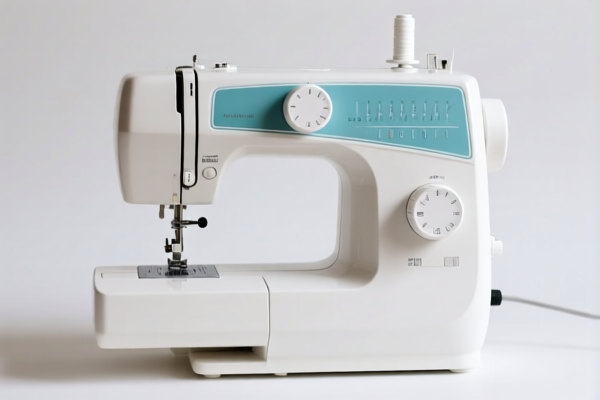
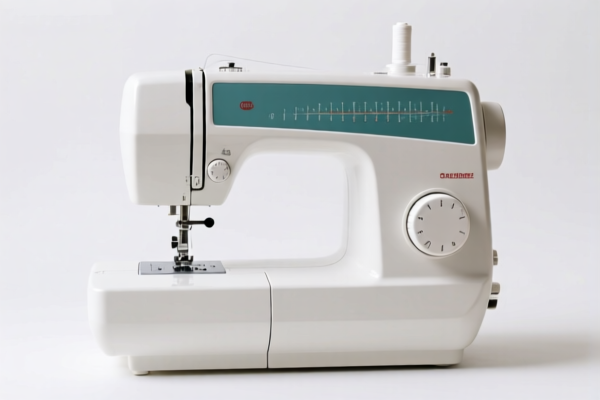
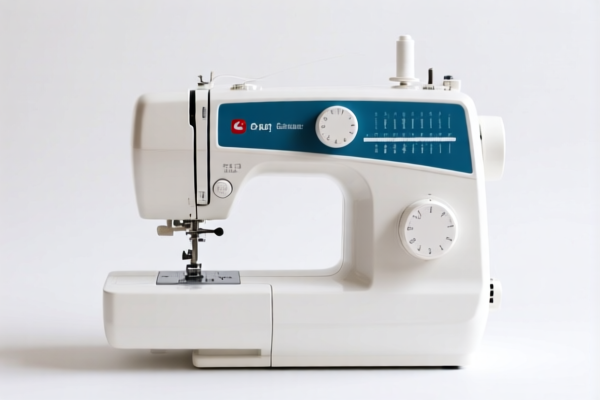
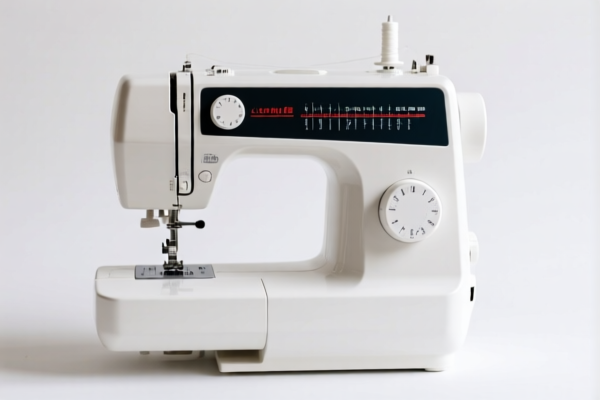
AI Analysis
🧵 Sewing Machines (Industrial & Home Use)
🌐 HS Code Reference & Customs Clearance Guide | 2026 Latest Tariff Analysis | Professional Clearance Strategy
📌 I. Product Definition and Classification: Do You Really Understand "Sewing Machines"?
Sewing machines are core equipment in the textile and garment industry, broadly divided into two categories in international trade:
Home Sewing Machines: Designed for domestic use, typically lower speed, single-purpose, and compact.
Industrial Sewing Machines: Designed for mass production, high speed, often part of an automatic assembly line, and highly specialized.
⚠️ Key Distinction Point:
- If it is a home-use unit, it generally falls under 8452.10 or related home-use subcategories.
- If it is an industrial unit, it may fall under 8452.29 (other industrial machines) or 8479.89.65 (if classified as a machine with its own motor and independent function outside Chapter 8452).
📦 II. HS Code Classification Details (2026 Latest Tariff Authoritative Comparison)
Based on the provided data, the following HS Codes are relevant for Sewing Machines:
| HS Code | Product Description | Application Scenario | Tax Rate |
|---|---|---|---|
8452.10.00.90 |
Home Sewing Machines | Directly fits "home use" criteria; no material or form conflict. | 17.5% |
8452.21.90.00 |
Industrial Sewing Machines | Classified under "other types" in automatic机组 (automatic groups/units). | 17.5% |
8452.29.90.00 |
Sewing Machines (General) | Core function is sewing; no material conflict. Can apply to general industrial types. | 35.0% |
8452.29.90.00 |
Industrial Sewing Machines | Other sewing machines (excluding bookbinding machines); no material/form conflict. | 35.0% |
8479.89.65.00 |
Industrial Sewing Machines | Mechanical devices with independent functions and self-contained electric motors. | 20.3% |
🔍 Key Reminder:
- Home vs. Industrial: The distinction is critical. Home machines (8452.10) often have lower additional duties compared to some industrial classifications.
- 8452 vs. 8479: While most sewing machines fall under 8452, those with independent functions and self-contained motors that do not fit neatly into standard 8452 subcategories may be classified under 8479.89.65. This classification carries a different tariff structure (20.3% vs. 35.0%).
- High Tariff Risk: HS Code8452.29.90.00carries the highest total tax rate of 35.0% due to additional levies.
💰 III. 2026 Latest Tariff Rate Details (Including Additional Taxes & Policy Surcharges)
✅ Applicable Country: United States (US)
✅ Origin: China (CN)
✅ Effective Time: Current rates apply as per 2026 data
🎯 1. 8452.10.00.90 — Home Sewing Machines
| Item | Content |
|---|---|
| Basic Tariff | 0.0% |
| Section 301 Additional Tariff | 7.5% |
| Section 122 Tariff | 10% |
| Total Tax Rate | 17.5% |
| Tax Calculation | CIF Value × 17.5% |
| De Minimis Exemption | ❌ Not Applicable (Subject to Section 301 and 122) |
| Legal Basis Path | Section 301 → Section 122 → HS:8452.10.00.90 |
📌 Explanation:
- The 7.5% is from USITC Section 301 additional duties.
- The 10% is from Section 122 tariff (typically related to national security or specific trade remedy measures).
- Total: 17.5%. This is a moderate rate compared to industrial options.
🎯 2. 8452.21.90.00 — Industrial Sewing Machines (Automatic Group)
| Item | Content |
|---|---|
| Basic Tariff | 0.0% |
| Section 301 Additional Tariff | 7.5% |
| Section 122 Tariff | 10% |
| Total Tax Rate | 17.5% |
| Tax Calculation | CIF Value × 17.5% |
| De Minimis Exemption | ❌ Not Applicable |
| Legal Basis Path | Section 301 → Section 122 → HS:8452.21.90.00 |
📌 Note:
- Same tariff structure as home machines due to the specific subcategory "other types" in automatic groups.
- Suitable for specific industrial applications defined under this subheading.
🎯 3. 8452.29.90.00 — Other Sewing Machines (High Tariff Risk)
| Item | Content |
|---|---|
| Basic Tariff | 0.0% |
| Section 301 Additional Tariff | 25.0% |
| Section 122 Tariff | 10% |
| Total Tax Rate | 35.0% |
| Tax Calculation | CIF Value × 35.0% |
| De Minimis Exemption | ❌ Not Applicable |
| Legal Basis Path | Section 301 → Section 122 → HS:8452.29.90.00 |
📌 Explanation:
- Section 301 Additional Tariff is 25% (higher than the 7.5% in other subcategories).
- Section 122 Tariff is 10%.
- Total: 35.0%. This is a very high tariff. Must be avoided if a lower-rate alternative (like 8479.89.65 or 8452.10/21) is applicable.
🎯 4. 8479.89.65.00 — Industrial Sewing Machines (Independent Function)
| Item | Content |
|---|---|
| Basic Tariff | 2.8% |
| Section 301 Additional Tariff | 7.5% |
| Section 122 Tariff | 10% |
| Total Tax Rate | 20.3% |
| Tax Calculation | CIF Value × 20.3% |
| De Minimis Exemption | ❌ Not Applicable |
| Legal Basis Path | Section 301 → Section 122 → HS:8479.89.65.00 |
📌 Note:
- This classification applies to machines with independent functions and self-contained electric motors that may not fit strictly into 8452.
- Total: 20.3%. This is a competitive rate compared to the 35.0% of8452.29.90.00.
- Strategy: If your industrial machine has a self-contained motor and independent function, consider classifying under 8479.89.65.00 to save 14.7% in taxes.
🛠️ IV. Customs Clearance Practical Advice (Battle-Tested Pitfall Guide)
✅ 1. Preparation Checklist (All Required)
| Document | Mandatory | Description |
|---|---|---|
| ✅ Product Specification Sheet | ✔️ | Include model, type (home/industrial), motor type, speed, stitching function. |
| ✅ Technical Drawings/Circuit Diagrams | ✔️ | Crucial for distinguishing between 8452 and 8479 (independent motor vs. integrated). |
| ✅ Product Photos (Including Nameplate) | ✔️ | Clear view of brand, model, voltage, and power rating. |
| ✅ Third-Party Test Reports | ✔️ | FCC, CE, RoHS, UL (if applicable). |
| ✅ Commercial Invoice | ✔️ | Clearly state "Sewing Machine" and specify "Home Use" or "Industrial Use". |
| ✅ Certificate of Origin (CO) | ✔️ | If not China-origin, check for preferential rates. |
| ✅ Packing List | ✔️ | Detail parts vs. whole machine to avoid splitting issues. |
✅ 2. Declaration Tips (Key Mnemonics)
🔥 "Classify by Function, Distinguish by Motor, Avoid High 35%, Aim for 20% or 17%!"
| Scenario | Correct Declaration | Wrong Practice |
|---|---|---|
| Home Sewing Machine | 8452.10.00.90 |
Misdeclare as industrial → 35% |
| Industrial Machine (Standard) | 8452.21.90.00 or 8452.29.90.00 |
Misdeclare as home → 17.5% (but may be audited) |
| Industrial Machine (Independent Motor) | 8479.89.65.00 |
Misdeclare as 8452.29.90.00 → 35% (save 14.7%) |
| Accessory (Needle, Foot) | Separate HS Code | Declare as part of machine → Risk of penalty |
✅ 3. Special Cases Handling
| Case | Handling Advice |
|---|---|
| OEM Custom Sewing Machine | Provide client order + design specs. Avoid "generic" descriptions. |
| Machine with Integrated Computer Control | Still falls under 8452 if primary function is sewing. Do not misclassify as "computer hardware". |
| Bookbinding Machines | Excluded from 8452.29.90.00. Must use specific bookbinding HS codes. |
| Sewing Machine Parts | Declare separately. E.g., needles, presser feet, motors (if sold separately). |
🌍 V. Global Market Comparison (2026 Latest)
| Country/Region | Recommended HS Code | Tariff (China Origin) | Certification | Notes |
|---|---|---|---|---|
| 🇺🇸 USA | 8452.10.00.90 / 8479.89.65.00 |
17.5% / 20.3% | FCC + RoHS | Avoid 8452.29.90.00 (35%) |
| 🇨🇳 China | 8452.10.00.90 |
~20% | CCC | No additional Section 301/122 |
| 🇪🇺 EU | 8452.10.00 / 8452.21.00 |
0% - 4.5% | CE | No additional surcharges |
| 🇬🇧 UK | 8452.10 / 8452.21 |
0% - 4.5% | UKCA | Post-Brexit rules apply |
| 🇯🇵 Japan | 8452.10 / 8452.21 |
0% - 3.2% | PSE | No additional surcharges |
📌 Conclusion:
- USA is the most complex market due to Section 301 and Section 122 tariffs.
- EU and Japan have lower, more stable tariffs.
- Strategic Tip: For US imports, prioritize classification under8479.89.65.00(20.3%) or8452.10.00.90(17.5%) to minimize costs.
📌 VI. Common Mistakes & Pitfall Guide (Lessons Learned)
❌ Mistake 1: Declaring all industrial machines under 8452.29.90.00
👉 Consequence: 35% tax.
👉 Solution: Check if the machine has an independent motor and function. If so, use 8479.89.65.00 (20.3%).
❌ Mistake 2: Confusing "Home" and "Industrial" classifications
👉 Consequence: If a home machine is declared as industrial, it might be fine (17.5% vs 17.5%), but if an industrial machine is declared as home, it will be audited and penalized.
👉 Solution: Be precise in description.
❌ Mistake 3: Ignoring Section 122 Tariff
👉 Consequence: Unexpected 10% charge.
👉 Solution: Always include Section 122 in cost calculations.
❌ Mistake 4: Declaring Accessories as Main Goods
👉 Consequence: Misclassification, delays, and penalties.
👉 Solution: Separate parts and accessories.
✅ Correct Declaration Example:
"Industrial Sewing Machine, Model XYZ, Self-Contained Motor, Independent Function, 220V, FCC Certified" →
8479.89.65.00
🎯 VII. Conclusion: Precision in Classification Saves Money!
🎯 Remember the Mnemonic:
🔹 "Home is 17.5%, Independent Motor is 20.3%, General Industrial is 35%. Don't pay 35% if you can pay 20%!"
🔹 "Check the motor, check the function, choose the right HS Code, save 14.7%."
📌 Pro Tip:
If your sewing machines are originating from Vietnam, Mexico, Thailand, or Malaysia, you may qualify for IEEPA Exemptions or lower tariffs.
Recommend applying for an Advance Ruling with US Customs to confirm the correct HS Code and tax rate before shipment.
📣 Take Action Now:
📞 Contact a professional customs broker + Provide product specs + Apply for HS Code Advance Ruling
🚀 Ensure smooth clearance, efficient export, and maximized profit margins!
✨ Professional clearance starts with accurate classification!
💼 Every cent of cost deserves precise calculation!
Customer Reviews
About HS Code Classification
The Harmonized System (HS) is an internationally standardized nomenclature developed by the World Customs Organization (WCO) to classify traded products. Over 200 countries use the HS system as the basis for customs tariffs, trade statistics, and import/export regulations.
Each HS code follows a hierarchical structure:
- Chapter (2 digits) — Broad category of goods (e.g., Chapter 84: Machinery and Mechanical Appliances)
- Heading (4 digits) — More specific grouping within the chapter
- Subheading (6 digits) — Internationally standardized breakdown, used by all WCO member countries
- National subdivisions (8-10 digits) — Country-specific extensions for further classification, such as US HTSUS 10-digit codes
Correct HS code classification is essential for smooth customs clearance, accurate duty payment, and compliance with trade regulations. Misclassification can lead to customs delays, overpayment of duties, or penalties.
When importing from CN to US, the applicable tariff rates may include:
- Most-Favored-Nation (MFN) rate — The standard duty rate applied to WTO members
- General rate — Applied to countries without trade agreements
- Trade remedy duties — Additional tariffs such as Section 301 (anti-dumping), Section 232 (national security), or countervailing duties
The information provided on this page is for reference purposes only. For official classification, please consult with your local customs authority or a licensed customs broker.