Sewing Thread
CN → US| HS Code | Tariff Rate | Origin | Destination | Doc |
|---|---|---|---|---|
| 5204110000 | 39.4% | CN | US | Official Doc |
| 5204190000 | 39.4% | CN | US | Official Doc |
| 5508100000 | 46.4% | CN | US | Official Doc |
| 5508200000 | 46.0% | CN | US | Official Doc |
| 5401100000 | 46.4% | CN | US | Official Doc |
| 5401200000 | 46.4% | CN | US | Official Doc |
Product Images
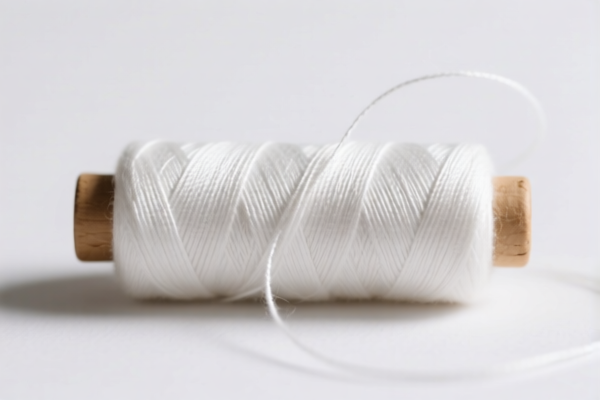
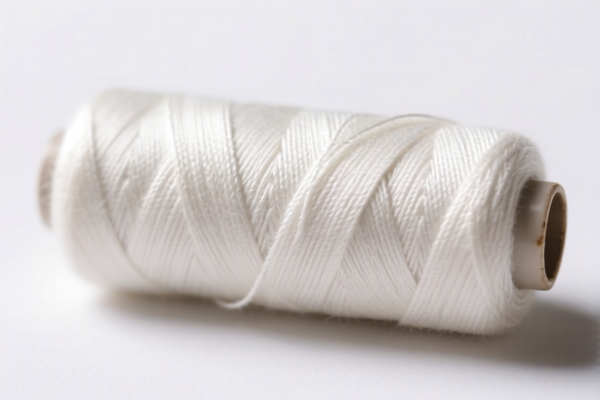
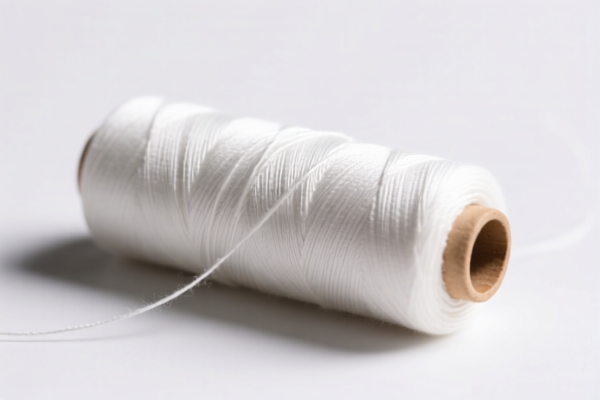
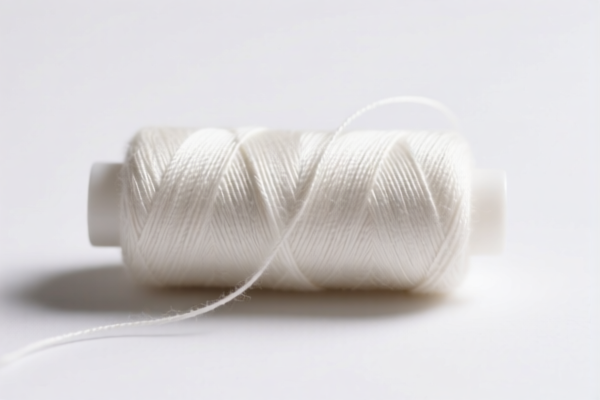
AI Analysis
🧵 Sewing Thread (Textile Sewing Thread)
🌐 HS Code Reference & Customs Clearance Guide | 2026 Latest Tariff Breakdown | Pro-Level Import Strategy
📌 One, Product Definition & Classification: Do You Really Know What "Sewing Thread" Is?
Sewing thread is a fundamental component in the global textile, apparel, footwear, and industrial manufacturing supply chains. In international trade, it's categorized based on fiber material and physical form, not just by name.
⚠️ Critical Distinction:
- Cotton-based thread → classified under 5204.11.00.00 / 5204.19.00.00
- Synthetic fiber (e.g., polyester) short staple thread → 5508.10.00.00 / 5508.20.00.00
- Synthetic filament thread (e.g., polyester long fiber) → 5401.10.00.00 / 5401.20.00.00🔍 Key Rule:
- Fiber type determines HS Code, not brand, color, or thickness.
- "Sewing thread" is not a single category — it's a family of products with different tax treatments.
📦 Two, HS Code Classification Details (2026 Latest Tariff Authority)
| HS Code | Product Description | Material | Form | Tax Rate |
|---|---|---|---|---|
5204.11.00.00 |
Cotton sewing thread | Cotton | Sewing thread | 39.4% |
5204.19.00.00 |
Other cotton sewing thread | Cotton | Sewing thread | 39.4% |
5508.10.00.00 |
Synthetic staple fiber sewing thread | Polyester | Short staple fiber | 46.4% |
5508.20.00.00 |
Artificial staple fiber sewing thread | Polyester | Short staple fiber | 46.0% |
5401.10.00.00 |
Synthetic filament sewing thread | Polyester | Continuous filament | 46.4% |
5401.20.00.00 |
Artificial filament sewing thread | Polyester | Continuous filament | 46.4% |
📌 Important Note:
- "Cotton" threads are taxed lower than synthetic ones — even though both are used in garments.
- Filament vs. staple matters: filament threads (long continuous fibers) are taxed higher than staple (short fibers), despite similar use.
💰 Three, 2026 Latest Tariff Breakdown (With Full Add-Ons)
✅ Applicable Country: United States (US)
✅ Origin: China (CN)
✅ Effective Date: November 10, 2025 (and ongoing)
🎯 1. 5204.11.00.00 & 5204.19.00.00 — Cotton Sewing Thread
| Item | Detail |
|---|---|
| Base Duty | 4.4% (ad valorem) |
| Section 301 (USITC) Additional Duty | +25.0% |
| Section 122 (IEEPA) Additional Duty | +10.0% |
| Total Effective Duty | 39.4% |
| Tax Calculation | CIF Value × 39.4% |
| De Minimis Threshold | ❌ Not eligible (denied) |
| Legal Basis Path | IEEPA:9903.01.25 → IEEPA:9903.01.24 → USITC:5204.11.00.00 → FOOTNOTE:9903.88.01 |
📌 Explanation:
- "USITC 25%" comes from Section 301 of the U.S. Trade Act — targeting Chinese goods deemed unfair trade practices.
- "IEEPA 10%" is under the International Emergency Economic Powers Act — a punitive tariff on goods from China/Hong Kong.
- Combined: 39.4% — one of the highest tariffs on textile inputs.
🎯 2. 5508.10.00.00 — Synthetic Staple Fiber Sewing Thread (Polyester, Short Fiber)
| Item | Detail |
|---|---|
| Base Duty | 11.4% |
| USITC Additional Duty | +25.0% |
| IEEPA Additional Duty | +10.0% |
| Total Effective Duty | 46.4% |
| Tax Calculation | CIF × 46.4% |
| De Minimis | ❌ Not eligible |
| Legal Basis Path | IEEPA:9903.01.25 → IEEPA:9903.01.24 → USITC:5508.10.00.00 → FOOTNOTE:9903.88.01 |
📌 Note:
- Despite being short fiber, this is still highly taxed due to synthetic origin and Chinese origin.
🎯 3. 5508.20.00.00 — Artificial Staple Fiber Sewing Thread (Polyester, Short Fiber)
| Item | Detail |
|---|---|
| Base Duty | 11.0% |
| USITC Additional Duty | +25.0% |
| IEEPA Additional Duty | +10.0% |
| Total Effective Duty | 46.0% |
| Tax Calculation | CIF × 46.0% |
| De Minimis | ❌ Not eligible |
| Legal Basis Path | IEEPA:9903.01.25 → IEEPA:9903.01.24 → USITC:5508.20.00.00 → FOOTNOTE:9903.88.01 |
📌 Difference from 5508.10:
- Slightly lower base duty (11.0% vs 11.4%) due to minor classification distinction in fiber type (artificial vs synthetic), but same high附加 taxes.
🎯 4. 5401.10.00.00 & 5401.20.00.00 — Filament Sewing Thread (Polyester, Long Continuous Fiber)
| Item | Detail |
|---|---|
| Base Duty | 11.4% |
| USITC Additional Duty | +25.0% |
| IEEPA Additional Duty | +10.0% |
| Total Effective Duty | 46.4% |
| Tax Calculation | CIF × 46.4% |
| De Minimis | ❌ Not eligible |
| Legal Basis Path | IEEPA:9903.01.25 → IEEPA:9903.01.24 → USITC:5401.10.00.00 → FOOTNOTE:9903.88.01 |
📌 Why Higher Than Staple?
- Filament threads are often used in high-performance garments (e.g., industrial sewing, technical textiles) → treated as higher-value inputs → higher tariff.
🛠️ Four, Customs Clearance Best Practices (Real-World Tips)
✅ 1. Required Documentation (Must-Have List)
| Document | Required? | Purpose |
|---|---|---|
| ✅ Product Specification Sheet | ✔️ | Fiber content, denier, twist, color, packaging |
| ✅ Material Safety Data Sheet (MSDS) | ✔️ | For chemical compliance (if dyed) |
| ✅ Lab Test Report (e.g., AATCC, ISO) | ✔️ | Confirm fiber type & composition |
| ✅ Commercial Invoice | ✔️ | Must state "Sewing Thread, [Material], [Form]" |
| ✅ Certificate of Origin (CO) | ✔️ | If from non-China, may qualify for lower rates |
| ✅ Packing List | ✔️ | Show net weight, number of spools, packaging |
| ✅ Product Photos (with labels) | ✔️ | For customs verification |
✅ 2.申报技巧 (Key Pro Tips)
🔥 "Fiber First, Form Second, Origin Last — Tax is Built on This Order!"
| Scenario | Correct HS Code | Wrong Code | Result |
|---|---|---|---|
| Cotton thread, 100% cotton, 30s count | 5204.11.00.00 |
5508.10.00.00 |
+7% tax → $10k+ extra |
| Polyester filament thread, 200D | 5401.10.00.00 |
5508.10.00.00 |
+0.4% → still 46.4% |
| Polyester staple thread, 50/1 | 5508.10.00.00 |
5204.11.00.00 |
+42% tax → huge penalty |
| Thread sold in bulk spools, no packaging | 5204.11.00.00 |
5508.10.00.00 |
Wrong classification → audit risk |
📌 Pro Tip:
Always declare the fiber type in the invoice — e.g.,
"Polyester Filament Sewing Thread, 200D, 3-ply, 100% Polyester, for Industrial Use"
✅ 3. Special Cases & Solutions
| Situation | Recommended Action |
|---|---|
| OEM thread for branded apparel | Provide customer PO + lab report — avoid "generic" labeling |
| Thread with recycled content | Still taxed at same rate — no green tax break in U.S. |
| Thread for medical garments | Still taxed at 46.4% — no exemption for "healthcare" use |
| Thread from Vietnam/Mexico/Thailand | Can apply for IEEPA exemption — 0% to 5% — huge savings |
🌍 Five, Global Market Customs Comparison (2026)
| Country/Region | Recommended HS Code | Tariff | Certification | Notes |
|---|---|---|---|---|
| 🇺🇸 United States | 5204.11.00.00 |
39.4% (cotton) | None | High附加 taxes apply |
| 🇨🇳 China | 5204.11.00.00 |
5% | CCC | No extra tariffs |
| 🇪🇺 European Union | 5204.11.00.00 |
0% (if CE) | CE | No附加 taxes |
| 🇦🇺 Australia | 5204.11.00.00 |
5% | RCM | No附加 taxes |
| 🇯🇵 Japan | 5204.11.00.00 |
0% | PSE | No附加 taxes |
📌 Key Insight:
- The U.S. is the only major market with 39.4%+ tariffs on sewing thread from China.
- Moving production to Vietnam, Mexico, or Thailand can cut tax by over 30%.
📌 Six, Common Mistakes & How to Avoid Them (Real Cases)
❌ Mistake 1: Declaring cotton thread as "polyester" to avoid tax
👉 Result: Penalty + seizure + future audits
❌ Mistake 2: Using "textile thread" instead of "sewing thread" in invoice
👉 Result: Customs may reclassify → higher tax
❌ Mistake 3: Not providing fiber test report
👉 Result: Delayed release or "provisional" duty assessment
❌ Mistake 4: Shipping cotton thread in bulk without labeling
👉 Result: Customs may suspect synthetic fiber → 46.4% tax applied
✅ Correct Way:
"Cotton Sewing Thread, 100% Cotton, 30s Count, 1000m Spools, 500 Spools per Carton, CO: CN"
🎯 Seven, Conclusion: Accurate Classification = Lower Cost, Faster Clearance!
🎯 Remember the Mantra:
🔹 "Fiber First, Form Second, Origin Last — Tax is Built on This Order!"
🔹 "One wrong code = 46.4% vs 39.4% = $10k+ extra!"
📌 Pro Tip:
If your thread is originating from Vietnam, Mexico, Thailand, or India, apply for IEEPA exemption — tariff drops to 0%–5%.
✅ Request an Advance Ruling (Pre-Approval) from U.S. Customs before shipping.
📣 Take Action Now:
📞 Contact a licensed customs broker + provide fiber test + product photos
🚀 Get HS Code pre-approval → avoid delays, penalties, and surprise taxes
✨ Smart Exporting Starts with Smart Classification!
💼 Your thread may be small — but your tax bill shouldn’t be!
Customer Reviews
About HS Code Classification
The Harmonized System (HS) is an internationally standardized nomenclature developed by the World Customs Organization (WCO) to classify traded products. Over 200 countries use the HS system as the basis for customs tariffs, trade statistics, and import/export regulations.
Each HS code follows a hierarchical structure:
- Chapter (2 digits) — Broad category of goods (e.g., Chapter 84: Machinery and Mechanical Appliances)
- Heading (4 digits) — More specific grouping within the chapter
- Subheading (6 digits) — Internationally standardized breakdown, used by all WCO member countries
- National subdivisions (8-10 digits) — Country-specific extensions for further classification, such as US HTSUS 10-digit codes
Correct HS code classification is essential for smooth customs clearance, accurate duty payment, and compliance with trade regulations. Misclassification can lead to customs delays, overpayment of duties, or penalties.
When importing from CN to US, the applicable tariff rates may include:
- Most-Favored-Nation (MFN) rate — The standard duty rate applied to WTO members
- General rate — Applied to countries without trade agreements
- Trade remedy duties — Additional tariffs such as Section 301 (anti-dumping), Section 232 (national security), or countervailing duties
The information provided on this page is for reference purposes only. For official classification, please consult with your local customs authority or a licensed customs broker.