Sewing Thread Spool
CN → US| HS Code | Tariff Rate | Origin | Destination | Doc |
|---|---|---|---|---|
| 5508200000 | 46.0% | CN | US | Official Doc |
| 5508100000 | 46.4% | CN | US | Official Doc |
| 5401200000 | 46.4% | CN | US | Official Doc |
| 5401100000 | 46.4% | CN | US | Official Doc |
Product Images
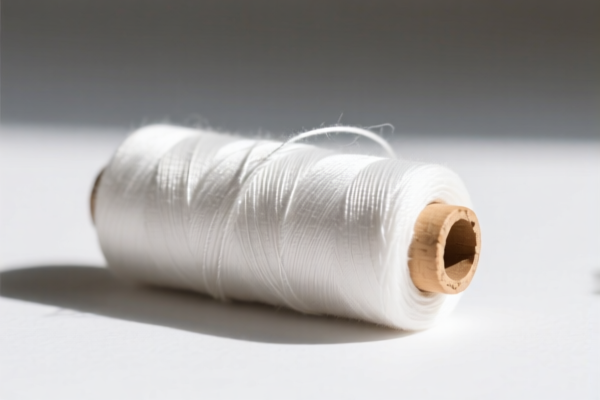
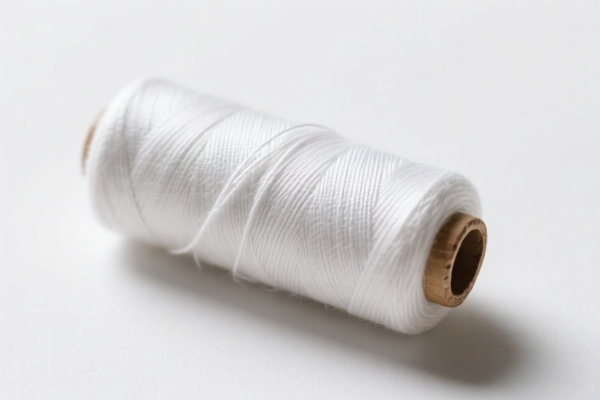
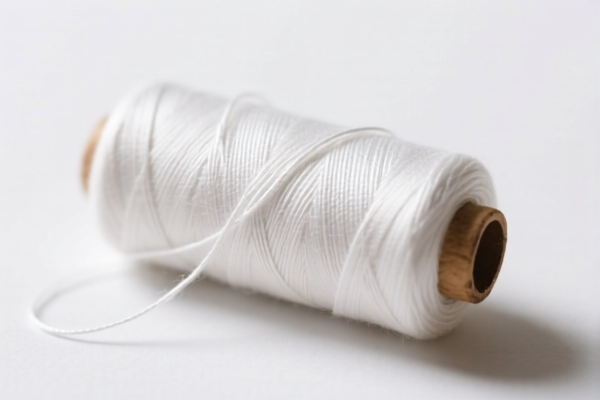
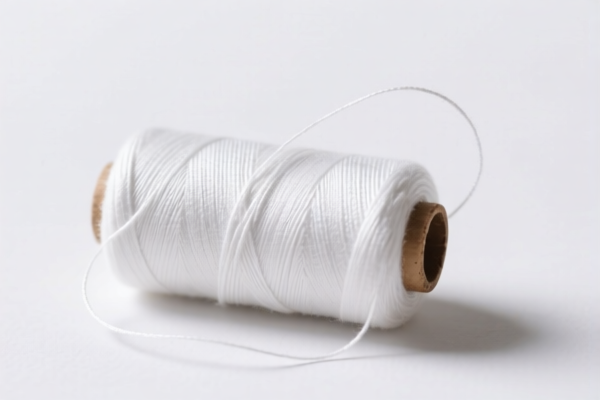
AI Analysis
🧵 Sewing Thread Spool (Artificial/Synthetic Filament)
🌐 HS Code Reference & Customs Clearance Guide | 2026 Latest Tariff Analysis | Professional Clearance Strategy
📌 I. Product Definition & Classification: Do You Really Know "Sewing Thread"?
Sewing thread spools are essential consumables in the textile and apparel industry. In international trade, they are classified based on material composition (artificial vs. synthetic) and fiber structure (filament vs. staple).
Artificial Rayon (Viscose): Made from regenerated cellulose fibers. Typically falls under Chapter 55 or 54 depending on the specific manufacturing process. Synthetic Fibers: Made from petrochemical polymers (e.g., Polyester, Nylon). Typically falls under Chapter 54.
⚠️ Key Distinction Point: - If the material is Artificial Rayon (Regenerated Cellulose) → Usually grouped under 5508 (Synthetic fibers staple yarn) or 5401 (Synthetic/Artificial filament yarn) depending on the specific subheading interpretation of "Artificial" in the provided data. - If the material is Synthetic (e.g., Polyester/Nylon) → Falls under 5401 (Filament yarn).
📦 II. HS Code Classification Details (Based on Provided Data)
| HS Code | Product Description | Material Type | Form | Total Tax Rate |
|---|---|---|---|---|
5508.20.00.00 |
Spools of sewing thread, material is Artificial Rayon | Artificial Rayon | Sewing Thread Spool | 46.0% |
5508.10.00.00 |
Spools of sewing thread, material corresponds to Synthetic Fibers (Note: Data labels this as Synthetic but places in 5508) | Synthetic Fibers* | Sewing Thread Spool | 46.4% |
5401.20.00.00 |
Spools of sewing thread, material is Artificial Filament | Artificial Filament | Sewing Thread Spool | 46.4% |
5401.10.00.00 |
Spools of sewing thread, material is Synthetic, form is Synthetic Filament Sewing Thread | Synthetic Filament | Synthetic Filament Sewing Thread | 46.4% |
🔍 Important Note on Data Consistency: -
5508.20.00.00is explicitly defined as Artificial Rayon. -5508.10.00.00is defined in the data as Synthetic Fibers, though typically Chapter 55 covers staple fibers. However, we strictly follow the provided summary: "Material corresponds to synthetic fibers". -5401series covers Filament yarns (both Artificial and Synthetic). - Tax Rates: Slight differences exist (46.0% vs 46.4%) due to variations in the Base Tariff (11.0% vs 11.4%). The additional tariffs are consistent.
💰 III. 2026 Latest Tariff Rate Breakdown (Including Surcharges)
✅ Applicable Country: United States (US) ✅ Origin: China (CN) ✅ Effective Date: Current rates apply (Includes Section 301 and IEEPA surcharges)
🎯 1. General Tariff Structure for All Categories
Regardless of the specific HS Code (5508 or 5401), the tax structure is nearly identical, with minor variations in the Base Tariff.
| Component | Rate | Source / Description |
|---|---|---|
| Base Tariff | 11.0% | For 5508.20.00.00 (Artificial Rayon) |
| Base Tariff | 11.4% | For 5508.10.00.00, 5401.20.00.00, 5401.10.00.00 |
| Section 301 Surcharge | +25.0% | Added tariff under US Trade Act Section 301 |
| Section 122 Tariff | +10.0% | Additional tariff under Section 122 provisions |
| Total Tax Rate | 46.0% | For 5508.20.00.00 (11.0 + 25.0 + 10.0) |
| Total Tax Rate | 46.4% | For others (11.4 + 25.0 + 10.0) |
📌 Explanation: - Base Tariff: Standard MFN (Most Favored Nation) rate applied to the CIF (Cost, Insurance, Freight) value. - Section 301 (25%): Applies to Chinese-origin goods in this category as part of ongoing trade tensions. - Section 122 (10%): Additional tariff provision specified in the data. - Total: The 46.0% - 46.4% rate is very high, significantly impacting profit margins.
🛠️ IV. Customs Clearance Practical Advice (Pitfall Avoidance Guide)
✅ 1. Required Documentation Checklist
| Document | Must Provide | Explanation |
|---|---|---|
| ✅ Product Specification Sheet | ✔️ | Must clearly state: Material (Artificial Rayon vs. Synthetic), Fiber Type (Filament vs. Staple), and Usage (Sewing Thread). |
| ✅ Material Composition Statement | ✔️ | Critical for determining HS Code. Example: "100% Artificial Rayon Filament" vs. "100% Polyester Filament". |
| ✅ Commercial Invoice | ✔️ | Must match the HS Code and describe goods accurately as "Sewing Thread Spool". |
| ✅ Packing List | ✔️ | Include net weight and gross weight. |
| ✅ Certificate of Origin | ✔️ | Required to verify China origin and apply (or not apply) surcharges. |
✅ 2. Declaration Tips (Key Mnemonics)
🔥 "Material Defines HS, Tax Differs by 0.4%!"
| Scenario | Correct HS Code | Tax Rate | Common Mistake |
|---|---|---|---|
| Artificial Rayon Spool | 5508.20.00.00 |
46.0% | Mislabeling as Synthetic → Higher base tariff? (Data shows 46.0% is lowest) |
| Synthetic Fiber Spool | 5508.10.00.00 |
46.4% | Confusing with 5401 series |
| Artificial Filament Thread | 5401.20.00.00 |
46.4% | Incorrect material declaration |
| Synthetic Filament Thread | 5401.10.00.00 |
46.4% | Confusing with 5508 series |
📌 Note:
5508.20.00.00offers the lowest total tax rate (46.0%) due to a slightly lower base tariff (11.0% vs 11.4%). Ensure your product is genuinely Artificial Rayon to qualify for this.
✅ 3. Special Considerations
| Situation | Advice |
|---|---|
| Mixed Materials | If spools contain mixed fibers, classification becomes complex. Declare the predominant material or seek a binding ruling. |
| Small Packages (De Minimis) | ❌ Not Eligible: Due to the high tariff rate and China origin, small packages do not qualify for de minimis exemption. All shipments are subject to duties. |
| Labeling | Ensure labels on spools clearly state "Artificial Rayon" or "Polyester" to match customs declaration. |
🌍 V. Global Market Comparison (2026 Overview)
| Country/Region | Recommended HS Code | Base Tariff | Section 301 | IEEPA/122 | Total Est. Rate | Notes |
|---|---|---|---|---|---|---|
| 🇺🇸 USA | 5508.20.00.00 or 5401.10.00.00 |
11.0% - 11.4% | +25% | +10% | 46.0% - 46.4% | High duties apply. |
| 🇨🇳 China | 5508.20.00.00 or 5401.10.00.00 |
~5% - 8% | N/A | N/A | ~15% - 18% | Lower rates, but import restrictions may apply. |
| 🇪🇺 EU | 5401.10.00.00 |
6.5% | N/A | N/A | 6.5% | No additional surcharges. |
| 🇬🇧 UK | 5401.10.00.00 |
6.5% | N/A | N/A | 6.5% | Post-Brexit tariffs align closely with EU. |
📌 Conclusion: - USA imposes the highest cost due to Section 301 and Section 122 tariffs. - EU/UK offer much more competitive rates (~6.5%). - Strategy: If exporting to the US, consider pricing strategies to absorb the ~46% duty or explore tariff engineering (if applicable, e.g., changing material composition to qualify for lower base rates, though surcharges may still apply).
📌 VI. Common Errors & Pitfalls (Lessons Learned)
❌ Error 1: Declaring "Synthetic Thread" when it is "Artificial Rayon"
👉 Consequence: May lead to audit. While rates are similar, misdeclaration is fraud.
👉 Correct: Be precise: "Artificial Rayon Filament" → 5401.20.00.00 or "Artificial Rayon" → 5508.20.00.00 (as per data).
❌ Error 2: Ignoring the 122 Clause 👉 Consequence: Underpayment of 10% → Penalties and back taxes. 👉 Correct: Always include the 10% surcharge in cost calculations.
❌ Error 3: Using Generic Description "Sewing Thread" 👉 Consequence: Customs may classify to the highest duty rate or request additional info, causing delays. 👉 Correct: Use precise descriptions: "Sewing Thread Spool, 100% Artificial Rayon, Filament".
🎯 VII. Conclusion: Professional Declaration, Cost Control!
🎯 Remember the Key Takeaway:
🔹 HS Code determines the Base Tariff (11.0% vs 11.4%). 🔹 Total Tax is ~46% for US-bound Chinese goods. 🔹 Artificial Rayon (
5508.20.00.00) has the lowest rate (46.0%). 🔹 De Minimis does NOT apply.
📌 Pro Tip: If you are importing into the US, calculate the landed cost including the 46% tax. Consider sourcing from countries with FTAs (Free Trade Agreements) if possible, or explore Section 301 Exclusions if your specific product code is eligible (check USITC exclusion lists).
📣 Immediate Action:
📞 Contact a licensed customs broker. 📄 Provide accurate material composition documents. 📊 Use the correct HS Code to avoid penalties. 🚀 Ensure smooth clearance and accurate cost forecasting!
✨ Professional customs clearance starts with accurate classification! 💼 Every cent saved on tariffs counts!
Customer Reviews
About HS Code Classification
The Harmonized System (HS) is an internationally standardized nomenclature developed by the World Customs Organization (WCO) to classify traded products. Over 200 countries use the HS system as the basis for customs tariffs, trade statistics, and import/export regulations.
Each HS code follows a hierarchical structure:
- Chapter (2 digits) — Broad category of goods (e.g., Chapter 84: Machinery and Mechanical Appliances)
- Heading (4 digits) — More specific grouping within the chapter
- Subheading (6 digits) — Internationally standardized breakdown, used by all WCO member countries
- National subdivisions (8-10 digits) — Country-specific extensions for further classification, such as US HTSUS 10-digit codes
Correct HS code classification is essential for smooth customs clearance, accurate duty payment, and compliance with trade regulations. Misclassification can lead to customs delays, overpayment of duties, or penalties.
When importing from CN to US, the applicable tariff rates may include:
- Most-Favored-Nation (MFN) rate — The standard duty rate applied to WTO members
- General rate — Applied to countries without trade agreements
- Trade remedy duties — Additional tariffs such as Section 301 (anti-dumping), Section 232 (national security), or countervailing duties
The information provided on this page is for reference purposes only. For official classification, please consult with your local customs authority or a licensed customs broker.