Sewing Tool Kit Black
CN → US| HS Code | Tariff Rate | Origin | Destination | Doc |
|---|---|---|---|---|
| 9605000000 | 18.1% | CN | US | Official Doc |
| 4823908680 | 35.0% | CN | US | Official Doc |
| 7319901000 | 67.5% | CN | US | Official Doc |
| 7319909000 | 70.4% | CN | US | Official Doc |
Product Images
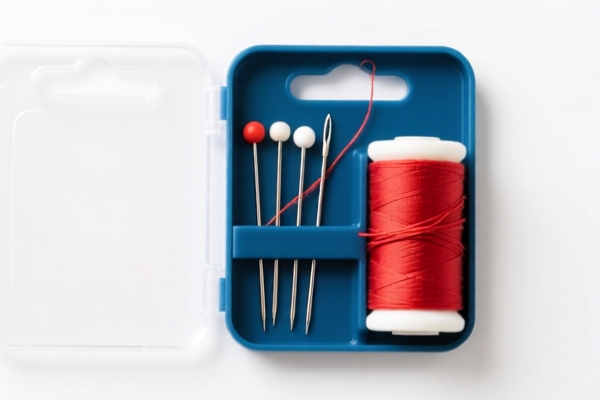
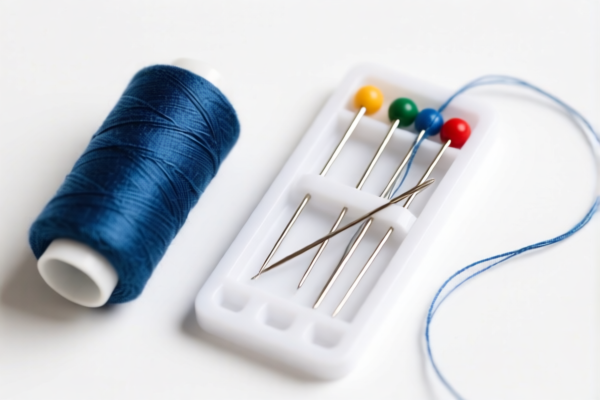
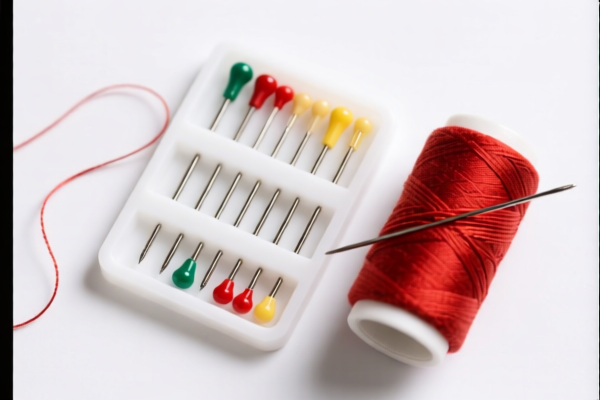
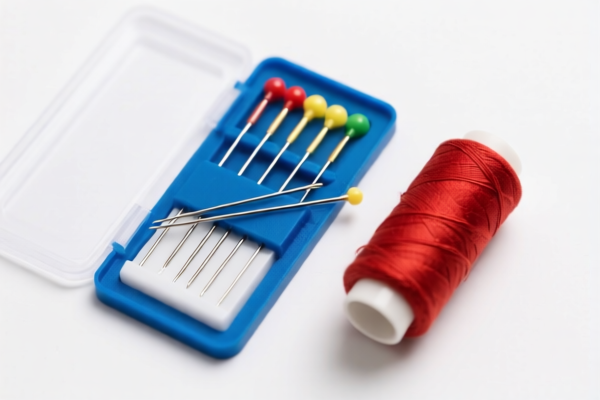
AI Analysis
🧵 Sewing Tool Kit (Black) | Complete HS Code Classification & Customs Clearance Guide
🌐 HS Code Reference & Customs Clearance Guide | 2026 Latest Tariff Analysis | Professional-Level Compliance Strategy
📌 I. Product Definition & Classification: What Exactly is a "Sewing Tool Kit"?
A Sewing Tool Kit is a collection of tools designed for mending, crafting, or professional tailoring. In international trade, classification depends heavily on: 1. Material Composition: Are the tools made of plastic, metal, wood, or a mix? 2. Form Factor: Is it a loose set, or packaged in a specific container (e.g., pouch, case)? 3. Primary Function: Is it for domestic hand-sewing or industrial use?
⚠️ Key Classification Dilemma:
- If the kit is plastic/combined materials and packaged as a set → Often classified under Ch. 96 (Miscellaneous Manufactured Articles) as "sets."
- If the kit contains metal needles/tools primarily → May fall under Ch. 73 (Articles of Iron or Steel) or Ch. 48 (Paper products) if packaged in paper sleeves.
- Misclassification Risk: Declaring as "textile accessories" when it’s a metal tool set can lead to higher duties (up to 70%+) vs. lower duty sets (18%).
📦 II. HS Code Classification Details (2026 Latest Tariff Authority Cross-Reference)
Based on the provided data, here are the only valid HS codes derived from the input "sewing tool kit black," along with the rationale and tax implications.
| HS Code | Product Description | Classification Rationale | Total Tax Rate |
|---|---|---|---|
9605.00.00.00 |
Sewing Kits (Sets) | Matches usage (sewing tools) and form (set/package). No material conflict. Most likely for plastic/wood/mixed kits in a case. | 18.1% |
4823.90.86.80 |
Other Paper Articles | Inferred from packaging: If the "kit" is primarily a paper-based sewing aid (e.g., paper pattern guides, paper-wrapped tools), it falls under "other paper products." | 35.0% |
7319.90.10.00 |
Iron/Steel Sewing Needles/Tools | Matches usage (sewing) and inferred material (iron/steel). Assumes the kit is dominated by metal needles/tools. | 67.5% |
7319.90.90.00 |
Other Iron/Steel Articles | Broad category for "other" sewing-related iron/steel items not specifically listed elsewhere. Fits general metal sewing tools. | 70.4% |
🔍 Critical Distinction:
-9605.00.00.00is the most favorable if the kit is a true "set" (e.g., in a fabric bag, plastic box, or wooden case) and not purely metal.
-7319.xxxxcodes attract heavy additional tariffs (50% Section 301 + 10% IEEPA) because they are classified as steel/iron products from China.
-4823.90.86.80is risky if the product is not predominantly paper; customs may reclassify it as metal, leading to penalties.
💰 III. 2026 Latest Tariff Rate Breakdown (Including Surcharges & Policy Add-ons)
✅ Applicable Country: United States (US)
✅ Origin: China (CN)
✅ Effective Time: 2025–2026 (Current Trade Environment)
🎯 1. 9605.00.00.00 —— Sewing Kits (Sets)
| Item | Detail |
|---|---|
| Base Tariff | 8.1% |
| Section 301 Surcharge | 0.0% |
| IEEPA Section 122 Surcharge | +10.0% |
| Total Tax Rate | 18.1% |
| Tax Calculation | CIF Value × 18.1% |
| De Minimis Eligibility | ❌ No (Deny de minimis if value > $800 or if specifically targeted; however, 18.1% is moderate) |
| Legal Authority | USITC:9605.00.00.00 → IEEPA:9903.01.25 (122 clause) |
📌 Explanation:
- This is the best-case scenario.
- The 10% IEEPA surcharge applies to all Chinese-origin goods under Section 122 (if active) or general trade war tariffs.
- No Section 301 (25%) applies here because it’s not classified as steel or specific tech goods.
🎯 2. 4823.90.86.80 —— Other Paper Articles
| Item | Detail |
|---|---|
| Base Tariff | 0.0% |
| Section 301 Surcharge | +25.0% |
| IEEPA Section 122 Surcharge | +10.0% |
| Total Tax Rate | 35.0% |
| Tax Calculation | CIF Value × 35.0% |
| De Minimis Eligibility | ❌ No |
| Legal Authority | USITC:4823.90.86.80 → IEEPA:9903.01.24 → USITC:FOOTNOTE |
📌 Explanation:
- High risk. If customs determines the kit contains metal needles, they will reject this classification and reassign it to Ch. 73, triggering 67.5%–70.4% taxes.
- Only suitable if the kit is 100% paper-based (e.g., paper sewing patterns, paper thimbles, no metal).
🎯 3. 7319.90.10.00 —— Iron/Steel Sewing Needles/Tools
| Item | Detail |
|---|---|
| Base Tariff | 0.0% |
| Section 301 Surcharge | +7.5% |
| IEEPA Section 122 Surcharge | +10.0% |
| Section 301 Steel/Aluminum/Copper Surcharge | +50.0% |
| Total Tax Rate | 67.5% |
| Tax Calculation | CIF Value × 67.5% |
| De Minimis Eligibility | ❌ No |
| Legal Authority | USITC:7319.90.10.00 → IEEPA:9903.01.24 → USITC:FOOTNOTE:Steel/Al/Cu |
📌 Explanation:
- Severe Penalty: The 50% surcharge for steel/iron products from China is devastating.
- Applies if the kit is primarily metal needles/tools.
- Even a small set of metal needles can trigger this high rate.
🎯 4. 7319.90.90.00 —— Other Iron/Steel Articles
| Item | Detail |
|---|---|
| Base Tariff | 2.9% |
| Section 301 Surcharge | +7.5% |
| IEEPA Section 122 Surcharge | +10.0% |
| Section 301 Steel/Aluminum/Copper Surcharge | +50.0% |
| Total Tax Rate | 70.4% |
| Tax Calculation | CIF Value × 70.4% |
| De Minimis Eligibility | ❌ No |
| Legal Authority | USITC:7319.90.90.00 → IEEPA:9903.01.24 → USITC:FOOTNOTE:Steel/Al/Cu |
📌 Explanation:
- The highest possible tax rate for this product.
- Avoid this code unless the product is strictly metal and cannot be classified as a "sewing kit" (9605).
- The 50% steel surcharge is the key driver.
🛠️ IV. Customs Clearance Practical Advice (Real-World Pitfall Avoidance)
✅ 1. Required Documentation Checklist
| Document | Must Provide | Purpose |
|---|---|---|
| ✅ Product Photos | ✔️ | Show the kit contents: Is it in a bag? Are tools plastic or metal? |
| ✅ Bill of Materials (BOM) | ✔️ | List all items: e.g., "10 plastic thimbles, 5 wooden pins, 1 metal needle" |
| ✅ Commercial Invoice | ✔️ | Clearly describe as "Sewing Kit, Plastic/Mixed Materials, in Cloth Bag" |
| ✅ Packing List | ✔️ | Confirm no heavy metal tools dominate the value |
| ✅ Origin Certificate | ✔️ | If non-China origin, can reduce tariffs |
✅ 2. Declaration Strategy (Key Mnemonic)
🔥 "Set vs. Tool: Plastic Wins, Metal Burns!"
| Scenario | Correct HS Code | Risk |
|---|---|---|
| Kit in a fabric/plastic case with mixed tools | 9605.00.00.00 |
✅ Low Risk (18.1%) |
| Kit with ONLY metal needles | 7319.90.10.00 |
❌ High Risk (67.5%) |
| Kit with ONLY paper patterns | 4823.90.86.80 |
⚠️ Medium Risk (35.0%) |
| Kit with metal tools but declared as paper | 4823.90.86.80 |
❌ Rejection & Penalty |
✅ 3. Special Handling Tips
| Situation | Recommendation |
|---|---|
| Mixed Material Kit | Emphasize "set" and "non-metal dominance" in description to push for 9605. |
| Pure Metal Kit | Accept the 67.5%–70.4% tax. Consider sourcing from non-China countries for US export. |
| Small Gift Sets | If value < $800, check de minimis rules, but steel tools are often excluded. |
| OEM Custom Kits | Provide design files showing material composition to justify 9605. |
🌍 V. Global Market Comparison (2026)
| Country/Region | Recommended HS Code | Duty Rate | Notes |
|---|---|---|---|
| 🇺🇸 USA | 9605.00.00.00 |
18.1% | Best option. Avoid Ch. 73 due to 50% steel surcharge. |
| 🇨🇳 China | 9605.00.00.00 |
5% | No additional surcharges for domestic trade. |
| 🇪🇺 EU | 9605.00.00 |
6.5% | Standard rate. No trade war surcharges. |
| 🇬🇧 UK | 9605.00.00 |
6.5% | Post-Brexit alignment with EU. |
📌 Conclusion:
- USA is the most challenging market due to Section 301 and IEEPA surcharges on steel/paper products.
-9605.00.00.00is the only competitive option for US exports from China.
- If your kit contains metal needles, consider repositioning as a "sewing accessory set" with non-metal dominance to qualify for 9605.
📌 VI. Common Mistakes & Pitfalls (Blood Lessons)
❌ Mistake 1: Declaring a metal needle kit as 9605.00.00.00
👉 Consequence: Customs reclassifies to 7319, imposing 67.5% tax + penalties.
❌ Mistake 2: Ignoring the 50% steel surcharge
👉 Consequence: Profit margin erased. A $10 kit becomes $17.04 in taxes.
❌ Mistake 3: Using vague descriptions like "Sewing Tools"
👉 Consequence: Customs defaults to the highest duty code (7319.90.90.00 at 70.4%).
✅ Correct Practice:
"Sewing Kit, Plastic & Wooden Tools, in Cloth Bag, Model ABC, 18.1% Duty Eligible"
🎯 VII. Conclusion: Precise Classification Saves Thousands!
🎯 Remember the Mnemonic:
🔹 "Plastic/Mixed = 18.1%, Metal = 67.5%+!"
🔹 "Set it as 9605, avoid the 50% steel tax!"
🔹 "HS Code is King, 49% difference can kill your profit!"
📌 Pro Tip:
If you export metal sewing tools to the US, consider shifting production to Vietnam or Mexico to avoid the 50% steel surcharge and qualify for FTAA/USMCA benefits.
📣 Immediate Action:
📞 Consult a licensed customs broker
📷 Provide clear photos of your kit’s contents
📄 Apply for an Advance Ruling if the kit has mixed materials
✨ Professional Customs Clearance Starts with Accurate Classification!
💼 Every Percentage Point of Tax is a Point of Profit Lost!
Customer Reviews
About HS Code Classification
The Harmonized System (HS) is an internationally standardized nomenclature developed by the World Customs Organization (WCO) to classify traded products. Over 200 countries use the HS system as the basis for customs tariffs, trade statistics, and import/export regulations.
Each HS code follows a hierarchical structure:
- Chapter (2 digits) — Broad category of goods (e.g., Chapter 84: Machinery and Mechanical Appliances)
- Heading (4 digits) — More specific grouping within the chapter
- Subheading (6 digits) — Internationally standardized breakdown, used by all WCO member countries
- National subdivisions (8-10 digits) — Country-specific extensions for further classification, such as US HTSUS 10-digit codes
Correct HS code classification is essential for smooth customs clearance, accurate duty payment, and compliance with trade regulations. Misclassification can lead to customs delays, overpayment of duties, or penalties.
When importing from CN to US, the applicable tariff rates may include:
- Most-Favored-Nation (MFN) rate — The standard duty rate applied to WTO members
- General rate — Applied to countries without trade agreements
- Trade remedy duties — Additional tariffs such as Section 301 (anti-dumping), Section 232 (national security), or countervailing duties
The information provided on this page is for reference purposes only. For official classification, please consult with your local customs authority or a licensed customs broker.