Shaking Machine
CN → US| HS Code | Tariff Rate | Origin | Destination | Doc |
|---|---|---|---|---|
| 8479899595 | 37.5% | CN | US | Official Doc |
| 8479909596 | 85.0% | CN | US | Official Doc |
| 9506910030 | 22.1% | CN | US | Official Doc |
Product Images
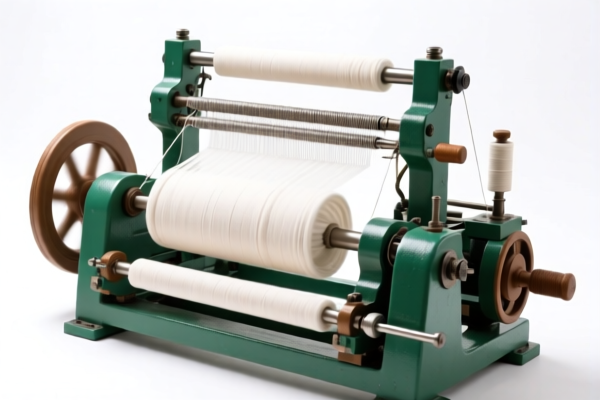
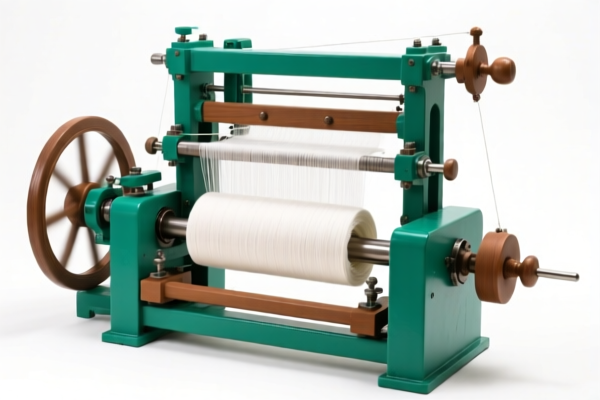
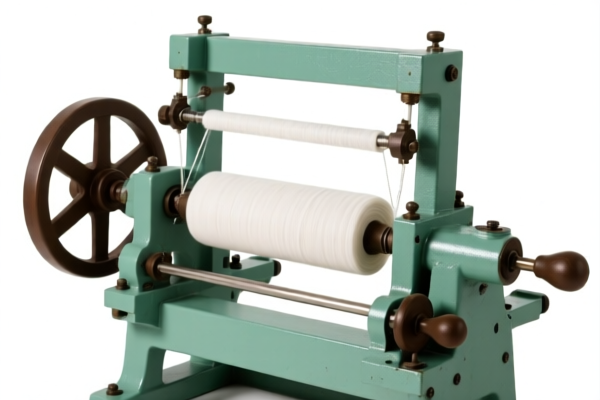
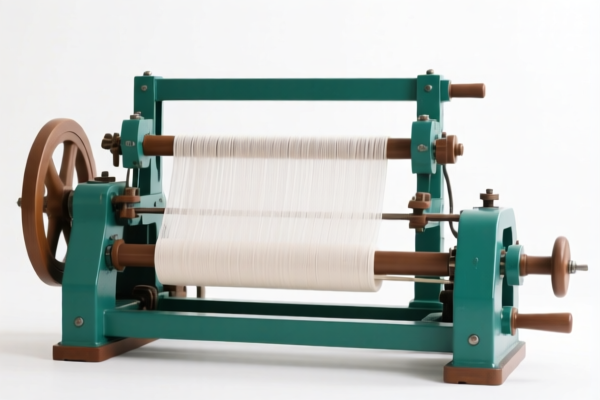
AI Analysis
🌪️ Industrial Shaking Machines & Vibration Equipment (Classification Guide)
🌐 HS Code Reference & Customs Clearance Guide | 2026 Latest Tariff Analysis | Professional Entry Strategy
📌 I. Product Definition & Classification: Do You Really Understand "Shaking Machines"?
Shaking machines (often referred to as vibration machines, shakers, or test equipment) are specialized industrial devices used for compaction, separation, screening, or testing material properties. In international trade, they are primarily categorized based on their industrial function versus laboratory/testing function.
Industrial Vibration Machines: Used for construction (soil compaction), mining (screening), or manufacturing (vibratory feeding).
Laboratory/Testing Shakers: Used for medical, chemical, or biological sample mixing.
⚠️ Key Distinction Point:
- If the machine is primarily for general industrial processing (like construction or manufacturing) and fits no other specific heading, it often falls under Chapter 84 (Machinery).
- If the machine is clearly for sports, fitness, or general medical/lab use, it may fall under Chapter 95 (Toys/Sports) or Chapter 90 (Optical/Medical Instruments).
- Note: The provided DATA focuses on Chapter 84 and 95 interpretations.
📦 II. HS Code Classification Details (Based on Provided DATA)
| HS Code | Summary from Data | Interpretation & Logic |
|---|---|---|
| 8479.89.95.95 | "Highly compatible with industrial vibration machines; inferred as mechanical manufacturing products based on common sense." | Industrial/General Machinery. This is the most likely classification for heavy-duty industrial shakers (e.g., concrete compactors, vibratory screens) that do not have a more specific heading in Chapter 84. It is considered a "general purpose" machine. |
| 8479.90.95.96 | "Belongs to machinery with independent functions; judged according to the residual principle of other categories." | Independent Functional Machinery. This code is used for machinery that doesn't fit other specific mechanical categories. It is a "catch-all" for independent mechanical units. Note: The data highlights higher risk/tariffs here due to steel/aluminum content. |
| 9506.91.00.30 | "Falls under the category of general sports, fitness, or sports equipment; fits the definition of other general sports goods." | Sports/Fitness Equipment. If the "shaking machine" is actually a fitness device (e.g., vibration plate for weight loss, muscle training) or a recreational shaker, it is classified here. This is a critical pivot point: Industrial vs. Consumer/Health. |
💰 III. 2026 Latest Tariff Rate Breakdown (Including Surcharges & Policy Add-ons)
✅ Applicable Country: United States (US)
✅ Origin: China (CN)
✅ Effective Date: Post-2025 Trade Policies (Section 301 & IEEPA)
🎯 1. 8479.89.95.95 —— Industrial General Machinery (Best Case Scenario for Industrial Use)
| Item | Content |
|---|---|
| Base Duty Rate | 2.5% (Standard MFN rate for general machinery) |
| Section 301 Surcharge | +25.0% (Standard retaliation tariff) |
| Section 122 Tariff | +10.0% (Specific policy surcharge mentioned in data) |
| Steel/Aluminum Surcharge | ❌ Not Applicable (Data does not list 50% for this code) |
| Total Tax Rate | 37.5% |
| Tax Calculation | CIF Value × 37.5% |
| De Minimis Exemption | ❌ Not Available |
| Legal Basis Path | Base: 8479.89.95.95 → Section 301: +25% → Section 122: +10% |
📌 Explanation:
- This is the most favorable industrial classification if the machine is purely for mechanical processing (e.g., construction, manufacturing).
- The 37.5% rate is high but lower than the steel-heavy alternative.
- Why? It is viewed as a general "mechanical unit" rather than a raw material-intensive structure.
🎯 2. 8479.90.95.96 —— Independent Functional Machinery (High Risk/High Cost)
| Item | Content |
|---|---|
| Base Duty Rate | 0.0% (Some independent machinery parts have 0% base) |
| Section 301 Surcharge | +25.0% |
| Section 122 Tariff | +10.0% |
| Steel/Aluminum Surcharge | +50.0% (CRITICAL: Steel/Aluminum products face additional 50% tariff) |
| Total Tax Rate | 85.0% |
| Tax Calculation | CIF Value × 85.0% |
| De Minimis Exemption | ❌ Not Available |
| Legal Basis Path | Base: 8479.90.95.96 → Section 301: +25% → Section 122: +10% → Steel/Al: +50% |
📌 Critical Warning:
- This code attracts the highest total tax (85%).
- The 50% steel/aluminum surcharge is the main driver. If your shaking machine has a significant steel/aluminum frame or components, customs may apply this.
- Strategy: Avoid this code if possible. It is a "residual" category and often triggers stricter scrutiny on material composition.
🎯 3. 9506.91.00.30 —— Sports & Fitness Equipment (Alternative for Consumer Use)
| Item | Content |
|---|---|
| Base Duty Rate | 4.6% |
| Section 301 Surcharge | +7.5% (Reduced surcharge for sports goods in some contexts) |
| Section 122 Tariff | +10.0% |
| Steel/Aluminum Surcharge | +50.0% (Still applies if steel/aluminum content is high) |
| Total Tax Rate | 22.1% (Base + 301 + 122) OR 69.6% (If Steel/Al 50% applies) |
| Tax Calculation | CIF Value × 22.1% (if eligible) or 69.6% |
| De Minimis Exemption | ❌ Not Available |
| Legal Basis Path | Base: 9506.91.00.30 → Section 301: +7.5% → Section 122: +10% |
📌 Strategic Insight:
- If your "Shaking Machine" is a vibration plate for home fitness or gym equipment, this is the best classification with a 22.1% rate (assuming steel surcharge does not apply or is mitigated).
- However, the data notes a 50% steel/aluminum surcharge for this code too. If the machine is heavy steel, the rate jumps to ~69.6%.
- Recommendation: Prove it is "fitness equipment" and minimize steel weight where possible, or ensure the steel component value is low.
🛠️ IV. Customs Clearance Practical Advice (Real-World Pitfall Guide)
✅ 1. Document Preparation Checklist (Non-negotiable)
| Document | Must Provide | Purpose |
|---|---|---|
| ✅ Product Specifications | ✔️ | Define exact function: Is it for concrete compaction (Ind) or weight loss (Sport)? |
| ✅ Photos (Full Unit + Label) | ✔️ | Show brand, model, voltage, and application scene. |
| ✅ Circuit/Structure Diagram | ✔️ | Helps customs determine if it's "General Machinery" (84) or "Fitness" (95). |
| ✅ Material Composition Statement | ✔️ | Crucial for Steel/Aluminum Surcharge. Detail % of steel vs. plastic/electronics. |
| ✅ Commercial Invoice | ✔️ | Clearly state: "Industrial Vibration Machine" or "Fitness Vibration Plate". |
| ✅ Certificate of Origin (CO) | ✔️ | Essential for verifying CN origin to calculate 301/122 tariffs. |
✅ 2. Classification Strategy (Key Mnemonic)
🔥 “Industries go to 84, Fitness goes to 95. Steel adds 50, be wise!”
| Scenario | Recommended HS Code | Total Tax | Reason |
|---|---|---|---|
| Heavy Industrial Shaker (Concrete, Mining) | 8479.89.95.95 |
37.5% | Best for pure mechanical industrial use. Avoids steel surcharge if designed smartly. |
| Home Fitness Vibration Plate | 9506.91.00.30 |
22.1% | Lowest base rate. But check steel content. If heavy steel, tax jumps. |
| General Purpose Mechanical Unit | 8479.90.95.96 |
85.0% | AVOID if possible. Highest risk. Only use if no other category fits. |
✅ 3. Special Case Handling
| Situation | Handling Suggestion |
|---|---|
| "Is it a Machine or a Toy?" | If it’s a lab shaker for blood samples, consider Chapter 90. If it’s for sports, use 9506. If industrial, use 8479. Misclassification leads to penalties. |
| Steel/Aluminum Content > 50% | If the machine is mostly steel, expect the +50% surcharge regardless of chapter. Try to use aluminum alloys or plastic housings to reduce duty. |
| Labeling | Label clearly as "Industrial Use Only" if aiming for 8479.89.95.95. If labeled "For Home Fitness", customs will force 9506. |
| Pre-Ruling | Apply for an Advance Ruling from CBP. Provide photos and specs. Ask: "Is this fitness equipment (9506) or general machinery (8479)?" |
🌍 V. Global Market Comparison (2026 Update)
| Market | Recommended HS Code | Est. Total Tax (China Origin) | Key Requirement |
|---|---|---|---|
| 🇺🇸 USA | 8479.89.95.95 |
37.5% | Section 301 + 122 + Base |
| 🇺🇸 USA | 9506.91.00.30 |
22.1% (or 69.6% w/ Steel) | Must prove Fitness Use |
| 🇪🇺 EU | 8479.89 |
~5-10% | No 301/122. Only standard duty. |
| 🇨🇳 China | 8479.89 |
~5-10% | Import duty, no punitive tariffs. |
📌 Conclusion:
- The US market is the most complex due to punitive tariffs.
- Fitness Equipment (9506) offers the lowest tax (22.1%) if steel content is managed.
- Industrial Machinery (8479.89) is the second-best option (37.5%) and safer for heavy-duty machines.
📌 VI. Common Errors & Pitfalls (Lessons Learned)
❌ Error 1: Labeling an industrial compactor as "Fitness Equipment"
👉 Consequence: Customs audits will reveal industrial specs → Penalty + Back Taxes.
❌ Error 2: Assuming all steel machines pay 50% surcharge
👉 Reality: Some "general machinery" under 8479.89.95.95 do not attract the 50% steel surcharge in the provided data. Always check the specific code.
❌ Error 3: Using the wrong summary on Invoice
👉 Consequence: If you write "Shaker" without context, customs will pick the highest risk code (8479.90.95.96 @ 85%).
👉 Fix: Use precise terms: "Vibratory Soil Compactor" (for 8479.89) or "Whole Body Vibration Platform" (for 9506).
✅ Correct Approach:
"Industrial Vibratory Screen, Model XYZ, For Mineral Processing, Steel Frame, 10HP Motor, CE Certified"
OR
"Home Fitness Vibration Plate, Model ABC, Plastic/Abs Housing, 200W, For Muscle Toning"
🎯 VII. Final Advice: Professional Classification, Cost Savings
🎯 Remember the Key Rule:
🔹 "Industries use 84, Fitness uses 95. Check the steel! 8479.89 is safest for industry, 9506 is cheapest for fitness."
🔹 "One wrong code, 85% tax. One right code, 22% tax. Precision pays!"
📌 Pro Tip:
If you are exporting fitness shakers to the US, minimize steel usage (use aluminum or plastic) to stay under the 50% steel surcharge threshold.
For industrial machines, clearly document "non-steel" components where possible to avoid the 50% add-on.
📣 Immediate Action:
📞 Consult a customs broker with pre-classification photos.
📄 Request an Advance Ruling from CBP if the product is ambiguous.
🚀 Classify correctly, save 63% in taxes!
✨ Professional Customs Clearance Starts with Precise Classification!
💼 Your profit margin depends on the HS Code!
Customer Reviews
About HS Code Classification
The Harmonized System (HS) is an internationally standardized nomenclature developed by the World Customs Organization (WCO) to classify traded products. Over 200 countries use the HS system as the basis for customs tariffs, trade statistics, and import/export regulations.
Each HS code follows a hierarchical structure:
- Chapter (2 digits) — Broad category of goods (e.g., Chapter 84: Machinery and Mechanical Appliances)
- Heading (4 digits) — More specific grouping within the chapter
- Subheading (6 digits) — Internationally standardized breakdown, used by all WCO member countries
- National subdivisions (8-10 digits) — Country-specific extensions for further classification, such as US HTSUS 10-digit codes
Correct HS code classification is essential for smooth customs clearance, accurate duty payment, and compliance with trade regulations. Misclassification can lead to customs delays, overpayment of duties, or penalties.
When importing from CN to US, the applicable tariff rates may include:
- Most-Favored-Nation (MFN) rate — The standard duty rate applied to WTO members
- General rate — Applied to countries without trade agreements
- Trade remedy duties — Additional tariffs such as Section 301 (anti-dumping), Section 232 (national security), or countervailing duties
The information provided on this page is for reference purposes only. For official classification, please consult with your local customs authority or a licensed customs broker.