Shale Oil Based High Strength Adhesive
CN → US| HS Code | Tariff Rate | Origin | Destination | Doc |
|---|---|---|---|---|
| 3910000000 | 38.0% | CN | US | Official Doc |
| 3824100000 | 41.0% | CN | US | Official Doc |
| 3907290000 | 41.5% | CN | US | Official Doc |
| 3907915000 | 41.5% | CN | US | Official Doc |
| 3824994900 | 41.5% | CN | US | Official Doc |
Product Images
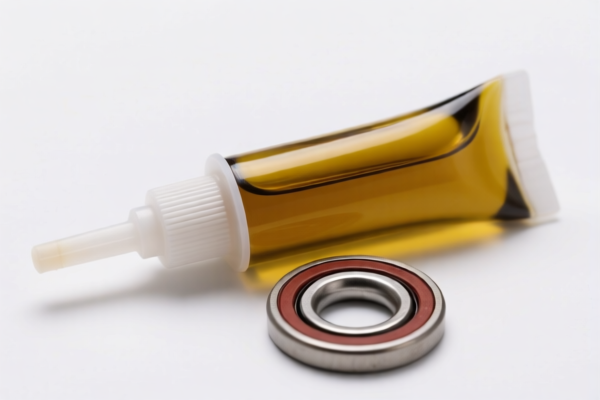
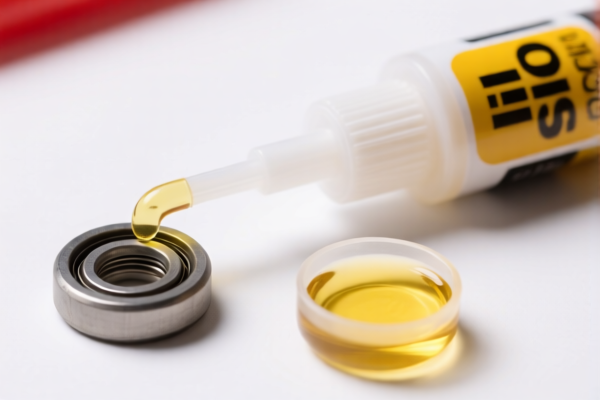
AI Analysis
🧪 Shale Oil Based High Strength Adhesive (Binder)
🌐 HS Code Reference & Customs Clearance Guide | 2026 Latest Tariff Analysis | Professional Compliance Strategy
📌 I. Product Definition & Classification: What Exactly Is This "Shale Oil Binder"?
"Shale Oil Based High Strength Adhesive" is a specialized chemical binding agent used primarily in industrial casting processes (sand casting, metal casting). It is not a simple household glue; it is a chemical mixture derived from shale oil, designed to bind sand or other materials into molds or cores.
In international trade, the critical distinction lies in its chemical composition and specific industrial application:
- Chemical Nature: It is a complex mixture of hydrocarbons derived from shale oil. This places it firmly in the realm of Chemical Products (Section VI) rather than simple plastics (Section VII) or rubber (Section XV).
- Functional Purpose: It is specifically formulated for casting molds or cores (foundry applications).
⚠️ Key Classification Conflict:
- If declared simply as "Adhesive" (粘结剂) without specifying the "Shale Oil Base" or "Casting Use," customs may misclassify it as a generic plastic resin (e.g., Chapter 39), leading to errors.
- Correct Path: Must leverage the "Modifed Adhesives" category under Chapter 38, specifically targeting the subheading for foundry mold/core binders.
📦 II. HS Code Classification Details (2026 Latest Tariff Authority Comparison)
Based on the provided data, five potential HS Codes were analyzed. Below is the detailed breakdown of why each was considered, which one is Correct, and which are Incorrect/High Risk.
| HS Code | Product Description | Match Status | Reasoning & Risk Assessment |
|---|---|---|---|
3824.10.00.00 |
Modifed Adhesives, For Making Molds or Cores | ✅ BEST MATCH (Recommended) | Perfect Match. 1. Name: "Adhesive" matches "Modifed Adhesives". 2. Base: "Shale Oil Base" fits the chemical nature of cast additives. 3. Use: "High Strength" in casting context implies "For Making Molds or Cores". 4. Summary: Directly matches the class description for foundry binders. |
3824.99.49.00 |
Other Chemical Products & Preparations (Shale Oil Based) | ⚠️ VALID ALTERNATIVE | High Match. 1. Material: Explicitly mentions "Shale Oil Base" (derived from petroleum/shale oil hydrocarbon mixtures). 2. Use: Casting binder. 3. Difference: Broader category than 3824.10. If 3824.10 is accepted, it’s more precise. If 3824.10 is rejected due to lack of specific "mold" documentation, this is the fallback. |
3910.00.00.00 |
Silicones in Primary Forms | ❌ POOR MATCH (High Risk) | Conflict: 1. Material: Silicones are a specific polymer class. "Shale Oil Based" implies hydrocarbon mixtures, not necessarily silicone polymers. 2. Form: "Primary Forms" usually means raw pellets/powder. Adhesives are often prepared formulations. 3. Risk: High chance of customs audit for misclassification. |
3907.29.00.00 |
Other Polyacetals, Other Polyethers | ❌ NO MATCH | Conflict: 1. Material: Specific to Polyethers/Polyacetals. Shale oil derivatives are complex hydrocarbon mixtures, not pure polyether resins. 2. Risk: Chemical mismatch. |
3907.91.50.00 |
Other Unsaturated Polyesters | ❌ NO MATCH | Conflict: 1. Material: Specific to Unsaturated Polyesters (UPR). While some binders use UPR, "Shale Oil Based" suggests a different chemical lineage (hydrocarbon/fatty acids from shale). 2. Risk: Chemical composition evidence (COA) will likely refute this. |
🔍 Critical Insight:
-3824.10.00.00is the most precise code for Foundry Binders.
-3824.99.49.00is the most accurate code for Shale Oil Chemical Preparations.
- Avoid Chapter 39 codes (3910,3907) unless you can prove the product is 100% a specific polyester or polyether resin, which contradicts "Shale Oil Base" in most commercial contexts.
💰 III. 2026 Latest Tariff Rate Breakdown (Including Surcharges & Policy Add-ons)
✅ Applicable Country: United States (US)
✅ Country of Origin: China (CN)
✅ Effective Date: From November 10, 2025 (including subsequent imports)
🎯 1. 3824.10.00.00 —— Modifed Adhesives (For Molds/Cores) [RECOMMENDED]
| Item | Content |
|---|---|
| Base Duty Rate | 6.0% (Ad valorem) |
| USITC Section 301 Surcharge | +25.0% |
| IEEPA Section 122 Surcharge | +10.0% |
| Total Tax Rate | 41.0% |
| Calculation Basis | CIF Value × 41.0% |
| De Minimis Exemption | ❌ Not Applicable (Deny De Minimis) |
| Legal Path | Base Tariff: 3824.10.00.00 → USITC Footnote: 301-Section-301 → IEEPA: 122-Clause |
📌 Explanation:
- Base Rate (6%): Standard MFN rate for chemical preparations.
- 301 Clause (25%): The major US-China trade war tariff.
- 122 Clause (10%): Additional surcharge on specific chemical/industrial inputs from China.
- Total (41%): This is a high-cost product. Budget carefully.
🎯 2. 3824.99.49.00 —— Other Chemical Products (Shale Oil Based) [ALTERNATIVE]
| Item | Content |
|---|---|
| Base Duty Rate | 6.5% (Ad valorem) |
| USITC Section 301 Surcharge | +25.0% |
| IEEPA Section 122 Surcharge | +10.0% |
| Total Tax Rate | 41.5% |
| Calculation Basis | CIF Value × 41.5% |
| De Minimis Exemption | ❌ Not Applicable |
| Legal Path | Base Tariff: 3824.99.49.00 → USITC: 301-Section-301 → IEEPA: 122-Clause |
📌 Note:
- Only 0.5% higher than the recommended code.
- Useful if you cannot prove the "Mold/Core" specific use but can prove the "Shale Oil" composition.
🎯 3. 3910.00.00.00 —— Silicones (Primary Forms) [AVOID]
| Item | Content |
|---|---|
| Base Duty Rate | 3.0% |
| USITC Section 301 Surcharge | +25.0% |
| IEEPA Section 122 Surcharge | +10.0% |
| Total Tax Rate | 38.0% |
| Risk | HIGH AUDIT RISK. If customs disputes the "Silicone" classification, you will face penalties, back taxes, and delays. The chemical mismatch is significant. |
🎯 4. 3907.29.00.00 & 3907.91.50.00 —— Polyethers/Polyesters [AVOID]
| Item | Content |
|---|---|
| Base Duty Rate | 6.5% |
| USITC Section 301 Surcharge | +25.0% |
| IEEPA Section 122 Surcharge | +10.0% |
| Total Tax Rate | 41.5% |
| Risk | Chemical Misclassification. "Shale Oil" does not equal "Unsaturated Polyester" or "Polyether". High risk of rejection. |
🛠️ IV. Customs Clearance Practical Advice (Avoiding Pitfalls)
✅ 1. Preparation Checklist (Mandatory Documents)
| Document | Must Provide? | Explanation |
|---|---|---|
| ✅ Certificate of Analysis (COA) | ✔️ Critical | Must list chemical composition. Prove it contains Shale Oil derivatives and is NOT a pure Silicone (3910) or Polyester (3907). |
| ✅ Product Specification Sheet | ✔️ Critical | Must explicitly state: "Used for Making Molds or Cores in Casting Processes". This justifies HS 3824.10. |
| ✅ Commercial Invoice | ✔️ | Describe as: "Shale Oil Based Chemical Adhesive for Foundry Molds" rather than just "Glue". |
| ✅ Material Safety Data Sheet (MSDS/SDS) | ✔️ | Confirm hazardous material status. Shale oil products may require special handling declarations. |
| ✅ Packaging List | ✔️ | Net weight vs. Gross weight must be clear for duty calculation. |
✅ 2. Declaration Strategy (Key Mantra)
🔥 "Highlight 'Foundry Use', Prove 'Shale Base', Avoid 'Silicone'!"
| Scenario | Correct Declaration | Incorrect Action |
|---|---|---|
| Primary Use | "Adhesive for Sand Casting Molds" | "General Purpose Adhesive" |
| Chemical Base | "Shale Oil Hydrocarbon Mixture" | "Silicone Resin" (Wrong HS) |
| HS Code | 3824.10.00.00 |
3910.00.00.00 (Risk of audit) |
✅ 3. Special Situations
| Situation | Handling Advice |
|---|---|
| Is it a "Prepared" Adhesive? | Yes. Chapter 38 covers "Prepared Binders for Foundry Molds". Do not classify as raw materials (Chapter 27/38 unprepared). |
| What if the Buyer is not a Foundry? | Still declare the intended industrial use. If the product is only suitable for casting, it must be declared as such. |
| Hazardous Material? | Shale oil derivatives may be flammable. Ensure IMDG/IATA compliance for shipping. Customs may check for hazmat labels. |
🌍 V. Global Market Clearance Comparison (2026 Latest)
| Country/Region | Recommended HS Code | Duty Rate (China Origin) | Certification Requirements | Notes |
|---|---|---|---|---|
| 🇺🇸 USA | 3824.10.00.00 |
41.0% | None specific | High tariff due to 301+122 clauses. |
| 🇨🇳 China | 3824.10.00.00 |
~6-9% | GB Standards | Import duty for raw chemicals. |
| 🇪🇺 EU | 3824.10.00 |
~6.5% | REACH Registration | REACH compliance is mandatory for chemical imports. |
| 🇯🇵 Japan | 3824.10.00 |
~6-8% | PSAC (if applicable) | Chemical notification may be needed. |
| 🇬🇧 UK | 3824.10.00 |
~6.5% | UK REACH | Post-Brexit UK REACH registration required. |
📌 Conclusion:
- USA is the most expensive market due to the 41% total tariff burden.
- EU/UK require REACH Registration before import. Do not ship before REACH compliance is verified.
- Avoid Chapter 39 globally if the chemical makeup is shale-based, as it will lead to customs discrepancies.
📌 VI. Common Errors & Pitfalls (Lessons Learned)
❌ Error 1: Declaring as "Silicone Adhesive" (3910) to lower the base rate from 6% to 3%.
👉 Consequence: Customs request COA. If COA shows hydrocarbons, not silicones → Penalty + Retroactive Duty + Delay.
❌ Error 2: Using generic name "Chemical Binder" without specifying "Foundry Use".
👉 Consequence: Customs may classify under 3824.99 (Higher base rate or different scrutiny) or reject as "Undeclared Use".
❌ Error 3: Ignoring the "Shale Oil" component.
👉 Consequence: Misclassification as "Petroleum Oil" (2710) or "Other Chemicals" (3824.99), leading to incorrect tax calculation.
✅ Correct Practice:
"Shale Oil Based Foundry Binder, Prepared Adhesive for Sand Molds, Chemical Composition: Hydrocarbon Mixture from Shale Oil, HS Code: 3824.10.00.00"
🎯 VII. Conclusion: Professional Declaration for Cost Efficiency
🎯 Key Takeaway:
🔹 Use
3824.10.00.00: It is the most accurate for "Mold/Core Adhesives".
🔹 Total Tax is 41%: Factor this into your pricing model for US imports.
🔹 Documentation is Key: COA must prove Shale Oil origin to avoid Chapter 39 misclassification.
📌 Pro Tip:
If you are importing into the EU or UK, ensure REACH Registration is completed before shipment. Failure to do so will result in goods being held at customs indefinitely.
📣 Immediate Action:
📞 Confirm REACH (EU/UK) or TSCA (US) compliance.
📄 Prepare COA highlighting "Shale Oil" and "Foundry Use".
🚀 Apply for Advance Ruling if unsure about the "Mold" classification nuance.
✨ Precise Classification Saves Costs!
💼 Don't Let Chemical Misclassification Cost You 41%!
Customer Reviews
About HS Code Classification
The Harmonized System (HS) is an internationally standardized nomenclature developed by the World Customs Organization (WCO) to classify traded products. Over 200 countries use the HS system as the basis for customs tariffs, trade statistics, and import/export regulations.
Each HS code follows a hierarchical structure:
- Chapter (2 digits) — Broad category of goods (e.g., Chapter 84: Machinery and Mechanical Appliances)
- Heading (4 digits) — More specific grouping within the chapter
- Subheading (6 digits) — Internationally standardized breakdown, used by all WCO member countries
- National subdivisions (8-10 digits) — Country-specific extensions for further classification, such as US HTSUS 10-digit codes
Correct HS code classification is essential for smooth customs clearance, accurate duty payment, and compliance with trade regulations. Misclassification can lead to customs delays, overpayment of duties, or penalties.
When importing from CN to US, the applicable tariff rates may include:
- Most-Favored-Nation (MFN) rate — The standard duty rate applied to WTO members
- General rate — Applied to countries without trade agreements
- Trade remedy duties — Additional tariffs such as Section 301 (anti-dumping), Section 232 (national security), or countervailing duties
The information provided on this page is for reference purposes only. For official classification, please consult with your local customs authority or a licensed customs broker.