Shaping Device
CN → USProduct Images
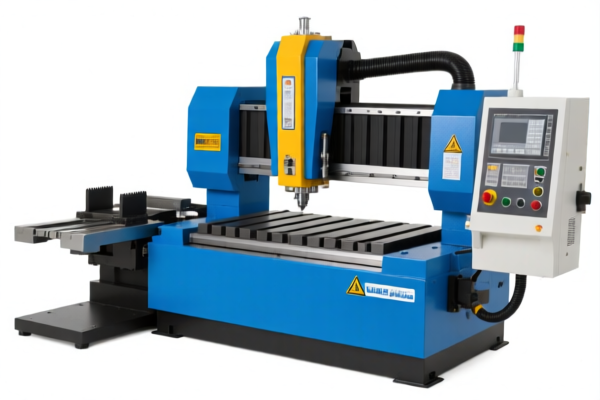
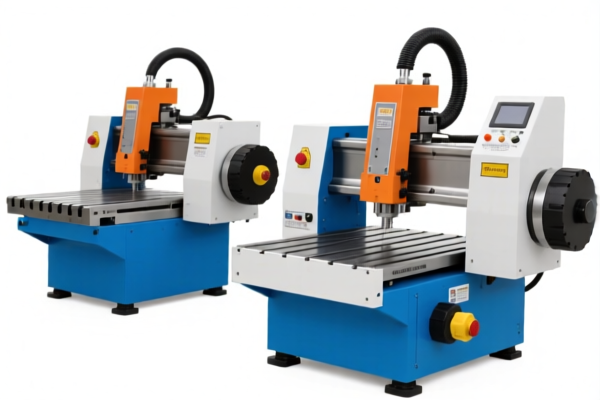
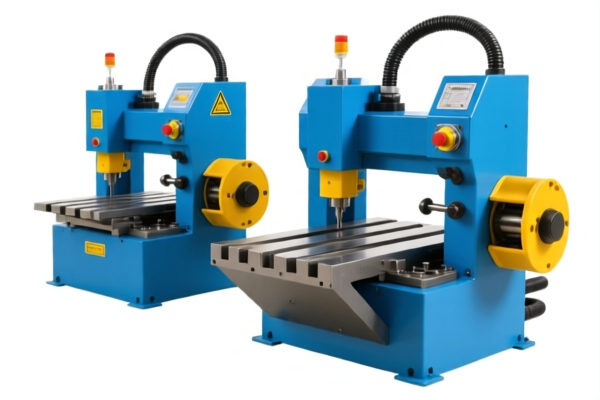
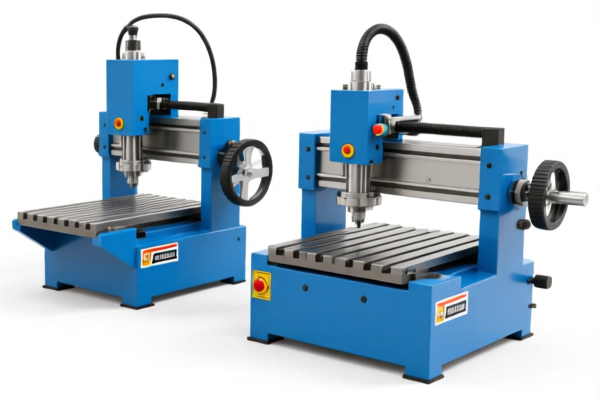
AI Analysis
🛠️ Shaping Device (Shaping Tools/Apparatus)
🌐 HS Code Reference & Customs Clearance Guide | 2026 Latest Tariff Analysis | Strategic Compliance Strategy
📌 I. Product Definition & Classification: What Exactly is a "Shaping Device"?
A "Shaping Device" is a broad term in international trade, generally referring to tools or machines used to alter the form, shape, or surface of a material. Due to the ambiguity of the term, customs authorities require precise classification based on material, function, and end-use.
Two Main Categories:
1. Industrial Machinery/Components (Chapter 84):
Machines or molds used for shaping plastic, rubber, or metal. This includes injection molding machines, blow molding machines, and related parts.
2. Hand Tools/Utensils (Chapter 82/84/34):
Manual tools for cutting, planing, or sculpting, or specialized kits for children’s entertainment (e.g., modeling clay tools).
⚠️ Key Classification Point:
- If the device is motorized, industrial, or used for mass-production plastic/rubber molding → Likely 8477 or 8467.
- If it is a manual cutting/scraping tool (like a plane or chisel) → Likely 8205.
- If it is a miscellaneous consumer good or kit → Likely 3407 (fallback).
📦 II. HS Code Classification Details (2026 Latest Tariff Reference)
| HS Code | Product Description | Application Scenario | Key Characteristics |
|---|---|---|---|
8477.10.90.40 |
Machinery for working rubber or plastics (other) | Industrial plastic/rubber processing; compatible with thermoplastic materials. | ✅ Industrial Machinery; Plastic/Rubber compatible. |
8477.10.30.00 |
Machinery for working rubber or plastics (injection/compression molding) | Plastic molding tools/appliances specifically for rubber or plastic processing. | ✅ Industrial Molding Tools; Rubber/Plastic specific. |
8205.30.60.00 |
Hand tools: planes, chisels, gouges, etc. | Manual shaping/cutting tools; wood or similar material processing. | ✅ Manual Tool; Cutting/Planing action. |
3407.00.40.00 |
Prepared modeling pastes; other prepared modeling or decorating masses | Fallback category; often applies to children's entertainment or creative modeling kits. | ✅ Consumer/Creative; Fallback/兜底 logic. |
8467.29.00.90 |
Other power tool tools for working in the hand | Handheld shaping tools; material inferred as metal or plastic. | ✅ Power Tool; Handheld shaping application. |
🔍 Crucial Distinction:
- "Machinery" vs. "Tool": Industrial injection/molding machines fall under 8477. Handheld power tools fall under 8467. Manual chisels/plane-like tools fall under 8205.
- Material Compatibility: If the device is explicitly designed for thermoplastics (like an extruder or injector), it leans towards 8477.
- Ambiguity: If the device is a simple kit or non-industrial, it may fall into the 3407 fallback.
💰 III. 2026 Latest Tariff Rate Breakdown (Including Additional Taxes, Policy Surcharges)
✅ Applicable Country: United States (US)
✅ Origin: China (CN)
✅ Effective Date: From November 10, 2025 (and subsequent imports)
🎯 1. 8477.10.90.40 —— Machinery for Working Rubber or Plastics
| Item | Content |
|---|---|
| Base Tariff | 3.1% (ad valorem) |
| Section 301 Tariff (Add-on) | +25.0% (USITC Footnote related to Chinese goods) |
| Section 122 Tariff (Add-on) | +10.0% (Specific to Chinese imports) |
| Total Tariff Rate | 38.1% |
| Tax Calculation | CIF Value × 38.1% |
| De Minimis Eligibility | ❌ No (High tariff risk) |
| Legal Basis Path | USITC:8477.10.90.40 → Section 301: +25% → Section 122: +10% |
📌 Explanation:
- This code covers industrial machinery. The 25% Section 301 tariff is standard for many Chinese machinery imports.
- The 10% Section 122 tariff is an additional layer targeting specific Chinese manufacturing goods.
- Total 38.1% is a significant cost driver for plastic/rubber processing equipment.
🎯 2. 8477.10.30.00 —— Machinery for Injection/Compression Molding of Rubber/Plastics
| Item | Content |
|---|---|
| Base Tariff | 0.0% |
| Section 301 Tariff (Add-on) | +25.0% |
| Section 122 Tariff (Add-on) | +10.0% |
| Total Tariff Rate | 35.0% |
| Tax Calculation | CIF Value × 35.0% |
| De Minimis Eligibility | ❌ No |
| Legal Basis Path | USITC:8477.10.30.00 → Section 301: +25% → Section 122: +10% |
📌 Note:
- Although the base tariff is 0%, the 25% + 10% additional tariffs bring the total to 35.0%.
- This is slightly more favorable than8477.10.90.40due to the lower base rate, but still high.
🎯 3. 8205.30.60.00 —— Hand Tools: Planes, Chisels, Gouges
| Item | Content |
|---|---|
| Base Tariff | 5.0% |
| Section 301 Tariff (Add-on) | +25.0% |
| Section 122 Tariff (Add-on) | +10.0% |
| Total Tariff Rate | 40.0% |
| Tax Calculation | CIF Value × 40.0% |
| De Minimis Eligibility | ❌ No |
| Legal Basis Path | USITC:8205.30.60.00 → Section 301: +25% → Section 122: +10% |
📌 Warning:
- This is the highest tariff bracket among the listed codes.
- Applies to manual shaping/cutting tools (e.g., wood planers, chisels).
- Do not misclassify as a "machine" to avoid scrutiny, but ensure it is indeed a hand tool.
🎯 4. 3407.00.40.00 —— Prepared Modeling Pasts / Modeling Kits (Fallback)
| Item | Content |
|---|---|
| Base Tariff | 0.0% |
| Section 301 Tariff (Add-on) | 0.0% |
| Section 122 Tariff (Add-on) | +10.0% |
| Total Tariff Rate | 10.0% |
| Tax Calculation | CIF Value × 10.0% |
| De Minimis Eligibility | ⚠️ Caution: Check if de minimis applies, but Section 122 may negate it. |
| Legal Basis Path | USITC:3407.00.40.00 → Section 122: +10% |
📌 Strategic Insight:
- This is the most cost-effective option with only 10% total tariff.
- However, it is a fallback category. It applies to "other" items, often used for children's toys, clay kits, or non-industrial creative tools.
- Risk: If the item is clearly an industrial machine or metal tool, misclassification here can lead to severe penalties and retroactive duties. Only use if the product fits the description (e.g., creative modeling tools, not heavy machinery).
🎯 5. 8467.29.00.90 —— Other Power Tools (Handheld Shaping)
| Item | Content |
|---|---|
| Base Tariff | 0.0% |
| Section 301 Tariff (Add-on) | +7.5% |
| Section 122 Tariff (Add-on) | +10.0% |
| Total Tariff Rate | 17.5% |
| Tax Calculation | CIF Value × 17.5% |
| De Minimis Eligibility | ❌ No |
| Legal Basis Path | USITC:8467.29.00.90 → Section 301: +7.5% → Section 122: +10% |
📌 Note:
- Applies to handheld power tools (e.g., angle grinders, sanders, rotary tools) used for shaping.
- The Section 301 tariff is only 7.5% for this category, making it more favorable than industrial machinery (25%).
- Ensure the tool is handheld and powered to qualify.
🛠️ IV. Customs Clearance Practical Advice (Battle-Tested Pitfall Guide)
✅ 1. Documentation Checklist (Non-Negotiable)
| Document | Required | Explanation |
|---|---|---|
| ✅ Product Spec Sheet | ✔️ | Must detail material (plastic/metal/wood), power source, and function. |
| ✅ Product Photos | ✔️ | Clear images showing the device type (handheld vs. machine). |
| ✅ User Manual/Instructions | ✔️ | Proves intended use (e.g., "for modeling clay" vs. "industrial injection"). |
| ✅ Commercial Invoice | ✔️ | Must accurately describe the item (e.g., "Plastic Injection Molding Machine" vs. "Handheld Shaper"). |
| ✅ Declaration of Composition | ✔️ | Specifies if made in China, key components, etc. |
| ✅ Certifications | ✔️ | UL, CE, FCC (if electrical), or safety standards relevant to the tool. |
✅ 2. Declaration Tips (Key Mantra)
🔥 "Function Defines Code, Material Defines Rate, Handheld vs. Machine is Critical!"
| Scenario | Correct Declaration | Wrong Action |
|---|---|---|
| Industrial Plastic Molder | 8477.10.30.00 / 8477.10.90.40 |
Declare as "Hand Tool" → Audit & Penalty |
| Manual Wood Chisel/Plane | 8205.30.60.00 |
Declare as "Power Tool" → Wrong Tax |
| Children's Clay Modeling Kit | 3407.00.40.00 |
Declare as "Machinery" → Overpay Tax |
| Handheld Rotary Sander | 8467.29.00.90 |
Declare as "Tool Part" → Complex Review |
✅ 3. Special Situation Handling
| Situation | Handling Advice |
|---|---|
| Multi-Function Device | If it can both mold plastic and cut wood, classify based on primary function or principal use. Provide evidence (manual, marketing). |
| OEM/Custom Tool | Provide design drawings and client specs. Avoid generic terms like "Shaping Device." Use specific terms like "Thermoplastic Extruder." |
| Electrical vs. Manual | If plugged in or battery-powered, it is likely Chapter 84 (Machine/Tool). If purely manual, check Chapter 82. |
| "Kit" Classification | If sold as a kit (e.g., tool + clay), the whole kit may be classified under 3407 if the modeling mass is the essential character. |
🌍 V. Global Market Clearance Comparison (2026 Latest)
| Country/Region | Recommended HS Code | Tariff (China Origin) | Certification | Note |
|---|---|---|---|---|
| 🇺🇸 USA | 8477.10.30.00 / 8467.29.00.90 |
35% / 17.5% | FCC, UL, RoHS | High additional tariffs (Section 301/122). |
| 🇨🇳 China | 8477.10.30.00 |
5-10% (Import) | CCC (if electrical) | Lower import duties, no Section 301. |
| 🇪🇺 EU | 8477.10.30.00 |
0-4.5% | CE, RoHS, REACH | No Section 301/122 equivalent. |
| 🇯🇵 Japan | 8477.10.30.00 |
0-5% | PSE, JIS | Favorable rates, strict safety standards. |
| 🇦🇺 Australia | 8477.10.30.00 |
5% | RCM | Moderate duties. |
📌 Conclusion:
- USA imposes heavy additional tariffs on Chinese-made shaping devices.
- EU/Japan are more tariff-friendly but require strict compliance (CE/PSE).
- Strategy: If exporting to the US, consider supply chain diversification or accurate classification to minimize tax burden.
📌 VI. Common Errors & Pitfall Guide (Lessons Learned)
❌ Error 1: Classifying an industrial machine as a hand tool (8205 or 8467) to save tax.
👉 Consequence: Customs audit, back taxes + penalties. The machine is clearly motorized/industrial.
❌ Error 2: Classifying a power tool as a consumer kit (3407) to avoid Section 301.
👉 Consequence: High risk of misdeclaration. Tools are not "modeling pastes."
❌ Error 3: Ignoring Section 122 Tariff in calculations.
👉 Consequence: Unexpected 10% additional cost on all Chinese imports affecting specific industrial goods.
❌ Error 4: Using vague terms like "Shaping Tool" in the commercial invoice.
👉 Consequence: Customs request for additional information, delay in clearance.
✅ Correct Practice:
"Electric Plastic Injection Molding Machine, Model X, 220V, For Industrial Use"
OR
"Handheld Power Sander, Model Y, 110V, For Wood/Shaping"
OR
"Children's Modeling Clay Tool Kit, Non-Electric, For Creative Play"
🎯 VII. Conclusion: Precision Classification, Cost Optimization!
🎯 Remember the Mantra:
🔹 "Industrial = 8477 (35-38%), Handheld Power = 8467 (17.5%), Manual = 8205 (40%), Kit = 3407 (10%)."
🔹 "Section 301 is 25% for Machinery, 7.5% for Hand Tools. Section 122 is 10% Everywhere."
🔹 "Don't fake it! Misclassification leads to audits, delays, and higher costs than correct declaration!"
📌 Pro Tip:
If your product is essential for industrial production, consider applying for an Exclusion from Section 301 tariffs if available, or explore Third-Country Assembly (e.g., Vietnam, Thailand) to mitigate US tariffs.
For US imports, always get an Advance Ruling (CBP Ruling) for ambiguous "Shaping Devices."
📣 Immediate Action:
📞 Consult a licensed customs broker.
📄 Provide detailed product specs, photos, and intended use.
🚀 Ensure Smooth Clearance, Avoid Surprises, Maximize Profit Margins!
✨ Professional Clearance Starts with Accurate Classification!
💼 Your Cost Efficiency Depends on Your HS Code Strategy!
Customer Reviews
About HS Code Classification
The Harmonized System (HS) is an internationally standardized nomenclature developed by the World Customs Organization (WCO) to classify traded products. Over 200 countries use the HS system as the basis for customs tariffs, trade statistics, and import/export regulations.
Each HS code follows a hierarchical structure:
- Chapter (2 digits) — Broad category of goods (e.g., Chapter 84: Machinery and Mechanical Appliances)
- Heading (4 digits) — More specific grouping within the chapter
- Subheading (6 digits) — Internationally standardized breakdown, used by all WCO member countries
- National subdivisions (8-10 digits) — Country-specific extensions for further classification, such as US HTSUS 10-digit codes
Correct HS code classification is essential for smooth customs clearance, accurate duty payment, and compliance with trade regulations. Misclassification can lead to customs delays, overpayment of duties, or penalties.
When importing from CN to US, the applicable tariff rates may include:
- Most-Favored-Nation (MFN) rate — The standard duty rate applied to WTO members
- General rate — Applied to countries without trade agreements
- Trade remedy duties — Additional tariffs such as Section 301 (anti-dumping), Section 232 (national security), or countervailing duties
The information provided on this page is for reference purposes only. For official classification, please consult with your local customs authority or a licensed customs broker.