Shark Clip
CN → US| HS Code | Tariff Rate | Origin | Destination | Doc |
|---|---|---|---|---|
| 3926902500 | 24.0% | CN | US | Official Doc |
| 7117909000 | 28.5% | CN | US | Official Doc |
| 3926909989 | 22.8% | CN | US | Official Doc |
Product Images
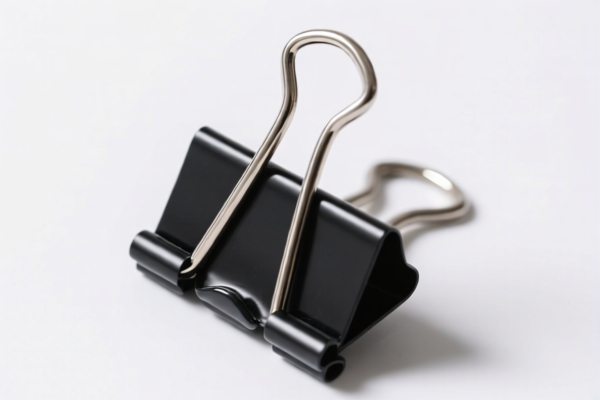
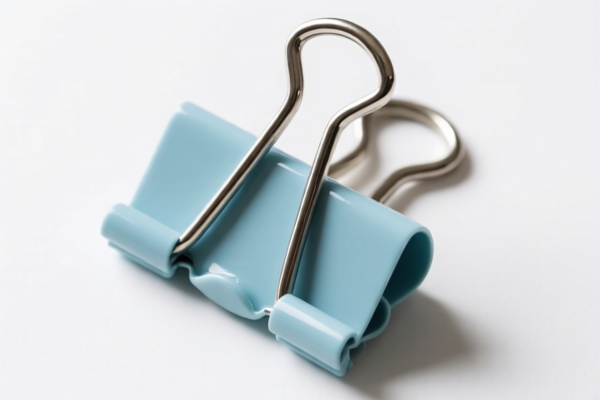
AI Analysis
🦈 Shark Clip (Hair Claw) – HS Code Classification & Tariff Guide | 2026 Clearance Strategy
🌐 HS Code Reference & Customs Clearance Guide | 2026 Latest Tariff Analysis | Professional-Level Clearance Strategy
📌 1. Product Definition & Classification: What Exactly is a "Shark Clip"?
The Shark Clip (commonly known as a Hair Claw Clip) is a popular hair accessory used to secure hair in place. In international trade, its classification depends heavily on material composition and functional design.
⚠️ Key Distinction Points:
- If made primarily of plastic and used as a functional hair accessory → Classified under Chapter 39 (Plastics) or Chapter 96 (Miscellaneous Manufactured Articles) depending on specific design.
- If made of metal, plastic, or mixed materials and designed to mimic jewelry or worn as an ornament → Classified under Chapter 71 (Imitation Jewelry).
- Critical Rule: Customs authorities scrutinize whether the item is primarily a functional hair tool or an ornamental accessory.
📦 2. HS Code Classification Details (2026 Latest Tariff Authority Comparison)
Based on the provided data, here are the three possible HS Code classifications for Shark Clips, depending on their material and intended use:
| HS Code | Product Description | Applicable Scenario | Material |
|---|---|---|---|
3926.90.25.00 |
Other plastic articles | Plastic shark clips, classified as "other plastic products" | 🧴 Plastic |
7117.90.90.00 |
Imitation jewelry | Plastic or metal shark clips, classified as "imitation jewelry" | 💍 Metal/Plastic |
3926.90.99.89 |
Other plastic articles, not elsewhere specified | Plastic shark clips, classified as "other plastic articles" | 🧴 Plastic |
🔍 Important Reminder:
- If the shark clip is decorative, jeweled, or made of metal, it is likely to be classified as imitation jewelry (7117.90.90.00).
- If it is a standard plastic hair clip without ornamental features, it falls under Chapter 39 (3926.90.25.00or3926.90.99.89).
- Misclassification Risk: Declaring a metal/jeweled clip as a plain plastic article can lead to higher duties, delays, or penalties.
💰 3. 2026 Latest Tariff Rate Breakdown (Including Surcharges & Policy Add-ons)
✅ Applicable Country: United States (US)
✅ Origin: China (CN)
✅ Effective Date: Current rates apply as per 2026 tariff schedule
🎯 1. 3926.90.25.00 – Plastic Shark Clip (Other Plastic Articles)
| Item | Content |
|---|---|
| Basic Tariff | 6.5% |
| Section 301 Surcharge | 7.5% |
| Section 122 Tariff | 10% |
| Total Tax Rate | 24.0% |
| Tax Calculation | CIF Value × 24% |
| De Minimis Eligibility | ❌ Not Eligible (if value exceeds threshold) |
| Legal Basis Path | HTS:3926.90.25.00 → USITC:301:7.5% → Section 122:10% |
📌 Explanation:
- This rate applies to plastic shark clips classified as "other plastic products."
- The 24% total duty includes the basic tariff, Section 301 surcharge, and Section 122 tariff.
- High tariff impact: Must be factored into pricing strategy.
🎯 2. 7117.90.90.00 – Imitation Jewelry (Plastic or Metal Shark Clip)
| Item | Content |
|---|---|
| Basic Tariff | 11.0% |
| Section 301 Surcharge | 7.5% |
| Section 122 Tariff | 10% |
| Total Tax Rate | 28.5% |
| Tax Calculation | CIF Value × 28.5% |
| De Minimis Eligibility | ❌ Not Eligible |
| Legal Basis Path | HTS:7117.90.90.00 → USITC:301:7.5% → Section 122:10% |
📌 Note:
- This rate applies if the shark clip is deemed imitation jewelry (e.g., metal, jeweled, or ornamental design).
- Highest tariff among the three options: 28.5% total.
- Recommendation: Avoid this classification unless the product is explicitly marketed as jewelry.
🎯 3. 3926.90.99.89 – Plastic Shark Clip (Other Plastic Articles, NES)
| Item | Content |
|---|---|
| Basic Tariff | 5.3% |
| Section 301 Surcharge | 7.5% |
| Section 122 Tariff | 10% |
| Total Tax Rate | 22.8% |
| Tax Calculation | CIF Value × 22.8% |
| De Minimis Eligibility | ❌ Not Eligible |
| Legal Basis Path | HTS:3926.90.99.89 → USITC:301:7.5% → Section 122:10% |
📌 Note:
- This is the lowest tariff option for plastic shark clips.
- Applies to generic plastic hair clips without specific subheading alignment.
- Best for cost optimization if the product is purely functional and plastic-based.
🛠️ 4. Customs Clearance Practical Advice (Real-World Pitfall Avoidance Guide)
✅ 1. Documentation Checklist (All Required)
| Document | Required | Notes |
|---|---|---|
| ✅ Product Specification Sheet | ✔️ | Include material, dimensions, weight, packaging |
| ✅ Product Photos | ✔️ | Clear images showing front, back, and any decorative elements |
| ✅ Commercial Invoice | ✔️ | Clearly state "Shark Clip" or "Hair Claw Clip," not "Jewelry" |
| ✅ Packing List | ✔️ | Itemize quantities, weights, and package dimensions |
| ✅ Certificate of Origin (CO) | ✔️ | If applicable for preferential treatment |
| ✅ Material Composition Statement | ✔️ | Confirm if plastic, metal, or mixed |
| ✅ Third-Party Test Report | ✔️ | If required for safety (e.g., CPSIA for children’s items) |
✅ 2. Declaration Tips (Critical Mantra)
🔥 “Plastic is Function, Metal is Ornament. Choose wisely to lower tax!”
| Scenario | Correct Declaration | Wrong Practice |
|---|---|---|
| Plain plastic clip | 3926.90.99.89 (22.8%) |
Misdeclare as jewelry → 28.5% |
| Metal/jeweled clip | 7117.90.90.00 (28.5%) |
Misdeclare as plastic → Penalty + Back Taxes |
| Mixed material clip | Consult Customs | Ambiguous description → Audit Risk |
✅ 3. Special Cases Handling
| Situation | Handling Advice |
|---|---|
| OEM Custom Clips | Provide design specs to prove material and function |
| Children’s Shark Clips | Must comply with CPSIA; additional testing required |
| Bulk vs. Retail Packaging | Bulk shipments may face stricter scrutiny on classification |
| New Material Types | If biodegradable or composite, seek pre-ruling |
🌍 5. Global Market Comparison (2026 Latest)
| Country/Region | Recommended HS Code | Tariff | Certification Required | Notes |
|---|---|---|---|---|
| 🇺🇸 United States | 3926.90.99.89 |
22.8% (Plastic) | CPSIA (if for kids) | 28.5% if jewelry |
| 🇨🇳 China | 3926.90.99.89 |
5% | N/A | No surcharges |
| 🇪🇺 EU | 3926.90.99.89 |
4% | REACH Compliance | No Section 301 |
| 🇬🇧 UK | 3926.90.99.89 |
4% | UKCA Marking | Post-Brexit rules |
| 🇨🇦 Canada | 3926.90.99.89 |
5.5% | CPSIA (if exported to US) | Similar to US |
📌 Conclusion:
- US has the highest effective duty due to Section 301 and Section 122 tariffs.
- EU and UK have lower tariffs but require additional compliance (REACH, UKCA).
- China origin products face 22.8%–28.5% in the US – plan pricing accordingly.
📌 6. Common Errors & Pitfalls (Lessons from Real Cases)
❌ Error 1: Declaring a metal jeweled clip as a plastic hair accessory
👉 Consequence: Customs reclassification → Back taxes + 28.5% instead of 22.8%
❌ Error 2: Using vague terms like "Hair Accessory" without specifying material
👉 Consequence: Customs inquiry → Delays + Potential Penalty
❌ Error 3: Ignoring Section 122 Tariff
👉 Consequence: Underpaid duties → Audit + Interest
❌ Error 4: Not distinguishing between jewelry and functional clips
👉 Consequence: Misclassification → 28.5% instead of 22.8%
✅ Correct Approach:
“Shark Clip, Plastic, 10cm, Matte Black, 100pcs/CTN, For Hair Styling”
🎯 7. Conclusion: Precision Classification Saves Money!
🎯 Remember the Mantra:
🔹 “Plastic = 22.8%, Metal/Jewelry = 28.5%, Be Specific to Save Cash!”
🔹 “HS Code Determines Duty, Accuracy Prevents Fines!”
📌 Pro Tip:
If your shark clips are originating from Vietnam, Mexico, or Malaysia, you may be eligible for IEEPA Exemptions, reducing duties to 0%–5%.
Recommendation: Apply for a Pre-Ruling (Advance Ruling) to confirm HS Code and avoid clearance risks.
📣 Immediate Action Steps:
📞 Contact a licensed customs broker
📷 Provide clear product images & material specs
📄 Request HS Code Pre-Ruling from CBP
🚀 Ensure smooth clearance, reduce costs, and maximize profits!
✨ Professional Classification Starts Here!
💼 Every dollar saved in duty is pure profit!
Customer Reviews
About HS Code Classification
The Harmonized System (HS) is an internationally standardized nomenclature developed by the World Customs Organization (WCO) to classify traded products. Over 200 countries use the HS system as the basis for customs tariffs, trade statistics, and import/export regulations.
Each HS code follows a hierarchical structure:
- Chapter (2 digits) — Broad category of goods (e.g., Chapter 84: Machinery and Mechanical Appliances)
- Heading (4 digits) — More specific grouping within the chapter
- Subheading (6 digits) — Internationally standardized breakdown, used by all WCO member countries
- National subdivisions (8-10 digits) — Country-specific extensions for further classification, such as US HTSUS 10-digit codes
Correct HS code classification is essential for smooth customs clearance, accurate duty payment, and compliance with trade regulations. Misclassification can lead to customs delays, overpayment of duties, or penalties.
When importing from CN to US, the applicable tariff rates may include:
- Most-Favored-Nation (MFN) rate — The standard duty rate applied to WTO members
- General rate — Applied to countries without trade agreements
- Trade remedy duties — Additional tariffs such as Section 301 (anti-dumping), Section 232 (national security), or countervailing duties
The information provided on this page is for reference purposes only. For official classification, please consult with your local customs authority or a licensed customs broker.